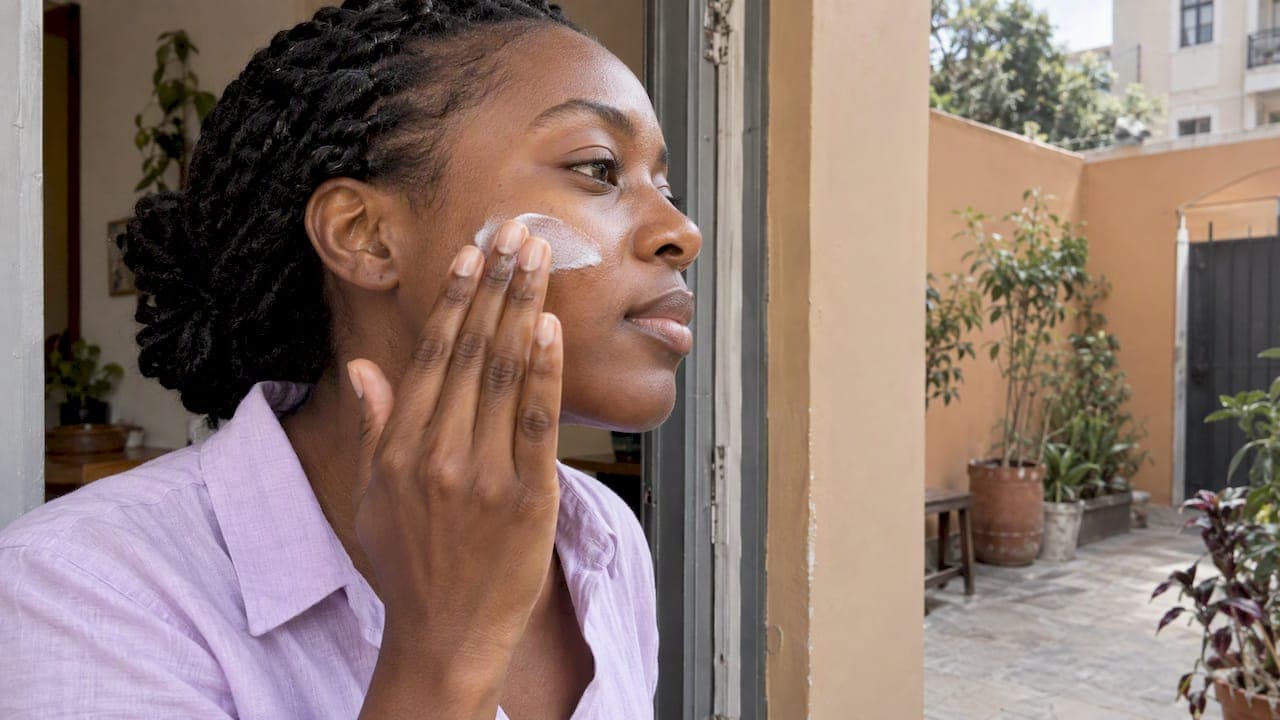
Dark skin needs the same basics as any skin: cleanse, treat, moisturize, protect. The difference is risk. Darker skin makes extra pigment easily after acne, irritation, shaving or sun. So the best routine is gentle, short and consistent, and it ends with sunscreen every morning.
This guide covers the routine, the ingredients with evidence behind them, what to avoid, and when a dermatologist should take over.
TL;DR
- Keep the routine short: gentle cleanser, one treatment, moisturizer, sunscreen.
- Dark spots usually follow inflammation: acne, irritation, razor bumps. Prevent the irritation and the spots have less to start from.
- Ingredients with support for dark spots include niacinamide, licorice extract, vitamin C, arbutin and kojic acid. Introduce one at a time.
- Use tinted sunscreen with iron oxide, SPF 30 or higher. Sun keeps spots dark.
- Persistent patches, especially on the cheeks, forehead or upper lip, belong with a dermatologist.
Table of Contents
- What makes dark skin different
- A simple routine for dark skin
- Cleansing without stripping
- Ingredients that help dark spots
- Sun protection: the step that decides results
- Acne, razor bumps and irritation: stop the spot before it starts
- What to avoid
- Dry, oily and sensitive skin: adjusting the routine
- Perspective: why we keep it simple
- Yuka+Face products for this routine
- When to see a dermatologist
- FAQ
- Sources
What makes dark skin different
Skin color comes from melanin. Darker skin has more active melanin production. That is protective in many ways, but it also means the skin reacts to triggers by making extra pigment. The American Academy of Dermatology (AAD) explains that people with medium to dark skin tones get dark spots and patches when something triggers the skin to make extra melanin.
The common trigger is inflammation. The Skin of Color Society describes post-inflammatory hyperpigmentation (PIH) as a result of inflamed or irritated skin that is common in people with darker skin. Acne, eczema, bug bites, burns, waxing, shaving and harsh products can all start it.
Two practical points follow:
- Irritation costs more than it seems. A scrub that feels satisfying today can leave a mark that lasts months.
- Sun protection is part of treatment, not an extra.
The terms "dark skin," "melanated skin," "brown skin" and "skin of color" cover a wide range of undertones and sensitivities. Skin type still matters more than shade: oily, dry, combination and sensitive skin each need different texture choices.
A simple routine for dark skin
Fewer steps means fewer chances to irritate. Start here, then add one product at a time, waiting a couple of weeks between additions.
Morning
- Cleanse. A gentle, non-stripping cleanser. Skip it if skin feels dry and rinse with water only.
- Tone or treat. A hydrating toner or a brightening serum (niacinamide or vitamin C).
- Moisturize. A light cream for oily skin, a richer one for dry skin.
- Protect. Tinted sunscreen, SPF 30 or higher, broad-spectrum.
For a fuller walkthrough, see our morning skin care routine.
Evening
- Remove sunscreen and makeup. An oil cleanser first, then a water-based cleanser. Our double cleansing guide explains the method.
- Treat. Serum for dark spots, or a barrier-supporting product if skin is irritated.
- Moisturize. Night cream or facial oil to seal in water.
Evening steps are covered in more detail in these evening skincare ritual tips.
Weekly
One mild exfoliation or one mask, not both on the same night. Dry or sensitive skin can do it every other week. More on exfoliation below.
Cleansing without stripping
Cleansing is where many routines go wrong. Squeaky-clean skin is stressed skin. Stripped skin loses water, gets tight, then reacts to everything applied afterward.
What works:
- Lukewarm water, not hot.
- Fingertips, not a washcloth or rough brush.
- A pH-friendly, fragrance-light cleanser.
- Oil cleansing at night when wearing sunscreen or makeup.
A cleanser with niacinamide suits oily and sensitive skin. Our B3 Gentle Cleanser is built for that. For an evening oil step, the Vitamin C Cleansing Oil is an option, and the Cleansing Duo pairs the two stages.
Ingredients that help dark spots
Dermatology references list several topical options for hyperpigmentation. DermNet lists licorice extracts, niacinamide, kojic acid, arbutin, soy and vitamin C among topical treatments. Here is how to think about each.
| Ingredient | What it does | Best for | Watch for |
|---|---|---|---|
| Niacinamide | Supports the skin barrier and helps even tone | Oily, acne-prone, sensitive skin | Tingling at high strengths |
| Licorice extract | Targets pigment production | Spots and uneven tone | Rare allergy; patch test |
| Vitamin C | Antioxidant, brightening | Dull tone, sun-related spots | Can sting; start low |
| Arbutin | Gentle pigment-reducing ingredient | Sensitive skin | Slow results |
| Kojic acid | Pigment-reducing | Stubborn spots | Can irritate or cause contact reactions |
| Soy | Mild brightening | Sensitive skin | Rare allergy |
Licorice extract
Licorice root extract is a common request for hyperpigmentation. Its active compound, glabridin, is studied for blocking tyrosinase, the enzyme involved in making melanin. A 2025 literature review concludes that licorice root extract shows promise as a natural option, and reports that glabridin inhibits tyrosinase without causing irritation. That is a review of existing studies, not proof that any one product works for every person. Expect gradual change over weeks to months, and expect sun protection to matter as much as the serum.
Niacinamide
Niacinamide is one of the easiest ingredients to tolerate. It supports the barrier, which matters because a damaged barrier invites inflammation, and inflammation invites spots. Our guide to the benefits of niacinamide goes through the details.
Vitamin C
Vitamin C works best in the morning under sunscreen. Start with a lower strength and every other day if skin is reactive. Our piece on brightening ingredients for sensitive skin compares options.
Natural does not mean risk-free
Plant-based ingredients can still cause reactions. Essential oils, citrus extracts and some botanical blends are common triggers. Because irritation can leave a mark on darker skin, a patch test is worth the extra week:
- Apply a small amount behind the ear or on the inner forearm.
- Repeat once a day for several days.
- Stop at any redness, itching or burning.
For a longer plan, see how to fade dark spots naturally.
Sun protection: the step that decides results
Sun makes existing dark spots darker and slows their fading. The AAD states that effective treatment for dark spots begins with sunscreen. It recommends a tinted sunscreen with iron oxide, because iron oxide helps protect against visible light, which can also trigger dark spots.
The AAD's checklist for that sunscreen:
- SPF 30 or higher
- Broad-spectrum
- Water-resistant
- Non-comedogenic if skin is oily
- A tint that blends with your skin tone, with no white cast
To check for iron oxide, read the ingredient list. Apply every morning, including cloudy days and days indoors near windows, and reapply when outdoors for long periods.
The AAD also notes that a spot a few shades darker than your natural skin color usually fades within 6 to 12 months once the cause is found and stopped. Deeper marks take longer. Patience is part of the plan.
Acne, razor bumps and irritation: stop the spot before it starts
The most effective dark-spot treatment is not letting the spot form. The Skin of Color Society notes that treating the skin problem behind PIH and protecting skin from sunlight can help.
Practical steps:
- Do not pick. Picking turns a pimple into a longer-lasting mark.
- Treat acne early. Gentle, consistent treatment beats aggressive spot attacks.
- Shave with care. Use a sharp single or double blade, a lubricating gel and the direction of hair growth. Stop if bumps appear.
- Cut back on actives when skin stings. Pause everything except cleanser, moisturizer and sunscreen until calm.
- Keep the barrier healthy. Hydrated skin resists inflammation better.
Our tips on how to prevent skin irritation cover this in more detail.
What to avoid
Harsh scrubs. Grit-based scrubs and stiff brushes cause micro-irritation. Choose a mild chemical exfoliant, used rarely, or a soft enzyme product.
Too many actives at once. Acids, retinoids and vitamin C layered together invite irritation. Add one, wait, then add the next.
Aggressive in-office procedures without a skin-of-color specialist. DermNet notes that chemical peels, lasers and intense pulsed light may help epidermal pigmentation but can also worsen it by injuring the epidermis. If you are considering any light-based option, learn the risks first, such as the red light therapy contraindications, and ask a dermatologist experienced with darker skin.
Unregulated lightening creams. Products promising dramatic fading without naming ingredients are not worth the risk. Choose products with full, readable ingredient lists.
Skipping moisturizer. Oily skin still needs water. Dehydration can make skin look dull and ashy.

Dry, oily and sensitive skin: adjusting the routine
Dry skin
Ashiness is usually dryness showing against darker skin. Use a cream cleanser, layer a hydrating serum under a richer moisturizer, and seal with a few drops of oil at night. Understanding the difference between moisturizing and hydrating helps with choosing. Our Hydrating Power Moisturizer is one option for this.
Oily and acne-prone skin
Choose lightweight gel or lotion textures, niacinamide, and a non-comedogenic tinted sunscreen. Avoid over-cleansing, which can trigger more oil.
Sensitive skin
Keep the routine to four products. Choose short ingredient lists, avoid added fragrance, and patch test everything. A lavender essence toner can suit those who tolerate lavender, but patch test first.
Perspective: why we keep it simple
We formulate for all skin types and ages, and for sensitive skin in particular. Our view on darker skin is practical. Most dark spots are the aftermath of irritation, so the routine that wins is the one that irritates least. That means short ingredient lists, a healthy barrier, plant-based and vegan formulas, and sunscreen every day.
We do not believe in a product for every problem. We believe in a few good steps done every day. Skin that is calm, hydrated and protected makes less pigment in response to trouble, and fades what is there faster.
— Kelly
Yuka+Face products for this routine
Yuka+Face makes vegan, cruelty-free, natural skincare with short ingredient lists. The range includes cleansers, toners, serums, oils, moisturizers and masks. Browse the full skincare shop, or look at the moisturizers and masks for dry skin. A gift card is also available from 50 $.
When to see a dermatologist
Home care has limits. Book a visit when:
- Dark spots do not fade after several months of sunscreen and gentle care.
- Patches appear symmetrically on the cheeks, forehead or upper lip. This pattern can be melasma.
- A spot changes in shape, color or size, bleeds or itches.
- Acne is persistent or scarring.
- A product causes burning, swelling or blistering.
Melasma is a good example. A 2023 paper in the Journal of the American Academy of Dermatology notes that melasma is chronic and more prevalent in skin of color, and some treatments carry side effects. The authors present a focused treatment algorithm for patients with skin of color. Treatment plans like this need a clinician who knows the risks for darker skin.
When booking, ask whether the dermatologist treats skin of color regularly, especially before any peel or laser.
FAQ
What skincare is best for dark skin?
A gentle cleanser, a treatment such as niacinamide or vitamin C, a moisturizer and a tinted sunscreen with iron oxide. Keep the routine short and add products one at a time. Consistency matters more than the number of steps.
What should you not use on dark skin?
Avoid harsh scrubs, stacked actives, unnamed lightening creams and aggressive peels or lasers done without expertise in skin of color. Irritation can leave long-lasting dark marks. Patch test new products first.
Does licorice extract work for dark spots?
It shows promise. Reviews describe glabridin as a tyrosinase inhibitor that is well tolerated, but evidence comes mostly from small studies and lab work. Use it with daily sunscreen and allow months, not days.
Are natural ingredients safe for dark spots?
Many are well tolerated, but natural does not mean non-allergenic. Essential oils and citrus extracts can irritate. Patch test, introduce one product at a time, and stop if skin turns red or itchy.
Sources
- AAD: How to fade dark spots in darker skin tones
- Skin of Color Society: Post-Inflammatory Hyperpigmentation
- DermNet: Postinflammatory hyperpigmentation
- Potential of Licorice Root Extract for the Treatment of Hyperpigmentation: Literature Review
- JAAD: Best practices in the treatment of melasma in skin of color