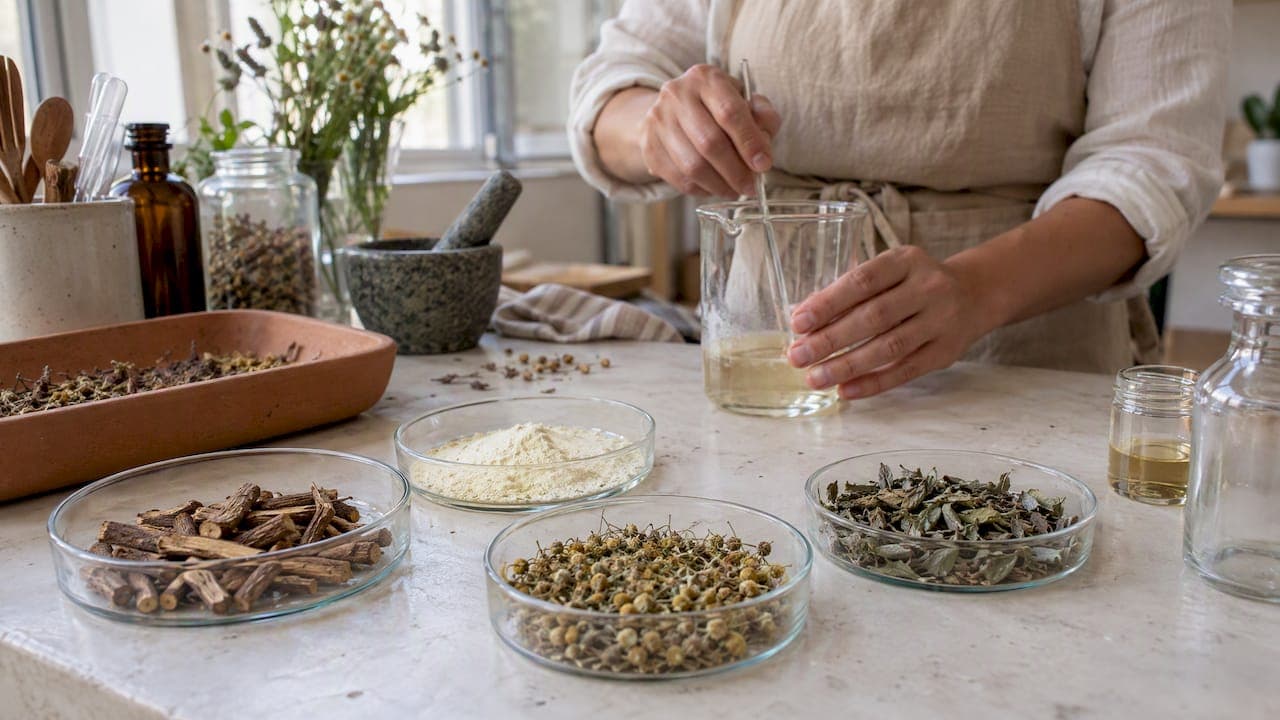
Vitamin C, niacinamide, azelaic acid, alpha-arbutin, licorice extract, and gentle exfoliating acids make up the core of effective brightening skincare. These ingredient classes work through different mechanisms, so pairing one from each group can address both existing dark spots and future pigment. None of it holds without daily sunscreen: skip the SPF and new pigment can form as fast as the old pigment fades.
TL;DR:
- Brightening results require several weeks of consistent use, with exfoliating acids showing surface improvement more quickly than agents that inhibit melanin production.
- Combining different ingredient classes, such as antioxidants, tyrosinase inhibitors, and surface exfoliants, enhances effectiveness more than relying on a single active.
- Daily sunscreen with broad-spectrum protection, especially formulas containing iron oxide, is essential to prevent new pigment formation and maintain progress.
- Introduce new active ingredients one at a time, patch-test beforehand, and start with lower frequencies to avoid irritation, especially for sensitive skin.
- For stubborn or resistant pigment, dermatologist consultation and possibly in-office treatments may be necessary alongside topical routines.
Table of Contents
- Quick takeaways on brightening ingredients
- What actually causes uneven skin tone
- How brightening ingredients work on skin
- The top brightening ingredients worth knowing
- How to build a brightening routine step by step
- Why sunscreen decides whether brightening works
- The formulation philosophy behind brightening that lasts
- A realistic word on patience and pigment
- Start a gentle brightening routine with Yuka+Face
- Sources
- FAQ
Quick takeaways on brightening ingredients
Brightening results take time, and not every ingredient works the same way. A quick scan of what each category does helps you pick faster.
- Vitamin C: antioxidant support, best for dullness and early sun damage, used in the morning.
- Niacinamide: blocks melanin transfer, fits almost any skin type, day or night.
- Azelaic acid: calms inflammation while fading spots, suited to acne-prone and sensitive skin.
- Alpha-arbutin and licorice extract: gentler tyrosinase inhibitors, good for reactive or easily irritated skin.
- AHAs and BHAs: exfoliate pigmented surface cells, best introduced slowly.
Brightening results take time and typically require several weeks of consistent use before tone visibly evens out. Exfoliating acids can show surface change sooner, since they work by removing pigmented cells rather than altering melanin production. Patch-test anything new, start with a few uses per week, and wear sunscreen daily no matter which active you choose.
What actually causes uneven skin tone
Melanin production ramps up in response to UV exposure, inflammation, and hormonal shifts, which is why sunspots, melasma, and post-inflammatory marks all share a root cause even though they look different. A breakout, a bug bite, or a sunburn can each leave behind a flat brown or pink mark as skin heals, known as post-inflammatory hyperpigmentation.
Sunspots form more directly from cumulative UV exposure over years. Visible light, not just UV rays, also plays a role in triggering pigment in some skin tones, which is part of why the American Academy of Dermatology points to iron-oxide containing sunscreens as added protection for melasma-prone skin.
How brightening ingredients work on skin
Each ingredient class interrupts the pigment process at a different stage, which is why combining categories often outperforms relying on one alone.
Antioxidants like vitamin C and ferulic acid neutralize the free radicals that trigger excess melanin and support collagen production, which is why they tend to work best as morning actives layered under sunscreen. Tyrosinase inhibitors, including azelaic acid, arbutin, kojic acid, and licorice extract, slow the enzyme responsible for producing new pigment before it forms. Niacinamide works further down the line, blocking melanin from transferring into the surface skin cells where it becomes visible. Exfoliating acids such as glycolic, lactic, and salicylic acid speed the shedding of pigmented cells already on the surface and can improve how well other actives penetrate. Newer adjuncts like tranexamic acid and cysteamine are sometimes used alongside these for stubborn pigment, usually under clinical guidance, since the supporting evidence is still smaller than for classic agents.

The top brightening ingredients worth knowing
These five show up in nearly every effective brightening routine, each with its own strengths and quirks.
Vitamin C (L-ascorbic acid) is the most studied antioxidant for brightening. It neutralizes oxidative stress, supports collagen, and gradually fades discoloration with regular use. Vitamin C works well applied in the morning before sunscreen, though some people notice tingling or redness at first, usually eased by starting with a lower concentration a few times a week.
Niacinamide blocks the transfer of melanin to surface skin cells while also strengthening the skin barrier and regulating oil production, according to DermNet NZ. It is one of the better tolerated actives on this list and pairs easily with vitamin C or retinol without the irritation some combinations cause. A deeper breakdown of its effects is covered in this niacinamide guide.
Azelaic acid inhibits tyrosinase while calming inflammation, which makes it especially useful for post-inflammatory marks left by acne.
AHAs and BHAs, namely glycolic, lactic, and salicylic acid, exfoliate pigmented surface cells and help other actives absorb better. Start with lower concentrations once or twice a week, since over-exfoliating thins the barrier and can worsen the exact discoloration you're trying to treat.
Alpha-arbutin, kojic acid, and licorice extract act as gentler tyrosinase inhibitors, often better suited to sensitive or reactive skin than stronger agents like hydroquinone. Research on heat-treated licorice extract found increased antioxidant activity and tyrosinase inhibition in lab models, supporting its long-standing use in brightening formulas, though how well it performs depends heavily on formulation and concentration.
Pro Tip: Introduce one active at a time and give it two full weeks before judging whether it's working or irritating your skin.
How to build a brightening routine step by step
Layering brightening actives correctly prevents irritation and helps each ingredient do its job.
- Cleanse, then apply vitamin C in the morning, followed by moisturizer and sunscreen.
- Reserve exfoliating acids and azelaic acid for evenings, alternating nights if using both.
- Add niacinamide into either routine since it layers well with almost everything.
- Introduce one new active at a time, starting 2 to 3 times a week before increasing frequency.
- Patch-test on the inner arm for 48 hours before applying anything new to your face.
- If pigment resists months of consistent topical care, especially with melasma, talk to a dermatologist about prescription options or in-office treatments; clinical pigmentation treatments are sometimes layered alongside a topical routine for faster results.
A simple step-by-step plan for fading dark spots gently is laid out in this brightening routine guide.
Why sunscreen decides whether brightening works
None of these ingredients hold up without daily protection. Sun exposure, including visible light, restarts pigment production, undoing weeks of progress. The AAD recommends broad-spectrum sunscreen daily, with iron-oxide containing or tinted formulas offering extra defense against visible light for melasma-prone skin.

Watch for burning, excessive redness, or peeling, which signal it's time to scale back frequency or simplify the routine entirely. Anyone pregnant or breastfeeding should check with a provider before using azelaic acid, retinoids, or prescription-strength lightening agents, since not all are considered appropriate during that time.
The formulation philosophy behind brightening that lasts
The formulation uses gentler botanical actives like licorice extract alongside agents such as vitamin C, aiming for results without compromising the skin barrier. Licorice's antioxidant and tyrosinase-inhibiting properties make it a natural fit for sensitive skin that cannot tolerate harsher brighteners. The brand's vegan, cruiset-free approach and short ingredient lists reflect a preference for formulas that support the skin's own repair process rather than overwhelming it.
A realistic word on patience and pigment
Brightening is slow work. Give any routine 6 to 12 weeks before judging it, keep sunscreen non-negotiable, and see a dermatologist if pigment doesn't budge. Patch-test everything new.
— Kelly
Start a gentle brightening routine with Yuka+Face
A simple starting combination covers most of what this guide recommends: a vitamin C serum for mornings, a barrier-supporting moisturizer, and daily SPF. Yuka+Face's Vitamin C Glow Serum pairs with products from the shop to build out the rest.

- Patch-test any new serum for 48 hours before applying to your full face.
- Pair vitamin C with a daily SPF routine, outlined in this morning skincare guide.
- Browse moisturizers and masks suited to barrier support on the dry skin collection.
Try the starter combination and build from there as your skin adjusts.
This article is general information, not a substitute for advice from a qualified doctor. Consult a qualified healthcare professional about your own circumstances before acting on anything here.
Sources
- Topical Treatments for Melasma and Their Mechanism of Action - PubMed
- Melasma: Diagnosis and treatment - American Academy of Dermatology
- Antioxidant and Anti-Melanogenic Activities of Heat-Treated Licorice (Wongam) Extract - PMC
- Nicotinamide (niacinamide) - DermNet NZ
FAQ
What is the best ingredient for skin brightening?
There is no single best ingredient since different actives target different causes of discoloration. Vitamin C and niacinamide are among the most broadly tolerated and well-supported options, while azelaic acid and licorice extract suit more sensitive or acne-prone skin.
What do Koreans use for skin brightening?
Korean skincare routines commonly feature niacinamide, licorice extract, and vitamin C, often layered in multi-step routines alongside gentle exfoliation. These ingredients are chosen for their tolerability alongside their brightening effect.
What do Japanese use to lighten skin?
Japanese skincare has long favored kojic acid and arbutin, both tyrosinase inhibitors that slow new pigment formation. These are typically used in serums or lotions alongside consistent sun protection.
What ingredient can lighten skin?
Tyrosinase inhibitors like azelaic acid, alpha-arbutin, kojic acid, and licorice extract reduce the skin's pigment production over time. Results depend on consistent use and daily sunscreen, since new sun exposure can offset progress.