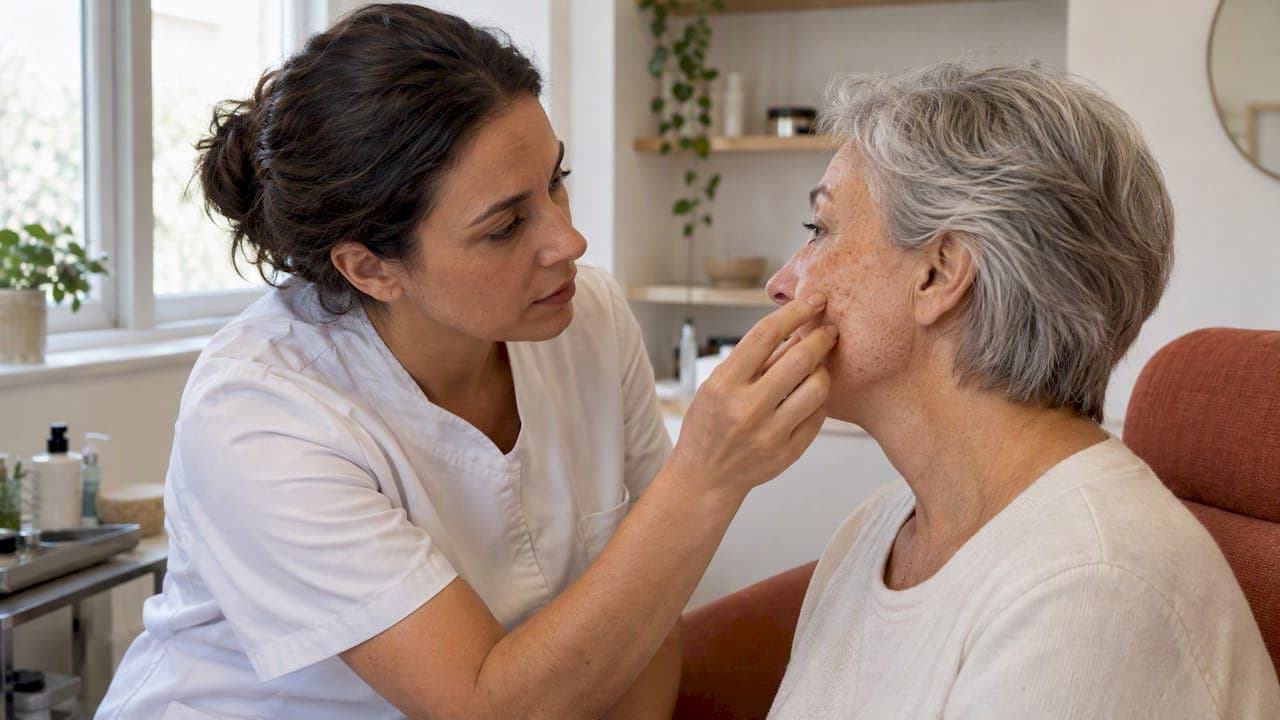
Repair sun-damaged skin by combining daily broad-spectrum SPF 30+ with reapplication, barrier-first hydration and antioxidants, a nightly retinoid introduced slowly, and a dermatologist visit about peels or lasers for deeper pigment and texture. Topical changes show in weeks. Clinical changes build over weeks to months.
TL;DR:
- Reapply broad spectrum SPF 30 or higher every two hours outdoors, choose water resistant formulas for swimming or sweating, and keep antioxidants beneath morning sunscreen.
- Introduce a nighttime retinoid every other night, sandwich it between moisturizer layers, and add only one active at a time if your skin is sensitive.
- Ask a dermatologist about peels or lasers for persistent pigment or texture; darker skin tones require careful treatment planning to reduce pigment complications.
- Superficial peels have less downtime than medium peels, while ablative CO2 lasers can produce stronger resurfacing results but require longer recovery.
- Vitamin C and E can neutralize reactive oxygen species caused by UV exposure, but cannot undo DNA changes or replace sunscreen.
Table of Contents
- What can you do at home today to start repairing sun damage?
- Which active ingredients actually help sun-damaged skin?
- Which professional treatments work for deeper sun damage?
- How do you combine home care with procedures?
- How long does visible improvement take?
- What is our take on natural-first repair?
- Which Yuka+Face products fit a repair routine?
- FAQ
- Sources
What can you do at home today to start repairing sun damage?
Start with protection. Consistent daily sun protection is required for any repair routine to work, because new UV exposure cancels out corrective progress. The FDA says broad-spectrum sunscreen helps protect against early skin aging and recommends reapplying every two hours.
Your daily order:
- Morning: gentle cleanser, antioxidant serum, moisturizer, broad-spectrum SPF 30+.
- Outdoors: reapply every two hours. Choose water-resistant formulas for swimming or sweating.
- Night: gentle cleanser, then a retinoid on a low schedule, buffered by moisturizer.
- Barrier care: humectants such as hyaluronic acid and glycerin, plus ceramide moisturizers, calm flaking.
- Recent sunburn: soothe with aloe or panthenol. Blistering or severe burns need medical care.
Our morning routine guide walks through the daytime steps.
Pro Tip: Start your retinoid every other night and apply moisturizer before and after it. This "sandwich" method limits irritation, as the AAD explains.

Which active ingredients actually help sun-damaged skin?
Each active does a different job. Use what fits your skin.
- Retinoids: Long-term tretinoin use, past six months, can reduce freckling, sun spots and fine wrinkling. They cause irritation for many people, so apply at night and keep moisturizer close.
- Vitamin C and E: These neutralize reactive oxygen species from UV, but they cannot undo DNA changes. Use them in the morning under sunscreen. Our guide to key vitamins for skincare covers the details.
- AHAs: They exfoliate, smooth texture and fade surface pigment. Skin becomes more sun-sensitive, so SPF matters more.
- Skin-lightening agents: Hydroquinone, tranexamic acid, niacinamide and kojic acid target dark spots. Expect gradual fading, not overnight change.
- DNA-repair enzymes: Photolyase and T4 endonuclease show benefits as adjuncts to sunscreen. They do not replace it.
Reversal steps in one place: Ohio State Health & Discovery lists SPF 30+, retinoic acid, AHAs or vitamin C, lightening creams and laser therapy as the core steps.
For sensitive skin, add one active at a time and wait until your skin adjusts before adding the next. Our evidence-based antioxidant picks can help you choose.
Which professional treatments work for deeper sun damage?
When pigment, texture or wrinkles resist home care, clinic treatments step in.
- Non-ablative lasers and IPL: Target pigment and vascular concerns with a safer profile and faster recovery.
- Ablative CO2 laser: Resurfacing results are stronger, with a longer recovery.
- Chemical peels: Superficial peels use glycolic or salicylic acid. Medium peels use TCA and go deeper, with more downtime and pigment risk.
- Microdermabrasion and microneedling: Shorter downtime, with texture and collagen benefits.
- Botox and fillers: They soften deep lines, but photoaging biology stays unchanged.
Book a consult with a board-certified dermatologist. Darker skin tones need careful planning to avoid pigment complications. Dermatologists favor pairing procedures with steady home care to avoid over-treatment.
How do you combine home care with procedures?
Preparation and aftercare decide how well a procedure heals.
- Prime the skin. Providers often ask for several weeks of retinoid or AHA use first. Skipping this raises the risk of uneven pigment and poor healing.
- Follow your provider's pause rules. Stop or adjust actives exactly as directed.
- Avoid the sun strictly. Wear broad-spectrum SPF and a hat while skin recovers.
- Moisturize gently. Use barrier-supporting products until healing finishes.
- Maintain. Daily SPF, antioxidants and a gradual retinoid routine protect your results. Our evening ritual tips help with night routines.
Pro Tip: Bring your full product list to your consult, so your provider can tell you what to pause.
How long does visible improvement take?
Progress comes in stages.
- Days to weeks: Hydration improves, and surface redness and flaking calm down.
- Over time: Fine lines and pigmentation may begin to look better with consistent retinoid and vitamin C use.
- Weeks to months after procedures: Texture and pigment keep changing as skin heals. CO2 shows bigger change with a longer recovery.
Cellular DNA damage may not fully reverse. You can still improve how skin looks and stop new damage from piling on.
What is our take on natural-first repair?
We favor barrier-first, antioxidant-rich, natural formulas for daily maintenance. Gentle consistency beats aggressive scrubbing. Deeper pigment, texture or precancerous concerns deserve a dermatologist, and we encourage you to book that visit for prescription treatments or procedures. Natural care and medical care work best together.
— Kelly
Which Yuka+Face products fit a repair routine?
We built our range to support skincare routines. Browse the full shop or our moisturizers and masks.

- Gentle cleansers like our B3 Gentle Cleanser
- Antioxidant serums for your morning routine
- Hydrating moisturizers like our Hydrating Power Moisturizer for barrier repair
- Morning routines built on these steps
Pick your first product today.
This article is general information, not a substitute for advice from a qualified doctor. Consult a qualified healthcare professional about your own circumstances before acting on anything here.
FAQ
How long does skin take to heal from sun damage?
Surface redness and flaking usually settle in days to weeks. Visible changes in pigment and fine lines take longer, and depend on consistent retinoid and antioxidant use. Procedures continue to evolve for months.
Is it too late to fix sun-damaged skin?
No. You can improve how sun-damaged skin looks at any age, though deep DNA changes may not fully reverse. The first step is daily sun protection, since broad-spectrum SPF reduces the risk of early skin aging.
What is the best treatment for sun-damaged skin?
It depends on the damage. Mild damage responds to sunscreen, antioxidants and retinoids. Deeper pigment and wrinkles may need peels or lasers chosen with a dermatologist.
What do dermatologists recommend for sun-damaged skin?
They recommend SPF 30+ broad-spectrum sunscreen daily, reapplied every two hours outdoors. They also pair professional procedures with a steady home routine.
Can antioxidants from food or supplements help?
They may support skin from the inside. A physician-formulated resource on antioxidants explains the oral approach. Treat it as an extra, not a replacement for sunscreen.
Sources
- Natural Antioxidants: Multiple Mechanisms to Protect Skin From Solar Radiation
- Aad
- Five ways to reverse sun damage | Ohio State Health & Discovery
- Laser resurfacing