
TL;DR:
- Protecting the skin barrier is essential to prevent irritation and maintain skin health. Simplified routines with gentle products, proper hydration, and environmental controls reduce sensitivity. Promptly identifying and removing triggers limits flare-ups and supports faster recovery.
Skin irritation is defined as any inflammatory response that causes redness, itching, burning, or flaking when the skin barrier is compromised or exposed to a trigger. Knowing how to prevent skin irritation starts with one principle: protect the skin barrier before symptoms appear. Clinical guidance from 2026 confirms that simplifying your routine and using gentle, targeted products outperforms aggressive treatment every time. The skin barrier is your first line of defense, and when it stays intact, most irritation never starts. This guide covers the causes, daily habits, and troubleshooting steps that keep sensitive skin calm and healthy.
What causes skin irritation and how do you recognize your triggers?
Skin irritation falls into two main categories: irritant contact dermatitis and allergic contact dermatitis. Irritant contact dermatitis happens when a substance directly damages the skin surface. Allergic contact dermatitis involves an immune response to a specific allergen. Both produce similar symptoms, including redness, itching, swelling, and dryness, but the causes and solutions differ.
The most common triggers include:
- Harsh cleansers and soaps that strip natural oils from the skin surface
- Fragranced products, including perfumes, scented lotions, and fabric softeners
- Over-exfoliation with physical scrubs or strong chemical acids
- Hot water during showers or face washing, which removes protective lipids
- Synthetic fabrics like polyester and nylon that trap heat and cause friction
- Environmental factors such as cold air, low humidity, wind, and pollution
- Allergens in laundry detergents, including optical brighteners and preservatives
- Sweat and prolonged moisture against the skin after exercise or outdoor activity
Removing the causative substance is the primary step in treating contact dermatitis, and redness and itching often resolve within days or weeks once exposure stops. That means identifying your personal trigger is not optional. It is the treatment.
Keeping a diary to track products, foods, and environmental exposures helps identify triggers and prevent skin rashes before they repeat. Write down what you applied, what you ate, where you were, and how your skin responded. Patterns appear faster than most people expect.
Pro Tip: Use the subtraction plan. Stop all new or suspect products at once, then reintroduce one every 5–7 days. This method isolates the exact irritant without guesswork.
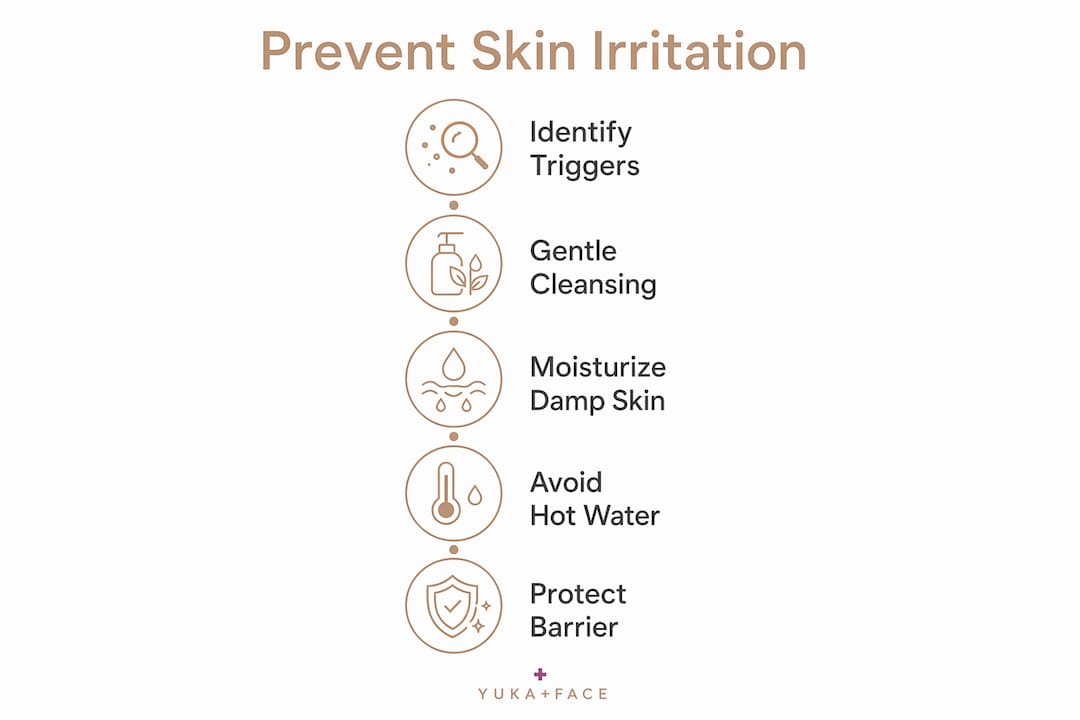
How to build a gentle daily routine to prevent skin irritation
A consistent, simplified routine is the most reliable way to reduce skin sensitivity over time. The goal is to repair and maintain the skin barrier, not to treat symptoms after they appear. Consistency and simplification of skincare routines are more effective than intensifying treatments for irritated skin.
Follow these steps to build a routine that works:
- Cleanse once or twice daily with a mild, fragrance-free cleanser. Avoid foaming formulas with sulfates, which strip the skin's natural lipid layer.
- Use lukewarm water only. Hot water is the most overlooked cause of irritation. It strips protective oils even when your cleanser is gentle. Lukewarm water prevents this stripping and reduces irritation risk.
- Pat skin dry gently. Never rub with a towel. Friction on sensitive skin triggers inflammation.
- Apply a ceramide-rich moisturizer immediately after washing. Ceramides are lipids that naturally occur in the skin barrier. Replacing them with a topical moisturizer accelerates repair.
- Choose moisturizers that combine humectants and occlusives. A 2024 study cited in 2026 clinical guidance confirms that multi-pathway moisturizers show superior outcomes for skin barrier repair. Humectants like glycerin draw water into the skin. Occlusives like shea butter seal it in.
- Apply mineral sunscreen daily. UV exposure degrades the skin barrier and worsens sensitivity. Mineral filters like zinc oxide sit on top of the skin and are less likely to cause reactions than chemical UV filters.
- Pause active ingredients during flare-ups. Retinoids, strong AHAs, and BHAs all increase cell turnover. That process is useful for healthy skin but damaging to an already irritated barrier.
- Introduce new actives one at a time. Wait at least two weeks between adding new products. This approach makes it easy to spot what caused a reaction. A personalized routine by skin type helps you choose the right actives from the start.
Pro Tip: Apply moisturizer while skin is still damp to trap moisture and prevent transepidermal water loss. This single timing adjustment significantly improves hydration results.
For a complete walkthrough of building your routine from scratch, the Yuka+Face skincare routine guide covers each step with product category recommendations.

Lifestyle and environmental strategies that reduce irritation risk
Your environment and daily habits affect your skin as much as your products do. Controlling external factors is a practical, low-cost way to prevent skin rashes and reduce sensitivity without changing your entire routine.
- Wear breathable fabrics. Protective clothing and cotton fabrics reduce friction and sweat-related irritation. Avoid wool directly against sensitive skin, and choose loose-fitting clothing during warm weather.
- Switch to fragrance-free laundry detergent. Residual detergent on clothing and bedding is a common hidden irritant. Optical brighteners and preservatives in standard detergents frequently cause contact reactions.
- Keep indoor humidity moderate. Dry indoor air, especially in winter, pulls moisture from the skin surface. A humidifier set between 40% and 60% relative humidity helps maintain skin hydration without creating conditions for mold.
- Limit hot showers to under 10 minutes. Longer exposure to hot water compounds the stripping effect on skin lipids, even for people without diagnosed sensitivity.
- Rinse off sweat promptly after exercise. Sweat left on skin raises pH and creates a warm, moist environment that irritates the barrier and can trigger rashes in skin folds.
- Apply sunscreen before outdoor activity. UV radiation weakens the skin barrier and amplifies sensitivity to other irritants. Mineral sunscreens are the preferred choice for reactive skin.
- Avoid touching your face with unwashed hands. Transferring oils, bacteria, and environmental residue to the face is a simple but significant source of irritation.
These adjustments work best when applied together. Changing one habit while ignoring others produces limited results. Skin responds to the total load of stressors, not individual ones in isolation.
What to do when skin irritation occurs despite prevention
Even with a careful routine, flare-ups happen. The right response limits damage and speeds recovery. The wrong response, which usually means adding more products or scrubbing harder, makes things significantly worse.
When irritation appears, take these steps:
- Stop all new products immediately. Do not try to treat the reaction with another new product. Return to your most basic, proven routine only.
- Use the subtraction plan. Stopping all suspect products and reintroducing one every 5–7 days is the most reliable method for isolating the cause.
- Apply a cold compress or cool wet dressing to calm the skin. Cold reduces inflammation and relieves itching without introducing new ingredients.
- Avoid scratching. Scratching breaks the skin surface, creates entry points for bacteria, and extends the duration of a flare-up.
- Use OTC remedies for mild cases. Hydrocortisone creams and oral antihistamines relieve itching in mild dermatitis cases. Apply hydrocortisone cream for no more than one week without medical guidance.
- Consult a dermatologist if symptoms persist or worsen. Persistent redness, blistering, weeping skin, or reactions that spread beyond the original area require professional assessment.
Treatment must address both calming the skin barrier and avoiding the initial trigger. Treating symptoms without removing the cause leads to repeated flare-ups and a cycle of product switching that never resolves the underlying problem.
Understanding the signs of skin barrier damage early makes it easier to catch a flare-up before it escalates. The sooner you act, the faster recovery happens.
Key Takeaways
Preventing skin irritation requires protecting the skin barrier through gentle routines, trigger identification, and consistent lifestyle habits rather than reactive treatment.
| Point | Details |
|---|---|
| Identify your triggers first | Keep a diary of products, foods, and environments to find the cause before treating symptoms. |
| Simplify your routine | Use a mild cleanser, ceramide-rich moisturizer, and mineral sunscreen as your daily foundation. |
| Apply moisturizer on damp skin | Timing moisturizer application right after washing seals in hydration and supports barrier repair. |
| Use the subtraction plan | Stop all suspect products and reintroduce one every 5–7 days to isolate the irritant. |
| Adjust your environment | Breathable fabrics, fragrance-free detergent, and moderate indoor humidity reduce daily irritation load. |
What I've learned about skin irritation after years of watching people get it wrong
The most common mistake I see is the instinct to add something when skin reacts. A new serum, a stronger cream, a "calming" mask. The skin flares, and the response is to layer on more products. That instinct is almost always wrong.
Irritated skin needs less, not more. The skin barrier is already compromised. Every new ingredient is another variable the barrier has to process. The people who recover fastest are the ones who strip their routine down to three products and wait. Patience is the actual treatment.
The second mistake is chasing the "right" product instead of finding the wrong one. Trigger identification matters more than product selection. You can have the gentlest cleanser on the market, but if you are washing your face with hot water and sleeping on a pillowcase washed in fragranced detergent, your skin will stay reactive. The skin barrier damage guide from Yuka+Face covers this in detail, and it is worth reading before you spend money on new products.
The third thing I want to say is this: consistency beats intensity every time. A simple routine done daily for three months outperforms an aggressive routine done sporadically. Skin does not respond to effort. It responds to stability.
— Kelly
Gentle skincare from Yuka+Face

Yuka+Face formulates every product for sensitive, reactive skin. The full range is 100% natural, vegan, and fragrance-free by design. No synthetic irritants. No unnecessary additives. For those building or simplifying their routine, the morning skincare routine guide from Yuka+Face walks through a gentle, barrier-focused approach step by step. Readers looking for clean, plant-based ingredient options can also browse the vegan skincare guide for product selections suited to sensitive skin. Natural ingredients, clear formulations, and practical guidance in one place.
FAQ
What is the fastest way to soothe irritated skin?
Apply a cold compress to reduce inflammation, then use a fragrance-free, ceramide-rich moisturizer on damp skin. Avoid adding new products until the irritation resolves.
How do I know if my skincare product is causing irritation?
Use the subtraction plan: stop all new or suspect products at once, then reintroduce one every 5–7 days. If a reaction returns after reintroducing a specific product, that product is the cause.
Can hot water really cause skin irritation?
Yes. Hot water strips the skin's natural oils and disrupts the barrier, even when your cleanser is gentle. Lukewarm water is the correct temperature for both face and body washing.
When should I see a dermatologist for skin irritation?
Consult a dermatologist if your irritation persists beyond two weeks, spreads, blisters, or does not respond to basic OTC remedies like hydrocortisone cream or oral antihistamines.
Do natural skincare products prevent skin irritation better than conventional ones?
Natural, fragrance-free formulations reduce exposure to common synthetic irritants. Products built around ceramides, glycerin, and plant-based occlusives support barrier repair without adding unnecessary chemical load.