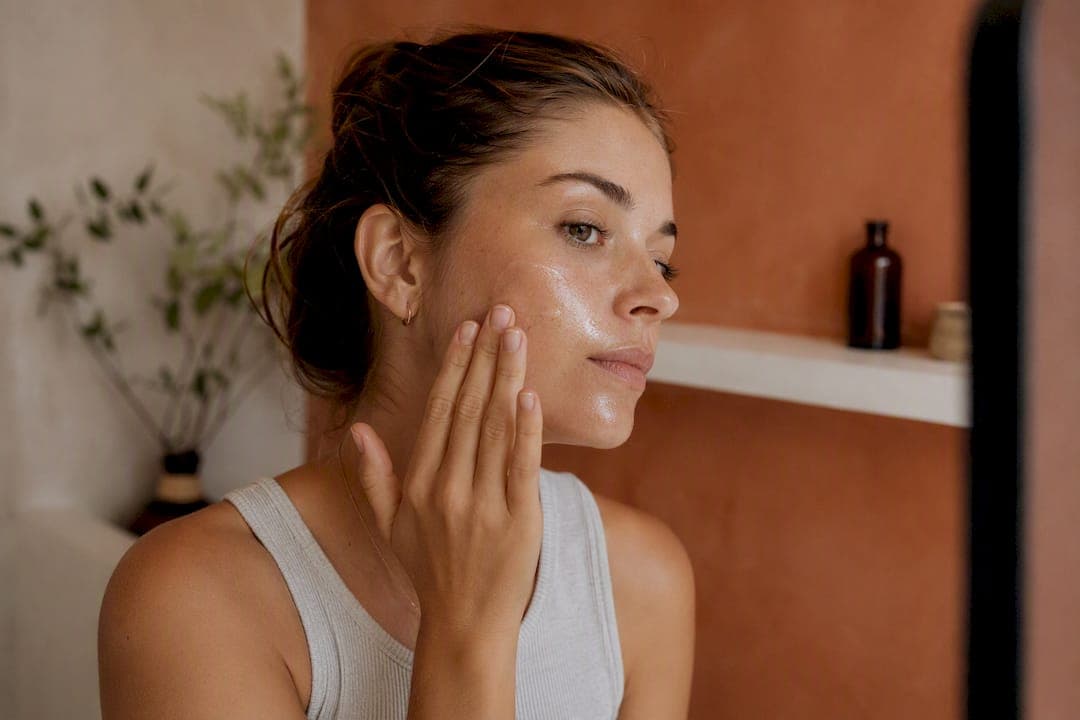
Restore hydration with humectants, seal it in with emollients and occlusives, then shield skin daily with SPF. That is the entire winter skincare routine in one sentence. Make the switch the moment your skin feels tight after cleansing, starts flaking, or your heat kicks on for the season. Mornings lean toward protection; nights lean toward repair.
TL;DR:
- Using a humectant serum on damp skin is crucial in winter to maximize water absorption before sealing it in with emollients and occlusives.
- Replace lighter moisturizers with richer, ceramide-rich creams at night, especially for dry or sensitive skin, to reinforce the lipid barrier.
- Reducing exfoliation frequency and avoiding alcohol-heavy or fragranced products helps prevent moisture loss and skin irritation in cold weather.
- Applying petrolatum or other occlusives as a final step can significantly reduce overnight water loss, but should be used separately from active acids or retinoids.
- Carrying hand cream, lip balm, and protecting skin outdoors with clothing and SPF prevents damage caused by wind, cold, and sun exposure during winter.
Table of Contents
- Your Winter Skincare Routine: Morning and Evening Steps
- The Ingredient Toolkit: What to Add and What to Dial Back
- Adjusting the Routine by Skin Type
- Small Habits That Change the Whole Season
- Why Restore, Seal, Shield Actually Works
- Kelly's Take: The Routine Doesn't Need to Be Complicated
- Build Your Winter Routine With Yuka+Face
- Sources
- FAQ
Your Winter Skincare Routine: Morning and Evening Steps
Winter skin needs a different rhythm than the rest of the year, not just different products. Cold air outside and forced heat inside both pull moisture out of your skin barrier, so your routine has to work on two fronts at once: adding water back in, then trapping it there before it evaporates. Here's how that plays out step by step.
Morning:
- Cleanse gently. Skip foaming or sulfate-heavy washes. A cream or gel cleanser that doesn't leave skin feeling squeaky is the goal. Squeaky means stripped.
- Apply a humectant serum to damp skin. Hyaluronic acid or glycerin works best when your face is still slightly wet from rinsing. This is sometimes called the hydration window, and skipping it means the humectant has less water to pull from.
- Layer a ceramide-rich moisturizer. This locks the humectant's work in place and reinforces the lipid barrier that cold air keeps breaking down.
- Finish with broad-spectrum SPF. Non-negotiable, even in January.
Evening:
- Double-cleanse if you wore sunscreen or makeup. An oil or balm cleanser first, followed by a gentle gel, gets everything off without over-scrubbing.
- Use retinoids or exfoliating acids less often. A reduced frequency of retinoid use in winter is recommended for most people, cutting back from a nightly habit in warmer months.
- Reapply your ceramide moisturizer, heavier than the morning version if your skin can take it.
- Seal with an occlusive or sleeping balm. This is the step most people skip and the one that makes the biggest overnight difference.
The order matters as much as the products. Go thinnest to thickest: humectant, then emollient, then occlusive. Reversing that sequence blocks the lighter layers from absorbing at all.
The Ingredient Toolkit: What to Add and What to Dial Back
Three ingredient categories do the actual work of a winter routine, and understanding what each one does stops you from wasting money on products that overlap instead of complement each other.
Humectants pull water into the skin. Glycerin and hyaluronic acid are the two most common, and they need either damp skin or a moisturizer on top to work well, since in dry air they can pull moisture from deeper skin layers instead of the environment.
Emollients smooth and soften by filling gaps between skin cells. Squalane, fatty acids, and shea butter fall into this group.
Occlusives form a physical barrier that stops water from escaping. Petrolatum and dimethicone are the standard bearers here, and petrolatum in particular is highly effective at reducing water loss overnight. "Slugging," the practice of applying a thin petrolatum layer as your last step, works due to its occlusive strength.
What to scale back:
- Frequent AHA or BHA exfoliation, since dermatologists recommend reducing exfoliation frequency when skin turns more reactive in winter.
- Strong retinoids used nightly. Two to three times weekly is more sustainable for most people once the air dries out.
- Alcohol-heavy toners or serums, which accelerate moisture loss rather than prevent it.
- Fragranced products, even ones labeled "unscented." That label can still mean masking fragrance is present.
Pro Tip: Check ingredient lists for "fragrance-free," not "unscented." The two terms are not interchangeable, and only the first guarantees no added scent compounds at all.
Adjusting the Routine by Skin Type
A single winter formula does not fit everyone, though the restore, seal, shield structure holds for every skin type. What changes is texture and frequency.
- Dry skin needs richer creams from the start and can usually tolerate a nightly occlusive without issue. Avoid foaming cleansers entirely, since they tend to strip what little natural oil is already there.
- Oily or dehydrated skin still loses water in winter air, even when skin does not feel dry. Lead with a humectant, follow with a lightweight, non-comedogenic emollient, then a thin occlusive layer rather than skipping this step altogether.
- Combination skin benefits from targeted richness. Apply heavier cream on the cheeks and jawline where dryness shows up first, and keep the T-zone in a lighter texture.
- Sensitive skin does best with fragrance-free everything, one new product introduced at a time, and a patch test on the inner arm before anything touches the face. Winter is not the season to experiment with three new actives at once.
Small Habits That Change the Whole Season
Products only do part of the job. What you do around them matters just as much, and these four habits carry a disproportionate amount of weight for very little effort.
- Run a humidifier, aiming for 30 to 50 percent indoor humidity. Place it in the bedroom, where you spend the most consecutive hours, and clean it weekly to prevent mold buildup.
- Shorten and cool down your showers. Hot water strips natural oils faster than lukewarm water does, so keep showers brief and lukewarm, then pat skin dry and moisturize within three minutes.
- Cover exposed skin outdoors with gloves, scarves, and a hat, and keep SPF on any skin that stays uncovered. Wind and cold together do more damage than either alone.
- Carry hand cream and lip balm everywhere. Hands and lips lack the oil glands that protect the rest of your face, so they dry out faster and benefit from a thick occlusive layer at bedtime when cracking is severe.
Why Restore, Seal, Shield Actually Works
Cold air holds less moisture than warm air, and indoor heating strips what little humidity remains, both of which increase transepidermal water loss, the technical term for how fast skin loses water to its surroundings. That is the mechanical reason winter skin feels different, and it is why the order of operations in your routine matters more than the number of products in it.
Clinical research backs the humectant-plus-occlusive pairing directly. Combinations of glycerin and hyaluronic acid measurably improve hydration and reduce transepidermal water loss for up to 24 hours in controlled studies, which is why layering a serum under a cream outperforms either ingredient used alone.
A nightly protocol combining a glycerin-rich serum, a ceramide cream, and an occlusive can produce visible improvement in a damaged barrier within a few days, according to clinical observation of moisture-sandwich protocols.
One caution worth repeating: occlusives increase penetration of whatever is underneath them. Layering petrolatum over a fresh application of strong acids or an active retinoid can intensify irritation rather than soothe it, so keep those steps on separate nights.
Kelly's Take: The Routine Doesn't Need to Be Complicated
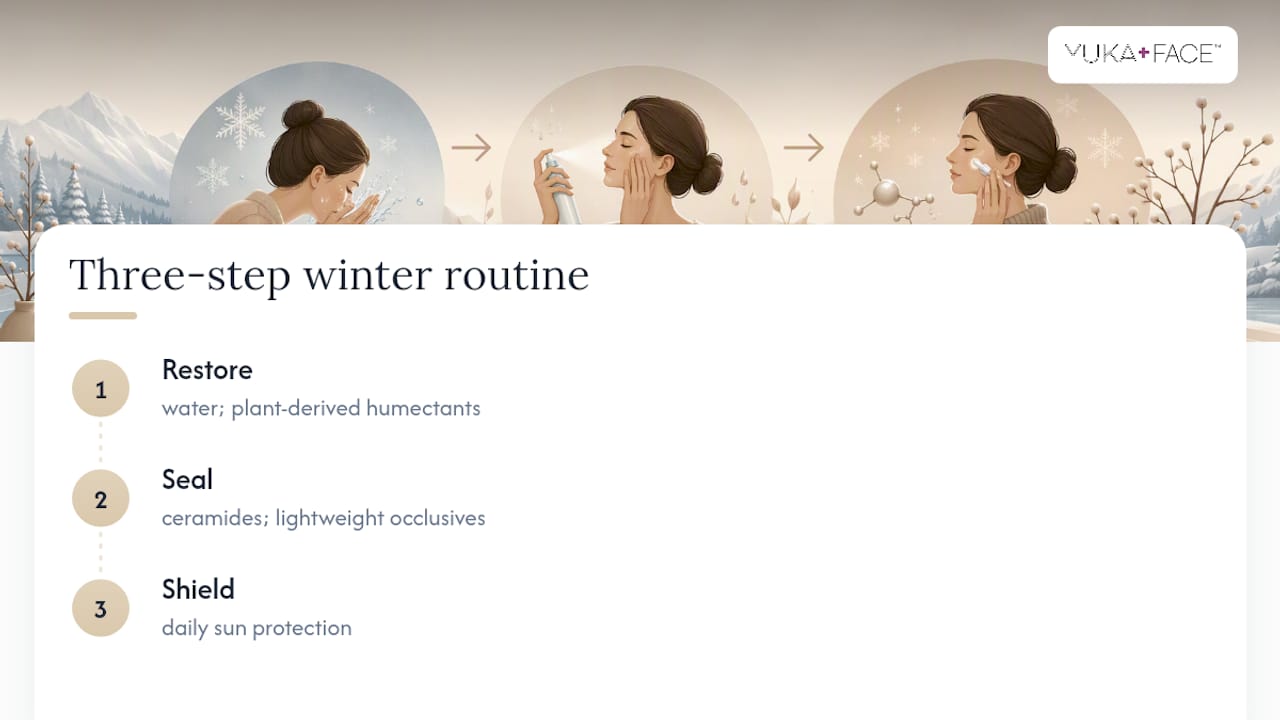
Most winter skincare advice piles on more steps than anyone will actually keep up with by February. Restore, seal, shield works because it fits on an index card, and every ingredient in it has a defined job. Skin doesn't need ten products layered in a specific ritual order to survive January. It needs water, a way to keep that water in, and daily sun protection.
Yuka+Face's approach fits that same logic. The line leans on ceramides, plant-derived humectants, and lightweight occlusives instead of a crowded ingredient list, because a barrier under stress from cold, dry air responds better to fewer, well-chosen layers than to more of everything. If you're building your winter setup from scratch, start with the Morning Skin Care Routine guide and adjust texture and frequency as the season deepens, not the number of steps.
— Kelly
Build Your Winter Routine With Yuka+Face
Every product in the Yuka+Face line is vegan, cruelty-free, and formulated without the synthetic fillers that can aggravate skin already stressed by cold, dry air. For a reader following the restore, seal, shield framework, that matters more in winter than any other season, since fewer irritants means fewer setbacks while your barrier is trying to repair itself.

If your current routine is built for summer heat and you're not sure where to start layering richer textures, the hydration and restoration guide walks through Yuka+Face's ceramide and botanical humectant pairings step by step. Ready to put restore, seal, shield into practice? Start with the Morning Skin Care Routine and build your evening layers from there.
Sources
- Dermatologist-Approved Tips for Healthier Winter Skin | Dartmouth Health
- Dry Skin in Winter: 9 Tips To Keep Hydrated | Cleveland Clinic
- Dermatologists' top tips for relieving dry skin | American Academy of Dermatology (AAD)
- NCBI / PMC article on moisturizing ingredients
FAQ
What is the best skincare routine for winter?
The most effective approach is restore, seal, shield: a humectant serum on damp skin, a ceramide-rich moisturizer to lock it in, and daily broad-spectrum SPF, with a heavier occlusive added at night.
What skincare products work best in cold weather?
Cream or ointment-based moisturizers outperform lotions in winter, and dermatologists recommend choosing fragrance-free formulas and minimizing exfoliation to avoid irritating already-stressed skin.
What are the core steps of a skincare routine?
A basic routine covers cleansing, treating (serums or targeted actives), moisturizing, and sun protection, with winter adding an occlusive sealing step, particularly at night.
Should I change my skincare routine in winter?
Yes. Switch when you notice tightness after washing, flaking, or increased reactivity, or as soon as indoor heating becomes a daily fixture, since these are the practical triggers dermatologists point to rather than a fixed calendar date.
Do I still need sunscreen in winter?
Yes, every day. UVA levels remain significant through winter months, and UV exposure still contributes to photoaging and skin inflammation even when it's cold outside.