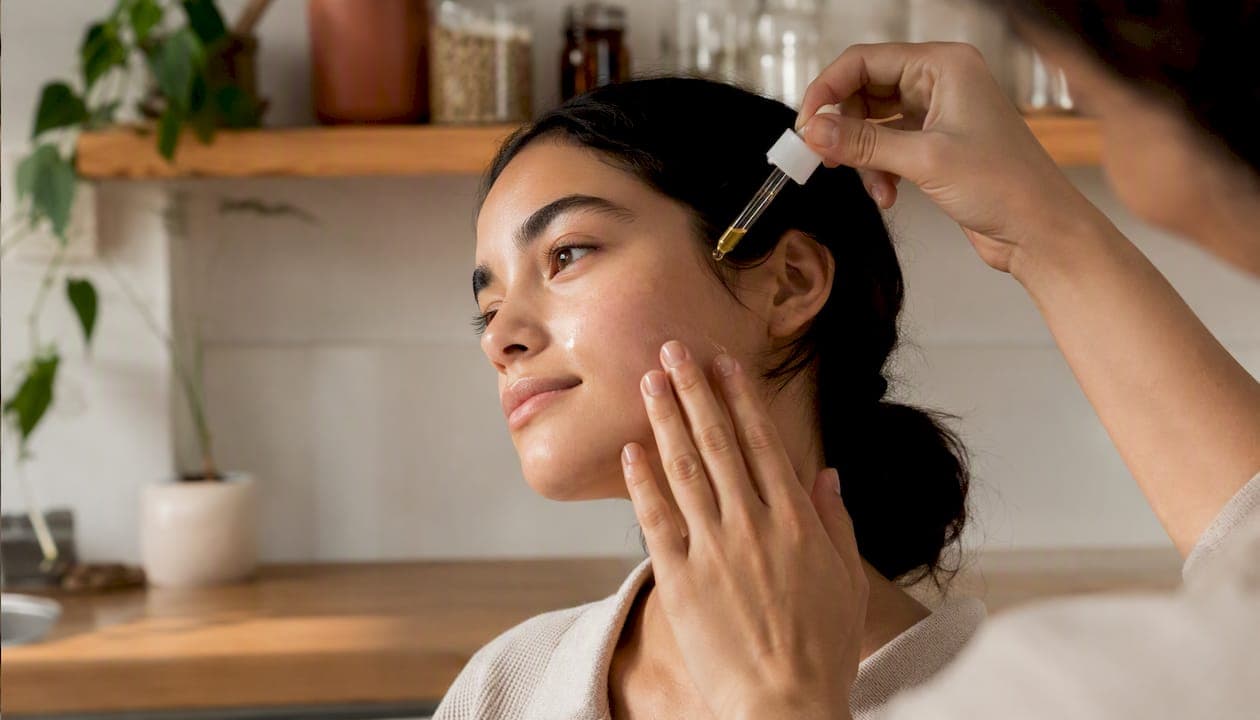
Start today with key steps: apply a tinted sunscreen with iron oxide every morning, use a vitamin C serum before that sunscreen, and add a licorice-based or gentle acid topical at night. That combination addresses the root cause, protects your progress, and works with your skin rather than against it.
Start here:
- Apply tinted SPF 30+ with iron oxide every morning, rain or shine
- Use a vitamin C serum (10–20% L-ascorbic acid or a stable derivative) in the AM, under sunscreen
- Add a licorice extract or lactic/mandelic acid product at night, 2–3 times per week to start
Safety note: Patch test every new product on your inner arm for 24–48 hours before full-face use. If redness or stinging appears, stop and wait.
It's gentler, more stable, and still clinically active.*
Key Takeaways
Fading dark spots naturally requires daily tinted SPF with iron oxide, a vitamin C serum in the morning, and a gentle brightening topical at night, with realistic expectations of 4–12 weeks for early results and up to 6 months for deeper pigmentation.
| Point | Details |
|---|---|
| Tinted SPF is non-negotiable | Iron oxide blocks visible light that standard SPF misses, protecting gains from melasma and PIH. |
| Vitamin C: start at 10% | A Bayesian meta-analysis of 31 RCTs supports topical vitamin C at around 10% for reducing UV-induced pigmentation. |
| Expect 4–12 weeks minimum | Initial brightening typically appears in 4–8 weeks; deeper spots need 3–6 months of consistent use. |
| Choose acids by skin type | Mandelic and lactic acids suit sensitive and darker skin tones; glycolic suits mature or less reactive skin. |
| Yuka+Face for the routine | Vegan, cruelty-free formulas built on botanical actives fit directly into the AM/PM protocol above. |
This article is general information, not a substitute for advice from a qualified doctor. Consult a qualified healthcare professional about your own circumstances before acting on anything here.
Table of Contents
- Why dark spots form — and why that matters for treatment
- How to fade dark spots naturally: 11 remedies worth knowing
- How to apply these remedies safely
- Preventing new dark spots: sunscreen and beyond
- Realistic timeline: what to expect and when
- When to see a dermatologist: red flags and clinical options
- Dermatologist-backed ingredient guidance
- Diet, hydration, and lifestyle factors that affect dark spots
- How your skin actually fades dark spots over time
- A natural approach that actually holds up
- Yuka+Face natural brightening products for your routine
- Sources
- FAQ
Why dark spots form — and why that matters for treatment
Dark spots, formally called hyperpigmentation, share one root cause: excess melanin deposited in the skin. But the trigger differs by type, and that changes which remedies help.
- Sunspots (solar lentigines): Caused by cumulative UV exposure. Flat, tan-to-brown, and common on the face, hands, and shoulders after years of sun exposure.
- Post-inflammatory hyperpigmentation (PIH): Left behind after acne, eczema, a cut, or any skin injury. The skin overproduces melanin during healing. PIH is especially common and persistent in medium-to-deep skin tones.
- Melasma: Hormonally driven, often triggered by pregnancy, oral contraceptives, or sun exposure. Appears as symmetrical patches, usually on the cheeks, forehead, and upper lip. Melasma is the most stubborn type and is uniquely sensitive to visible light, not just UV.
The enzyme tyrosinase drives melanin production in all three cases. Most effective brightening ingredients work by inhibiting tyrosinase, dispersing existing pigment, or accelerating cell turnover to shed pigmented cells faster.
Prevention directly protects treatment results. Without daily broad-spectrum SPF, especially tinted SPF with iron oxide for melasma and PIH, UV and visible light continuously re-trigger melanin production and erase weeks of progress. The American Academy of Dermatology specifically recommends tinted sunscreen containing iron oxide to block visible light and reduce dark spots.
How to fade dark spots naturally: 11 remedies worth knowing
These remedies range from well-studied topicals to kitchen staples with modest evidence. Each entry notes what the science actually supports, not what marketing claims.
1. Vitamin C
Vitamin C inhibits tyrosinase and neutralizes the free radicals that trigger pigment production. A Bayesian meta-analysis of 31 randomized intraindividual trials found topical vitamin C formulations reduced UV daylight-induced pigmentation, with a meaningful effect at around 10% concentration. Stable derivatives like sodium ascorbyl phosphate (SAP) and ascorbyl glucoside are better tolerated and oxidize more slowly.
Apply in the morning before sunscreen. Store in a dark, cool place.
2. Licorice root extract
Licorice root extract contains liquiritin and licochalcone, which inhibit tyrosinase and help disperse existing melanin already deposited in the skin. That dual action makes it one of the more useful botanical brighteners available without a prescription. Look for it in serums or spot treatments labeled with "licorice root extract" or "Glycyrrhiza glabra."
Use morning or evening. Generally well-tolerated across skin types.
3. Niacinamide
Niacinamide (vitamin B3) reduces the transfer of melanin from melanocytes to skin cells. It also strengthens the skin barrier, which matters for PIH-prone skin.
Pairs well with vitamin C and licorice. Use AM or PM.
4. Lactic and mandelic acids (AHAs)
Alpha hydroxy acids accelerate cell turnover, shedding pigmented surface cells faster. Lactic acid (from yogurt or formulated products) and mandelic acid are gentler than glycolic acid and better suited to sensitive or darker skin tones. Dermatologists recommend choosing mandelic or lactic acid for sensitive skin to avoid triggering inflammation and more pigmentation.
Use at night, 2–3 times per week. Always follow with SPF the next morning.
5. Aloe vera
Aloesin, a compound in aloe vera gel, has shown tyrosinase-inhibiting activity in lab studies. Fresh gel from the leaf or a pure aloe product can be applied directly to spots. Evidence is preliminary but the safety profile is excellent.
Apply to clean skin, morning or evening. Rinse off or leave on depending on formulation.
6. Green tea extract
Epigallocatechin gallate (EGCG) in green tea has antioxidant and mild anti-inflammatory properties. Topical green tea extract may reduce UV-induced pigmentation, though evidence remains limited to small studies.
Use in serum or toner form. Suitable for all skin types.
7. Turmeric
Curcumin, turmeric's active compound, inhibits tyrosinase in lab settings. Mix a small amount of turmeric powder with a carrier like honey or plain yogurt to reduce staining. Apply as a spot mask for 10–15 minutes, then rinse thoroughly. Turmeric can stain fabric and temporarily yellow fair skin if left on too long.
Use 1–2 times per week as a rinse-off mask only.
8. Honey
Raw honey contains enzymes, hydrogen peroxide, and antioxidants that may support gentle brightening and barrier repair. Manuka honey has the strongest antimicrobial evidence. Apply as a mask for 15–20 minutes.
Best for dry or combination skin. Rinse thoroughly.
9. Apple cider vinegar (ACV)
ACV contains acetic acid, which may offer mild exfoliation. It is one of the more irritating kitchen remedies. Always dilute: one part ACV to three parts water at minimum. Consumer guidance notes that home remedies like ACV may help mildly but lack the clinical potency of formulated topicals. Avoid on broken skin or near eyes.
Patch test required. Use diluted, rinse off after 5 minutes. Not for sensitive skin.
10. Potato and yogurt
Raw potato contains catecholase, an enzyme with mild brightening activity. Plain yogurt delivers lactic acid. Both are low-risk, low-evidence options suited to occasional use as rinse-off masks. Expect subtle results at best.
Apply for 10–15 minutes, rinse. Use 1–2 times per week.
11. Topical arbutin
Alpha-arbutin is a stable, plant-derived compound that slowly releases hydroquinone at the skin surface, inhibiting tyrosinase without the irritation risk of prescription-strength hydroquinone.
Use AM or PM. Pairs well with vitamin C and niacinamide.
Quick-reference comparison:
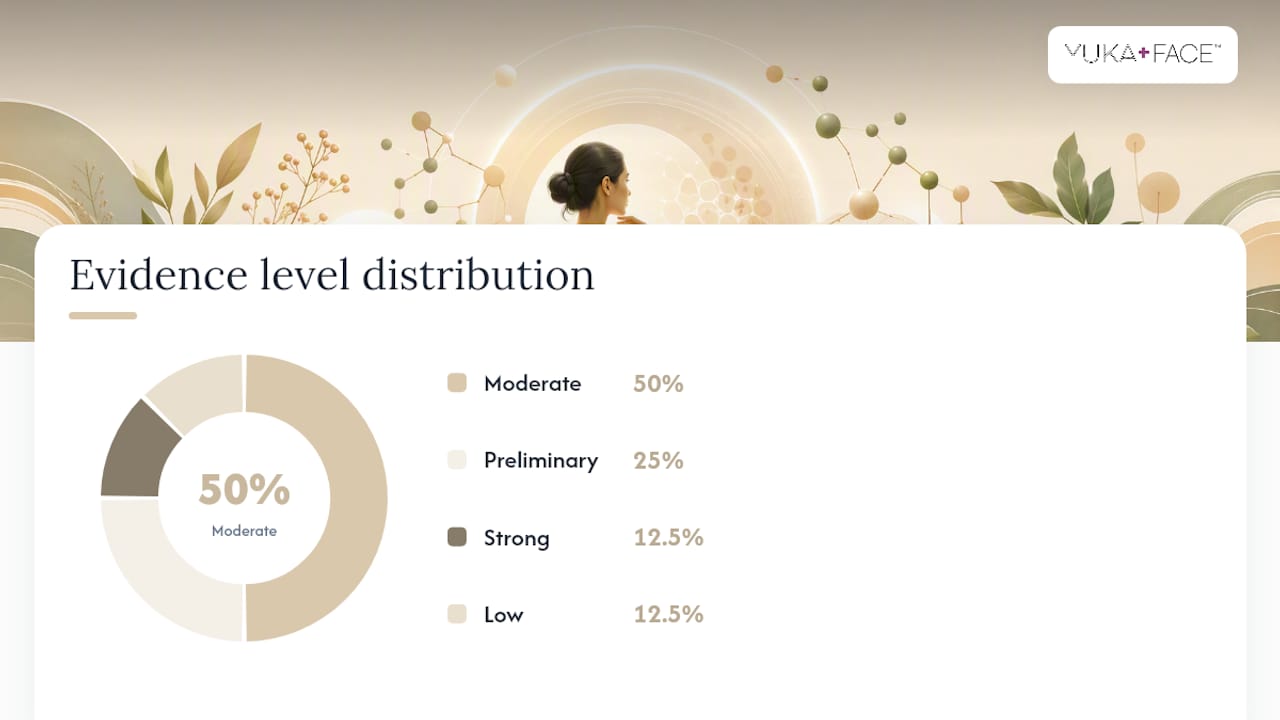
| Remedy | Mechanism | Evidence level | Best for | Main precaution |
|---|---|---|---|---|
| Vitamin C (L-AA/SAP) | Tyrosinase inhibition + antioxidant | Strong (31 RCTs) | All types; sunspots | Oxidizes quickly; use fresh |
| Licorice root extract | Tyrosinase inhibition + melanin dispersal | Moderate | All types; PIH, melasma | Check for allergy |
| Niacinamide | Melanin transfer inhibition | Moderate | All types; PIH | Rare flushing at high % |
| Lactic/mandelic acid | Cell turnover acceleration | Moderate | Sensitive/darker skin | Photosensitizing; use PM |
| Alpha-arbutin | Tyrosinase inhibition | Moderate | All types | Avoid high heat storage |
| Aloe vera | Aloesin/tyrosinase inhibition | Preliminary | Sensitive skin | Latex allergy (rare) |
| ACV | Mild acid exfoliation | Low | Normal skin only | Irritating; always dilute |
| Turmeric | Curcumin/tyrosinase inhibition | Preliminary | All types (mask only) | Stains fabric and skin |
How to apply these remedies safely
Skipping safety steps is the fastest way to make hyperpigmentation worse, not better. Post-inflammatory hyperpigmentation from irritation can be darker and longer-lasting than the original spot.
- Patch test first. Apply a small amount to your inner forearm. Wait 24–48 hours. No reaction? Proceed to a small area of your face for another 48 hours before full use.
- Dilute irritating ingredients. ACV: one part to three parts water. Lemon juice: one part to four parts water (and consider skipping it entirely, as it is highly photosensitizing). Essential oils: always in a carrier oil.
- Introduce one new product at a time. Wait at least one week before adding another active. This way, if irritation appears, you know the cause.
- Limit exfoliation frequency. Start at 2 times per week. Over-exfoliation damages the skin barrier and can trigger PIH. If your skin feels tight, raw, or stings with water, pause all actives for several days.
- Layer correctly. In the morning: cleanser, vitamin C serum, moisturizer, tinted SPF. At night: cleanser, acid or licorice topical, moisturizer. Do not mix high-strength AHAs with retinoids on the same night until your skin has adapted to each separately.
- Stop if irritation appears. Redness, burning, or peeling beyond mild flaking means the product or frequency is too aggressive. Reduce concentration or frequency before resuming.
Pro Tip: If you have a medium-to-deep skin tone or reactive skin, mandelic acid is a better starting acid than glycolic. Its larger molecular size means slower, more even penetration and a lower risk of triggering PIH.
Preventing new dark spots: sunscreen and beyond
No brightening routine holds without daily sun protection. UV and visible light continuously re-stimulate melanin production, reversing progress within days of unprotected exposure.
- Daily broad-spectrum SPF 30+ is the baseline. The AAD recommends tinted sunscreen with iron oxide specifically because iron oxide blocks visible light, which is a key trigger for melasma and PIH that standard chemical or mineral SPF alone does not fully address.
- Reapply every 2 hours when outdoors, or after swimming or sweating.
- Wear UPF 50+ clothing and a wide-brim hat during peak sun hours (10 AM–4 PM).
- Avoid picking, scratching, or rubbing active breakouts or healing skin. Friction and inflammation are direct PIH triggers.
- Reduce skin irritation broadly: harsh scrubs, tight clothing on body spots, and aggressive cleansing all create micro-inflammation that feeds pigmentation.
Short lifestyle habits also support skin health. An antioxidant-rich diet (berries, leafy greens, citrus) provides internal support for UV defense. Adequate hydration keeps the skin barrier functional. Smoking accelerates oxidative stress and slows healing.
Pro Tip: For melasma specifically, visible light from indoor screens and LED bulbs can worsen pigmentation. Tinted SPF with iron oxide worn indoors is not excessive if melasma is your concern.
Realistic timeline: what to expect and when
Fading dark spots naturally takes weeks to months. Setting the right expectation prevents abandoning a routine that is actually working.
- 4–8 weeks: Early lightening may be visible, especially with consistent vitamin C use. Initial brightening typically begins in this window when vitamin C is applied daily with sunscreen.
- 8–12 weeks: More noticeable fading for surface-level sunspots and mild PIH.
- 3–6 months: Deeper or long-standing spots, melasma, and PIH in darker skin tones often need this full window before significant change is visible.
- Beyond 6 months: Some spots, particularly melasma, are manageable rather than permanently erasable. Ongoing maintenance with SPF and brightening topicals is standard.
Factors that slow progress:
- Ongoing UV or visible-light exposure without adequate SPF
- Deeper pigment (dermal vs. epidermal)
- Hormonal triggers (melasma during pregnancy or on oral contraceptives)
- Medium-to-deep skin tones, where melanocytes are more reactive
Track your progress: Photograph spots in the same lighting every 4 weeks. Changes are gradual and easy to miss day-to-day. If there is no visible change after 12 weeks of consistent use, reassess the routine or consult a dermatologist.
When to see a dermatologist: red flags and clinical options
Not every dark spot is a cosmetic concern. Some lesions that look like age spots are not.
See a dermatologist before treating at home if a spot:
- Changes size, shape, or color rapidly
- Has irregular, uneven, or blurred borders
- Contains multiple colors (brown, black, red, white, or blue)
- Is raised, scaly, rough, or crusted
- Bleeds, itches, or is painful
- Appeared suddenly without a clear cause
These are the ABCDE warning signs of melanoma: Asymmetry, Border irregularity, Color variation, Diameter over 6mm, and Evolution (change over time). Dermatologists consistently advise that any new or changing spot should be evaluated clinically before cosmetic home treatment begins.
Skin cancer can mimic benign age spots. A flat, brown lesion that looks like a sunspot may be a lentigo maligna, an early form of melanoma. Clinical evaluation is not optional when a spot is changing or symptomatic.
Clinical options when home care is insufficient:
- Prescription retinoids (tretinoin) to accelerate cell turnover
- Prescription-strength hydroquinone or azelaic acid
- Professional chemical peels (glycolic, TCA)
- Cryotherapy for isolated sunspots
- Laser and IPL treatments for stubborn pigmentation
Many dermatologists combine botanical topicals alongside medical treatments. A professional facial or peel can complement a home brightening routine, particularly for PIH or melasma that has not responded to over-the-counter care alone.
Dermatologist-backed ingredient guidance
Concentration and formulation matter as much as ingredient choice. Here is what dermatology-informed sources recommend for at-home use.
Board-certified dermatologist Ife Rodney advises increasing cell turnover without causing damage, preferring mandelic or lactic acid for sensitive skin to avoid triggering inflammation and more pigmentation.
L-AA works best at a low pH (around 3.5) and degrades with light and air exposure. Apply in the morning before tinted SPF. Stable derivatives (SAP, ascorbyl glucoside) are a practical alternative for sensitive skin.
Licorice root extract: Effective as a standalone brightener or in combination with vitamin C. Its dual action, tyrosinase inhibition plus liquiritin-mediated dispersal of existing melanin, makes it a strong botanical option. Use in serum or treatment form, morning or evening.
Acids: Mandelic and lactic acids suit sensitive and darker skin tones. Glycolic acid penetrates faster and suits mature or less reactive skin.
| Ingredient | Suggested concentration | Typical time to visible result | Main precaution |
|---|---|---|---|
| L-ascorbic acid | 10–20% | 4–12 weeks | Oxidizes; store dark/cool |
| SAP (vitamin C derivative) | 10–15% | 6–12 weeks | Gentler; slower onset |
| Licorice root extract | 1–5% (as labeled) | 6–12 weeks | Patch test for allergy |
| Lactic acid | 5–10% | 4–8 weeks | Photosensitizing; PM use |
| Mandelic acid | 5–10% | 6–10 weeks | Photosensitizing; PM use |
| Alpha-arbutin | 1–2% | 8–12 weeks | Avoid high-heat storage |
| Niacinamide | 5–10% | 8–12 weeks | Rare flushing above 10% |
Pro Tip: Vitamin C and niacinamide can be layered in the same routine. Earlier concerns about them canceling each other out have not held up in practice at standard concentrations.
Diet, hydration, and lifestyle factors that affect dark spots
What you eat and drink affects how your skin heals and how well it defends against pigmentation triggers.
Antioxidants consumed through food provide internal UV defense. Vitamin C from citrus, bell peppers, and strawberries supports collagen synthesis and free-radical neutralization. Vitamin E from nuts and seeds works alongside vitamin C to protect cell membranes. Polyphenols from green tea, berries, and dark chocolate reduce oxidative stress that can trigger melanin overproduction.

Some oral antioxidant supplements, including pomegranate extract and astaxanthin, have randomized, placebo-controlled trial evidence suggesting modest protective and brightening effects for photoinduced pigmentation. Topical routines and sun protection remain primary, but dietary antioxidant support can complement them. For more on which vitamins support skin health from the inside out, the Yuka+Face vitamins guide covers the evidence clearly.
Hydration keeps the skin barrier intact. A compromised barrier is more prone to inflammation, and inflammation feeds PIH. Aim for consistent daily water intake and use a barrier-supporting moisturizer alongside any active treatments.
Smoking slows skin cell turnover and increases oxidative stress. Alcohol dehydrates and can worsen redness and uneven tone. Both habits work against any brightening routine.
How your skin actually fades dark spots over time
Skin renews itself through a continuous cycle. New cells form in the deepest layer of the epidermis (the basal layer) and migrate upward over roughly 28–40 days, eventually shedding from the surface. Pigmented cells follow this same path.
When melanin is deposited in the upper layers of the skin (epidermal pigmentation), it sheds with normal cell turnover. This is why surface-level sunspots and mild PIH respond faster to topical treatment than deeper pigmentation. Ingredients like AHAs speed up that shedding process. Vitamin C and licorice slow down new melanin production at the source.
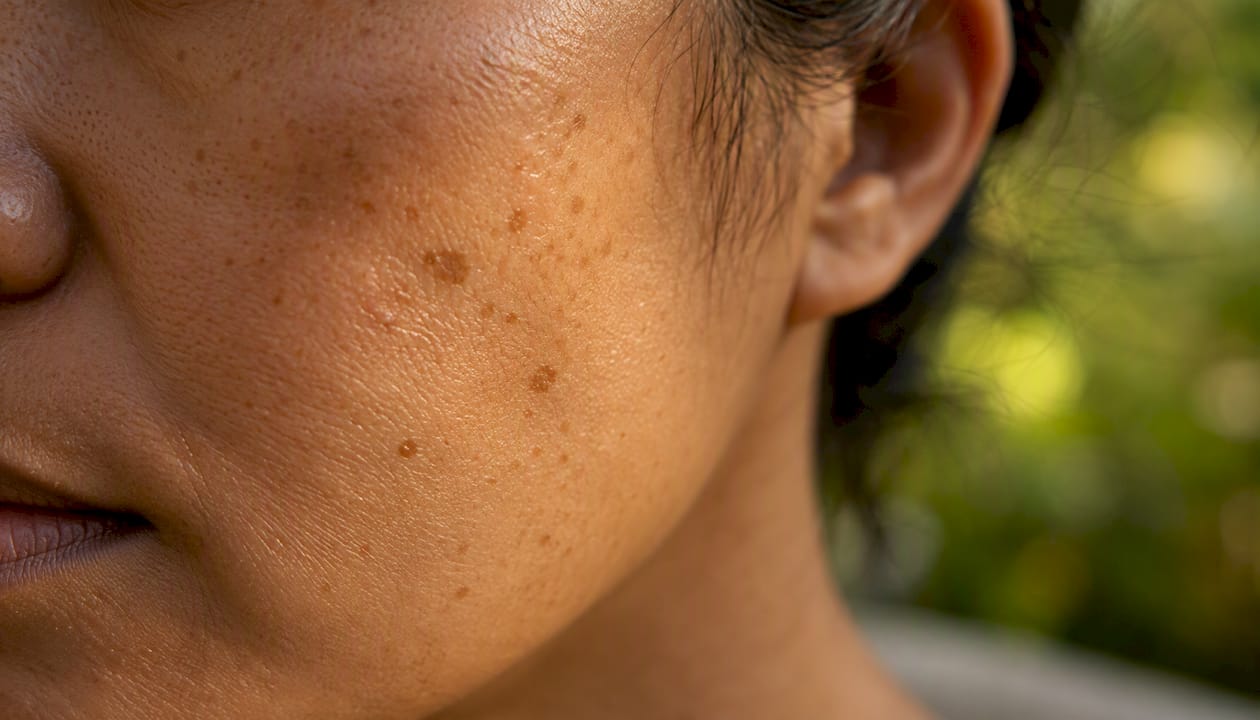
Dermal pigmentation, where melanin has been deposited in the deeper dermis, is harder to reach with topical products and takes significantly longer to fade. This is common in long-standing melasma and older, deeper PIH. Professional treatments like laser or IPL can reach the dermis more effectively than any topical.
Consistent use of brightening topicals, combined with daily SPF to stop new melanin from forming, works with the skin's natural renewal cycle rather than trying to override it. That is why patience is not optional. The skin is doing the work on its own schedule.
A natural approach that actually holds up
The conventional wisdom around fading dark spots tends to swing between two extremes: either aggressive clinical treatments or a long list of kitchen remedies with inflated claims. Neither extreme serves most people well.
The evidence points to a middle path. Vitamin C and licorice root extract have real mechanistic backing. Gentle acids accelerate what the skin is already doing. Tinted SPF with iron oxide protects every gain you make. And kitchen remedies like honey, yogurt, and turmeric can support that routine without replacing it.
What gets underestimated is the role of visible light. Most people apply SPF and assume they are covered. For melasma and PIH, standard mineral or chemical sunscreen is often not enough. Iron oxide in tinted formulas blocks the visible-light wavelengths that standard SPF misses entirely. That single upgrade to a tinted formula can make a measurable difference in how fast pigmentation fades.
The other underestimated factor is barrier health. Skin that is irritated, stripped, or over-exfoliated produces more pigmentation, not less. Usually, the gentlest effective routine is the fastest one.
Yuka+Face natural brightening products for your routine
Readers who want a formulated, plant-forward option to complement this protocol will find Yuka+Face products built around the same principles: botanical actives, vegan and cruelty-free formulations, and gentle efficacy for all skin types.

A practical AM/PM setup using Yuka+Face: apply a vitamin C serum in the morning as part of your morning skincare routine, follow with a tinted SPF, and use the Nighttime Ageless Peptide Serum in the evening alongside a gentle acid or licorice topical. Every product in the Yuka+Face range is vegan, cruelty-free, and formulated without harsh synthetics. For sun-heavy months, the summer skincare guide covers SPF layering and visible-light protection in detail. Visit the dark spot and pigmentation page to find the right products for your skin type and start your routine today.
Sources
- How to fade dark spots — American Academy of Dermatology
- Vitamin C (ascorbic acid) meta-analysis on pigmentation (PubMed 30881584)
- 3 natural ways to fade dark spots at home, according to pros — mindbodygreen
- Licorice extract for skin — Byrdie
- Vitamin C serum for dark spots — SANE MD
- 12 ways to fade and remove age spots naturally — Verywell Health
FAQ
What fades dark spots the fastest naturally?
Adding a licorice root extract topical at night accelerates the process further.
Can dark spots be removed permanently at home?
Surface-level sunspots and mild PIH can fade significantly and may not return with consistent SPF use. Melasma is typically manageable rather than permanently erasable, requiring ongoing maintenance with brightening topicals and daily sun protection.
Does apple cider vinegar really get rid of age spots?
ACV may offer mild exfoliation via acetic acid, but clinical evidence for meaningful spot fading is limited. It must be diluted (one part ACV to three parts water minimum) and is not suitable for sensitive skin. Formulated topicals with vitamin C or licorice root extract are more reliably effective.
What do Korean skincare routines use for dark spots?
Korean skincare routines commonly feature niacinamide, alpha-arbutin, and licorice root extract in layered serums and essences, often combined with daily SPF. These ingredients align with the same tyrosinase-inhibiting approach supported by dermatology research.