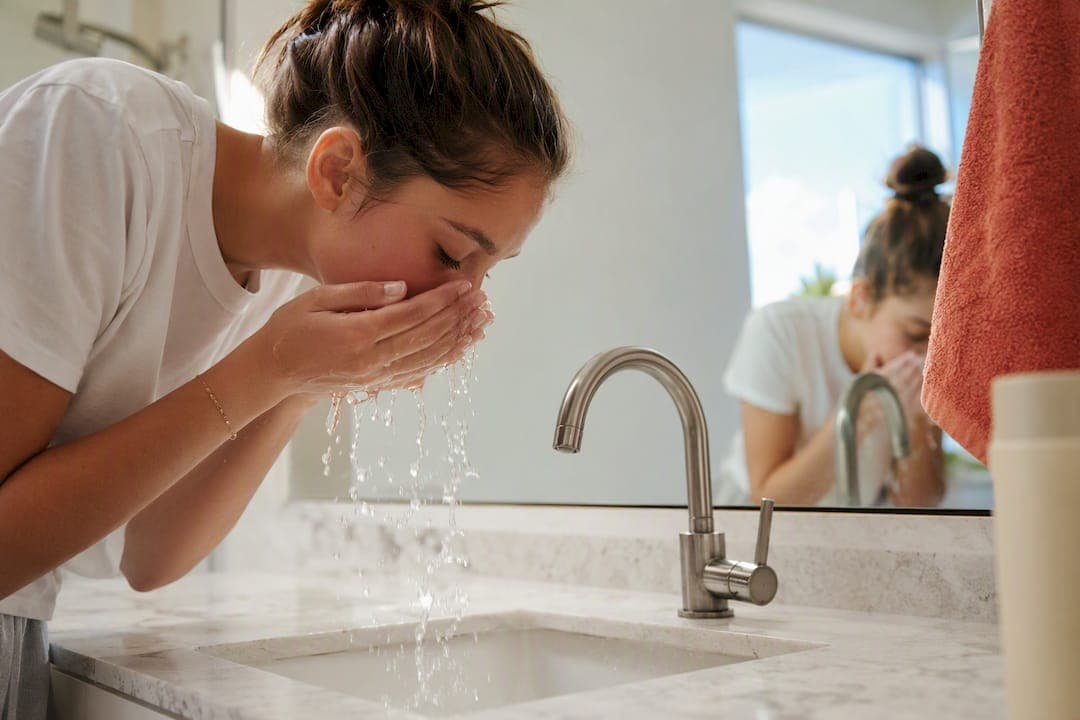
The evidence-backed teen skincare routine has three steps: cleanse, moisturize, and apply broad-spectrum mineral SPF every morning. At night, the same cleanser and moisturizer repeat, with a spot treatment added only where breakouts show up. That's it. With about 85% of people ages 12 to 24 dealing with acne, dermatologists keep steering teens away from ten-step trends and back toward this shorter, gentler version.
TL;DR:
- Twice-daily gentle cleansing with pH-balanced formulas can reduce acne risk by about 20 to 30 percent in teens.
- Using a broad-spectrum mineral SPF 30 or higher every morning is essential to protect developing skin from cumulative UV damage.
- Safe acne treatments for teens include benzoyl peroxide and low-dose salicylic acid, avoiding high-strength prescription actives unless prescribed by a dermatologist.
- Teen skincare labels should be free of fragrance, heavy oils, and harsh acids, with niacinamide and azelaic acid remaining gentle, effective options.
- Building a routine with one new product at a time and waiting 6 to 8 weeks before reassessment helps prevent irritation and over-treatment.
Table of Contents
- What Does a Simple Teen Skincare Routine Look Like Morning and Night?
- Which Acne Treatments Are Safe for Teen Skin?
- Which Ingredients Should Teens Choose or Avoid?
- How Do You Build a Teen Skincare Routine Without Overspending?
- What Mistakes Should Teens Avoid, and When Is It Time to See a Dermatologist?
- Why This Routine Reflects Expert Guidance and Yuka+Face's Approach
- A Note on Skin, Self-Esteem, and Consistency
- Start With a Gentle, Plant-Forward Routine
- Sources
- FAQ
What Does a Simple Teen Skincare Routine Look Like Morning and Night?
The morning and evening versions of a teen skincare routine share two steps and differ on a third. That overlap is intentional. Pediatric guidance points to a core three-step regimen: cleanse, moisturize, protect. Everything else is optional.
Morning routine:
- Cleanse with a gentle, pH-balanced cleanser to remove overnight oil buildup. A gel formula suits oily or acne-prone skin, while a lightweight lotion cleanser works better for dry or sensitive skin.
- Moisturize with a lightweight, non-comedogenic lotion if skin feels tight or flaky. Oily skin can sometimes skip this step and go straight to sunscreen.
- Protect with a broad-spectrum mineral SPF 30 or higher as the final step, every single day, rain or shine.
Evening routine:
- Cleanse again to remove the day's oil, sweat, sunscreen, and any makeup.
- Moisturize to support the skin barrier overnight.
- Spot treat only where a pimple is active, and only at night.
Order matters here. Cleanser always comes first because it clears the slate. Moisturizer goes on damp skin to lock in hydration. Sunscreen is the literal last step in the morning, applied over moisturizer, never mixed in with it.
Makeup and heavy sunscreen benefit from a quick pre-cleanse pass, sometimes called double cleansing: a light first wash to break down product, followed by the actual cleanser to clean the skin underneath. Skipping that step is one reason cleansers feel like they "stop working" when a teen switches from bare-faced summer days to full coverage for school photos.
Pro Tip: If mornings feel rushed, keep the routine down to cleanser and SPF only, and save moisturizer for the evening when there's more time to let it absorb before bed.
Twice-daily cleansing isn't just a habit for habit's sake. A pediatric dermatologist cited in consumer reporting notes that washing the face twice a day can lower acne risk by roughly 20% to 30%, which makes the humble cleanse step do more work than most teens give it credit for.
Which Acne Treatments Are Safe for Teen Skin?
Not every acne product sold to adults belongs on a 14-year-old's shelf. The safest first-line options are benzoyl peroxide and low-dose salicylic acid, both of which work by clearing clogged pores and reducing the bacteria that trigger breakouts, without the intensity of prescription-strength actives.
Gentler alternatives fill in around them. Azelaic acid calms redness and mild acne while being easier on the skin barrier, and niacinamide helps even out tone and control oil without the sting some acids cause. Dermatologists generally steer developing skin away from high-dose retinoids and concentrated AHAs or BHAs, favoring barrier-protecting, microbiome-friendly approaches instead of the aggressive "active stacking" popular in adult routines.
Introducing any new active should follow a slow, deliberate pattern:
- Patch test on the inner forearm and wait 48 to 72 hours for signs of irritation before applying to the face.
- Start with twice-weekly use for about two weeks, then increase frequency gradually if skin tolerates it.
- Alternate nights between different actives rather than layering them, since combining too much too fast breaks down the skin barrier.
- Discontinue immediately if stinging or redness persists beyond the first few uses.
Pimple patches are a low-risk way to manage an active whitehead overnight, and they double as a physical barrier against picking, which is one of the fastest routes to scarring on teen skin.
Which Ingredients Should Teens Choose or Avoid?
Reading a skincare label is mostly about spotting a handful of traits, not memorizing a chemistry textbook. Look for products that are fragrance-free, non-comedogenic, and pH-balanced, with gentle surfactants that clean without stripping. Mineral sunscreens (zinc oxide or titanium dioxide) tend to sit better on reactive teen skin than chemical filters.
On the avoid list: prescription-strength retinoids, concentrated AHAs or BHAs, heavy synthetic fragrances, and dense, pore-clogging oils. Fragrance and high-alkaline cleansers in particular raise the risk of contact dermatitis and long-term sensitivity in skin that's still developing its barrier.
A few ingredients earn their keep without the risk:
- Hyaluronic acid draws water into the skin, offering measurable hydration when it's formulated well, though it isn't a fix for every skin concern on its own.
- Niacinamide helps balance oil production and calm redness.
- Azelaic acid targets mild acne and post-breakout discoloration without the harshness of stronger acids.
Check the label for SPF value stated as a number (not just "sun protection"), a "non-comedogenic" claim printed clearly, and the small jar icon with a number like "12M," which tells you how many months a product stays good once opened.
How Do You Build a Teen Skincare Routine Without Overspending?
A working shopping list is short: a gentle cleanser, a lightweight moisturizer, a mineral sunscreen, and, if needed, one spot treatment. A gentle weekly exfoliant is optional, not essential.
- Buy the essentials first. Sunscreen and cleanser matter more than any serum, and effective versions exist at drugstore prices.
- Add one new product at a time. Introducing several changes at once makes it impossible to tell what's helping or hurting.
- Give each product 6 to 8 weeks before judging results. Skin needs time to show a real response, good or bad.
- Stop at the first sign of irritation. Patch test the product again on a small area, and if redness or stinging continues, involve a dermatologist rather than pushing through.
Starting simple early matters more than the price tag on any single product. Habit building beats chasing viral trends, and a basic routine started young tends to prevent mild acne from escalating into something harder to manage later.
What Mistakes Should Teens Avoid, and When Is It Time to See a Dermatologist?
Most teen skincare problems trace back to a handful of repeat mistakes: washing the face too often, over-exfoliating with harsh scrubs or multiple acids at once, copying elaborate adult routines seen online, and skipping sunscreen because it feels unnecessary on a cloudy day.
- Over-cleansing strips natural oils, which can trigger the skin to produce even more oil in response.
- Stacking multiple actives (retinoid plus acid plus scrub) in the same week overwhelms the skin barrier.
- Trend-chasing often means untested ingredient combinations with little benefit for a teen's actual skin needs.
- Skipping SPF undoes the benefit of every other step in the routine.
Certain signs call for a dermatologist rather than another drugstore try: painful cysts under the skin, visible scarring, breakouts that worsen rapidly over days, or irritation that doesn't calm down. If a consistent OTC routine shows no improvement after six to eight weeks, that's the cue to book an appointment rather than switch products again.
Pro Tip: Acne affects confidence as much as skin, so keep the conversation going with a caregiver or clinician if breakouts start affecting mood or self-esteem, not just appearance.
Why This Routine Reflects Expert Guidance and Yuka+Face's Approach
The three-step framework recommended throughout this guide lines up with pediatric dermatology guidance and with the broader clinical picture of adolescent acne, which peer-reviewed research documents as the most common skin condition in this age group.
Yuka+Face delivers a 100% natural, cruelty-free and environmentally conscious product range. Yuka+Face combines botanical research with scientific expertise to create formulas for all skin types and ages. Yuka+Face emphasizes holistic beauty, nurturing skin and overall well-being rather than chasing trends.
That philosophy overlaps with what dermatologists tell teens directly: less is more, and the skin barrier does better when it's supported, not stripped. Yuka+Face publishes practical guidance on this exact topic, including "Morning Skincare Routine Checklist: 9 Steps to Glow" and "A Minimal Skincare Routine That Actually Works," both aimed at building sustainable habits instead of overloaded shelves....
A Note on Skin, Self-Esteem, and Consistency
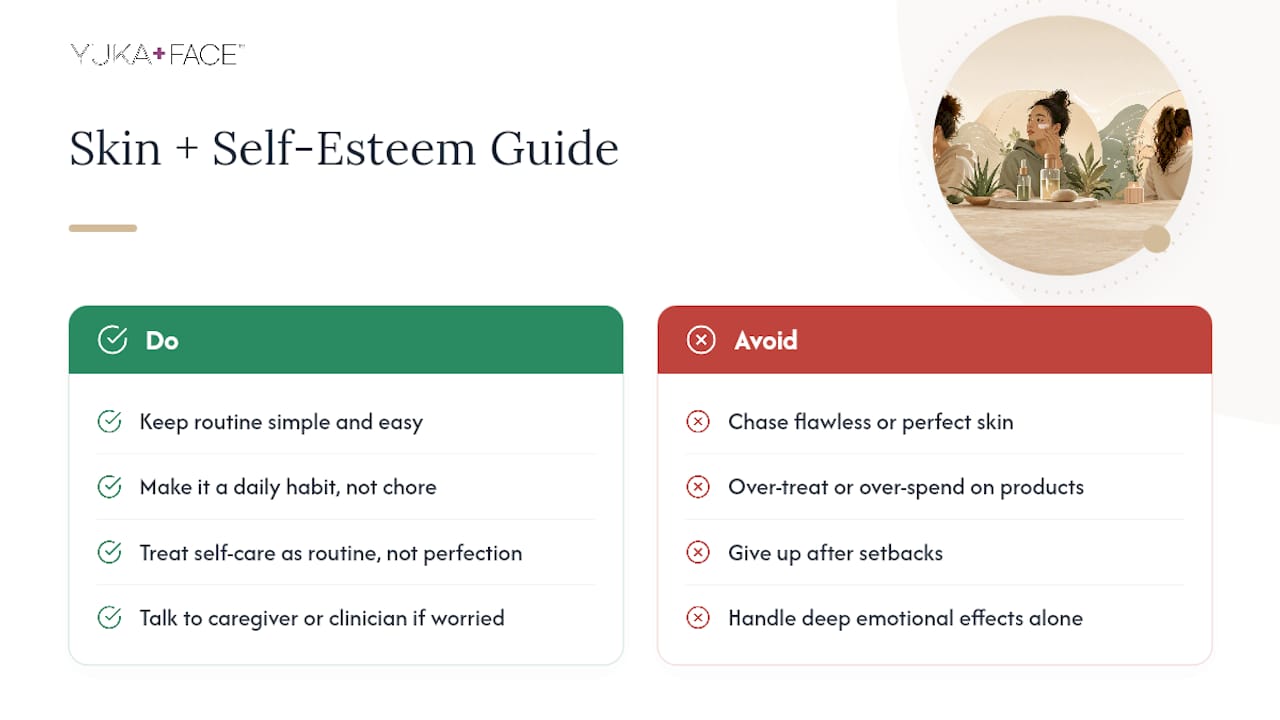
A good skincare routine for teenagers isn't about achieving flawless skin. It's about building a habit that's easy enough to stick with on the busy days, not just the calm ones. Perfect skin was never really the goal, and chasing it usually backfires into over-treating, over-spending, or giving up entirely.
Consistency matters more than any single product, and self-care habits like this one are worth treating as routine, not chore. If a breakout, a reaction, or a mood shift feels like more than skin deep, that's a conversation worth having with a caregiver or a clinician, not something to sort out alone.
— Kelly
Start With a Gentle, Plant-Forward Routine
Yuka+Face builds its formulas around what developing skin actually needs: vegan, cruelty-free ingredients without the fragrance load or heavy actives that irritate teen skin. That barrier-first approach mirrors the exact guidance dermatologists give for this age group.

A simple starting pairing works well for most teens: a gentle cleanser, a lightweight moisturizer, and a mineral SPF layered in that order each morning. The Morning Skin Care Routine guide walks through exactly how to sequence these three steps and when to add anything extra. For teens managing hormonal breakouts or barrier sensitivity, the vegan skincare collection covers formulas built without the harsh surfactants or synthetic fragrances that tend to trigger reactions. Medical-grade acne concerns still call for a dermatologist. For everyday maintenance, browse the starter routine and build from there one product at a time.
Sources
- Best Skincare For Teens 2026 - Forbes Vetted
- Prevalence data on adolescent acne (MDPI)
- Healthychildren
- NCBI review on acne (PMC)
This article is general information, not a substitute for advice from a qualified doctor. Consult a qualified healthcare professional about your own circumstances before acting on anything here.
FAQ
What is a good skincare routine for teenagers?
A gentle cleanser, lightweight non-comedogenic moisturizer, and broad-spectrum mineral SPF 30+ each morning, repeated at night with a spot treatment added only where needed.
What skincare brands should a 13-year-old use?
Look for fragrance-free, non-comedogenic, vegan formulas without harsh actives; Yuka+Face's cleanser and moisturizer pairing fits that profile for younger teens just starting out.
What is a good skincare routine for teenage girls?
The same three-step routine applies regardless of gender: cleanse, moisturize, and protect with SPF, with acne-safe additions like benzoyl peroxide or azelaic acid introduced gradually if breakouts appear.
What's a good skincare routine for a 14-year-old?
A minimal morning and evening routine built around cleanser, moisturizer, and sunscreen works best, since pediatric guidance discourages adult-style multi-step regimens for developing skin.