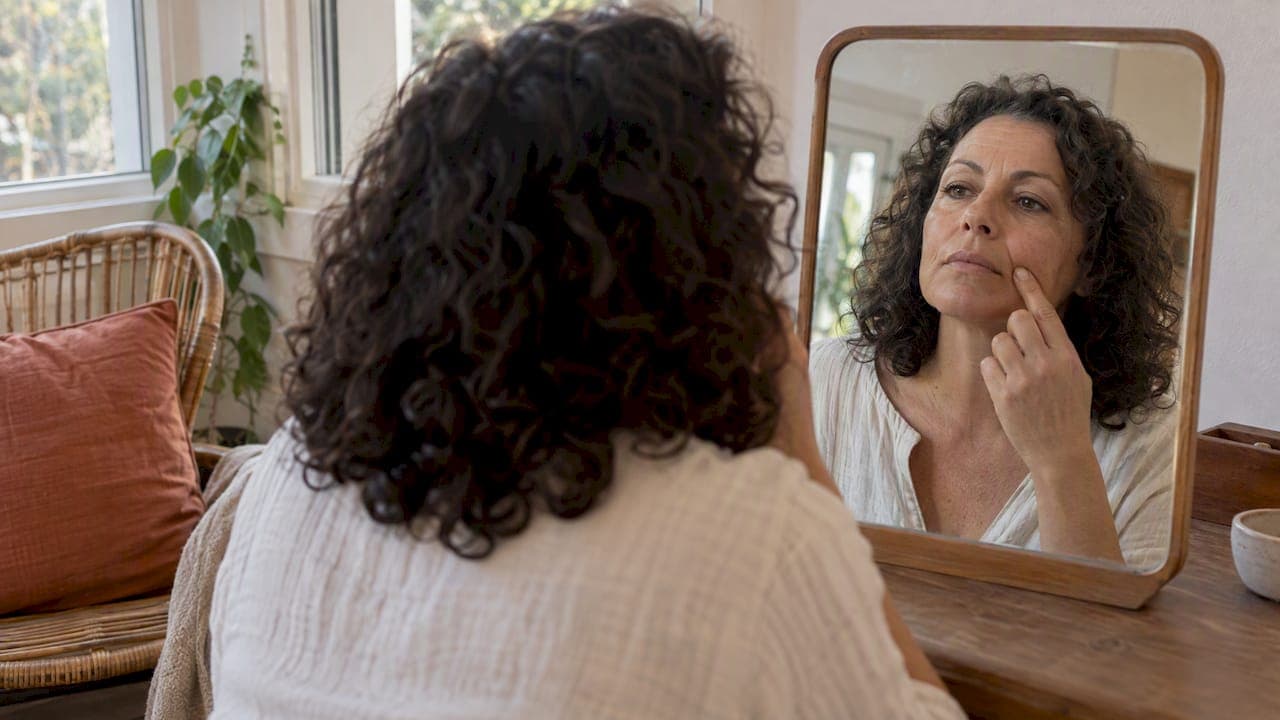
Skincare can soften the look of smile lines. It cannot erase them. Daily sunscreen, a moisturizer and a retinoid used slowly are the steps with the most support. Deeper folds are a volume question, and that is a job for a licensed provider.
Smile lines are the creases that run from the sides of the nose to the corners of the mouth. The medical name is nasolabial folds. This guide covers what causes them, which skincare steps help, which do not, and when to see a professional.
TL;DR
- Smile lines are normal. Skincare can improve skin quality around them. It cannot remove a fold.
- Start with broad-spectrum SPF 30+ and a moisturizer every day. Dermatologists rank these first.
- Add a retinoid slowly. Expect results in months, not days.
- Too many strong actives irritate skin. Irritation can make lines look deeper.
- Deep or moderate to severe folds respond to in-office treatment. Skincare alone will not match it.
Table of Contents
- What smile lines are
- What skincare can and cannot do
- Step 1: Sunscreen, every day
- Step 2: Moisturize, and know what it does
- Step 3: Add a retinoid, slowly
- Step 4: Peptides and other supporting ingredients
- Why less is more
- A simple routine for smile lines
- Habits that affect the folds
- Our perspective
- Where our products fit
- When skincare is not enough
- Common mistakes
- FAQ
- Sources
What smile lines are
Nasolabial folds are creases that extend from both sides of the nose to the corners of the mouth. They are also called smile lines or laugh lines. Most people have them to some degree. They can become more prominent with age, and Cleveland Clinic notes that smoking makes them more so.
Two things drive them:
- Surface changes. Sun exposure, dryness and slower collagen production make skin thinner and less elastic. Lines etch in more easily.
- Volume and structure. The cheeks lose support over time. Tissue moves downward and the fold deepens.
The difference matters. A topical product works on the first group. It does not rebuild the second.
What skincare can and cannot do
Topical products act on the skin surface and the upper layers. That is useful. It is also limited.
| Goal | Skincare | In-office treatment |
|---|---|---|
| Soften fine lines around the mouth | Yes, over months | Yes |
| Plump the look of skin temporarily | Yes, hydrating ingredients | Yes |
| Slow further sun damage | Yes, daily SPF | No |
| Fill a deep fold | No | Yes, filler |
| Lift sagging cheeks | No | Procedures or surgery |
The American Academy of Dermatology (AAD) is plain on this point. Anti-aging creams give modest results, and no single cream delivers what a surgical facelift does. Treat any product that promises to remove smile lines overnight with doubt. Clinical results for topical skincare are measured in months.
Step 1: Sunscreen, every day
Sun exposure speeds up skin aging. It shows up as sagging, age spots and wrinkles. The AAD says that protecting your skin from the sun can reduce premature aging as well as skin cancer risk.
Dermatologists tell patients to start with sunscreen and moisturizer. They call these the two most effective anti-aging products you can buy. Used daily, they make a noticeable difference.
What to look for:
- Broad-spectrum protection.
- SPF 30 or higher.
- Reapplication every two hours when outdoors, more often when sweating or swimming, as Cleveland Clinic advises.
Apply it to the whole face. The area around the nose and mouth is easy to miss.
Step 2: Moisturize, and know what it does
A moisturizer does not rebuild collagen. It does help skin hold water. Hydrated skin looks smoother, and fine lines look less sharp.
Hyaluronic acid is a common ingredient here. The AAD material points to improved hydration, elasticity and roughness, with effects that are real but temporary. That is useful for the look of surface lines. It is not a filler.
Two terms get mixed up. Hydrating products add water. Moisturizing products help keep it in. Our short guide on moisturizing vs. hydrating explains how to use both. For more on the ingredient, see the role of hyaluronic acid in skin hydration.
Apply moisturizer to slightly damp skin, morning and night. Smooth it along the fold with upward strokes. Do not drag the skin.

Step 3: Add a retinoid, slowly
Retinoids are forms of vitamin A. Cleveland Clinic says they can promote collagen production and reduce smile lines over time. The AAD guidance summarized in our research points to retinol formulations of at least 0.25% for clinical effect. It also says visible results need about three months of consistent use.
A slow start protects the skin:
- Use it two nights a week for the first two weeks.
- Move to every other night if skin stays comfortable.
- Apply a pea-sized amount to the whole face, not only the folds.
- Moisturize after.
- Wear SPF 30+ every morning. Retinoids do not replace sunscreen.
Stop and talk to a dermatologist if skin burns, peels heavily or stays red. Retinoids are not for everyone. If you are pregnant or trying to conceive, ask your clinician before using them.
For a plant-based option, see our vegan routine for aging skin, which covers bakuchiol and SPF. Our aging skin routine covers SPF first, then retinoids added gradually.
Step 4: Peptides and other supporting ingredients
Peptides are short chains of amino acids found in many serums. They are used for the look of firmness and texture. The evidence base is thinner than for sunscreen and retinoids. Think of them as a supporting step. They sit after the basics, not before. Our notes on peptides in organic skincare go into detail.
The AAD advice is to build the foundation first. Add corrective ingredients such as retinoids or peptides only after daily SPF and moisturizer are habits.
Why less is more
It is tempting to layer a retinol, an acid exfoliant and a vitamin C serum on the same night. Dermatologists warn against it. Using several strong products at once often leads to inflammation. Irritated skin can make fine lines look deeper and more obvious.
The AAD also says that shoppers should be careful with price and marketing. A well-formulated, budget-friendly sunscreen or moisturizer can work as well for maintenance as an expensive one.
A practical rule: change one product at a time. Wait several weeks before adding another.
A simple routine for smile lines
Morning
- Gentle cleanser.
- Hydrating toner or essence, if you use one.
- Moisturizer.
- Broad-spectrum SPF 30+.
For a longer walk-through, see our morning skincare routine checklist.
Evening
- Cleanse. Double cleanse if you wore sunscreen or makeup. Our double cleansing guide shows how.
- Retinoid, on the nights you use it.
- Serum on the other nights, if wanted.
- Moisturizer.
More ideas are in our evening skincare ritual tips.
Habits that affect the folds
Skincare is one part. Daily habits count too.
- Sleep position. Habitual side sleeping puts pressure on one side of the face and can deepen creases there. Sleeping on your back removes that compression. It is free. It takes time to learn.
- Smoking. Cleveland Clinic lists smoking as a factor that makes the folds more prominent. Quitting helps skin and overall health.
- Sun. Hats and shade add to sunscreen.
- Hydration of the skin barrier. Dry, damaged skin shows lines more. Gentle cleansing helps protect the barrier.
Our perspective
We make vegan, cruelty-free, natural skincare. We see smile lines as a normal part of a face that moves. We do not sell a product that removes them, and we do not suggest one exists.
What we focus on is skin condition. Barrier repair, hydration and sensitive skin care are where our formulas are aimed. Skin that is calm and well hydrated looks its best at any age. Skin that is irritated does not.
That is why our routines stay short. A cleanser, a toner, a serum and a moisturizer, plus daily SPF from a source you trust. Fewer steps mean fewer chances to overload the skin. This is the simplicity behind our "unbothered skin" approach.
We also think aging is a blessing. The goal is skin that feels comfortable and looks healthy. It is not a face without lines.
— Kelly
Where our products fit
Our formulas are vegan and cruelty-free, and we hold Leaping Bunny certification. These products suit a smile line routine focused on hydration and barrier support:
- B3 Gentle Cleanser for the first step, morning and night.
- Lavender Essence Balancing Toner for a light hydrating layer.
- Bright Eyes Peptide Serum for a peptide step.
- Hydrating Power Moisturizer to finish the routine.
Browse the full range in the Yuka+Face shop. For more on our approach to aging skin, read aging products for skin and skin rejuvenation products that actually work.
When skincare is not enough
If the folds bother you, a board-certified dermatologist or cosmetic surgeon can tell you what applies to your face. The first question is whether you need volume or surface resurfacing. Research on combined treatments suggests that diagnosis by a provider is needed to decide this. Combinations are not always better than filler alone.

Fillers
Hyaluronic acid fillers are the usual choice for moderate to severe folds. One FDA-approved example, Juvederm Vollure XC, is indicated for correction of moderate to severe facial wrinkles and folds, such as nasolabial folds, in adults over 21. It is injected into the mid to deep dermis.
Risks are rare but serious. They include injection into a blood vessel, which can lead to tissue death, vision loss or stroke. Choose a trained, licensed injector and ask about their experience with the face area.
Peels and lasers
These treat the surface, not volume. The AAD warns that some chemical peels sold for home use have caused serious injuries. Its advice is to use a chemical peel only under supervision. Procedures close together, such as laser after filler, need spacing under clinical guidance.
Other options
Cleveland Clinic also lists skin-tightening procedures and surgery such as a cheek lift or facelift among options. These are for specific cases and need a surgeon's assessment.
An honest split:
- Skincare if you want healthier, smoother-looking skin and have mild lines.
- A provider if the fold itself is the concern.
- Both, in many cases. Good skin care supports any procedure.
Common mistakes
- Skipping sunscreen while buying serums.
- Starting a retinoid every night.
- Stacking exfoliating acids with a retinoid.
- Judging results after two weeks.
- Buying on price alone, in either direction.
- Using at-home peels without guidance.
FAQ
What skincare can get rid of smile lines?
None can remove them fully. Daily SPF 30+, a moisturizer and a retinoid used consistently can soften the look of surface lines. Deeper folds need in-office treatment such as filler.
How long does it take to see results?
Retinoids need about three months of steady use. Hydrating products can make skin look smoother within hours, but that effect is temporary. Be wary of overnight claims.
Can I use retinol and an exfoliating acid together?
It is better not to. Using several strong actives at once often causes inflammation, which can make lines look deeper. Use them on separate nights, or choose one. Ask a dermatologist if your skin is sensitive.
Does sleeping position matter?
It can. Side sleeping presses on one side of the face and can deepen creases there. Back sleeping removes that pressure. It is a free change, though it takes time to build as a habit.
Are nasolabial folds and smile lines the same thing?
Yes. Both names describe the creases from the nose to the corners of the mouth. They are also called laugh lines.
Sources
- AAD: How to select anti-aging skin care products
- AAD: Wrinkle remedies
- AAD: Sun protection and wrinkles
- AAD: Chemical peels overview
- Cleveland Clinic: Nasolabial folds (smile lines)
- FDA: Juvéderm Vollure XC
- PMC: Concomitant use of hyaluronic acid and laser in facial rejuvenation