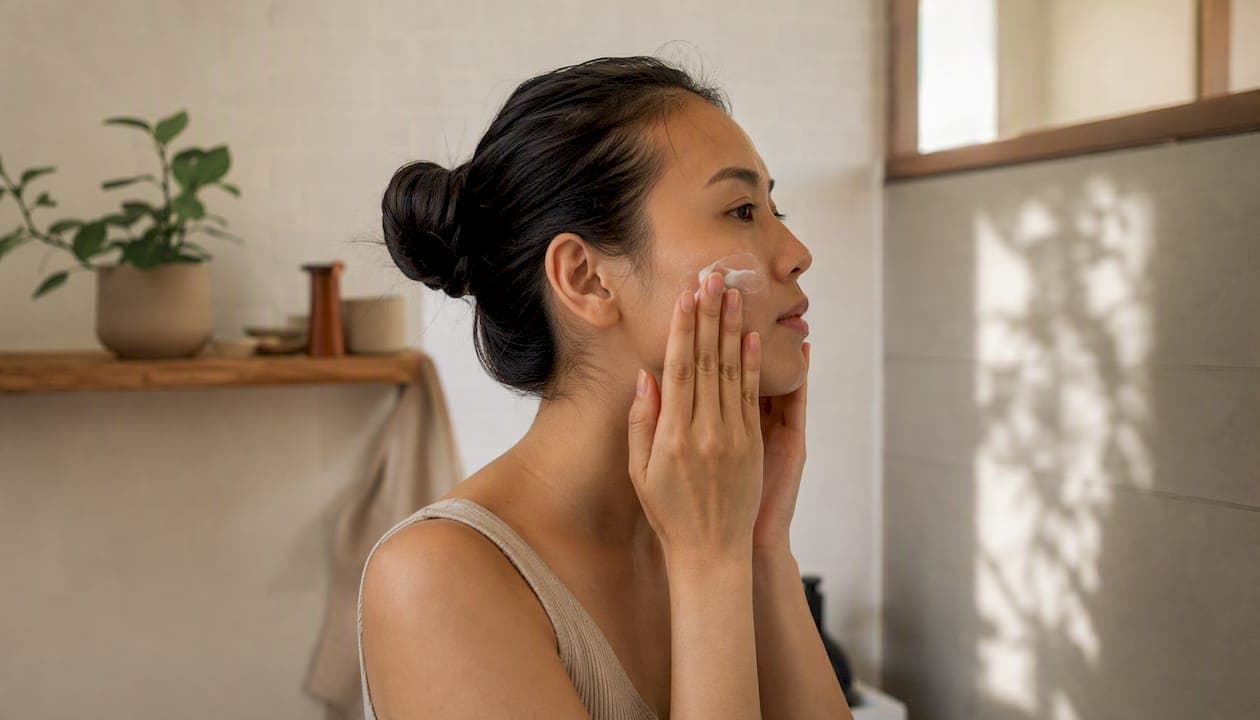
The most consistently effective topical approach combines a retinoid at night, broad-spectrum SPF daily, and supportive actives like vitamin C and hyaluronic acid. Professional procedures add speed and depth, but they build on this foundation rather than replace it.
Top actives to prioritize:
- Retinoids (retinol OTC, tretinoin Rx): accelerate cell turnover, stimulate collagen, reduce fine lines over 12–24 weeks
- Vitamin C (L-ascorbic acid): neutralizes free radicals, brightens tone, supports collagen synthesis
- Hyaluronic acid: draws moisture into the skin, plumps fine lines within hours
- Peptides: signal collagen production; evidence is promising, though more modest than retinoids
- AHAs/BHAs (glycolic, lactic, salicylic): exfoliate dead cells, improve texture and tone over 4–8 weeks
If you are pregnant, breastfeeding, or managing a skin condition, consult a dermatologist or your OB-GYN before starting any new active.
Key Takeaways
Daily SPF and a retinoid form the evidence-backed foundation of any skin rejuvenation routine; supporting actives and professional procedures build on that base, not around it.
| Point | Details |
|---|---|
| SPF is non-negotiable | Broad-spectrum SPF 30+ every morning is the highest-return anti-aging habit available. |
| Introduce one active at a time | Start retinol at low frequency (2x/week), increase every 2–4 weeks to minimize irritation. |
| Hydration supports every active | Hyaluronic acid and a barrier-repair moisturizer reduce side effects and improve results. |
| Results take months, not days | Visible line reduction from retinoids typically requires 12–24 weeks of consistent use. |
| Yuka+Face as a natural option | Vegan, cruelty-free formulas with peptides and botanical antioxidants fit the evidence-backed routine. |
Table of Contents
- What do skin rejuvenation products actually contain?
- Which product types belong where in your routine?
- How do you choose the right skin rejuvenation products?
- How to build a safe daily routine with rejuvenating actives
- What timeline and costs should you expect?
- Safety, side effects, and when to see a dermatologist
- What does the research actually say about wrinkle creams?
- How Yuka+Face fits an evidence-based skin care routine
- A note on product selection, from Kelly
- Yuka+Face starter regimen
- Sources
- FAQ
What do skin rejuvenation products actually contain?
The term "skin rejuvenation" covers a broad range of topical treatments, from drugstore moisturizers to prescription-strength formulas. What separates products that produce visible change from those that simply hydrate comes down to the active ingredients and their concentrations.
Retinoids
Retinoids are the most studied topical anti-aging actives available. Prescription tretinoin (a retinoic acid) works by binding to nuclear receptors in skin cells, speeding up cell turnover, and stimulating fibroblasts to produce more collagen. OTC retinol converts to retinoic acid in the skin, producing similar effects at a slower pace and with less irritation. Expect 12–24 weeks of consistent use before visible line reduction. The main trade-offs: dryness, peeling, and increased sun sensitivity, especially in the first 4–6 weeks.
Vitamin C
L-ascorbic acid is the most bioavailable form, but it degrades quickly when exposed to air and light. Stable derivatives like ascorbyl glucoside or sodium ascorbyl phosphate are gentler and more shelf-stable, though slightly less potent. Vitamin C works by scavenging free radicals generated by UV exposure and pollution, and it inhibits melanin synthesis, which gradually evens skin tone. Formulations work best at a pH of 2.5–3.5 for L-ascorbic acid; check that the product is packaged in opaque or airless containers.
Hyaluronic acid
Hyaluronic acid is a naturally occurring polysaccharide that holds up to 1,000 times its weight in water. Applied topically, it draws moisture from the environment and deeper skin layers to the surface, producing an immediate plumping effect. It suits all skin types, including oily and sensitive, and pairs well with nearly every other active. Apply to damp skin for best absorption.
Peptides
Peptides are short amino acid chains that signal the skin to produce collagen and elastin. Research on peptides in skincare shows a coherent but still-developing evidence base; small clinical trials report improvements in firmness and fine lines, though effects are generally more modest than those seen with retinoids. They are well-tolerated and a good option for skin that cannot handle retinoids.
Niacinamide
Niacinamide (vitamin B3) strengthens the skin barrier by increasing ceramide production, reduces the appearance of enlarged pores, and fades post-inflammatory hyperpigmentation.
AHAs and BHAs
Glycolic acid (AHA) penetrates deeply and is well-studied for improving fine lines and uneven texture. Lactic acid is gentler and better for sensitive or dry skin. Salicylic acid (BHA) is oil-soluble, making it the standard choice for oily or acne-prone skin.
Pro Tip: Never layer a high-strength AHA and a retinoid in the same application. Use AHAs on alternating nights, or apply the retinoid first and the AHA on separate evenings to avoid barrier disruption.
Which product types belong where in your routine?
Knowing the active is only half the equation. The delivery format determines how much of that active reaches the skin and when it should be applied.
- Serums: water-based, lightweight, high active concentration. Best vehicle for vitamin C, niacinamide, hyaluronic acid, and peptides. Apply before moisturizer.
- Creams and moisturizers: occlusive or semi-occlusive, seal in actives and repair barrier. Retinoids are often formulated here at lower concentrations; richer creams suit dry or mature skin.
- Facial oils: lipid-rich, support barrier function. Apply last in PM routine. Not a substitute for a moisturizer with humectants.
- SPF: the single most evidence-backed anti-aging product. Broad-spectrum SPF 30+ applied every morning, rain or shine.
- Exfoliants: AHA/BHA toners or pads, used 2–3 nights per week maximum. Not for daily use.
- Masks: concentrated actives in a leave-on or rinse-off format. Clay masks absorb oil; sheet masks deliver hydration; chemical exfoliant masks resurface. Use 1–2 times per week.
How devices and professional treatments fit in
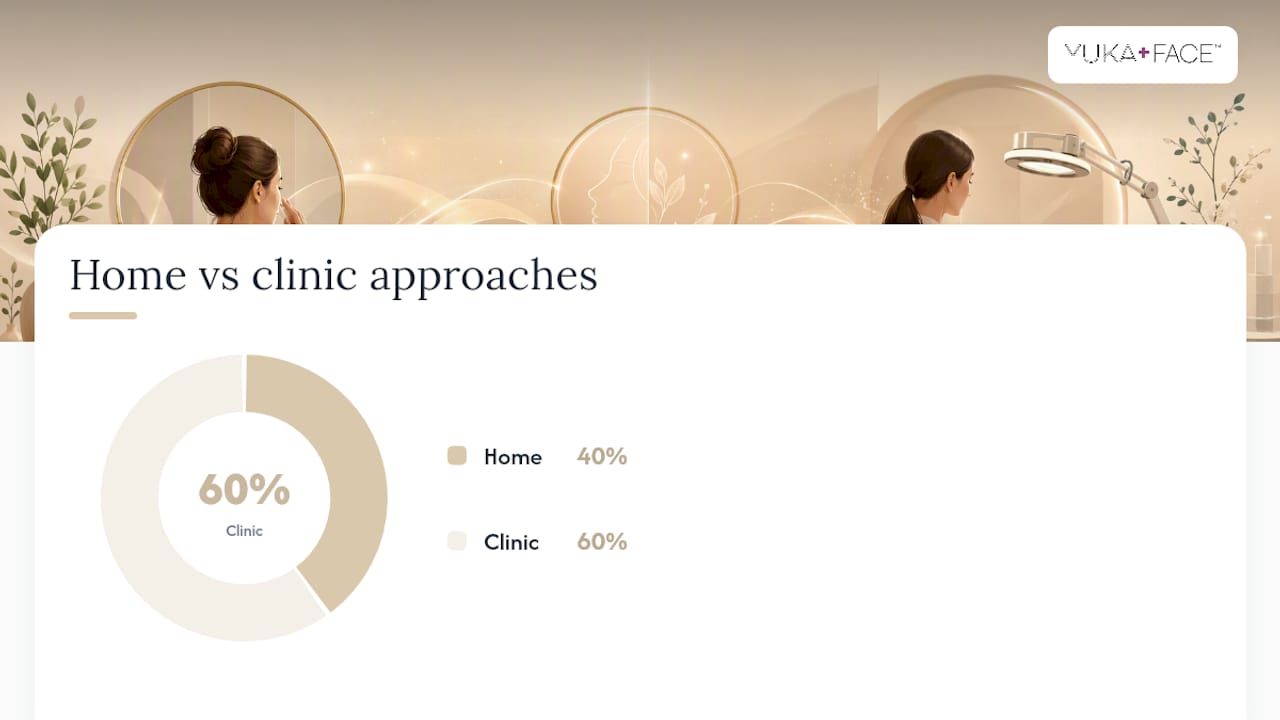
Devices and in-office procedures produce measurable collagen remodeling that topicals alone cannot match. Chemical peels, lasers, and microneedling are commonly used alongside topical regimens to deliver faster or more dramatic improvements in texture and wrinkles. LED light therapy devices (red and near-infrared) are the most accessible at-home option, with a modest evidence base for reducing fine lines over 8–12 weeks of consistent use.
| Approach | Ease of Use | Downtime | Typical Timeline | Best Fit |
|---|---|---|---|---|
| Daily topicals (SPF, retinoid, serum) | High | None | 12–24 weeks | Home, daily |
| At-home LED device | Moderate | None | 8–12 weeks | Home, 3–5x/week |
| Chemical peel (superficial) | Low (professional) | 3–7 days | 2–4 sessions | Clinic |
| Microneedling / RF | Low (professional) | 3–5 days | 3–6 sessions | Clinic |
| Ablative laser resurfacing | Low (professional) | 7 days | 1–3 sessions | Clinic |
Professional procedures require trained operators. Consult a board-certified dermatologist or plastic surgeon before booking any in-office treatment, particularly if you have active acne, a history of keloids, or are taking photosensitizing medications.
How do you choose the right skin rejuvenation products?
The label is where most people get lost. Here is a practical framework.
Check the label for:
- Active ingredient name and concentration (e.g., "retinol 0.05%," not just "retinol complex")
- pH for vitamin C serums and AHAs (should be stated or available from the brand)
- Vehicle type: water-based for serums, emollient for creams, anhydrous for oils
- SPF rating and UVA/UVB coverage ("broad-spectrum" is required by FDA labeling rules in the US)
- Fragrance and known allergens (fragrance is the leading cause of contact dermatitis in skincare)
Questions to ask before buying:
- What is my skin type (dry, oily, combination, sensitive)?
- Have I reacted to any active before?
- Am I on any prescription topicals or oral medications that interact with retinoids or acids?
- Am I pregnant, breastfeeding, or planning pregnancy?
Red flags on a label:
- "Anti-aging complex" with no listed actives or concentrations
- Fragrance listed high in the ingredient deck
- Before/after images with no disclosure of lighting, makeup, or photo editing
- Claims like "clinically proven" with no linked study or sample size
The prescription form is roughly 20 times more potent by mechanism, not just concentration. If OTC retinol produces no visible change after 16 weeks, ask a dermatologist about tretinoin.*
How to build a safe daily routine with rejuvenating actives
A structured routine reduces irritation and makes results predictable. Follow this sequence.
Morning routine
- Cleanse with a gentle, pH-balanced cleanser. Removes overnight product residue without stripping.
- Vitamin C serum (L-ascorbic acid or stable derivative, 10–20%). Apply to dry skin, wait 60 seconds before the next step.
- Hydrating serum or toner (hyaluronic acid, niacinamide). Layered on top while skin is still slightly damp.
- Moisturizer. Locks in hydration and supports barrier function. Check the morning skin care routine guide for sequencing tips.
- Broad-spectrum SPF 30+. Always the final step. Reapply every two hours if outdoors.
Evening routine
- Cleanse (double cleanse if wearing SPF or makeup).
- Targeted active: retinoid on designated nights, or an AHA/BHA exfoliant on alternating nights. Apply to dry skin.
- Peptide or hyaluronic acid serum. Supportive actives that layer safely over or under a retinoid.
- Moisturizer. Richer formula at night supports overnight repair.
Introducing actives safely
- Weeks 1–2: retinoid two nights per week, no AHA on the same night. Patch test first.
- Weeks 3–4: increase to three nights if no irritation (redness, flaking, stinging).
- Weeks 5–8: increase to every other night if tolerated.
- Week 9+: nightly use if skin has adapted.
Irritation protocol: if redness or peeling persists beyond 72 hours, stop the active, apply a fragrance-free barrier-repair moisturizer, and hold for one week. If irritation continues or blistering occurs, see a dermatologist. For routine timing and product sequencing, the skin routine guide covers what to use and when.
What timeline and costs should you expect?
Results from skin rejuvenation products follow a predictable but slow arc. Marketing images compress that timeline; clinical trials do not.
- Days 1–7: improved hydration and surface smoothness from hyaluronic acid and niacinamide
- Weeks 4–8: more even tone, reduced dullness from vitamin C and AHA exfoliation
- Weeks 12–24: measurable reduction in fine lines and improved texture from consistent retinoid use, as supported by peer-reviewed clinical evidence
- Months 6–12: collagen-driven firmness improvements; this timeline applies to both topicals and post-procedure recovery
Typical cost ranges (US market, 2026 estimates):
- OTC serums and creams: $15–$80 per product
- Clinical-grade or prescription topicals: $50–$200+ per product
- Superficial chemical peel (in-office): $150–$300 per session
- Microneedling or RF microneedling: $300–$700 per session
- Ablative laser resurfacing: $1,000–$5,000+ per session (varies by provider and region)
Maintenance matters more than any single purchase. Daily SPF is the lowest-cost, highest-return habit. After a professional procedure, topical actives sustain and extend results; skipping them accelerates regression.
Safety, side effects, and when to see a dermatologist
Every active carries trade-offs. Knowing them in advance prevents most problems.
Retinoids: dryness, peeling, and redness are expected in the first 4–6 weeks. Retinoids increase photosensitivity; daily SPF is not optional when using them. Prescription tretinoin is contraindicated in pregnancy.
AHAs: increase UV sensitivity for 24–48 hours after application. Always follow with SPF the next morning.
Pregnancy and breastfeeding: avoid prescription retinoids (tretinoin, adapalene, tazarotene) and high-dose salicylic acid. Niacinamide, hyaluronic acid, and gentle AHAs at low concentrations are generally considered lower-risk, but always confirm with your OB-GYN before starting any new active during pregnancy or while breastfeeding.
When to seek medical attention:
- Severe swelling, blistering, or hives after applying a product
- Persistent hyperpigmentation that worsens rather than fades
- Signs of infection (warmth, pus, spreading redness) after a procedure
- Any reaction that does not resolve within one week of stopping the product
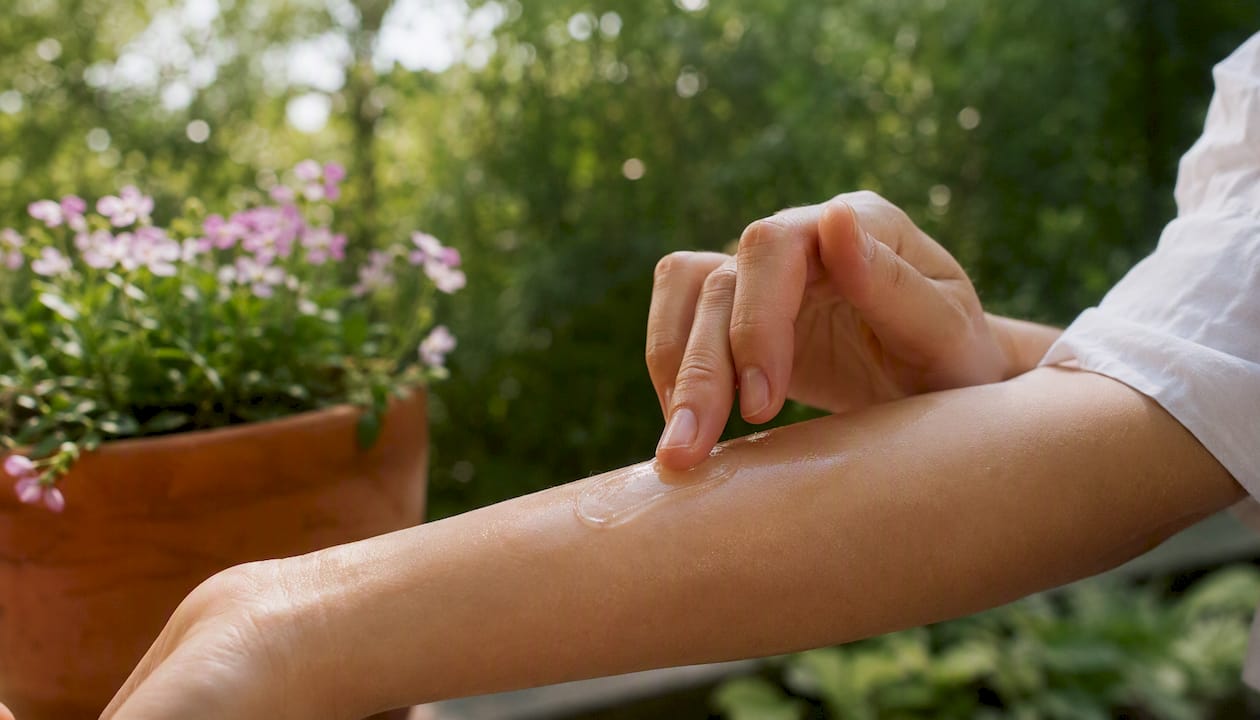
Pro Tip: Patch test every new active on the inner forearm for 48 hours before applying it to your face. A small inconvenience that prevents weeks of recovery.
Cellular health also plays a supporting role in how skin responds to topical actives. Cellular health and complexion research suggests that internal factors, including nutrition and oxidative stress, influence how effectively skin repairs itself alongside topical care.
What does the research actually say about wrinkle creams?
Marketing claims and clinical evidence are rarely the same document.
The American Academy of Dermatology identifies retinoids and daily broad-spectrum sunscreen as the two most evidence-backed topical strategies, with antioxidants, hydrators, and gentle exfoliants playing a supportive role. The AAD is explicit that topical strategies reduce visible signs of aging but do not replicate the results of procedural treatments.
Peer-reviewed mechanistic reviews archived at PMC confirm that retinoids, AHAs, and resurfacing procedures each affect skin structure through distinct pathways, and that combining them produces additive effects. The key word is "modest but meaningful" for topicals used alone; procedures accelerate and deepen those changes.
Rigorous clinical trial methodology matters here. Many product studies use small samples, short durations, or subjective grading scales. When evaluating a brand's efficacy claims, look for randomized controlled trials with objective outcome measures (elasticity, wrinkle depth scoring) rather than consumer perception surveys.
Ongoing clinical research at institutions like Mayo Clinic continues to evaluate newer device-assisted and combination approaches, which means the evidence base for some technologies (RF microneedling, combination LED plus topical protocols) is still developing. What is settled: SPF plus retinoid plus barrier support is the evidence-backed foundation.
How Yuka+Face fits an evidence-based skin care routine
Natural and vegan formulations are not in conflict with evidence-based skincare. The question is whether the formula delivers the right actives at effective concentrations, without unnecessary irritants.
Yuka+Face products are vegan, cruelty-free, and built around botanical actives that map directly to the evidence discussed above. Key proof points:
- Peptide-rich formulas: the Nighttime Ageless Peptide Serum delivers collagen-signaling peptides in an evening format, fitting the PM routine slot where targeted actives belong
- Hydration and barrier support: moisturizers formulated with hyaluronic acid and plant-derived humectants align with the hydration and barrier repair principles covered above
- Antioxidant support: botanical extracts rich in vitamins C and E provide free-radical defense compatible with a morning antioxidant step
- No fragrance overload: formulas avoid high-fragrance ingredients that trigger contact dermatitis
Example Yuka+Face morning routine: gentle cleanser, antioxidant serum, moisturizer, SPF (applied separately). Evening: gentle cleanser, Nighttime Ageless Peptide Serum, moisturizer.
Yuka+Face's approach to aging is covered in depth in the No More Anti-Aging journal piece, which explains the brand's philosophy around aging as a natural, supported process rather than something to fight.
Note: Yuka+Face products are not a substitute for prescription treatments or medical advice. Consult a dermatologist for persistent skin concerns or before starting prescription actives.
A note on product selection, from Kelly
Balancing botanical tradition with clinical evidence is not a compromise. The most effective routines tend to be the simplest: one proven active introduced carefully, a barrier-support moisturizer, and daily SPF. What gets people into trouble is layering too many actives too fast, or choosing products based on marketing language rather than ingredient lists.
Yuka+Face's commitment is to education first. The Yuka+Face journal covers ingredient science, routine building, and holistic skin health for readers who want to understand what they are putting on their skin and why. That transparency is the standard every product should be held to.
Yuka+Face starter regimen
A focused starting kit covers every evidence-backed step without overcomplicating the routine.
- Cleanser: gentle, pH-balanced. Morning and evening first step.
- Antioxidant serum: vitamin C and botanical antioxidants. Morning, before moisturizer.
- Nighttime Ageless Peptide Serum: peptides and supportive actives. Evening, after cleansing.
- Moisturizer: hyaluronic acid and plant humectants. Morning and evening, final step before SPF.
- SPF 30+: applied every morning as the last step.
All Yuka+Face products are vegan, cruelty-free, and formulated for all skin types. For a full guide to vegan skincare and what to look for in clean formulas, visit the vegan skincare guide. Browse the full range and build your routine at Yukaface.
This is a brand recommendation. It is not a substitute for medical advice.
Sources
- Wrinkle creams: Your guide to younger looking skin
- Anti-aging skin care
- PMC article (mechanisms and clinical context)
- PubMed article (PMID: 36594795)
- Skin Rejuvenation and Resurfacing - American Society of Plastic Surgeons
- Mayo
FAQ
What is the best skin rejuvenation product?
No single product covers every need, but a daily broad-spectrum SPF 30+ paired with a retinoid at night is the most consistently evidence-backed combination for reducing fine lines and photodamage, per Mayo Clinic and the AAD.
What is the most effective approach to skin rejuvenation overall?
A layered approach works best: daily SPF, a retinoid or stable vitamin C serum, a hydrating moisturizer, and periodic professional treatments (peels or microneedling) for faster collagen remodeling. Topicals alone produce modest but real improvements over 12–24 weeks.
What takes 10 years off your face?
Consistent daily sunscreen use, a retinoid, and professional resurfacing (chemical peel or laser) together produce the most visible age-reversal results. Sun protection prevents new damage while retinoids and procedures address existing photodamage and fine lines.
What is the closest over-the-counter option to Botox?
No topical product replicates Botox's mechanism, which is a neurotoxin that temporarily relaxes muscles. Peptide serums (particularly acetyl hexapeptide-3) are marketed as topical alternatives; evidence shows modest softening of expression lines, not the same degree of change as an injection. Yuka+Face's Nighttime Ageless Peptide Serum delivers peptides in a nightly format as a supportive, non-injectable option.