
TL;DR:
- The most effective anti-aging routine combines daily broad-spectrum SPF, a tolerated retinoid, hydration, barrier support, and antioxidants. Consistent use of proven ingredients like retinoids and proper moisturizing can improve skin texture, fine lines, and pigmentation over months. Prioritizing barrier repair and gradual retinoid introduction enhances long-term skin resilience and results.
The most effective anti-aging toolkit is straightforward: daily broad-spectrum SPF, a tolerated retinoid, humectant hydration, barrier-supporting lipids, and a stable antioxidant. That combination addresses the main drivers of visible skin aging — collagen breakdown, moisture loss, and oxidative stress — without overloading mature skin.
Quick summary:
- SPF first, always. UV exposure accelerates collagen and elastin breakdown and drives pigmentation. No other product compensates for skipping sunscreen.
- Hydration shows fast. Humectants like hyaluronic acid can plump fine lines within days to weeks.
- Retinoids take time. Expect texture and fine-line improvement after 8–12 weeks of consistent use, not days.
- Barrier first. Mature skin benefits more from ceramides and barrier repair than from stacking multiple strong actives.
Starter pick: The Yuka+Face Hyaluronic Hydration Serum is a practical first step for any mature skin routine. Find it in the Yuka+Face online store.
Table of Contents
- What do aging products for skin actually contain?
- How do you build a morning and evening anti-aging routine?
- How do you choose products for your skin type and age?
- What side effects should you expect, and when is it time to see a dermatologist?
- Why is daily sunscreen the most important anti-aging step?
- How does Yuka+Face's resiliency-first approach work?
- Key Takeaways
- The case for doing less, better
- Start with the Yuka+Face core routine
- Useful sources and further reading
- FAQ
What do aging products for skin actually contain?
The ingredient list is where anti-aging skin care either earns its price or doesn't. Over-the-counter products can deliver visible improvements when they contain evidence-backed actives used consistently over months — but the key word is consistently, and the key phrase is right ingredients for your skin.
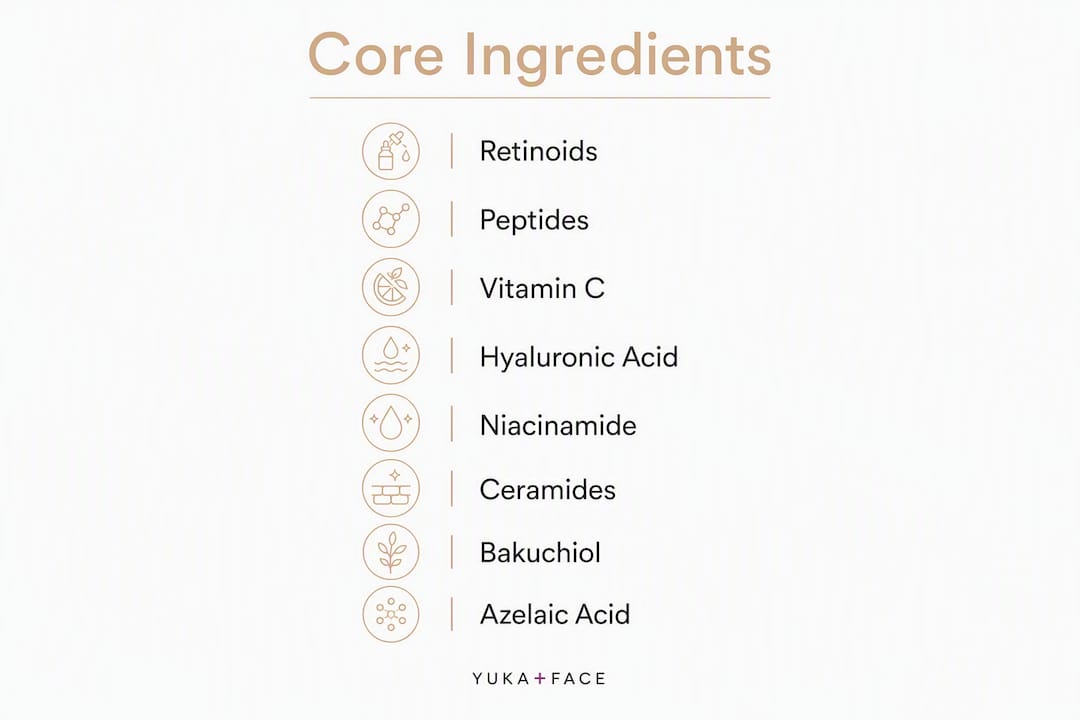
The core active ingredients
Retinoids and retinol are the gold standard for fine lines and texture. They work by speeding up cellular turnover and stimulating collagen synthesis, both of which slow with age. Dermatologists recommend starting with a milder OTC retinol for mature skin to reduce irritation risk before moving to prescription-strength tretinoin. Typical OTC retinol concentrations vary at low levels; prescription retinoids start at mild concentrations and can go higher.

Peptides are short amino acid chains that signal the skin to produce more collagen. They are gentler than retinoids and well-suited for sensitive or very mature skin. Look for palmitoyl tripeptide-1, palmitoyl tetrapeptide-7, or matrixyl on the label.
Vitamin C (L-ascorbic acid) brightens uneven tone, neutralizes free radicals, and supports collagen production. Stability is the challenge: L-ascorbic acid degrades quickly in light and air, so look for opaque or airless packaging and concentrations of 10–20%. Vitamin C derivatives like ascorbyl glucoside are more stable though their effects may develop more gradually.
Hyaluronic acid is a humectant that draws water into the skin. Moisturizers containing hyaluronic acid and glycerin temporarily plump skin and make fine lines look smoother — particularly useful for drier, mature skin. It works best applied to damp skin and sealed with a moisturizer.
Niacinamide (vitamin B3) reduces redness, minimizes pore appearance, and supports the skin barrier. It pairs well with almost every other active and is one of the most tolerable ingredients for sensitive aging skin.
Ceramides are lipids that make up a large part of the skin's barrier. As skin ages, ceramide levels drop, leading to increased water loss and sensitivity. Ceramide-rich moisturizers directly address this deficit.
Bakuchiol is a plant-derived alternative to retinol. It provides retinol-like smoothing and discoloration benefits with lower irritation risk and is the preferred option when retinoids are contraindicated — during pregnancy, for example, or for skin that cannot tolerate retinol at any strength.
Azelaic acid and tranexamic acid target pigmentation and uneven tone. Both can reduce discoloration and are generally well-tolerated, though they work best paired with daily SPF.
Ingredient reference table
| Ingredient | What it does | Best for | Typical OTC strength or note |
|---|---|---|---|
| Retinol | Boosts cell turnover, stimulates collagen | Fine lines, texture, tone | low concentrations; start low |
| Peptides | Signals collagen production | Sensitive, mature, or reactive skin | Varies by peptide type |
| Vitamin C (L-ascorbic acid) | Antioxidant, brightens, supports collagen | Dull tone, dark spots | 10%–20%; needs stable packaging |
| Hyaluronic acid | Humectant, plumps, reduces water loss | Dry, dehydrated, all types | Multiple molecular weights preferred |
| Niacinamide | Barrier support, reduces redness | Sensitive, oily, combination | 2%–10% |
| Ceramides | Repairs barrier, reduces water loss | Dry, sensitive, mature | Ceramide NP, AP, EOP |
| Bakuchiol | Retinol-like smoothing, gentler | Pregnancy, retinol-intolerant skin | 1%–2% |
| Azelaic acid | Reduces pigmentation, anti-inflammatory | Rosacea, dark spots | 10–20% |
| Tranexamic acid | Brightens, reduces discoloration | Melasma, uneven tone | 2%–5% |
Pro Tip: Never layer vitamin C and retinol in the same step. Apply vitamin C in the morning and retinol at night. If you use a chemical exfoliant like an AHA, keep it on a separate evening from retinol to avoid over-exfoliation and barrier damage.
For a deeper look at how antioxidants protect skin at the cellular level, the antioxidants and skin health guide on the Yuka+Face blog covers the evidence in detail.
How do you build a morning and evening anti-aging routine?
Routine order matters as much as ingredient choice. Applying products in the wrong sequence can block absorption or neutralize actives before they reach the skin.
Morning routine (in order)
- Cleanser. Use a gentle, low-pH cleanser. Avoid stripping formulas — mature skin produces less sebum and does not need aggressive cleansing.
- Vitamin C serum. Apply to clean, slightly damp skin. This is your antioxidant defense for the day.
- Hydrating serum. A hyaluronic acid or niacinamide serum goes on next, while skin is still slightly damp.
- Moisturizer. Seal in hydration with a ceramide-rich or lipid-based moisturizer. This step supports the barrier.
- Broad-spectrum SPF 30+. Apply last, generously. This is not optional. Reapply every two hours if you are outdoors.
Evening routine (in order)
- Cleanser. Remove SPF, makeup, and the day's buildup. Double-cleansing (an oil cleanser followed by a gentle water-based cleanser) is useful if you wear heavy SPF or makeup.
- Treatment serum. Apply retinol, bakuchiol, or a peptide serum depending on your tolerance. On nights you use a chemical exfoliant (AHA/BHA), skip the retinol.
- Hydrating serum. Hyaluronic acid or niacinamide, same as morning.
- Moisturizer. Use a slightly richer formula at night. This is when skin repair peaks.
- Eye cream. Apply last around the orbital bone, using your ring finger to avoid tugging.
Introducing retinoids safely
Many people start retinoids too aggressively and quit because of peeling and irritation. The right approach is gradual:
- Week 1–2: Apply retinol every third night.
- Week 3–4: Move to every other night if skin tolerates it.
- Week 5+: Nightly use, if comfortable.
Buffering helps. Apply a thin layer of moisturizer before retinol ("sandwich method") to reduce irritation without eliminating efficacy. If peeling occurs, reduce frequency rather than stopping entirely.
Layering principle: thin-to-thick, water-based before oil-based. Serums go before moisturizers. Oils go last in the evening routine.
How do you choose products for your skin type and age?
Skin type and life stage shape which textures and strengths work. A product that suits oily skin at 35 may actively irritate dry, post-menopausal skin at 65. Dermatologists advise prioritizing barrier support and hydration as skin ages — particularly for mature and very mature skin, where transepidermal water loss increases and sensitivity rises.

Hormonal changes compound this. Estrogen decline after menopause reduces collagen production, skin thickness, and natural oil output. Formulations that worked well in your 40s may feel insufficient or irritating in your 60s.
Skin type and product selection guide
| Skin type / concern | Best textures | Key ingredients | What to avoid |
|---|---|---|---|
| Mature dry skin | Rich creams, oil serums | Ceramides, hyaluronic acid, peptides, squalane | High alcohol, fragrance, foaming cleansers |
| Mature oily / combination | Lightweight gels, water serums | Niacinamide, hyaluronic acid, retinol | Heavy occlusive oils, comedogenic ingredients |
| Sensitive aging skin | Fragrance-free creams, gentle serums | Ceramides, bakuchiol, niacinamide, peptides | Retinol (start with bakuchiol), AHAs, fragrance |
| Very mature skin (60+) | Rich creams, layered serums | Ceramides, peptides, hyaluronic acid, low-strength retinol | High-strength retinoids, multiple actives at once |
Yuka+Face product recommendations by skin type
- Yuka+Face Retinol Serum: Best for mature dry and mature oily skin tolerating retinoids. Introduce gradually using the frequency ramp described above.
- Yuka+Face Hyaluronic Hydration Serum: Suited to all skin types, including sensitive and very mature skin. Apply to damp skin before moisturizer.
- Yuka+Face Vitamin C + Antioxidant Serum: Morning use for dull, uneven tone. Particularly effective for mature dry and mature oily skin with pigmentation concerns.
- Yuka+Face Renewal Moisturizer (with SPF option): The SPF version covers the final morning step for mature dry and combination skin. The non-SPF version suits evening use or layering under a separate sunscreen.
- Yuka+Face Restorative Eye Cream: Appropriate for all types, including sensitive and 60+ skin. Apply with light pressure using the ring finger.
Patch testing: Introduce one new product at a time. Apply a small amount to the inner forearm or behind the ear for two weeks before adding it to your full routine. This makes it straightforward to identify the cause if a reaction occurs. The AAD recommends stepwise introduction as the most reliable way to reduce adverse reactions.
For more on caring for mature skin and barrier-first routines, the Yuka+Face blog covers the full approach.
What side effects should you expect, and when is it time to see a dermatologist?
Realistic expectations prevent two common mistakes: quitting too early because results are slow, and pushing too hard because results feel urgent.
Timeline for results:
- Days to weeks: Hydration effects. Skin feels plumper, fine lines look smoother after consistent use of hyaluronic acid and ceramide moisturizers.
- 8–12 weeks: Retinoid-driven texture improvement and early collagen changes. This is the minimum window before judging whether a retinoid is working.
- 3–6 months: Pigmentation reduction from vitamin C, tranexamic acid, or azelaic acid. Tone work is slow.
- 6+ months: Sustained collagen remodeling from retinoids. Consistency and proven ingredients are the key drivers — not switching products every few weeks.
Common side effects and fixes:
- Retinoid irritation (redness, peeling, dryness): Reduce frequency. Buffer with moisturizer before application. Switch to bakuchiol temporarily if irritation persists.
- Vitamin C stinging: May indicate a damaged barrier or too-high a concentration. Drop to a lower percentage or switch to a gentler derivative.
- Chemical exfoliant sensitivity: Limit AHA/BHA use to once or twice per week. Never combine with retinol on the same night.
- General dryness and tightness: Add a barrier-repair step (ceramide cream or a few drops of a natural facial oil) before your moisturizer.
Lifestyle choices also affect how well topical products perform: consistent sleep, a diet rich in antioxidants, not smoking, and staying hydrated all support skin repair capacity. No serum compensates for chronic sleep deprivation or heavy smoking.
When to see a dermatologist:
- Severe or persistent redness, swelling, or burning that does not resolve after reducing product use
- Rapid or unusual discoloration, especially if asymmetric
- Signs of infection (warmth, pus, crusting)
- Interest in prescription retinoids (tretinoin, tazarotene) or in-office procedures
- Skin that consistently reacts to every new product, suggesting an underlying condition
Why is daily sunscreen the most important anti-aging step?
SPF is not a finishing step. It is the foundation. UV exposure accelerates the breakdown of collagen and elastin and drives pigmentation — the two primary visible signs of photoaging. No retinoid, peptide, or antioxidant serum undoes the damage that skipping sunscreen accumulates over years.
SPF 30 is the minimum. Broad-spectrum coverage (UVA + UVB) is non-negotiable. Dermatology guidance increasingly emphasizes daily use indoors as well as outdoors, since blue light and window-filtered UV contribute to cumulative skin stress.
Sunscreen selection and application
| Factor | What to look for | Notes |
|---|---|---|
| Protection level | Broad-spectrum, SPF 30+ | SPF 50 preferred for extended outdoor exposure |
| Formula type | Mineral (zinc oxide, titanium dioxide) or chemical | Mineral formulas suit sensitive and mature skin; chemical formulas tend to be lighter under makeup |
| Texture for mature skin | Hydrating, non-drying base | Avoid high-alcohol formulas that emphasize matte finish |
| Sensitive skin | Fragrance-free, mineral-only | Fewer irritants; less risk of stinging on compromised skin |
| Application quantity | About a nickel-sized amount for face and neck | Most people apply too little, cutting effective SPF significantly |
| Reapplication | Every two hours outdoors | Indoors: reapply after prolonged window exposure or screen time |
Pro Tip: If you find sunscreen breaks up your makeup or feels heavy, try a mineral SPF powder as a reapplication method over makeup. It is not a substitute for the morning base layer, but it maintains protection through the day without disrupting your look.
The Yuka+Face Renewal Moisturizer with SPF option combines the moisturizing step and sun protection into one product, which simplifies the morning routine without sacrificing either function.
How does Yuka+Face's resiliency-first approach work?
The conventional anti-aging framing pushes correction: stronger actives, faster turnover, more aggressive exfoliation. Yuka+Face takes a different position. Dermatologists now recommend shifting the goal for mature skin from strict correction to building resiliency — prioritizing barrier repair and hydration to reduce sensitivity and support long-term results.
That principle shapes every Yuka+Face formulation. Products are vegan, cruelty-free, and botanically informed, with full ingredient transparency so you can see exactly what you are applying. The brand avoids heavy fragrances and unnecessary fillers that compromise mature skin tolerance.
Yuka+Face product and toolkit mapping
| Toolkit role | Yuka+Face product | Key function |
|---|---|---|
| Antioxidant defense | Vitamin C + Antioxidant Serum | Brightens, protects against oxidative stress |
| Retinoid treatment | Retinol Serum | Cell turnover, collagen support |
| Humectant hydration | Hyaluronic Hydration Serum | Plumps, reduces water loss |
| Barrier and moisture seal | Renewal Moisturizer | Locks in hydration, SPF option available |
| Targeted eye care | Restorative Eye Cream | Addresses fine lines and puffiness around the eye |
The resiliency-first philosophy behind Yuka+Face's product line reflects a broader shift in dermatology: aging skin needs support, not punishment. The brand's vegan formulation approach ensures that botanical actives and natural lipids do the work without synthetic irritants.
For readers who want to go deeper on barrier maintenance, the healthy skin barrier guide on the Yuka+Face blog covers the mechanics in plain terms.
Key Takeaways
The most effective approach to aging skin is a short, consistent routine built on SPF, a tolerated retinoid or alternative, and barrier-supporting hydration — not a complex stack of actives.
| Point | Details |
|---|---|
| SPF is the foundation | Daily broad-spectrum SPF 30+ prevents collagen breakdown and pigmentation more than any other single product. |
| Retinoids need patience | Expect 8–12 weeks of consistent use before judging texture and fine-line results. |
| Barrier repair first | Ceramides and humectants reduce sensitivity and water loss — prioritize these before adding strong actives. |
| Patch test every new product | Introduce one product at a time over two weeks to identify reactions and protect the barrier. |
| Yuka+Face starter routine | The Hyaluronic Hydration Serum, Retinol Serum, and Renewal Moisturizer cover the core toolkit for mature skin. |
The case for doing less, better
Most people searching for skincare for aging skin are not doing too little. They are doing too much, too fast, with too many products at once. The skin barrier takes the hit, sensitivity increases, and the products that would actually work get blamed for the damage caused by overloading.
The resiliency-first approach is not a compromise. It is the more effective strategy. A well-maintained barrier absorbs actives better, tolerates retinoids at higher frequencies, and responds to antioxidants more predictably. Consistency with a short, well-chosen routine outperforms an ambitious 10-step regimen abandoned after three weeks of irritation.
Aging is not a problem to solve aggressively. The skin that holds up best over decades is the skin that has been supported, not stripped. Small, sustainable changes — daily SPF, a gentle retinoid introduced slowly, consistent hydration — compound over months into visible, lasting results.
Start with the Yuka+Face core routine
The Yuka+Face core routine covers every step in this guide without the guesswork of building from scratch.

The routine includes: a gentle cleanser, the Hyaluronic Hydration Serum, the Retinol Serum (or the Vitamin C + Antioxidant Serum as a morning alternative), the Renewal Moisturizer with SPF option, and the Restorative Eye Cream. Together, these five products address hydration, barrier repair, antioxidant defense, retinoid treatment, and sun protection — the complete toolkit from the opening section of this guide.
The routine suits mature dry, mature combination, and sensitive aging skin. For very mature or reactive skin, start with the Hyaluronic Hydration Serum and Renewal Moisturizer, then introduce the Retinol Serum gradually using the frequency ramp described above.
Ready to start? The morning skin care routine guide on the Yuka+Face site walks through the exact product order, and the hydration and restoration page covers the barrier-repair formulations in detail. Both are good starting points for building a routine that fits your skin now.
Useful sources and further reading
- Harvard Health: Skin care for aging skin — Clinical guidance on minimizing age spots, wrinkles, and under-eye changes; covers SPF, brighteners, and professional treatment options.
- Mayo Clinic: Wrinkle creams guide — Balanced, evidence-based overview of OTC anti-aging ingredients, realistic expectations, and ingredient efficacy.
- Luméra Cosmetica: Natural oils and hydration for mature skin — Third-party perspective on how natural oils support barrier function and hydration in mature skin.
- Yuka+Face blog: How to manage skin aging holistically — Covers lifestyle factors (diet, sleep, stress) alongside topical routines for a complete picture.
For prescription retinoids, in-office procedures, or persistent skin reactions, consult a board-certified dermatologist — these require professional assessment that no topical guide can replace.
FAQ
What is the best anti-aging product that actually works?
Retinoids are the most evidence-backed OTC anti-aging ingredient, with daily broad-spectrum SPF as the single most important protective step. Used together consistently over months, these two deliver the most measurable results for fine lines, texture, and pigmentation.
What are the best products for mature skin over 60?
Mature skin over 60 benefits most from ceramide-rich moisturizers, low-strength retinol or bakuchiol, and a hydrating serum like the Yuka+Face Hyaluronic Hydration Serum. Prioritize barrier repair and fragrance-free formulas before adding strong actives.
What helps aging skin look younger?
Consistent hydration with hyaluronic acid and glycerin temporarily plumps fine lines, while daily SPF prevents further collagen breakdown. Adding a retinoid or bakuchiol over time improves texture and tone.
How long before anti-aging products show results?
Hydration effects appear within days to weeks. Retinoid-driven texture and fine-line improvement takes 8–12 weeks minimum. Pigmentation work with vitamin C or tranexamic acid often requires 3–6 months of consistent use.
Is bakuchiol a good alternative to retinol?
Yes. Bakuchiol provides retinol-like smoothing and discoloration benefits with lower irritation risk and is the preferred option for sensitive skin, during pregnancy, or when retinol causes persistent peeling.