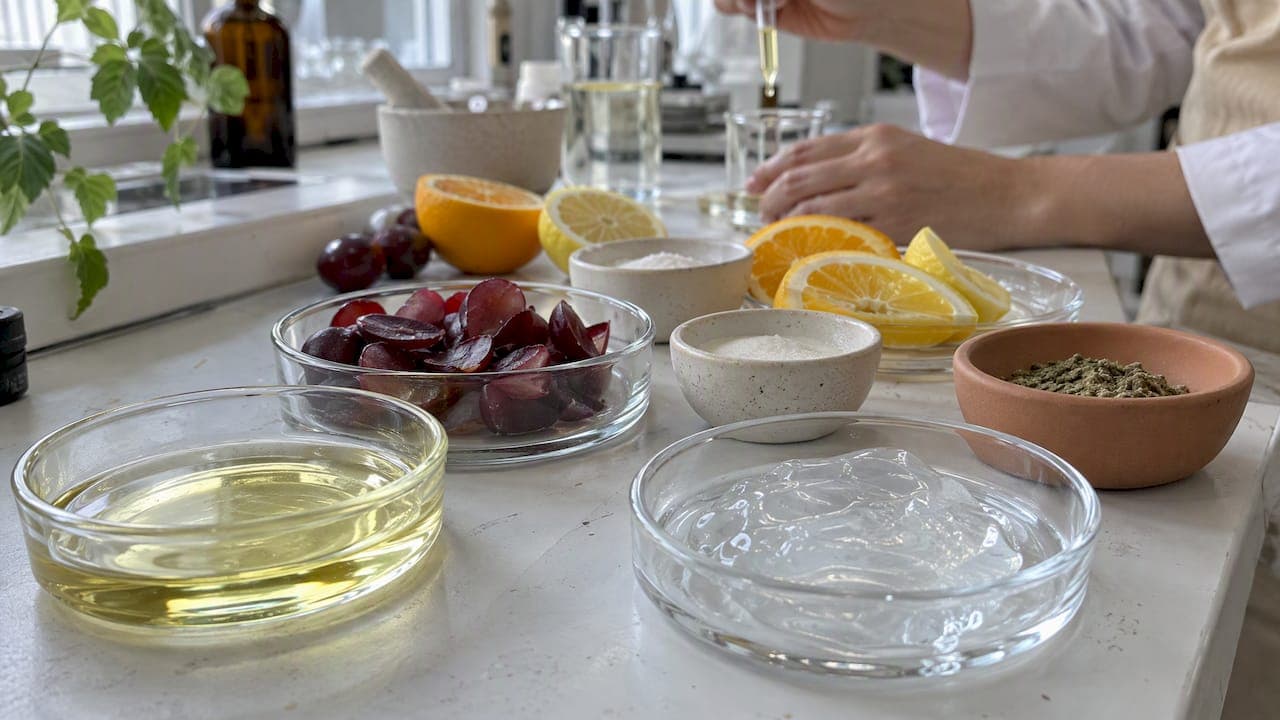
Bakuchiol, resveratrol, vitamin C, hyaluronic acid, peptides, niacinamide, AHAs, and ceramides lead the list of natural anti-aging ingredients with real clinical support. None of them work without daily broad-spectrum sunscreen and consistent use. Visible change typically takes weeks to months, not days.
TL;DR:
- Bakuchiol requires about 12 weeks of daily use to show visible wrinkle and firmness improvements, similar to retinol but with less irritation.
- Resveratrol at 0.007% concentration can improve skin hydration after four weeks, but effectiveness varies across products and formulations.
- Combining vitamin C, niacinamide, hyaluronic acid, and ceramides addresses specific concerns like dullness, dryness, or loss of firmness, and should be layered from light to heavy.
- Applying sunscreen daily remains essential, as no natural ingredient can counteract UV damage on its own, regardless of formulation strength or ingredients.
- Natural actives' evidence quality varies, with consistent use over months necessary to see meaningful results, especially for ingredients like peptides and bakuchiol.
Table of Contents
- 1. Top natural anti-aging ingredients and who they suit
- 2. How these ingredients actually work on skin
- 3. How to use natural anti-aging ingredients safely
- 4. Which natural ingredients fit your specific skin concern
- 5. Evidence snapshot: what the research actually shows
- A science-first view on aging gracefully
- Where Yuka+Face fits into this routine
- FAQ
- Sources
1. Top natural anti-aging ingredients and who they suit
Each of these actives has a distinct job. Matching the ingredient to the concern matters more than chasing a trendy blend.
- Bakuchiol: a plant-derived retinol alternative. Clinical use over about 12 weeks shows reduced fine lines, wrinkles, and hyperpigmentation, with better tolerability than retinoids.
- Resveratrol: a polyphenol antioxidant from grapes and berries. A topical formulation at 0.007% improved hydration after 4 weeks.
- Vitamin C: supports collagen production and brightens skin tone, though stability depends on formulation and pH.
- Hyaluronic acid: a humectant that holds water in skin; molecular weight affects how deeply it penetrates.
- Peptides: short amino acid chains that signal collagen production, among the better-supported cosmeceutical actives for firmness.
- Niacinamide: a form of vitamin B3 that calms inflammation, evens pigment, and strengthens the skin barrier.
- AHAs (glycolic, lactic acid): exfoliants that resurface skin and improve texture.
- Ceramides: lipids that rebuild the skin barrier and reduce water loss.
Bakuchiol suits anyone wanting retinol-like results without the flaking. Niacinamide suits sensitive or reactive skin. Hyaluronic acid and ceramides suit dry or dehydrated skin. Peptides suit those focused on firmness over time. For a deeper look at bakuchiol specifically, our notes on this retinol alternative cover how to work it into a routine.
2. How these ingredients actually work on skin
Antioxidants like resveratrol and vitamin C neutralize free radicals generated by UV exposure, which otherwise break down collagen and accelerate visible aging. Bakuchiol works differently: it regulates gene expression in a retinol-like way, upregulating collagen and TIMP proteins while downregulating MMPs that degrade skin structure. Peptides act as messengers, prompting fibroblasts to produce more collagen.
Hydration works on a separate track. Hyaluronic acid binds water molecules directly in the upper skin layers, while ceramides fill gaps in the skin barrier to slow water loss. AHAs take a mechanical approach, loosening the bonds between dead skin cells so they shed faster, which smooths texture and fades surface pigmentation over time.

3. How to use natural anti-aging ingredients safely
Layering order follows a simple rule: thinnest, most watery formulas go first, heavier creams go last. A typical morning routine runs cleanser, vitamin C serum, moisturizer, then sunscreen. At night, swap sunscreen for bakuchiol or a peptide serum, and save exfoliating acids for a few nights a week rather than daily use.
- Patch test any new active on the inner arm for 24 hours before applying to the face.
- Introduce one active at a time, starting every other night.
- Increase frequency gradually over two to four weeks as skin adjusts.
- Space strong exfoliants and potent actives apart rather than stacking them in one application.
- Check with a dermatologist if redness, stinging, or peeling persists beyond a few days.
Resveratrol showed benefit at a low 0.007% concentration in controlled testing, a reminder that potency doesn't always require a high percentage. For a full AM sequence with sunscreen placement, our morning routine guide walks through the order step by step.
Pro Tip: Apply sunscreen as the last step every morning, rain or shine, since none of these actives can outpace daily UV damage on their own.
4. Which natural ingredients fit your specific skin concern
Different concerns call for different combinations rather than one universal formula.
- Wrinkles: bakuchiol plus peptides plus vitamin C work on separate pathways, collagen signaling, gene regulation, and antioxidant defense, so they complement rather than duplicate each other.
- Pigmentation: vitamin C and niacinamide calm uneven tone, while resveratrol adds antioxidant support; pair with gentle exfoliation for faster fading.
- Dryness: hyaluronic acid draws in water and ceramides seal it in, a combination suited to richer moisturizers.
- Sagging or loss of firmness: peptides need sustained use over months to show measurable change in skin structure.
- Dullness or rough texture: low-strength AHAs plus vitamin C lift dead skin cells and add radiance.
5. Evidence snapshot: what the research actually shows
Bakuchiol produced measurable wrinkle and elasticity improvement after 12 weeks of consistent use, a timeline that matters for setting realistic expectations rather than judging a product after a week. A separate review of natural anti-aging compounds notes that evidence quality varies across botanicals, from strong human trial data to early lab work. Resveratrol's hydration data came from a single concentration in a short trial, useful but not proof that every resveratrol product performs the same way. Read individual studies as a starting point, not a guarantee.

A science-first view on aging gracefully
Aging skin doesn't need to be treated like a problem to solve overnight. Sunscreen and consistency outperform any single ingredient, and barrier-first routines reduce irritation while still allowing actives like bakuchiol or niacinamide to do their work over weeks and months.
— Kelly
Where Yuka+Face fits into this routine
We offer products built around vitamin C, bakuchiol, hyaluronic acid, and ceramides, suited to barrier repair and sensitive skin.

- Browse our shop for serums and moisturizers organized by concern.
- Check the Vitamin C Glow Serum if brightening and collagen support are the priority.
- Visit our dry skin and moisturizer collection for ceramide and hyaluronic acid formulations.
FAQ
How long does it take to see results from natural anti-aging ingredients?
Most clinical studies on ingredients like bakuchiol measure visible change after about 12 weeks of consistent use. Shorter timelines are possible for hydration-focused ingredients like resveratrol, which showed measurable change after 4 weeks in testing.
Is bakuchiol really as effective as retinol?
Bakuchiol works through a similar gene-regulation pathway as retinol but tends to cause less irritation, based on systematic review findings. It's considered a reasonable natural alternative for those who can't tolerate retinoids, though evidence is still growing compared to retinol's longer research history.
Can I use vitamin C and niacinamide together?
Yes, vitamin C and niacinamide can be layered in the same routine, typically vitamin C in the morning for antioxidant protection and niacinamide for barrier support. Introducing them gradually helps skin adjust without irritation.
Do natural ingredients replace the need for sunscreen?
No single natural ingredient replaces sunscreen. Dermatology guidance consistently places sun protection as the foundation of any anti-aging routine, with active ingredients working as supporting measures rather than substitutes.
What's the best natural ingredient for sensitive skin?
Niacinamide and ceramides tend to be the gentlest options, since they focus on calming inflammation and rebuilding the skin barrier rather than accelerating cell turnover. Bakuchiol is also generally well tolerated compared with traditional retinoids.
Sources
- Bakuchiol clinical studies (PubMed entry)
- The bioactivities of resveratrol and its naturally occurring derivatives on skin (PMC, 2021)
- Applications of bakuchiol in dermatology: Systematic review (PubMed, 2022)