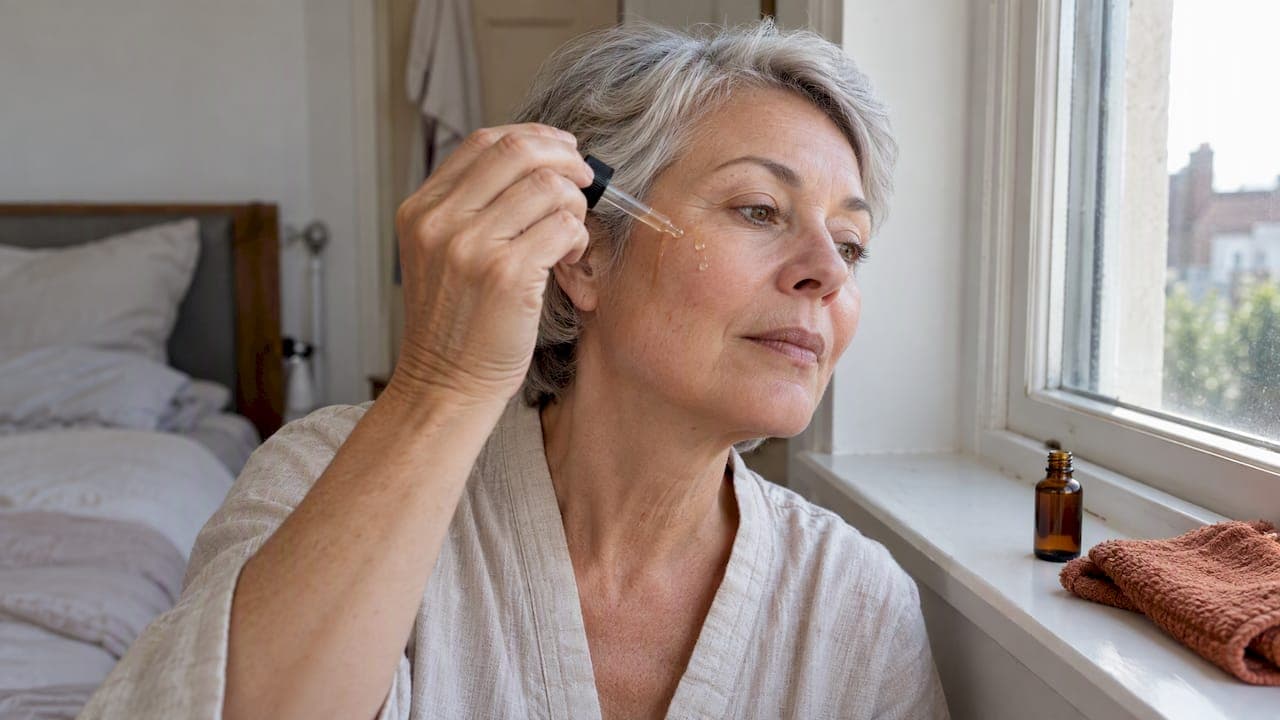
The simplest effective vegan anti-aging routine runs four steps: cleanse, apply a targeted plant-based treatment such as bakuchiol, moisturize, then finish the morning with broad-spectrum SPF 30+. Daily sunscreen remains the single most effective step against visible aging, and bakuchiol offers a gentler, vegan-friendly retinol alternative. We build our formulas around exactly these product types.
TL;DR:
- Start treatments every other night for two weeks, patch test on your inner arm for 24 hours, and introduce only one active at a time.
- Apply an amount the size of a nickel to your face 15 minutes before sun exposure, then reapply every two hours and after swimming.
- A randomized trial found bakuchiol reduced wrinkles and hyperpigmentation comparably to retinol, with less scaling and stinging; sensitive skin may tolerate it better.
- Dry skin benefits from richer creams and hyaluronic acid, while oily or combination skin calls for lightweight, noncomedogenic moisturizers and oil free sunscreen.
Table of Contents
- Your AM and PM vegan anti-aging routine, step by step
- The vegan actives that actually move the needle
- How to layer actives without irritating your skin
- Adjusting the routine for your skin type
- Why sunscreen is the backbone of vegan anti-aging
- Why we believe aging well starts with simplicity
- Getting started with a vegan anti-aging routine
- FAQ
- Sources
Your AM and PM vegan anti-aging routine, step by step
Mornings call for protection. Evenings call for repair. The order matters as much as the products themselves.
- Cleanse with a gentle, sulfate-free formula to remove oil and buildup without stripping the skin.
- Apply an antioxidant serum, such as vitamin C, to help defend against environmental stress.
- Moisturize with a lightweight, hydrating formula suited to your skin type.
- Finish with broad-spectrum SPF 30+, applied 15 minutes before sun exposure and reapplied per the label's instructions.
At night, the sequence shifts toward repair:
- Cleanse again to remove sunscreen, makeup, and the day's pollutants.
- Apply a targeted treatment, such as bakuchiol or another vegan active, introduced slowly rather than every night from the start.
- Moisturize to seal in hydration and support overnight barrier repair.
Reserve stronger actives for the PM routine. Skin repairs itself overnight, and treatments like bakuchiol work without the risk of sun sensitivity that some actives carry. When starting a new active, apply it every other night for the first two weeks, then increase frequency if your skin tolerates it well.
For sunscreen, the AAD recommends a nickel-sized amount for the face alone, reapplied at least every two hours outdoors. Avoid introducing more than one new active ingredient at a time. Layering several unfamiliar treatments at once makes it hard to identify what caused irritation if your skin reacts, and it raises the odds of redness or peeling on skin that's already working to repair itself.
The vegan actives that actually move the needle
Not every plant-based ingredient earns its spot on a label. A handful of vegan actives have real evidence behind them, and knowing what each one does helps you shop with purpose instead of guessing.
Bakuchiol stands out as the most studied vegan retinol alternative. A randomized clinical trial published on PubMed found that bakuchiol reduced wrinkle area and hyperpigmentation with efficacy comparable to retinol, while causing less scaling and stinging, which makes it a practical option for sensitive or darker skin tones that react poorly to traditional retinoids.
Pro Tip: Separate research combining bakuchiol with botanical extracts like vanilla tahitensis reported improved firmness and radiance over several weeks of consistent use, according to an open-label clinical trial.
Beyond bakuchiol, these ingredients round out a complete vegan routine:
- Hyaluronic acid and glycerin draw moisture into the skin and plump the look of fine lines.
- Plant-derived ceramides help rebuild the skin's barrier, which keeps moisture in and irritants out.
- Peptides support the skin's structural proteins, often used to firm and smooth texture over time.
- Vitamin C and vitamin E work as antioxidants, helping defend skin against daily environmental exposure.
To verify a product's vegan and cruelty-free claims, check the ingredient list for animal-derived items like collagen, beeswax, or carmine, and look for a stated animal-testing policy, such as Leaping Bunny certification, on the brand's own site.
How to layer actives without irritating your skin
Order of application affects how well each product works. Apply thin, liquid formulas first, treatments after cleansing, and moisturizer before sunscreen. The AAD's own guidance on product order warns that piling on too many products at once can irritate skin and work against your results.
A few rules keep this simple:
- Apply bakuchiol or other treatment actives at night, since that's when skin repairs itself without sun exposure to complicate things.
- Avoid retinoids entirely during pregnancy or while using isotretinoin, and lean on gentler options like bakuchiol instead, per AAD retinoid guidance.
- Patch test any new active on your inner arm for 24 hours before applying it to your face.
- Start new treatments every other night, then build up gradually as tolerance improves.
Pro Tip: If you notice redness, tightness, or peeling, pause the active for a few nights and return to cleanser and moisturizer alone until skin calms down.
Adjusting the routine for your skin type
A vegan anti-aging routine isn't one size fits all. Small adjustments based on your skin type make a real difference in comfort and results.
- Dry skin benefits from richer, ceramide-based creams at night and hyaluronic acid serums layered in both morning and evening.
- Oily or combination skin does better with lightweight, non-comedogenic moisturizers, gel-based humectants, and an oil-free sunscreen formula.
- Sensitive or darker skin tones should introduce actives slowly, prioritize bakuchiol over traditional retinol, and rely on barrier-repair moisturizers, since irritation on deeper skin tones can trigger lingering dark spots.
Across all three, a solid moisturizer carries more weight than most people assume. Research on barrier repair published on PubMed shows that moisturizer reduces water loss through the skin and strengthens the barrier, which both softens the look of fine lines and helps skin tolerate stronger actives without reacting.
Why sunscreen is the backbone of vegan anti-aging
Daily broad-spectrum SPF 30 or higher stands out as the most effective anti-aging step available, more so than any serum or treatment. The AAD reports that sunscreen labeled water resistant must specify whether that protection lasts 40 or 80 minutes, and reapplication is required at least every two hours regardless of that label.

Under the FDA's OTC sunscreen monograph, "broad spectrum" means a product protects against both UVA and UVB rays, and only broad-spectrum SPF 15 or higher can legally claim reduced risk of early skin aging when used alongside other sun-protective measures.
A few habits make sunscreen work the way it's designed to:
- Apply a nickel-sized amount to the face, and don't skip the ears, neck, or hairline.
- Apply 15 minutes before heading outside so the formula has time to settle.
- Reapply at least every two hours, and immediately after swimming or heavy sweating.
Reapplication matters just as much on tattooed or scarred skin, where sun exposure can fade ink and irritate healing tissue; guidance on SPF for tattoos covers how to protect those areas specifically. To confirm a sunscreen is vegan and cruelty-free, check for a mineral or chemical filter list free of animal-derived emulsifiers and confirm the brand's testing policy on its own site.
Why we believe aging well starts with simplicity
Most anti-aging advice piles on more products, not fewer. The real gap we see is between what's marketed and what skin actually needs: a strong barrier, consistent hydration, and daily sun protection. Bakuchiol and peptides earn their place because evidence backs them, not because they're trending.
Our formulas are built around that same logic: barrier-repair moisturizers, bakuchiol-friendly serums, and short ingredient lists instead of crowded ones. A dermatologist remains the right call for personalized concerns, and our journal offers a starting point for building your own routine.
— Kelly
Getting started with a vegan anti-aging routine
Each step of this routine is available as its own product, so building a full regimen doesn't require guesswork. Our B3 Gentle Cleanser covers step one, our Bright Eyes Peptide Serum and Vitamin C Glow Oil handle targeted treatment, and our moisturizers are formulated for barrier repair.
- Shop our full skincare lineup to assemble your routine piece by piece.
- Browse our morning routine guide for step-by-step application tips.
- Read our vegan skincare guide to see how we verify every cruelty-free claim.
Patch test any new product for 24 hours before adding it to your nightly lineup, and start treatments every other night to build tolerance gradually.
FAQ
What is the most important step in a vegan anti-aging routine?
Daily broad-spectrum SPF 30 or higher is the single most effective anti-aging step, according to the AAD. Pairing consistent sunscreen use with a gentle moisturizer and a vegan active like bakuchiol rounds out an effective routine.
Is bakuchiol as effective as retinol for anti-aging?
A randomized clinical trial found bakuchiol reduced wrinkles and hyperpigmentation with results comparable to retinol, while causing less irritation. This makes it a practical option for sensitive or darker skin tones that don't tolerate retinol well.
How often should I exfoliate in a vegan anti-aging routine?
Gentle enzymatic or chemical exfoliants work well for aging skin when used two to three times a week rather than daily, since over-exfoliating can damage the skin's barrier. Pair exfoliation with a barrier-repair moisturizer to offset any dryness.
Can I use vegan skincare if I have sensitive skin?
Yes, vegan formulas often skip common irritants and rely on plant-derived ceramides and humectants that support the skin barrier. Introduce any new active slowly, starting every other night, and prioritize bakuchiol over stronger retinoids.
What lifestyle habits support a vegan anti-aging routine?
Adequate hydration, a diet rich in antioxidants from fruits and vegetables, and consistent sleep all support skin repair alongside topical products. These habits work with, not instead of, a daily cleanse, treatment, moisturizer, and sunscreen routine.
Sources
- American Academy of Dermatology (AAD) — sunscreen guidance and stats
- PubMed — bakuchiol randomized clinical trial (2018)
- U.S. FDA — OTC monograph M020: Sunscreen drug products
- PubMed — moisturizer and barrier repair study