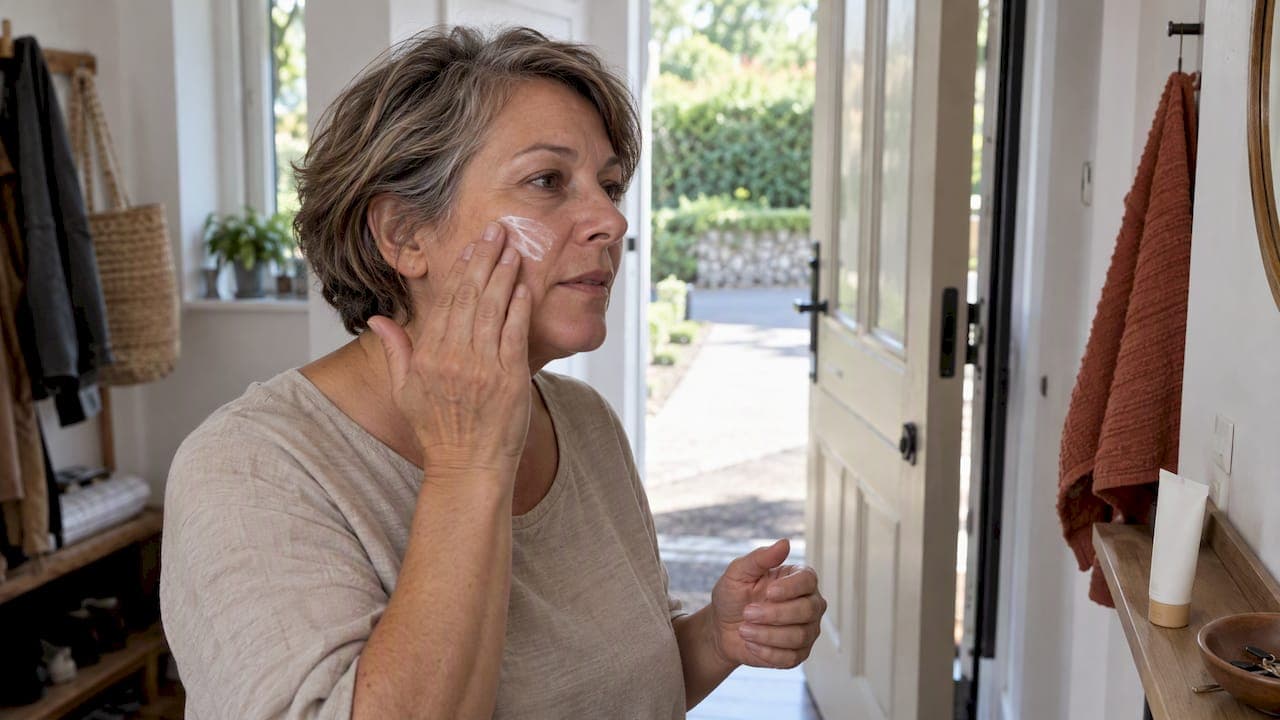
The simplest, most effective anti-aging approach is daily sunscreen paired with a two-part routine: a protective morning sequence and a repair-focused evening sequence built around retinoid nights. The American Academy of Dermatology points to broad-spectrum SPF 30+ as the single most important anti-aging step, with retinoids carrying the strongest evidence for treating photoaging. We built our product lineup around this exact structure.
TL;DR:
- Apply broad spectrum SPF 30+ every morning, use a nickel sized amount for your face, cover your neck, and reapply during extended outdoor exposure.
- Start retinoids once or twice a week, move to every other night only after tolerance develops, and avoid strong exfoliating acids on retinoid nights.
- Pause topical retinoids and consult a dermatologist if irritation persists, a severe skin reaction develops, or you are planning a pregnancy.
- Track progress with photos in consistent lighting and a product log; allow 6 to 12 weeks before switching products or judging results.
Table of Contents
- Your morning routine: protect first, treat second
- Building a safe, effective nighttime retinoid routine
- What the key anti-aging ingredients actually do
- Adjusting the routine for your age and skin type
- How long before you see results, and how to track them
- How our formulas support this exact routine
- Aging well versus chasing anti-aging claims
- Shop the starter kit that matches this routine
- FAQ
- Sources
Your morning routine: protect first, treat second
Morning skincare exists to prepare and shield your skin for the day. Keep it short enough to actually do every day.
Start with a gentle cleanse. A quick rinse or a light cleanser removes overnight sweat and oil without stripping your barrier. Drier or more mature skin tends to do better with a cream or oil cleanser rather than a foaming one, since foaming formulas can pull out moisture you need.
Vitamin C is optional here but worth considering. It works as an antioxidant that helps defend skin against daily environmental stress. The Cleveland Clinic recommends concentrations around 10% to 15% L-ascorbic acid, and notes that formulation stability matters: look for opaque or airless packaging, since light and air degrade vitamin C quickly. Our Vitamin C Cleansing Oil folds this step into cleansing for mornings when you want fewer products on your counter.
Moisturizer comes next. Look for humectants like hyaluronic acid and glycerin to pull in water, plus ceramides to support the skin barrier. Choose a richer cream if your skin runs dry, or a lighter lotion or gel if you lean oily.
Sunscreen closes the routine, and it is not optional. Apply broad-spectrum SPF 30+ every morning, using enough to cover your face and neck, and reapply if you are outdoors for extended periods. The AAD specifically recommends water-resistant SPF 30+ for outdoor days. Mineral formulas (zinc oxide, titanium dioxide) tend to suit sensitive skin, while chemical sunscreens often feel lighter under makeup.
- Cleanse with a formula suited to your skin's moisture needs, not just what is on sale.
- Apply vitamin C before moisturizer if you use it, letting it absorb for a minute first.
- Use a nickel-sized amount of sunscreen for the face alone, more if you are covering your neck and chest.
- Reach for a moisturizer with built-in SPF only when you are confident it delivers full broad-spectrum coverage.
Pro Tip: Keep your morning routine to four steps or fewer. A routine you will actually finish every day beats an elaborate one you abandon by week two.
Building a safe, effective nighttime retinoid routine
Evenings are when skin repairs itself, which makes this the right window for your most active ingredients. Start by cleansing again, choosing a gentle, non-stripping formula. Double cleansing (an oil-based cleanser followed by a water-based one) is worth adding only on days you wore heavy makeup or mineral sunscreen that needs a stronger lift.
Retinoids are where most of the structural benefit comes from, and they're also where people most often overdo it. A systematic review of topical retinoids found that prescription tretinoin has the strongest evidence for photoaging, with improvements in fine wrinkles showing up in trials lasting a month or longer, though irritation is a common side effect. The practical fix is to go slow:
- Apply a pea-sized amount of retinol or retinoid once or twice a week to start.
- Increase to every other night once your skin tolerates the lower frequency without redness or peeling.
- Work up to nightly use only if your skin stays calm, and avoid combining retinoids with strong AHAs or BHAs on the same night.
- Reserve prescription-strength tretinoin for use under a dermatologist's guidance, especially if you're moving beyond over-the-counter retinol.
Layer a hyaluronic acid serum before your retinoid to add a buffer of hydration, and follow with a moisturizer afterward to lock it in. If your skin runs very dry, a thin layer of an occlusive balm over moisturizer can prevent the flaking that often derails retinoid routines in the first few weeks.
Pause and check in with a dermatologist if you notice persistent irritation that does not improve after lowering frequency, if you are planning a pregnancy, or if you develop a more severe reaction like widespread dermatitis. The FDA labeling for Retin-A Micro specifically warns about photosensitivity and local irritation with topical tretinoin, and advises against use on sunburned skin. For more on sequencing these steps at night, our evening skincare ritual guide walks through layering order in more detail.
Pro Tip: If your skin stings or turns red after a retinoid, apply moisturizer first as a buffer layer next time, then the retinoid on top. This "sandwich method" softens the dose without canceling the benefit.

What the key anti-aging ingredients actually do
Retinoids sit at the top of the evidence list. Prescription tretinoin has stronger clinical support than most over-the-counter retinol products, though that strength comes with a higher chance of irritation, according to dermatology reviews of retinoids. Oral isotretinoin, used for severe acne rather than general anti-aging, carries strict pregnancy warnings under the FDA's iPLEDGE program and is a separate category entirely from topical retinoids.
Vitamin C supports skin by neutralizing everyday oxidative stress from sun and pollution exposure. A concentration in the mid-range, around ten to fifteen percent L-ascorbic acid, is commonly recommended, per Cleveland Clinic guidance, and stability depends heavily on packaging that blocks light and air.
Hydrators and barrier builders round out the routine:
- Hyaluronic acid draws water into the skin's surface layers for a plumping effect.
- Glycerin works similarly as a humectant and pairs well with heavier creams.
- Ceramides replace lipids that naturally decline with age, helping the skin barrier hold moisture.
- Peptides support the skin's structural proteins and are often used around the eyes and in targeted serums.
Chemical exfoliants like AHAs and BHAs can improve texture and tone, but they compete with retinoids for your skin's tolerance budget. Limit use to one or two times weekly, and never on the same night as a retinoid.
Adjusting the routine for your age and skin type
Mature skin tends to be drier and more reactive, so hydration and barrier support take priority over aggressive actives, with special attention to an easy hormone health morning routine for women that supports skin during hormonal changes. Harvard Health recommends mild cleansers and fragrance-free, barrier-supportive moisturizers for aging skin, along with cautious exfoliation. Don't forget your neck and hands: they get as much sun exposure as your face but are often left out of the routine entirely.
Skin type changes the details without changing the structure:
- Oily skin does best with a lightweight, gel-based moisturizer and a non-comedogenic sunscreen that won't clog pores.
- Sensitive skin benefits from fragrance-free formulas across the board, with new actives patch-tested on the inner arm before a full-face application.
- Skin of color needs a gentler hand with exfoliation and retinoid frequency, since irritation raises the risk of post-inflammatory hyperpigmentation.
A reliable buying rule: establish sunscreen and moisturizer as daily habits for a few weeks before adding any targeted active, then introduce one new product at a time so you know exactly what's working. Our guide to caring for mature skin breaks this sequencing down further for readers over 40.
How long before you see results, and how to track them
Hydration-driven changes show up fast. Plumping from moisturizer or hyaluronic acid can be visible within days, since it works by temporarily smoothing the skin's surface. Structural changes take longer: most targeted anti-aging products need at least 6 weeks, and a Consumer Reports expert summary points to a realistic window of 2 to 6 months for meaningful improvement from retinoids and vitamin C.
Track your progress with simple tools:
- Take photos in the same lighting and position every few weeks rather than relying on memory.
- Keep a short log of what you're using and when you started, so you can connect changes to specific products.
- Resist the urge to switch products before the 6 to 12 week mark. Switching too soon means you never find out if something was actually working.
If you see no change after a full trial period, or irritation becomes intolerable, that's the signal to see a board-certified dermatologist rather than add more products to the mix.
How our formulas support this exact routine
We build every Yuka+Face product around the same priorities this routine calls for: gentle cleansing, real hydration, and barrier support, without synthetic fillers.
A few ways our product types map onto the steps above:
- A gentle, barrier-friendly cleanser for the morning or evening step, like our B3 Gentle Cleanser.
- An antioxidant-rich oil or serum for mornings when vitamin C fits your routine.
- Moisturizers formulated with ceramides and humectants for both AM and PM hydration needs.
- A peptide-based eye serum for the thinner, more delicate skin around the eyes.
For ingredient-level detail, our natural anti-aging ingredients breakdown covers timelines and evidence for the botanicals we formulate with.
Aging well versus chasing anti-aging claims
No serum takes ten years off your face, and routines promising that are selling a feeling, not a result. What actually works is unglamorous: consistent sunscreen, steady hydration, and one well-chosen active introduced slowly. Chasing five new actives at once usually ends in irritation, not progress. Treat your routine as maintenance, not a reversal project, and give it the months it needs to show what it can actually do.
— Kelly
Shop the starter kit that matches this routine
We built our core lineup to match the exact steps above, without the guesswork of combining ingredients from a dozen different brands. Each piece has one job.

- A gentle cleanser to open both your morning and evening routine without stripping your barrier.
- An antioxidant-rich cleansing or glow oil for mornings when you want vitamin C built in.
- A ceramide and humectant moisturizer to lock in hydration day and night.
- Our Bright Eyes Peptide Serum for the thinner skin around the eyes where fine lines show first.
Browse the full lineup in our shop or start with moisturizers and masks built for drier, more mature skin.
This article is general information, not a substitute for advice from a qualified doctor. Consult a qualified healthcare professional about your own circumstances before acting on anything here.
FAQ
What is the best anti-aging skincare set?
The most effective set covers four roles: a gentle cleanser, an optional antioxidant like vitamin C, a barrier-supporting moisturizer, and broad-spectrum SPF 30+, with a retinoid added at night. Our starter kit is built around these exact roles using vegan, ceramide and humectant-based formulas.
What is the most effective anti-aging skin care line?
There is no single line proven superior to all others, but the most effective approach prioritizes sunscreen and a well-tolerated retinoid above any specific brand. The American Academy of Dermatology identifies sunscreen and moisturizer as the two products with the clearest anti-aging benefit, regardless of brand.
What is the 4-2-4 rule in skincare?
The 4-2-4 rule is a popular online skincare ritual rather than an evidence-based dermatology standard. Authoritative guidance from the American Academy of Dermatology prioritizes a mild cleanser and consistent basics over any specific timed ritual, so treat trends like this one as optional.
How can I take years off my face with skincare alone?
Topical skincare cannot literally reverse a decade of aging, but a consistent routine of sunscreen, hydration, and retinoids can meaningfully soften fine lines, even out pigmentation, and prevent further sun damage. More dramatic changes typically require procedural or prescription-level treatments discussed with a dermatologist, per AAD guidance.
How do I know if my routine is actually working?
Hydration improvements can appear within days, but structural changes like softened fine lines typically take 6 to 12 weeks, with some improvements continuing for months. Track consistent photos and a simple log, and avoid switching products before giving them a full trial period, per guidance on maximizing anti-aging results.
Sources
- How to select anti-aging skin care products — American Academy of Dermatology
- Anti-aging skin care — Cleveland Clinic
- Systematic review of topical retinoids for photoaging — PubMed
- RETIN-A MICRO prescribing information — FDA label