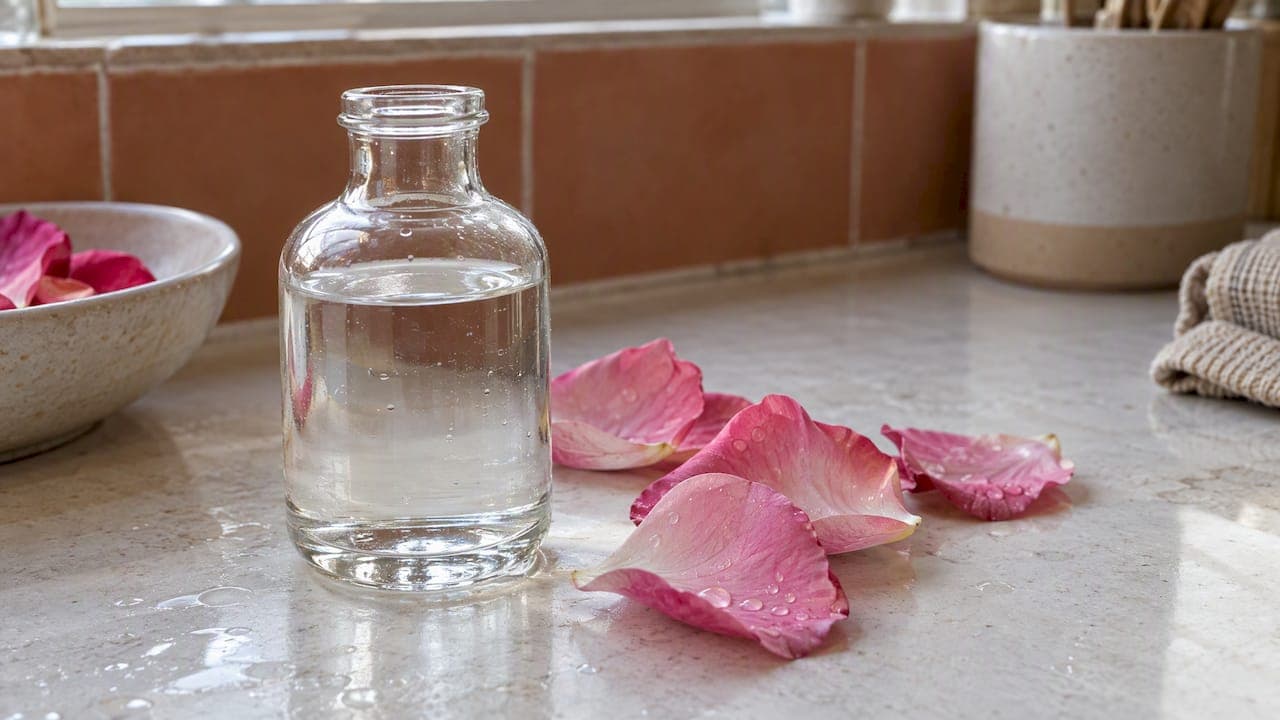
Rose water is a light, leave-on mist or toner that can leave skin feeling calmer, less tight and lightly hydrated after cleansing. That is the realistic benefit. Clinical evidence for stronger claims is limited, so the best results come from a well-made, simple formula used consistently. This guide covers what rose water does, what research supports, how it compares with witch hazel and with a standard toner, and how to use it on sensitive skin.
TL;DR
- Rose water is mainly a gentle hydrating and soothing step. Clinical evidence for skin benefits is limited.
- Lab work points to anti-inflammatory properties in rose extracts, but much of it was done on animal cells or in labs, so human effects are uncertain.
- Rose water is a soft, floral-water option. Witch hazel is an astringent. They do different jobs, and sensitive skin usually needs the gentler of the two.
- Check the label for alcohol, added fragrance and a short ingredient list. Patch test first.
Table of Contents
- What rose water is
- Rose water benefits: what is supported
- Rose water for sensitive skin
- Rose water vs. witch hazel
- Rose water vs. toner
- How to use rose water in a routine
- Who gets the most from rose water
- Perspective
- Shop gentle toners and routines
- FAQ
- Sources
What rose water is
Rose water is the aromatic water left from steeping or distilling rose petals. Real rose water, sometimes sold as rose hydrosol, contains water plus trace plant compounds. Many bottles on the shelf are different: water with fragrance, preservatives and sometimes alcohol, flavored with rose scent.
That difference matters more than the rose name. Two products both labeled "rose water" can behave very differently on skin, because the formula around the rose decides how it feels and how well skin tolerates it.
People use it in three main ways:
- As a toner after cleansing.
- As a mist over the day or over makeup.
- As a base for masks, or a light refresher between steps.
Rose water benefits: what is supported
Start with the honest summary. Rose water has a long history of use, and it is used for fragrance and potential skin benefits and calming effects. Clinical evidence on its effectiveness for skin is limited. Here is how each commonly claimed benefit holds up.
Light hydration
This is the benefit you can count on most. Any water-based mist or toner adds a thin layer of water to the skin surface right after cleansing. Skin feels softer and less tight for a short time. That layer only lasts if you follow it with a moisturizer that holds water in. Our guide to skin hydration explains the layering, and our piece on measurable hydration from hydrating toners covers what a toner step can add.
Calming feel
Many people find rose water soothing, and a cool mist on warm or flushed skin feels good. Some of that comes from the water itself and the ritual of a gentle step. The scent also plays a part, which is a point for sensitive skin, covered below.
Anti-inflammatory properties
A 2021 review reported anti-inflammatory properties in rose extracts. Much of that research was done on animal cells or in labs, so effects in people remain uncertain. It is a reason for interest, not proof that a rose water spray treats redness, rosacea or eczema.
Antioxidant and anti-aging claims
Some pages credit rose water with firming skin, boosting collagen or erasing wrinkles. These claims are usually drawn from rose extract studies or old studies of other forms, not from testing a mist on faces. Despite centuries of use, the empirical benefits of rose water remain uncertain. If lines and firmness are your goal, a targeted serum does more work. See our notes on peptides in organic skincare.
Antibacterial and acne claims
Rose water is sometimes called antiseptic or antibacterial. Treat that as an unproven marketing claim for a diluted floral water. If you have acne, rose water is not a treatment. A gentle cleanser and a routine suited to your skin type do more, and a dermatologist is the person to see for persistent or painful breakouts.
Non-skin claims
Readers also search about rose water for gums, mood, drinking or spiritual use. Those are outside skincare, and we do not make health claims for them here. For a medical concern, ask a doctor or dentist.
Rose water for sensitive skin
Rose water for sensitive skin sounds like a natural match, but the answer depends on the bottle. Sensitive skin reacts most often to added fragrance, alcohol and strong essential oils. Rose water sold as a scented toner can contain all three.
A practical way to judge a product:
- Read the ingredient list. Short is better. Look for water, a rose ingredient and a preservative system, not a long list of scent components.
- Look for alcohol. If denatured alcohol sits near the top of the list, the product can feel drying. Our guide to alcohol in toner shows which ingredients to check for your skin type.
- Check fragrance. "Parfum" or "fragrance" on the label adds an extra variable. Natural scent is still scent, and it can still bother reactive skin.
- Patch test. Apply a small amount to the inside of the forearm or behind the ear once a day for a few days. Stop if you see redness, itching or burning.
- Introduce one new product at a time. Then you know what caused a reaction.
If you have a diagnosed condition such as rosacea, eczema or a known fragrance allergy, ask your dermatologist before adding any new toner or mist. Stop using a product that stings or burns, and see a doctor if a reaction does not settle.
For other ingredients that suit reactive skin, see our list of calming skincare ingredients for irritated skin and the guide to aloe vera for face.
Rose water vs. witch hazel
These two are often sold side by side as toners, but they work differently.
| Rose water | Witch hazel | |
|---|---|---|
| Main role | Hydrating, soothing mist or toner | Astringent toner |
| Feel | Light, cool, often scented | Tightening, can feel drying |
| Typical concern | Dryness, tightness, dull feel | Oiliness, visible pores |
| Common watch-out | Added fragrance | Alcohol content, over-drying |
| Fit for sensitive skin | Often, if unscented or simply formulated | Only in alcohol-free, gentle formulas |
| Evidence for skin | Limited clinical evidence | Limited in consumer form |
Witch hazel is a plant extract rich in tannins. Tannins are astringent, meaning they make skin feel tighter and can reduce the look of oil. One ingredient supplier describes a fermented witch hazel as tannin-based and able to bind proteins, and reports visible pore-size improvement in its own testing. Those are supplier statements, not independent clinical trials, so read them as a description of how the ingredient is meant to behave.
Witch hazel alcohol free: what it means

Traditional witch hazel water is often made with added alcohol. An alcohol-free version leaves it out. The same supplier describes a lactobacillus-fermented witch hazel water that is alcohol-free by design. Alcohol-free does not mean irritation-free. An astringent can still feel strong on dry or reactive skin, and added fragrance or essential oils can still cause problems. Read the whole list, not one claim on the front.
Witch hazel toner pros and cons
- Pros: can help skin feel less oily and look cleaner, works as a quick step for oily or combination skin, pairs well with a moisturizer.
- Cons: the tightening effect can be too much for dry, sensitive or compromised skin, and alcohol-based versions can dry skin further.
If your skin is dry or easily irritated, rose water or another soothing, alcohol-free toner is usually the safer starting point. If your skin is oily and tolerates astringents, witch hazel in an alcohol-free formula is a reasonable option. Some people use rose water in the morning and a witch hazel step on oily zones only. Start with one and watch how skin responds.
Rose water vs. toner
Rose water is not a separate category from toner. It is one kind of toner, or one ingredient in one. A toner is any liquid step after cleansing that preps skin for what comes next. Modern toners can be hydrating, balancing, exfoliating or astringent.
The difference is how much the formula does:
- Plain rose water gives light hydration and scent. It does little else.
- A formulated toner can combine a floral water with humectants, soothing botanicals and a gentle preservative system, so it hydrates for longer and suits a defined skin type.
Our Lavender Essence Balancing Toner is an example of the second kind: a vegan, cruelty-free formula built as a toner step rather than a scented mist. If you like the idea of botanical water but want a clearer role in your routine, a formulated toner is where to look.
How to use rose water in a routine
Keep it simple.
- Cleanse. Remove makeup and sunscreen, then wash with a gentle cleanser. If you wear heavy makeup, our double cleansing guide shows how to do it without stripping skin.
- Apply rose water or toner. Mist onto the face, or press into skin with clean hands. Skin should still be slightly damp.
- Add serum if you use one. Water-based steps go before oils and creams.
- Moisturize. This keeps the added water from evaporating. See moisturizing vs. hydrating for the difference.
- Use sunscreen in the morning. Our morning skin care routine lays out the order.
Use it once or twice a day. Mist again during the day if skin feels dry, but skip it if the product stings.
How to store it
Keep rose water in a cool place out of direct sun, and close the cap each time. Water-based products can spoil, so discard anything that changes color or smell. Be careful with homemade versions: without a proper preservative, they can grow bacteria within days. A store-bought, preserved formula is the safer choice for your face, especially if your skin is reactive.

Who gets the most from rose water
Rose water tends to suit:
- Normal, dry or combination skin that wants a light hydrating step.
- People who like a refreshing mist over the day.
- Routines built around simple plant-based ingredients. See our overview of plant-based skincare steps.
It is a weaker fit for:
- Skin that reacts to any scent.
- People expecting it to treat acne, rosacea or wrinkles.
- Anyone who wants measurable results on dark spots or texture. A targeted active does more here. Our write-up on rosehip oil for face shows what a five-week test found on texture and spots.
Perspective
We make skincare on a simple idea: a short, transparent ingredient list is easier for skin to tolerate and easier for you to understand. Rose water fits that idea when the formula is plain. It is a pleasant, hydrating step, and we would not ask it to do more than that.
Our formulas are vegan, cruelty-free and built around botanical ingredients. We design them for barrier support and sensitive skin, so the botanical water in a toner works alongside humectants and gentle plant extracts, not alone.
When someone asks us whether to pick rose water or witch hazel, we ask about skin first. Dry or reactive skin usually does better with a soothing, alcohol-free toner. Oily skin may like a gentle astringent. The best routine is the one you can keep up without irritation.
Kelly
Shop gentle toners and routines
If you want a toner step without guessing at the label, browse our toners, cleansers and serums. Each is vegan and cruelty-free, and made for a routine that stays simple. For dry skin, our moisturizers and masks pair with a toner to keep water in.
The full range is also on our organic skincare page.
FAQ
What are the benefits of applying rose water?
The most reliable benefit is light hydration and a calming, fresh feel after cleansing. Lab research on rose extracts suggests anti-inflammatory properties, but human evidence is limited. Use it as a gentle step, not a treatment.
Is rose water good for sensitive skin?
It can be, if the product is simple, unscented or lightly scented, and free of alcohol. Added fragrance is the most common problem. Patch test first, and talk to a dermatologist if you have rosacea, eczema or a known fragrance allergy.
Which is better, rose water or witch hazel?
It depends on your skin. Rose water is hydrating and soothing, so it suits dry or reactive skin. Witch hazel is an astringent that suits oily skin better, and it should be alcohol-free if your skin is sensitive.
Is rose water the same as a toner?
No. Rose water is one ingredient or one type of toner. A formulated toner can add humectants and soothing botanicals, so it does more than a plain floral water and can be matched to your skin type.
Can I use rose water every day?
Most people can use a well-tolerated, preserved rose water once or twice a day. Stop if skin stings, turns red or itches, and see a doctor if the reaction continues.
Sources
- 3 Reasons To Use Rose Water for Skin Health This Spring, Health
- What does rose water do? Here's a look at the science, National Geographic
- Hamamelis Virginiana (Witch Hazel) Ferment Filtrate, Nikoochem