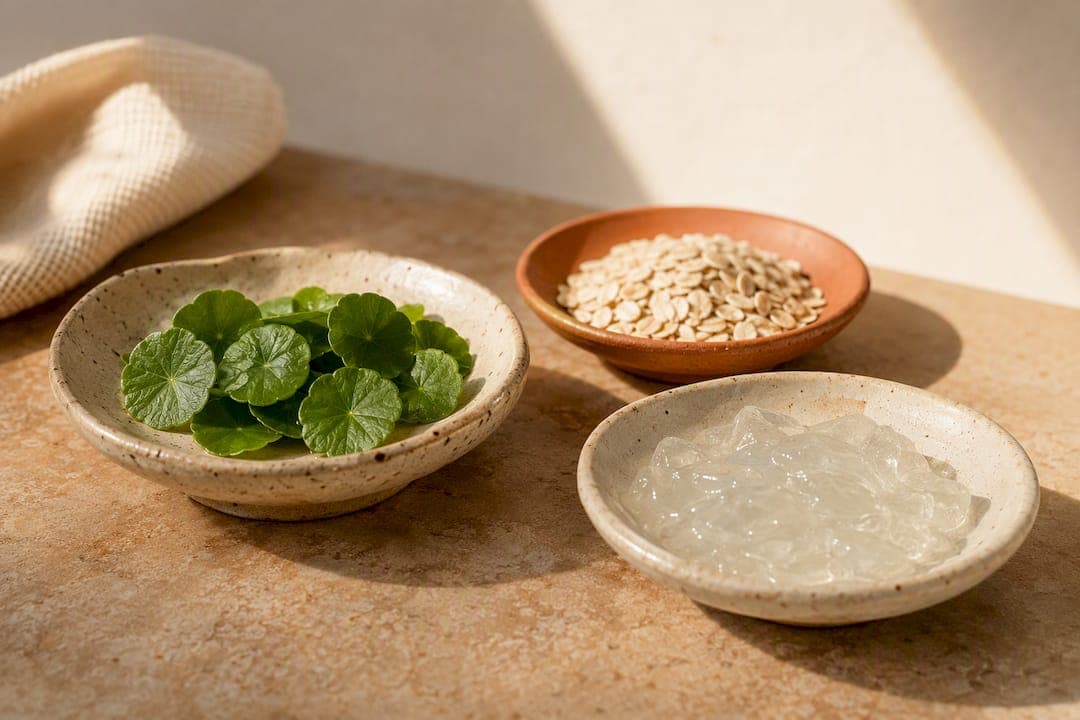
The most reliable calming skincare ingredients fall into three groups: hydrators, barrier lipids, and anti-inflammatory actives. Look for niacinamide, ceramides, hyaluronic acid, colloidal oatmeal, centella asiatica, panthenol, allantoin, bisabolol, squalane, aloe vera, green tea, and witch hazel on the label. Patch test any new product, and skip exfoliating acids while skin is actively irritated.
TL;DR:
- Hydrators like hyaluronic acid and glycerin draw water into the skin and rarely cause irritation when used properly.
- Barrier lipids such as ceramides and squalane restore the skin's protective layer, supporting long-term hydration and irritation prevention.
- Anti-inflammatory ingredients including niacinamide, centella asiatica, and allantoin can reduce redness and soothe skin, with human studies supporting their effectiveness.
- Avoid exfoliating acids and retinoids during active irritation, and patch test any new product to prevent adverse reactions.
- Formulations with short ingredient lists that exclude fragrance, alcohol, and unnecessary additives improve safety and tolerance for sensitive skin.
Table of Contents
- 1. Top calming ingredients to check for on a label
- 2. Barrier repair versus calming inflammation directly
- 3. How to choose and use calming ingredients safely
- 4. What the research says about calming ingredients
- 5. Our take on blending botanicals with proven actives
- 6. Where Yuka+Face fits into your calming routine
- Sources
- FAQ
1. Top calming ingredients to check for on a label
Calming ingredients cluster into three functional groups. Knowing the group helps you build a routine that covers both hydration and inflammation, rather than layering five products that do the same job.
Hydrators pull water into the skin and hold it there. Hyaluronic acid works in serums and lightweight creams. Glycerin shows up in nearly every moisturizer formula and rarely causes irritation at typical use levels.
Barrier lipids rebuild the fatty layer that keeps water in and irritants out. Ceramides appear in creams and lotions and are well tolerated across skin types. Squalane is a lightweight oil used in serums and facial oils, prized for sitting close to skin's own lipid profile.
Anti-inflammatories and soothers address redness and reactivity directly. Niacinamide was the most frequent active ingredient across 88 sensitive-skin products surveyed, typically used in concentrations most people tolerate well in serums and moisturizers. Centella asiatica extract at 5% improved hydration and reduced transepidermal water loss over four weeks in a small trial of 25 volunteers. Allantoin and bisabolol are common in after-sun and sensitive-skin creams. Dipotassium glycyrrhizinate, derived from licorice root, appears in calming serums and spot treatments.
Botanical extracts round out the list. Colloidal oatmeal is used in cleansers, bath soaks, and moisturizers, and carries one of the strongest safety records of any botanical: a review of 445,820 personal care products found low-level reactions in only 1.0% of cases during repeat-insult testing, with no allergies reported among consumers over three years. Aloe vera shows up in gels and after-sun products. Green tea extract appears in serums and masks for its soothing reputation. Witch hazel is common in toners, though its astringent, sometimes alcohol-based formulations can dry out already irritated skin.
- Niacinamide: reduces redness and supports barrier function; found in serums and moisturizers; generally well tolerated.
- Ceramides: restore lipid barrier; found in creams and lotions; suited to most skin types.
- Hyaluronic acid: draws in moisture; found in serums and gels; rarely irritating.
- Colloidal oatmeal: soothes and moisturizes; found in cleansers and creams; backed by strong safety data.
- Centella asiatica: calms and hydrates; found in serums and creams; supported by small human trials.
- Panthenol: softens and hydrates; found in creams and lotions; well tolerated at typical levels.
- Allantoin: soothes minor irritation; found in creams and lip balms; recognized skin protectant.
- Bisabolol: reduces inflammation; found in calming serums; used mostly in combination formulas.
- Squalane: reinforces barrier lipids; found in oils and creams; lightweight and non-greasy.
- Aloe vera: cools and hydrates; found in gels; can cause reactions in people with related plant allergies.
- Green tea extract: soothes and adds antioxidant support; found in serums and masks; mostly preclinical evidence.
- Witch hazel: tones and tightens; found in toners; alcohol-based versions can worsen dryness.
Human studies exist for colloidal oatmeal, panthenol combinations, and centella. Green tea and bisabolol lean more on cell-based and preclinical evidence, which still counts, but supports a more cautious claim.
2. Barrier repair versus calming inflammation directly
Calming ingredients work through two separate paths, and the best routines use both.
Barrier repair rebuilds the outer skin layer so water stays in and irritants stay out. Ceramides, glycerin, hyaluronic acid, and squalane all work this way, alongside protectants like petrolatum and dimethicone that form a physical seal over skin.
Inflammation control targets the signaling that causes redness, stinging, and swelling. Niacinamide, bisabolol, dipotassium glycyrrhizinate, and centella asiatica fall here. A laboratory study on human keratinocyte models found that a combination of allantoin, bisabolol, panthenol, and dipotassium glycyrrhizinate reduced UVB-induced inflammatory markers and mitochondrial oxidative stress, pointing to a cellular basis for these ingredients' reputation.

Formulation context changes everything. The same active behaves differently in a heavy cream versus a thin serum, and concentration and co-ingredients shift how well it performs. That is why finished-product testing, not just the ingredient list, matters for real results.
3. How to choose and use calming ingredients safely
Building a routine around calming ingredients works best with a clear process.
- Choose fragrance-free products with short, transparent ingredient lists.
- Look for ceramides, glycerin, or hyaluronic acid near the top of the list.
- Pick non-comedogenic formulas if you are also acne-prone.
- Patch test on your inner arm for 48 hours before applying to your face.
- Stop use immediately if you notice burning, swelling, or spreading redness.
- Avoid AHAs, BHAs, and retinoids while skin is actively irritated.
- Introduce niacinamide or panthenol one at a time, a few days apart.
- Apply moisturizer after any active treatment, never before.
The American Academy of Dermatology recommends choosing moisturizers based on ingredient tolerability rather than "natural" labeling, and advises avoiding fragrance, alcohol, and AHAs while skin is irritated. For readers managing both sensitivity and acne treatment, the AAD also notes that a non-comedogenic, fragrance-free moisturizer can improve tolerance to retinoids and benzoyl peroxide.
Pro Tip: Introduce one new calming product at a time so you can tell exactly what helped, or what didn't.
Most people notice improved tolerance within one to two weeks of a consistent, simplified routine. Persistent pain, cracking, oozing, or spreading redness are signs to see a dermatologist rather than keep testing products.
For a longer walkthrough of building this kind of routine, see this practical guide to caring for sensitive skin.
4. What the research says about calming ingredients
Evidence quality varies by ingredient, and it helps to know where each one stands.
A 2024 randomized trial of a panthenol cream with prebiotics and probiotic lysate followed 110 participants over 28 days and found significant improvements in hydration, reduced redness, and lower water loss, with excellent tolerance. Centella asiatica extract showed similar gains in a smaller four-week study. Colloidal oatmeal's safety record comes from one of the largest datasets in this space, covering hundreds of thousands of products over three years.
More than half of the 88 products surveyed in one analysis contained a barrier or inflammation targeting ingredient, yet the same review noted that high-quality clinical trials remain limited across the category.
- The FDA's OTC Monograph M016 lists allantoin, colloidal oatmeal, dimethicone, and glycerin as recognized skin protectants with permitted concentration ranges.
- Many trials test finished formulations, not single ingredients, so results reflect the whole product.
- Preclinical and cell-model studies support mechanisms but don't replace human trial data.
5. Our take on blending botanicals with proven actives
Formulation starts with botanical research, then is checked against what the evidence actually supports. Vegan, cruelty-free formulas built for barrier repair mean picking ceramides and hyaluronic acid over trendier ingredients with thinner data. Gentle anti-inflammatories like centella and panthenol get chosen for a reason: they show up in real trials, not just marketing copy. Ingredient selection means little without finished-product testing to confirm the combination performs as intended on real skin.
— Kelly
6. Where Yuka+Face fits into your calming routine
Yuka+Face formulas lean on fragrance-free, barrier-focused ingredients like the ones covered above, built from short, transparent lists rather than long synthetic ones. If you are ready to try a calming moisturizer, the Hydrating Power Moisturizer pairs barrier lipids with soothing actives for daily use.

Browse the full moisturizer and mask category to find a fit for your skin.
Sources
- Safety and efficacy of personal care products containing colloidal oatmeal
- Efficacy and safety of a cream containing panthenol, prebiotics, and probiotic lysate for improving sensitive skin symptoms
- Sensitive skin: Active ingredients on the spotlight
- Moisturizing and antiinflammatory properties of cosmetic formulations containing Centella asiatica extract
- Mechanistic evidence for a calming ingredient combination (allantoin, bisabolol, panthenol, dipotassium glycyrrhizinate)
FAQ
What is the most calming ingredient for skin?
No single ingredient wins for everyone, but colloidal oatmeal and centella asiatica have some of the strongest evidence behind them. Colloidal oatmeal shows very low irritation rates across hundreds of thousands of products tested, while centella has measurable hydration and anti-inflammatory results in small human trials.
What is calming in skincare?
A calming ingredient reduces redness, stinging, or reactivity, usually by supporting the skin barrier or reducing inflammatory signaling. Common examples include niacinamide, centella asiatica, panthenol, and colloidal oatmeal.
What can I put on my skin to calm it down?
A fragrance-free moisturizer containing ceramides, colloidal oatmeal, or panthenol is a reasonable starting point for irritated skin. Avoid exfoliating acids and retinoids until the irritation settles, and patch test before applying anything new to your face.
Which ingredient is known for its ability to calm irritated skin?
Niacinamide is the most frequently used active ingredient across sensitive-skin product formulations, valued for being well tolerated while supporting the skin barrier. Centella asiatica and panthenol are also widely used for their soothing effects in clinical and cosmetic formulations.