Yes, a modern hydrating toner can add measurable, short-term hydration and make your routine feel more comfortable, provided you use the right ingredients and follow with a moisturizer. Humectants like glycerin and hyaluronic acid, plus barrier-supporting lipids, drive the effect, and the American Academy of Dermatology backs ingredient-first choices. Patch-test if your skin is sensitive, and never treat toner as a moisturizer substitute.
TL;DR:
- A single application containing 1,3-propanediol, especially with glycerol, improved hydration and reduced water loss for up to 8 hours in controlled testing.
- Apply toner to slightly damp skin, then use serum and moisturizer without letting it dry; morning routines should end with sunscreen.
- Choose glycerin, hyaluronic acid, panthenol, or ceramides, and avoid high alcohol content, added fragrance, and witch hazel when skin is dry or sensitive.
- Cracking, persistent itching, or redness that lasts for weeks despite gentle care calls for a simplified routine and a dermatologist, not another toner.
Table of Contents
- What is a hydrating toner and how does it work?
- Core benefits: hydration, barrier support, and priming
- How to use a hydrating toner in your routine
- Key ingredients to look for in a hydrating toner
- When a toner isn't enough for your skin
- Evidence snapshot: what the research actually shows
- A barrier-first take on where toner fits
- Yuka+Face Lavender Essence Balancing Toner
- FAQ
- Sources
What is a hydrating toner and how does it work?
A hydrating toner is a water-based liquid applied right after cleansing and before serum or moisturizer. It is not the same as micellar water, which functions as a cleanser, or an old-style astringent loaded with alcohol. According to Cleveland Clinic, modern toners are formulated to hydrate or deliver active ingredients rather than strip the skin.
The mechanism is straightforward. Humectant ingredients pull water into the outer skin layer, increasing its water content within minutes. Separately, lipid and occlusive ingredients slow water loss from the surface, known as transepidermal water loss or TEWL. Research on basic emollients notes that humectants alone can sometimes increase evaporation unless paired with an occlusive layer, which is why formulation matters as much as the ingredient list.
A few practical distinctions help clear up confusion:
- Toner hydrates and preps skin; micellar water cleanses and removes residue.
- Astringents dry the skin with alcohol; modern hydrating toners do the opposite.
- Hyaluronic acid's molecular weight affects where it works, with larger molecules sitting on the surface and smaller ones reaching deeper layers.
Core benefits: hydration, barrier support, and priming
Hydrating toner delivers a cluster of related effects, and each one has a different strength of evidence behind it.
Hydration is the clearest benefit. Humectants such as glycerin and hyaluronic acid draw water into the stratum corneum, producing an immediate change in how skin feels and, in lab measurements, in how much water it holds. A study on 1,3-propanediol found that this humectant, especially combined with glycerol, increased skin hydration and reduced TEWL for up to 8 hours after a single application.

One study measured substantial hydration gains at one hour, with effects gradually tapering but still present at 24 hours, from a single fluid containing hyaluronic acid, glycerin, and Centella asiatica extract. (source) That decline over time is normal for humectant-only products and explains why sealing with moisturizer matters.
Barrier support is real but limited. Toners with ceramides or fatty acids contribute to the skin's lipid matrix, but lasting barrier repair depends more on a dedicated moisturizer than on toner alone. Product priming works because added surface water can help subsequent formulas spread more evenly, though it is not a guaranteed booster for every active ingredient. Mild cleansing shows up in some formulas through low-concentration acids, removing light residue missed by a cleanser. Soothing and antioxidant ingredients, including panthenol and botanical extracts, offer comfort for irritated or mature skin, which also matters for anyone layering makeup over sensitive or dry skin as covered in this guide to makeup for mature skin.
- Hydration: fast, measurable, but temporary without a sealing step.
- Barrier support: helpful addition, not a replacement for a ceramide-rich moisturizer.
- Priming and mild cleansing: supportive roles, not core functions.
How to use a hydrating toner in your routine
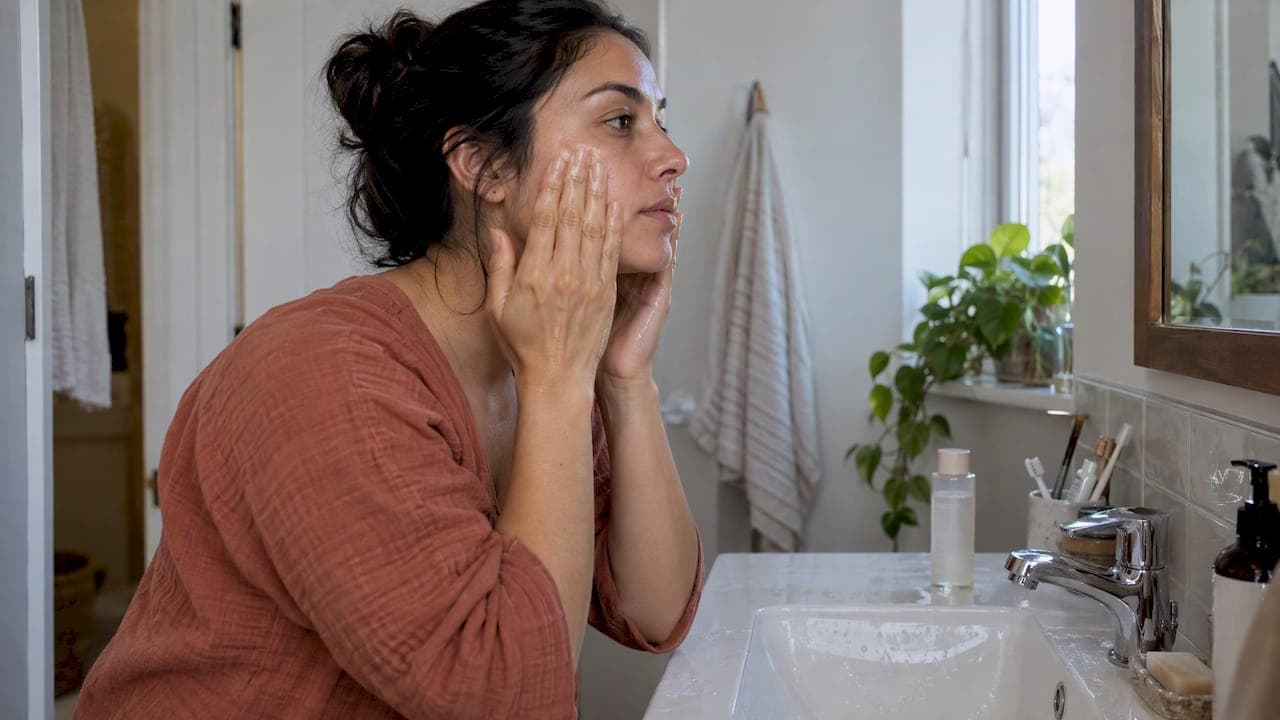
Apply toner right after cleansing, while skin is still slightly damp. This helps the formula spread evenly and gives humectants water to work with.
- Cleanse your face and pat it mostly dry, leaving a bit of moisture behind.
- Pour a small amount into clean hands or onto a soft reusable pad and press it into your skin.
- Follow immediately with a water-based serum or treatment.
- Seal everything with a moisturizer suited to your skin type.
- In the morning, finish with sunscreen.
Most people do well applying toner once or twice daily. If you notice stinging, redness, or tightness, stop rather than increasing frequency, a point the AAD's product-order guidance also makes for alcohol-free formulas. Avoid layering multiple strong actives, like retinoids and acids, onto the same damp skin in one sitting.
Pro Tip: Don't let toner air-dry completely before your next step. Humectants left unsealed on damp skin can evaporate along with the water they attracted, leaving skin drier than before.
Key ingredients to look for in a hydrating toner
Reading the ingredient list tells you more than any marketing claim on the bottle. Here's what to look for and what to skip.
- Hyaluronic acid: draws in water, though its effect depends on molecular weight, with larger molecules forming a surface film and smaller ones reaching deeper.
- Glycerin: a well-studied humectant that performs even better when combined with other moisture-binding ingredients.
- 1,3-propanediol: shown to improve hydration and barrier function on its own, with stronger results when paired with glycerol.
- Panthenol (vitamin B5): soothes and supports comfort, useful for reactive or compromised skin.
- Ceramides: lipids that reinforce the skin barrier for more durable results than humectants alone.
Skip toners with high alcohol content, added fragrance, or witch hazel if your skin runs dry or sensitive. These can undo the benefit you're after. Natural origin does not guarantee gentleness either, so patch-test any new toner on your inner arm for a day or two before applying it to your face, especially one with new botanical extracts. For more on how different alcohols behave in formulas, this breakdown of alcohol in toner is worth a look before you buy.
When a toner isn't enough for your skin
Toner, no matter how well formulated, cannot repair a severely compromised skin barrier or treat an inflammatory skin condition. If your skin is cracked, bleeding, persistently itchy, or simply not responding to moisturizer and gentler products, that's a sign to stop layering more over-the-counter steps and get it checked.
Watch for these red flags:
- Visible cracking or fissures, especially around knuckles, heels, or facial creases.
- Itching that disrupts sleep or doesn't ease with moisturizer.
- Redness or dryness that persists for weeks despite a simplified routine.
In these cases, strip your routine down to a gentle cleanser and a plain emollient, and see a dermatologist rather than adding another product. Hydrating toner supports a healthy routine. It does not substitute for medical care.
Evidence snapshot: what the research actually shows

The clinical picture supports humectants as effective for short-term hydration, with diminishing but still present effects at 24 hours. 1,3-propanediol combined with glycerol improved both hydration and barrier function (measured as reduced TEWL) across 15 minutes to 8 hours in controlled testing.
A review of basic emollients for dry skin found that pairing humectants with occlusives consistently outperforms humectants used alone. (source)
- Humectants increase water content fast but can increase evaporation without a sealing layer.
- Combination formulas (humectant plus glycerol, or humectant plus lipid) outperform single-ingredient products.
- Professional guidance from the AAD and Cleveland Clinic both frame toner as a supportive, optional step, not a core treatment.
A barrier-first take on where toner fits
We favor routines that do less, better. A hydrating toner earns its place by prepping skin and adding a layer of humectants, not by promising to fix every concern. Sensitive and dry skin types see the most benefit, since simple, humectant-rich formulas calm rather than challenge an already reactive barrier. If you're assembling a routine from scratch, our guide to building a skincare routine walks through the order that works.
— Kelly
Yuka+Face Lavender Essence Balancing Toner
Our Lavender Essence Balancing Toner is alcohol-free, built around humectants, and finished with soothing botanicals, which fits the dry and sensitive skin profile this guide points toward. It layers cleanly under serum and moisturizer without stinging or stripping.
- Alcohol-free formula, suited to reactive or easily irritated skin.
- Humectant-rich base to support the hydration step covered above.
- Pairs with heavier emollients from our dry skin collection for colder months or persistent dryness.
Browse the full lineup in our shop to build out the rest of your routine.
FAQ
What are the downsides of using a toner?
Some toners, especially older alcohol-based or fragranced formulas, can dry out or irritate skin rather than hydrate it. Even natural ingredients can trigger sensitivity in some people, so patch-testing a new product before full use is the safest approach.
What happens if I use face toner every day?
Daily use of a gentle, alcohol-free hydrating toner is generally well tolerated and can be part of both morning and evening routines. If you notice stinging, redness, or increased dryness, cut back to every other day or stop and reassess the formula.
Do I need a moisturizer if I use a toner?
Yes, toner and moisturizer serve different purposes and work best together. Toner adds surface hydration through humectants, while moisturizer seals that water in and supplies the lipids needed for lasting barrier support, a distinction the American Academy of Dermatology draws clearly.
Are toners actually necessary?
Toner is an optional step, not a required one. For dry or dehydrated skin it can add a helpful layer of hydration and prep for the rest of your routine, but a solid cleanser and moisturizer routine still works without it.
Sources
- What Does Toner Do for Your Face? 5 Benefits
- How to pick a moisturizer | American Academy of Dermatology
- Effects of 1,3-propanediol associated, or not, with butylene glycol and/or glycerol on skin hydration and skin barrier function
- Restoring Skin Hydration and Barrier Function: Mechanistic Insights Into Basic Emollients for Xerosis Cutis