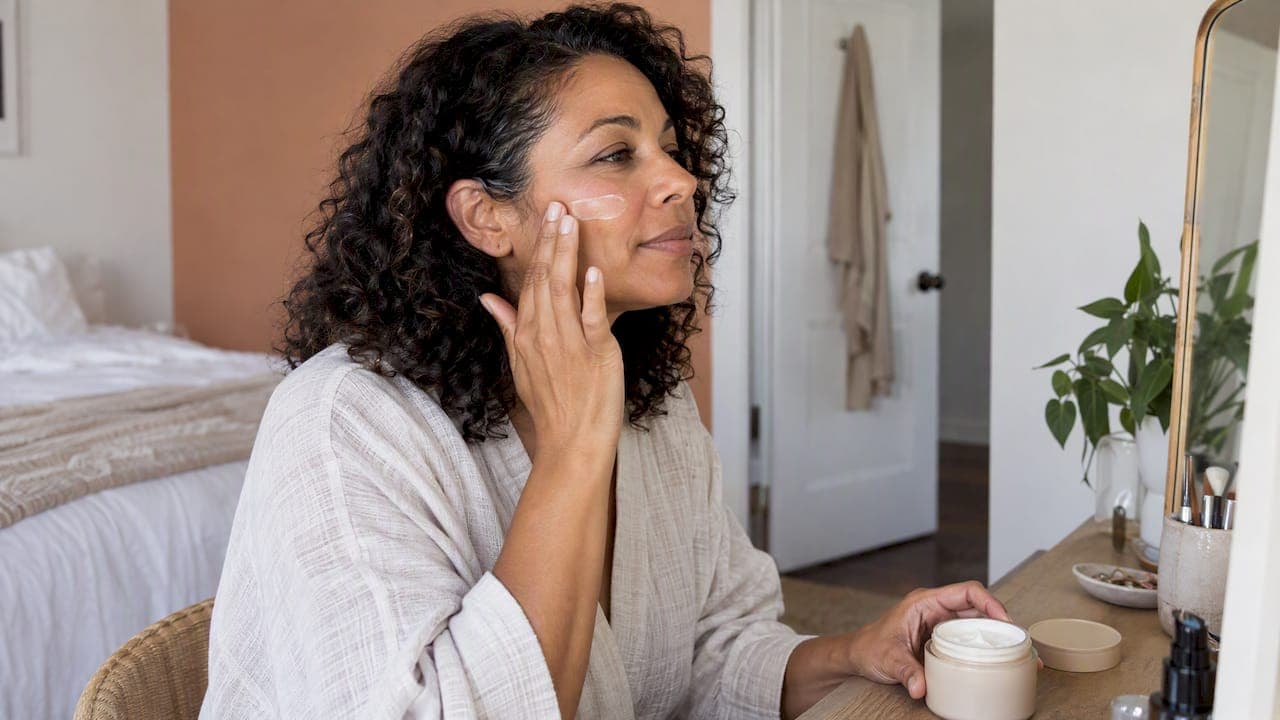
The best perimenopause skincare is a short routine: a mild cleanser, a rich moisturizer, daily SPF 30 or higher, and one gentle active added at a time. Hormone shifts can make skin drier, thinner and more reactive, so fewer, gentler products usually work better than more. This guide covers what changes, what to use morning and night, what to skip, and when to see a dermatologist.
TL;DR
- Skin often gets drier, thinner and more sensitive as estrogen falls. Hydration and barrier care come first.
- Use a mild, non-foaming cleanser, a moisturizer, and broad-spectrum SPF 30 or higher every day.
- Add one active at a time, such as retinol, niacinamide or vitamin C, and wait before adding the next.
- Skip fragrance, alcohol-heavy toners, harsh scrubs and teenage-style acne treatments.
- See a board-certified dermatologist for rashes that last, new spots that change, or skin that keeps worsening.
Table of Contents
- What happens to skin in perimenopause
- The principle: simplify, then add slowly
- Morning routine
- Evening routine
- Quick routine summary
- Ingredients to look for
- What to avoid during perimenopause
- Choosing natural skincare in perimenopause
- What skincare should a 45-year-old use?
- Seasonal adjustments
- Lifestyle habits that support skin
- When to see a dermatologist
- Our perspective
- Build your routine with Yuka+Face
- FAQ
- Sources
What happens to skin in perimenopause
Perimenopause is the transition before menopause. Estrogen levels swing, then trend down. Skin is one of the first places this shows.
Estrogen helps skin make oil and hold water, so dryness is one of the most common complaints at this stage. The American Academy of Dermatology lists several changes it sees: dry skin, easy bruising, sun spots, sagging and wrinkles, acne, and rashes or irritation. Its menopause skin care guidance is a good baseline for anything below.
Common changes look like this:
- Dryness and tightness. Moisturizer that worked at 35 may feel thin now.
- Sensitivity. Products you tolerated for years can start to sting or redden.
- Breakouts. Hormone shifts can raise oil production. Breastcancer.org notes that excess sebum can clog pores even while skin is thinner and drier.
- Uneven tone. Years of sun exposure can show up as dark spots.
- Loss of firmness. Collagen declines over time, and the drop is steeper around menopause. This overview of collagen loss after 40 explains how hormonal change affects skin and why routines need to adapt.
Not everyone gets every change. Timing and intensity vary a lot, which is why a routine built on your skin today beats one built on a calendar age.
The principle: simplify, then add slowly
Dermatologist Jacqueline Watchmaker, speaking to Dermatology Times, advises against a "kitchen sink" routine in menopause. Her advice: emphasize hydration, choose gentler actives, and change one thing at a time, because products you tolerated before may now irritate.
In practice:
- Start with a base of cleanser, moisturizer and sunscreen.
- Use it for two to four weeks.
- Add one active, two or three nights a week.
- Raise frequency only if skin stays calm.
- If something stings or reddens, stop it and go back to the base.
This is also how we suggest switching to natural skincare: one product at a time, with a few weeks between changes.
Morning routine
Keep it to three or four steps.
1. Cleanse gently
The AAD says to wash with a mild cleanser rather than soap, since soap can be too drying on mature skin. Cleveland Clinic suggests a gentle, non-foaming cleanser and avoiding fragrance, colors and alcohol in products.
In the morning, many people with dry skin do fine with water or a very light cleanse. If you wear no makeup and slept without heavy products, you may not need a full wash.
Our B3 Gentle Cleanser is made for this step. See our morning skin care routine for the full sequence.

2. Treat, only if needed
A vitamin C serum or a hydrating serum can go here. Topical vitamins C, B3 (niacinamide) and E may improve hydration, elasticity and texture, according to a 2026 review in the Journal of Integrative Dermatology. Introduce only one at a time.
3. Moisturize
Apply moisturizer while skin is still slightly damp. The AAD recommends moisturizing after bathing and again during the day when skin feels dry, and points to hyaluronic acid or glycerin as especially helpful. Ceramides support the skin barrier as well. We explain why in our guide to ceramides in skincare.
The Hydrating Power Moisturizer is our daily option here. If you are unsure of the difference between a hydrator and a moisturizer, read moisturizing vs. hydrating.
4. Sunscreen
This step matters most. The AAD recommends a broad-spectrum sunscreen with SPF 30 or higher every day, on all skin clothing does not cover, including winter. It says sunscreen cannot thicken skin, but it can prevent further thinning and help fade age spots and stop new ones.
Evening routine
1. Remove sunscreen and makeup
An oil-based first cleanse works well for dry or sensitive skin because it lifts sunscreen without scrubbing. Our Vitamin C Cleansing Oil fits this step. Follow with a gentle cream or gel cleanser. The Cleansing Duo pairs the two, and our double cleansing guide shows how to do it without over-washing.
On nights with no makeup or sunscreen, one gentle cleanse is enough.
2. Optional toner or essence
A toner is not required. If you use one, choose a hydrating, alcohol-free formula and check the ingredient list for anything you react to. Patch test on your jaw or inner arm first. Our Lavender Essence Balancing Toner is one option for those who like this step.
3. One active, a few nights a week
Choose one:
- Retinol or another retinoid. The AAD says retinol or peptides can increase collagen. The 2026 integrative dermatology review reports that topical retinoids can improve photodamage-related hyperpigmentation and roughness. Start two nights a week, pea-sized amount, and buffer with moisturizer if skin is sensitive. Our guide to an aging skin routine covers adding retinoids slowly.
- Bakuchiol. A plant-derived option some people prefer when retinol feels too strong. See our vegan routine for aging skin.
- Peptides. Found in serums and creams. Read more about peptides in organic skincare. The Bright Eyes Peptide Serum is made for the eye area.
Do not start a retinoid if you are pregnant or trying to conceive. Ask your doctor first if you use prescription skin treatments.
4. Moisturize again
Use the same moisturizer, or a richer one at night. If your skin feels tight in the morning, add more cream, not more actives.
Quick routine summary
| Step | Morning | Evening |
|---|---|---|
| Cleanse | Water or mild cleanser | Cleansing oil, then mild cleanser |
| Treat | Vitamin C or hydrating serum (optional) | One active: retinoid, bakuchiol or peptides |
| Moisturize | Yes, on slightly damp skin | Yes, same or richer |
| Protect | Broad-spectrum SPF 30+ | Not needed |
Ingredients to look for
- Hyaluronic acid and glycerin. Hydrators the AAD names for dry skin.
- Ceramides. Support the barrier so skin holds water better.
- Niacinamide (vitamin B3). Can support hydration and texture, per the 2026 review.
- Vitamin C and vitamin E. Antioxidants linked in the same review to better elasticity and texture.
- Retinoids or bakuchiol. For fine lines and uneven tone. Introduce slowly.
- Salicylic acid, in a gentle cleanser. For breakouts. Breastcancer.org recommends a salicylic-acid cleanser rather than harsh acne treatments, since skin is thinner and drier than in your teens.
What to avoid during perimenopause
- Fragrance, added colors and drying alcohol. These are the most common irritants, per Cleveland Clinic.
- Bar soap and harsh foaming washes. The AAD notes soap can be too drying for mature skin.
- Aggressive acne treatments. Thinner skin reacts more strongly to strong products.
- Many new products at once. If a reaction happens, you cannot tell which one caused it.
- Skipping sunscreen. It is the one step that protects against further thinning, spots and skin cancer risk.
- Hot showers and over-scrubbing. Both strip oil and worsen dryness.
Choosing natural skincare in perimenopause
Natural does not automatically mean gentle. A 2025 clinician's review in EMJ advises choosing high-quality, non-comedogenic products, gentle cleansers, and avoiding potential allergens and irritants. It also notes that evidence for phytoestrogens in skincare is still limited.
So read the label, not the front of the bottle. Look for short ingredient lists, no added fragrance if your skin is reactive, and plant oils and butters your skin already tolerates. Patch test every new product for several days. Our guide to vegan skincare explains what to check on a label.

What skincare should a 45-year-old use?
Age does not decide the routine, your skin does. At 45, many people are in perimenopause, but skin type, sun history and hormones differ widely. A sound starting point is the same for almost everyone:
- Mild cleanser.
- Moisturizer suited to how dry your skin feels.
- Broad-spectrum SPF 30 or higher daily.
- One active, such as a retinoid or vitamin C, added slowly.
Adjust from there. Dry and tight skin needs richer creams. Oily or breakout-prone skin needs a lighter texture and a gentle salicylic-acid cleanser. Our practical guide to caring for mature skin goes deeper, and ageless beauty in the modern era covers the mindset behind it.
Seasonal adjustments
Dry air in winter and heating can make perimenopausal dryness worse. Swap lighter lotions for creams, and keep sunscreen on. In warmer months, a lighter moisturizer may be enough, and sunscreen matters even more. See our notes on the transition to fall skincare and summer skincare.
Lifestyle habits that support skin
Products are only part of it. Sleep, a diet with enough protein and plant foods, less alcohol, and stress management all affect how skin looks and feels. None of these replace a medical conversation. If hot flashes, sleep loss or mood changes are disrupting your life, talk with your gynecologist or primary care clinician about options, including menopausal hormone therapy. Skin care can support the process, but it does not treat hormone changes.
When to see a dermatologist
Book a visit with a board-certified dermatologist if:
- A rash lasts or a skin condition keeps getting worse. The AAD says drier, more irritable skin may need professional help.
- A spot changes in size, shape or color, bleeds, or does not heal.
- Breakouts are painful, scarring, or do not respond to gentle care.
- Skin is thinning or bruising easily. A dermatologist can discuss whether a prescription retinoid or other treatment is right for you.
Our perspective
We build skincare around one idea: simple routines, short ingredient lists, and plants. That fits perimenopause well. Skin at this stage often needs less, not more.
Our formulas are vegan, cruelty-free and made with botanical ingredients. We design them to support the barrier, add hydration and be used in a short routine. Cleanser, moisturizer, sunscreen, and one targeted step is enough for most people.
We also believe aging skin deserves care, not correction. Rich plant oils, antioxidants and peptides are part of how we approach that. Start with the base, add one product at a time, and let your skin set the pace.
Kelly
Build your routine with Yuka+Face
We offer vegan, cruelty-free, organic skincare in cleansers, toners, serums, oils, moisturizers and masks. Browse the full shop to build a routine one step at a time, or see our moisturizers and masks if dryness is your main concern.

Not sure where to begin? Start with a cleanser and a moisturizer, then add a second product after a few weeks. Our organic skincare range is built for sensitive and mature skin.
FAQ
What is the best skincare for perimenopause?
The best routine is a mild cleanser, a moisturizer with hydrating ingredients such as hyaluronic acid, glycerin or ceramides, and daily broad-spectrum SPF 30 or higher. Add one active at a time, such as a retinoid, vitamin C or niacinamide. Avoid fragrance and harsh products.
What should I not do to my skin during perimenopause?
Avoid bar soap, harsh scrubs, strong acne treatments, and heavily fragranced or alcohol-based products. Do not add several new products at once. Do not skip sunscreen. Thinner, drier skin reacts more easily, so gentle care works better.
What do dermatologists recommend for menopausal skin?
The American Academy of Dermatology recommends a mild cleanser, moisturizer, fragrance-free products for irritated skin, and daily SPF 30 or higher. It also points to retinol or peptides for fine lines. For thinning skin or lasting rashes, it advises seeing a board-certified dermatologist.
Can I use natural skincare during menopause?
Yes. Choose non-comedogenic, gentle formulas without known irritants, and patch test first. Natural ingredients can still irritate, and evidence for phytoestrogens in skincare is limited, so judge a product by its full ingredient list.
Sources
- Caring for your skin in menopause, American Academy of Dermatology
- Understanding Menopause Skin Changes and What You Can Do, Healthline
- Menopause and Skin Changes: Dryness, Acne, and More, Breastcancer.org
- Menopause and the Skin: Recognizing Changes Beyond Aging, Dermatology Times
- Here's How Menopause Affects Your Skin and Hair, Cleveland Clinic
- Beyond Hot Flashes: Understanding and Treating Menopause, Journal of Integrative Dermatology
- Managing Menopausal Skin: A Clinician's Review, EMJ