
A minimal skincare routine delivers measurable skin health benefits in three steps: cleanse, treat, protect. That's it. The American Academy of Dermatology and most dermatologists converge on the same non-negotiables.
The 3 non-negotiables:
- Cleanse. Remove debris and excess oil without stripping the skin barrier.
- Treat. One targeted product: an antioxidant in the morning, a repair active at night.
- Protect. Broad-spectrum SPF 30+ every morning, no exceptions.
This routine fits any skin type and any budget. Most people see a calmer, more even complexion within 4–6 weeks of consistent use.
Key Takeaways
A minimal skincare routine built on cleanse, treat, and protect, used consistently, delivers better long-term results than any complex multi-step regimen used sporadically.
| Point | Details |
|---|---|
| Three steps are enough | Cleanse, treat (one active), and protect with SPF 30+ covers most skin health goals. |
| Sunscreen is non-negotiable | Daily broad-spectrum SPF is the highest-impact topical step for preventing UV damage and photoaging. |
| One active at a time | Introduce one new product, wait six weeks, and remove it after 12 weeks if no benefit appears. |
| Consistency beats complexity | A short routine used every day produces better outcomes than a long routine used inconsistently. |
| Yuka+Face minimal kit | Vegan, cruelty-free cleansers, barrier moisturizers, and serums that map directly to the three-step framework. |
Table of Contents
- What does each step in a minimal skincare routine actually do?
- What should your morning and evening routine look like?
- How do you adapt this routine for your skin type?
- When and how should you add actives safely?
- Three copy-and-paste routines for common goals
- What do dermatologists and research say about simple routines?
- Common mistakes and when to see a dermatologist
- The Yuka+Face view on keeping skincare simple
- Ready for a natural minimal kit?
- Sources
- FAQ
What does each step in a minimal skincare routine actually do?
Cleanse: remove without stripping
A cleanser's job is simple: lift dirt, oil, and pollutants without disrupting the skin's acid mantle. Choose a pH-balanced, low-sulfate, fragrance-free formula. Gel cleansers suit oily skin; cream or milk cleansers work better for dry or sensitive skin. If your skin feels too tight after washing, the cleanser may be too harsh.
Treat: one active, one goal
The treatment slot is where you address a specific concern. In the morning, a vitamin C serum (L-ascorbic acid) neutralizes free radicals and supports collagen. At night, a low-dose retinoid (retinol) accelerates cell turnover. Pick one active per session. A single, well-chosen product beats a shelf of half-used serums.

Protect: sunscreen is the highest-impact step
Peer-reviewed literature consistently ranks daily broad-spectrum sunscreen as the primary topical intervention to reduce UV damage and photoaging. SPF 30 blocks a high percentage of UVB rays; SPF 50 offers somewhat more protection. Choose a formula you will actually wear daily, whether mineral, chemical, or hybrid.
Order of application:
- Cleanser
- Treatment serum (thinnest texture first)
- Moisturizer (if needed, before SPF)
- Sunscreen (always last in the AM)
Pro Tip: Wait 60–90 seconds after applying vitamin C before layering moisturizer. This allows the low-pH serum to absorb properly before the next product changes the skin's surface pH.
What should your morning and evening routine look like?
AM routine (5 minutes)
- Cleanse — gentle wash or a plain water rinse if skin is dry and you cleansed thoroughly the night before.
- Antioxidant (optional but recommended) — vitamin C serum, patted on damp skin.
- Moisturizer — lightweight, ceramide-based if your skin is dry or reactive.
- Sunscreen — broad-spectrum SPF 30+, applied as the final step. Reapply every two hours when outdoors.
PM routine (5–7 minutes)
- Makeup/sunscreen removal — micellar water or a cleansing balm when wearing heavy SPF or makeup.
- Gentle cleanse — same low-sulfate cleanser used in the morning.
- Targeted treatment — retinoid, niacinamide, or a repair serum (not every night when starting out).
- Moisturizer — richer texture at night; ceramide or peptide formulas support barrier repair while you sleep.
Timing notes:
- Reapply sunscreen every two hours during outdoor exposure, per Cleveland Clinic guidance.
- Double cleanse only when wearing waterproof sunscreen or full makeup. On bare-skin days, one gentle cleanse is enough.
- Vitamin C needs 60–90 seconds to absorb before the next layer.
Consistency over complexity. A two-step routine used every day outperforms a ten-step routine used twice a week.
How do you adapt this routine for your skin type?
The three-step framework stays the same. What changes is the texture and ingredient profile of each product. For deeper personalization guidance, see how to personalize your skincare routine.
Dry skin
- Cleanser: cream or oil-based, sulfate-free.
- Treatment: hyaluronic acid serum AM; peptide or low-dose retinol PM.
- Moisturizer: rich emollient with ceramides and shea butter. Research on barrier lipids and ceramides confirms their role in reducing transepidermal water loss.
- Avoid: alcohol-heavy toners, foaming cleansers with sodium lauryl sulfate.
Oily or acne-prone skin
- Cleanser: gel or foaming, salicylic acid (0.5–2%) if congested.
- Treatment: niacinamide 5–10% AM; adapalene 0.1% PM (start 2–3 nights per week).
- Moisturizer: oil-free, non-comedogenic gel or fluid.
- Avoid: heavy occlusive creams, layering multiple acids.
Sensitive skin
- Cleanser: fragrance-free, minimal-ingredient micellar or cream formula.
- Treatment: azelaic acid 10% (well-tolerated, anti-inflammatory) or plain niacinamide.
- Moisturizer: ceramide-rich, no fragrance, no essential oils.
- Avoid: high-strength AHAs, alcohol-based toners, and any product with synthetic fragrance. EverydayHealth notes that simpler routines reduce cumulative irritant exposure for reactive skin.
Combination skin
- Cleanser: gentle gel, balanced pH.
- Treatment: niacinamide (regulates sebum and hydration simultaneously).
- Moisturizer: lightweight lotion; apply a richer product only on dry zones.
Aging or mature skin
- Cleanser: cream or gentle gel, no stripping.
- Treatment: vitamin C AM; retinol or retinaldehyde PM (start low, increase slowly).
- Moisturizer: peptide-rich, with ceramides and hyaluronic acid.
- SPF note: for Fitzpatrick III–V skin tones, choose a tinted SPF with iron oxides to block visible light, which contributes to post-inflammatory hyperpigmentation.
| Skin Type | Cleanser | Core Active | Moisturizer Type |
|---|---|---|---|
| Dry | Cream, sulfate-free | Hyaluronic acid / peptides | Rich emollient with ceramides |
| Oily/Acne-prone | Gel, low-dose salicylic acid | Niacinamide / adapalene | Oil-free gel |
| Sensitive | Micellar or cream, fragrance-free | Azelaic acid / niacinamide | Ceramide-rich, fragrance-free |
| Combination | Gentle gel | Niacinamide | Lightweight lotion |
| Aging/Mature | Cream or gentle gel | Vitamin C / retinol | Peptide + ceramide blend |
This reduces the risk of post-inflammatory hyperpigmentation from retinoid-induced irritation.*
When and how should you add actives safely?
Adding actives is where most people break their minimal routine. The rules below keep it simple and safe, aligned with Healthline's clinical-translation guidance and dermatologist best practice.
Step-by-step introduction:
- Stabilize first. Run the basic three-step routine for two full weeks before adding any active.
- Patch test. Apply a small amount to the inner forearm or behind the ear for 48 hours. Watch for redness, itching, or swelling.
- One new product at a time. Introduce one active and wait at least six weeks before adding another. Per Geisinger's guidance, if a product shows no benefit after 12 weeks of consistent use, remove it rather than adding more products.
- Start low frequency. Retinoids: begin 2 nights per week. AHAs/BHAs: once or twice per week maximum at the start.
- Evaluate at 6 weeks. Adjust frequency up or down based on tolerance, not on how fast you want results.
Dos and don'ts for mixing actives:
- Do: use vitamin C in the morning and retinol at night on separate sessions.
- Do: apply niacinamide with most other actives; it is generally well-tolerated.
- Don't: layer a high-strength AHA (glycolic acid 10%+) directly over a retinoid in the same session.
- Don't: use a physical scrub on the same night as a chemical exfoliant.
Red flags — stop and reassess:
- Burning that does not subside within 30 minutes of application.
- Peeling beyond mild flaking after the first two weeks.
- New breakouts spreading beyond the original concern area.
- Any sign of contact dermatitis: weeping, crusting, or hives.
Clinical research confirms that improper mixing of retinoids, high-strength AHAs/BHAs, and vitamin C raises the risk of irritation and post-inflammatory hyperpigmentation, particularly in pigment-prone skin.
Pro Tip: Slot a new active into the PM treatment step only. This keeps your AM routine unchanged and makes it easier to identify which product caused any reaction.
Three copy-and-paste routines for common goals
Routine 1: Basic maintenance (all skin types)
AM
- Gentle gel or cream cleanser
- Lightweight ceramide moisturizer
- Broad-spectrum SPF 30+
PM
- Same cleanser
- Ceramide or peptide moisturizer (slightly richer)
No actives required. Run this for 4 weeks before adding anything.
Routine 2: Acne-prone skin
AM
- Salicylic acid gel cleanser (0.5–1%)
- Niacinamide 10% serum
- Oil-free SPF 30+
PM
- Gentle non-acid cleanser (alternate nights)
- Adapalene 0.1% gel (2–3 nights per week to start)
- Oil-free gel moisturizer
Introduce adapalene in week 3, after skin has adjusted to niacinamide.
Routine 3: Anti-aging focus
AM
- Cream cleanser
- Vitamin C serum (L-ascorbic acid 10–15%)
- SPF 50 broad-spectrum (tinted if Fitzpatrick III–V)
PM
- Cream cleanser
- Retinol 0.025–0.05% (2 nights per week, weeks 1–4; increase to 3–4 nights in week 5+)
- Peptide and ceramide moisturizer
Pair vitamin C AM with retinol PM — never in the same session. For a natural skincare routine approach, look for plant-derived vitamin C (kakadu plum, rosehip) and bakuchiol as a gentler retinol alternative.
What do dermatologists and research say about simple routines?
The evidence base for a minimal approach is solid. Foxhall Dermatology's evidence-based summary endorses a morning routine of mild cleanser, humectant moisturizer, and SPF, with evening cleansing and optional low-dose retinoid. The Cleveland Clinic aligns: AM protection, PM repair.
Key evidence points:
- Daily broad-spectrum sunscreen is the single highest-impact topical step for photoaging prevention, per peer-reviewed clinical literature.
- Ceramide-based moisturizers reduce transepidermal water loss and improve tolerance to actives, per published barrier research.
- Overuse of multiple actives raises irritation risk and can trigger post-inflammatory hyperpigmentation in pigment-prone skin.
Real-world timelines:
- Hydration and barrier improvement: 2–4 weeks.
- Acne reduction with adapalene or salicylic acid: 6–8 weeks.
- Visible anti-aging effects from retinoids: 12 weeks minimum.
- Photoprotection benefit from sunscreen: cumulative and ongoing.
Common mistakes and when to see a dermatologist
Frequent minimalism mistakes:
- Over-cleansing. Washing more than twice daily strips the barrier and triggers rebound oil production.
- Skipping sunscreen on cloudy days. UVA penetrates cloud cover and glass year-round.
- Adding multiple actives at once. This makes it impossible to identify what is working or causing irritation.
- Inconsistent use. Using a retinoid three nights one week and zero the next resets the skin's adaptation cycle.
- Treating toner as mandatory. Most alcohol-based toners add irritation without adding benefit. Skip unless yours is a hydrating, low-pH essence.
Pro Tip: If you are unsure whether a product is helping, remove it for two weeks. If skin stays the same or improves, the product was not earning its place.
Red flags that need professional evaluation:
- Severe or rapidly spreading rash after starting a new product.
- Painful cystic acne that does not respond to over-the-counter adapalene after 12 weeks.
- Signs of infection: warmth, swelling, pus, or fever.
- Persistent burning or stinging that does not resolve after stopping all actives.
When you do see a clinician, bring: the full list of products used (including SPF), the timeline of when symptoms started, and any patch-test results. This information cuts diagnosis time significantly.
The Yuka+Face view on keeping skincare simple
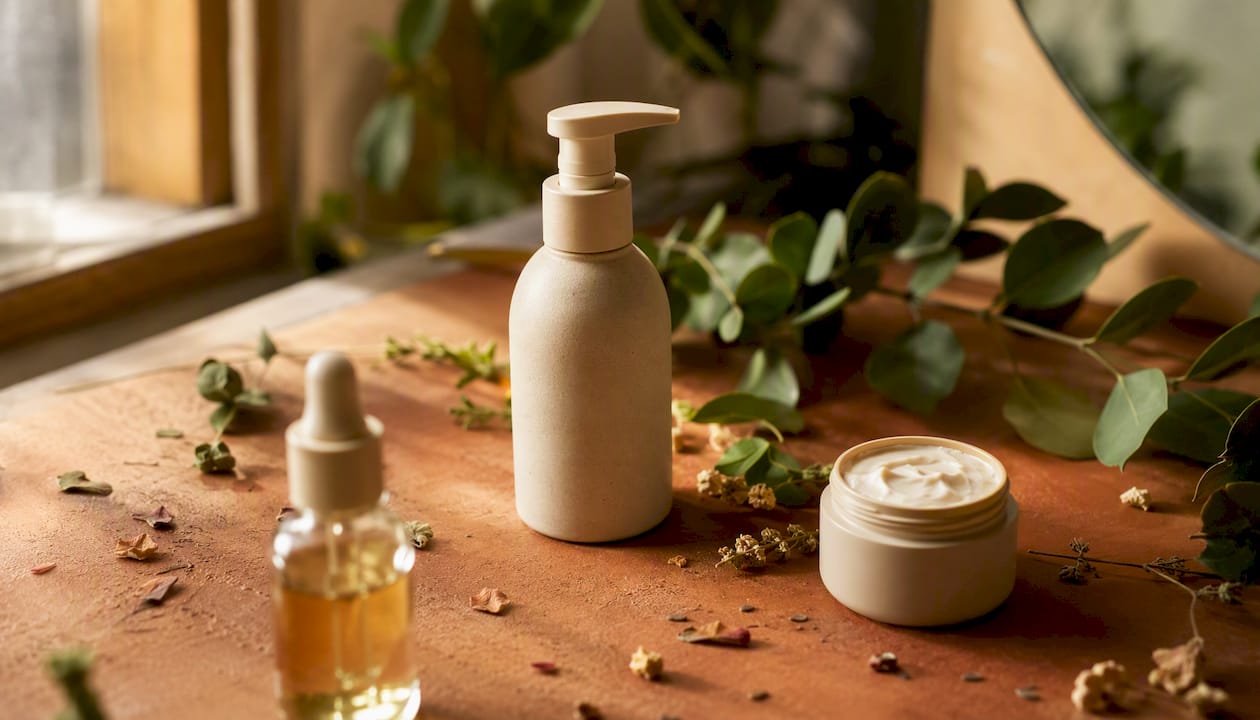
Minimal works. Three well-chosen products, used consistently, outperform a ten-step shelf. Yuka+Face is built on that premise: vegan, cruelty-free, natural formulas designed to support barrier health without unnecessary ingredients. The focus is on what skin actually needs — gentle cleansing, targeted care, and protection — not on what fills a shelf.
Curated kits reduce decision fatigue. Instead of researching 40 products, you select one cleanser, one treatment, one SPF. Yuka+Face's product range is formulated for all skin types and ages, using botanical actives and plant-derived ingredients that align with the barrier-first approach this guide recommends.
Ready for a natural minimal kit?
The three-step routine in this guide works with any clean, well-formulated products. For readers who want a ready-made option, Yuka+Face offers a range of vegan, cruelty-free cleansers, barrier moisturizers, and SPF-compatible serums that map directly to the cleanse-treat-protect framework.

You can follow this routine with store-bought products or with a Yuka+Face kit. Either way, the steps are the same. For a natural, plant-based starting point, the Yuka+Face morning skin care routine page walks through product pairings that fit the AM protection model. Browse the full range and build your minimal kit at Yukaface. For readers curious about the vegan skincare philosophy behind the formulas, the guide to vegan skincare covers ingredient sourcing and what "cruelty-free" means in practice.
For more on building a clean, effective regimen, the team at 16th Avenue also covers essential product categories worth knowing.
Sources
Further reading on specific actives:
This article is general information, not a substitute for advice from a qualified doctor. Consult a qualified healthcare professional about your own circumstances before acting on anything here.
FAQ
What is the simplest skin care routine?
Cleanse, moisturize, and apply broad-spectrum SPF 30+ every morning. At night, cleanse and moisturize. Three products total cover most skin health needs.
What is the 4-2-4 rule in skincare?
The 4-2-4 rule is a cleansing method: massage an oil cleanser for four minutes, emulsify with water for two minutes, then rinse for four minutes. It is a deep-cleanse technique, not a daily minimal routine, and is generally unnecessary unless you wear heavy makeup or waterproof sunscreen regularly.
What is the best minimalist skincare routine?
The most evidence-backed minimalist routine is: gentle cleanser, one targeted active (vitamin C AM or retinoid PM), and broad-spectrum SPF 30+. Yuka+Face's vegan, natural product range is formulated to support exactly this three-step framework.
How long before a minimal routine shows results?
Hydration and barrier improvement typically appear within 2–4 weeks. Acne reduction takes 6–8 weeks. Visible anti-aging effects from retinoids require at least 12 weeks of consistent use.