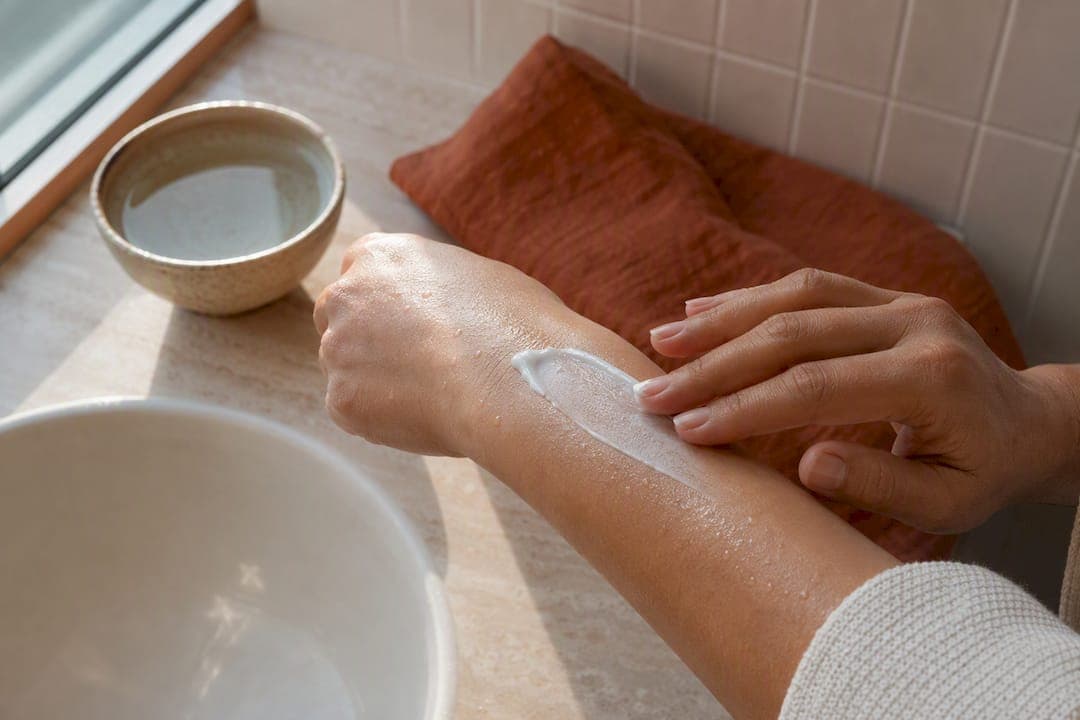
Ceramides restore and strengthen the skin's barrier, which reduces water loss and improves hydration. They work best for people with dry, sensitive, eczema-prone, or aging skin, where barrier function tends to break down faster. The clinical case is solid: ceramide-formulated creams outperform standard moisturizers at increasing hydration and cutting transepidermal water loss.
TL;DR:
- Ceramide formulations that combine multiple types and replicate the skin's lipid ratios provide more effective barrier repair than single-ceramide products.
- Well-formulated creams can increase hydration and reduce water loss significantly within 24 hours, outperforming standard moisturizers in clinical tests.
- Using ceramides within three minutes of cleansing on slightly damp skin enhances absorption and barrier benefits.
- Products that use lamellar delivery systems and proper solubilization techniques ensure ceramides effectively integrate into the skin barrier.
- Those with chronically dry, sensitive, or aging skin should prioritize ceramide-containing products, especially after procedures or in winter months.
Table of Contents
- What Ceramides in Skincare Actually Are
- How Ceramides Work and What the Research Shows
- Who Benefits Most From Ceramides
- How to Use Ceramides in Your Routine
- The Formulation Science Behind Ceramide Products
- A Formulation-First Take on Ceramides
- Where to Find Ceramides in a Yuka+Face Routine
- Sources
- FAQ
What Ceramides in Skincare Actually Are
Ceramides are sphingolipid molecules that sit inside the outermost layer of your skin, the stratum corneum. Dermatologists often describe this layer as a brick wall: skin cells are the bricks, and lipids like ceramides, cholesterol, and fatty acids are the mortar holding everything together. That mortar makes up roughly half of the intercellular lipid content in the stratum corneum, according to Cleveland Clinic. Without enough of it, water escapes and irritants get in.
Skincare labels rarely just say "ceramides." They list specific types, and the type matters more than most shoppers realize:
- Ceramide 1 (EOS) anchors other lipids in place and plays a major role in barrier structure.
- Ceramide 3 (NP) is one of the most abundant types in healthy skin and shows up in most ceramide moisturizer formulas.
- Ceramide 6-II (AP) supports skin renewal and is often paired with the other two for broader coverage.
Formulations that combine several ceramide types, sometimes alongside a precursor like phytosphingosine, tend to mimic the skin's own lipid mix more closely than single-ceramide products, per research on skin barrier composition. It's also worth knowing the difference between natural ceramides (derived from animal or plant sources), synthetic ceramides (lab-built to match human skin lipids), and pseudo-ceramides (structurally similar compounds that mimic ceramide function without being true sphingolipids). Plant-derived ceramides, often sourced from wheat, rice, or konjac, have become the standard for vegan ceramide moisturizer formulas, and they perform comparably to synthetic versions when properly formulated.
How Ceramides Work and What the Research Shows
Ceramides don't sit on top of skin like an occlusive balm. They integrate into the lamellar structure between skin cells, the layered lipid arrangement that blocks water from escaping and keeps irritants from getting in. Think of it less like a raincoat and more like grout between tiles: it fills gaps at a structural level.
The clinical evidence backs this up directly. A randomized controlled trial found that a ceramide-formulated cream produced significantly higher corneometry readings (a measure of skin hydration) at 24 hours than three reference over-the-counter moisturizers, while also reducing transepidermal water loss with statistical significance, per research published in PMC.
Clinical finding: Ceramide-formulated creams showed significantly greater hydration at 24 hours and measurably lower water loss compared to three standard moisturizers in a controlled trial.
That gap between "moisturized right now" and "still moisturized tomorrow" is where ceramides for skin barrier repair earn their reputation. Broader outcomes reported across trials and reviews include:
- Improved stratum corneum hydration sustained over 24 hours or longer
- Reduced transepidermal water loss compared with standard moisturizers
- Reduced pruritus and improved severity scores in atopic dermatitis regimens, per clinical trial data
- Calmer, less reactive skin in people prone to sensitivity or flare-ups
The benefits of ceramides go beyond a temporary hydration boost. They address the structural reason skin loses moisture in the first place, which is why dermatology has treated them as a barrier-repair ingredient rather than just another emollient.
Who Benefits Most From Ceramides
Ceramides for dry skin are close to a universal recommendation, but some groups get outsized benefit. Dry, sensitive, and eczema-prone skin types top the list, since their barriers already leak moisture faster than they should. People recovering from a procedure like a peel or microneedling session also benefit, since the barrier is temporarily compromised and vulnerable.
Here's who should prioritize ceramides in a routine:
- Anyone with chronically dry or flaky skin, especially in winter months
- People managing eczema, xerosis, or general barrier sensitivity
- Post-procedure skin healing after exfoliation or in-office treatments
- Adults over 30, since natural ceramide production declines with age
That last point matters more than people assume. Ceramide levels drop as skin ages, which is part of why aging skin feels drier and more reactive even without a diagnosed condition. Starting ceramides early functions as prevention, not just repair.
One caution: if you're using prescription retinoids, acne treatments, or barrier-thinning medications, check with a dermatologist before layering in heavy ceramide products, since combination routines sometimes need adjustment. For most people, though, topical ceramides carry low irritation potential and are considered safe for regular use, including on children's skin.
How to Use Ceramides in Your Routine
Getting the timing and pairing right changes how much benefit you actually get from a ceramide product. Here's the sequence that works:
- Cleanse first, but don't over-dry. Use a gentle, non-stripping cleanser so you're not undoing the barrier work before you start.
- Apply within about three minutes of washing. Damp skin absorbs moisturizing ingredients more efficiently, and that window closes fast once skin air-dries, according to Cleveland Clinic's guidance.
- Layer humectants underneath if your skin is very dry. Glycerin or hyaluronic acid draws water in; ceramides then help seal it there.
- Follow with your ceramide moisturizer or serum. Look for labels listing multiple ceramide types rather than a single generic mention.
- Add an occlusive on top for severely compromised skin. A thin layer of a barrier balm at night can reinforce the effect.
- Patch test new products, especially if you have reactive or eczema-prone skin, before applying to your full face.
Ceramides pair well with most active ingredients. Vitamin C and retinoids work fine alongside ceramide products in the same routine, typically at different times of day, since ceramides help buffer the mild irritation retinoids can cause. If you're sensitive to fragrance, choose a fragrance-free formula. Barrier-supporting ingredient guides can help you build out the rest of the routine around your ceramide product.
Pro Tip: Apply your ceramide moisturizer to skin that's still slightly damp, not soaking wet. Fully wet skin can dilute the product and slow absorption, while bone dry skin misses the window entirely.
The Formulation Science Behind Ceramide Products
Not every product labeled "with ceramides" performs the same way, and the reason comes down to chemistry most shoppers never see. Ceramides are notoriously difficult to solubilize. Formulators typically need to heat premixes above roughly 80°C with the right oils and emulsifiers to keep ceramides from recrystallizing once the product cools, according to research on ceramide formulation.
Poorly solubilized ceramides can crystallize inside a formula, which reduces the product's ability to repair the barrier even when the ingredient list looks strong on paper.
That's the gap between a product that lists ceramides and one that actually delivers them into the skin's lipid structure. A few things separate the two:
- Lamellar delivery systems that mirror the skin's own layered lipid arrangement, rather than a simple oil-in-water emulsion
- Correct lipid ratios, often modeled on a roughly 3:1:1 balance of ceramides, cholesterol, and free fatty acids
- Evidence of clinical testing, not just an ingredient list claim
Reviews on ceramide therapy note that topical application remains the best-established route for barrier repair, while oral ceramide supplementation is an emerging area with early but promising evidence, per a 2025 review. For now, a well-formulated topical remains the more reliable choice for most people.
A Formulation-First Take on Ceramides
Ceramides get marketed as a simple fix, and that undersells them. The real differentiator isn't whether a product lists ceramides. It's whether the formula solubilizes them correctly and builds a lamellar structure that actually mimics skin. Some brands approach barrier repair by favoring vegan, plant-derived ceramides backed by botanical research and formulating with transparent, fragrance-free options for sensitive skin. Good skincare education should make that formulation gap visible instead of hiding behind a marketing claim.
— Kelly
Where to Find Ceramides in a Yuka+Face Routine
If you're rebuilding a compromised barrier, the ingredient list matters more than the marketing copy on the front of the bottle. Some moisturizers and serums are formulated around plant-derived ceramides paired with humectants and supporting lipids, the combination clinical research points to for real barrier repair.

When you're comparing products, check for a few things: multiple ceramide types rather than a single vague mention, humectants like glycerin or hyaluronic acid working alongside them, and a fragrance-free option if your skin reacts easily. Yuka+Face's vegan skincare approach builds every formula around those standards rather than trend ingredients. If you want a starting point, the brand's hydration and restoration collection is built specifically around barrier-first repair. Browse the lineup, check the ceramide types listed on each product page, and add one to your next routine reset.
Sources
- Ceramides and Skin Health: New Insights
- The role of ceramides in skin barrier function and the importance of their correct formulation for skincare applications
- What Do Ceramides Do for Your Skin?
FAQ
What does ceramide do to your skin?
Ceramides rebuild the lipid structure between skin cells, which reduces water loss and helps skin retain moisture, calm irritation, and recover from barrier damage.
What should you not use with ceramides?
Strong exfoliating acids or high-strength retinoids used at the same time can offset ceramide benefits by disrupting the barrier faster than it can repair; space out active ingredients or check with a dermatologist if you're combining them.
What destroys ceramides in skin?
Over-cleansing, hot water, harsh exfoliation, and sun damage all deplete natural ceramide levels, and ceramide production also declines naturally with age.
Is ceramide better than retinol?
They're not competitors. Retinol targets cell turnover and fine lines, while ceramides for skin barrier support focus on hydration and repair, and most effective routines use both at different times.
How do ceramides compare to squalane?
Ceramide vs squalane isn't an either-or choice: squalane is an emollient that softens and seals skin, while ceramides rebuild the barrier's actual structure, and many routines use both together for hydration and repair.