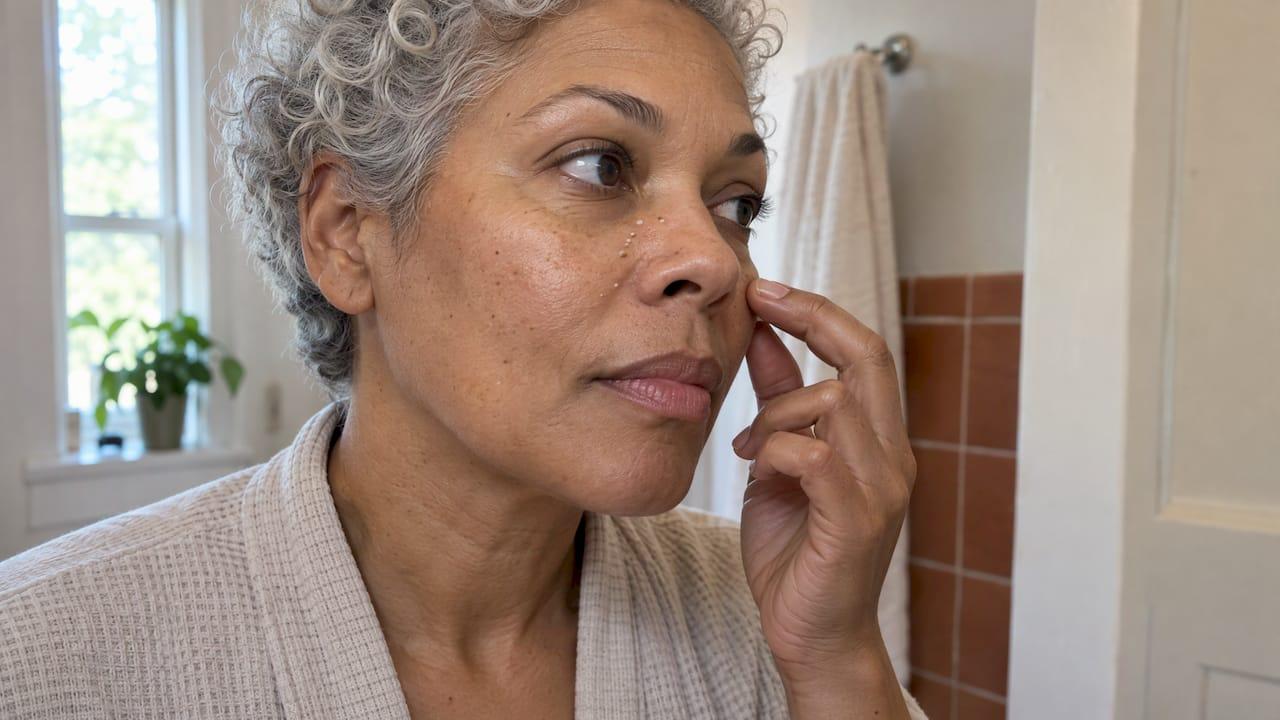
Milia are tiny white bumps that form when dead skin cells get trapped under the surface. Most cases can't be fully prevented, but a short routine lowers the odds: cleanse twice a day, remove eye makeup every night, exfoliate gently, wear sunscreen and avoid layering heavy products. Our cleanser, toner, serum and moisturizer line is built around short, plain ingredient lists, which makes this kind of routine easy to keep simple.
TL;DR
- Milia form when shed skin cells stay trapped and harden into small cysts. They are harmless.
- Some types, especially newborn milia, cannot be prevented. Later-onset milia can often be made less likely with routine habits.
- The basics: wash twice daily, remove makeup before bed, exfoliate gently two to three times a week, use SPF 30 or higher daily.
- Around the eyes, skip gritty scrubs and acids. Use gentle, eye-area products only.
- Never squeeze or scrape milia. See a dermatologist if you want them removed.
Table of Contents
- What milia are and why they appear
- Can milia be prevented completely?
- A prevention routine, step by step
- How to prevent milia around the eyes
- Products and habits that can work against you
- If you already have milia
- For estheticians, spas and retailers
- Our approach to a milia-prone routine
- Build a simple routine with Yuka+Face
- FAQ
- Sources
What milia are and why they appear
Milia are small, firm, white or yellowish bumps. They often show up on the cheeks, nose and around the eyes. The American Academy of Ophthalmology explains that milia form when shed skin cells stay trapped beneath the surface and harden into tiny cysts. They are not pimples. There is no pore opening to clear and no pus to drain.
That difference matters for prevention. Acne is about oil, bacteria and inflammation. Milia are about skin cells that do not shed the way they should. So prevention focuses on keeping the surface clear and avoiding anything that adds to buildup.
People of any age and skin type can get them. The same AAO page notes that newborns commonly develop milia because their skin is still learning to exfoliate, and these generally clear in weeks or months.

Can milia be prevented completely?
No, not always. Cleveland Clinic says most milia cannot be prevented, particularly the newborn type. It adds that the risk of some later-onset types may be reduced by limiting excessive sun exposure.
So the honest goal is lowering risk, not a guarantee. If you have had milia for years, that is common. Some skin is simply more prone to them. A steady routine helps, and it works best when you keep it consistent for weeks instead of changing products every few days.
Factors linked to higher risk
The AAO lists several factors associated with greater milia risk:
- Skincare or makeup that clogs pores
- Inadequate skincare
- Lack of sleep
- Dandruff or rosacea
- Long-term steroid use
You can act on some of these. You can check how your products behave on your skin, tighten up your nightly cleansing and protect your sleep. Others, such as rosacea or steroid use, are worth discussing with a doctor.
A prevention routine, step by step
The steps below follow guidance from medical bodies. Keep each one simple. A routine with many active products is harder to read when something goes wrong.
Step 1: Cleanse twice a day
The AAO's prevention advice is to wash the face twice daily. Cleveland Clinic's guide recommends warm water, gentle soap and patting the skin dry instead of rubbing.
Where this goes wrong: harsh, stripping cleansers and hot water. Irritated skin tends to react badly, and scrubbing can make the surface rougher, not clearer.
Our B3 Gentle Cleanser is made for this daily step, and it suits sensitive skin. It is vegan and cruelty-free.
Step 2: Remove makeup every night
Makeup left on overnight is a common route to buildup. The AAO's eye-makeup guidance, published October 27, 2026, advises removing eye makeup before sleep and rinsing remover thoroughly. Leftover remover can be as much of a problem as leftover makeup.
If you wear makeup, sunscreen or heavier products, a two-step cleanse covers the surface fully. Our guide to double cleansing walks through the method. The Vitamin C Cleansing Oil and the Cleansing Duo are the products we pair for it.
Step 3: Exfoliate gently, two to three times a week
The AAO recommends exfoliating two to three times a week with a product a doctor considers safe and effective. More is not better. Daily exfoliation can cause irritation, and irritated skin is not clear skin.
Dermatologists often suggest gentle chemical exfoliants such as salicylic acid or glycolic acid for milia-prone skin. One dermatologist quoted by NBC News says exfoliating face washes or toners with these acids may decrease the risk of milia. The same article notes that acids and retinoids should not be used around the eyes or on the eyelids, where the skin is very thin.
If you are over 40 or have sensitive skin, go slower still. Our guide to exfoliation for mature skin explains how to pace it.
Step 4: Tone and hydrate with light layers
Hydration keeps the skin barrier working, and a healthy barrier sheds cells more evenly. Keep the number of layers low. A toner, then a moisturizer, is enough for most days.
Our Lavender Essence Balancing Toner and Hydrating Power Moisturizer make up that pair. If you are unsure of the difference between the two ideas, read moisturizing vs. hydrating.
The rule that matters here: add one new product at a time, and give it two to three weeks. If new bumps appear after you add something, you know which product to remove.
Step 5: Wear sunscreen every day
The AAO recommends sunscreen of at least SPF 30 daily, including on cloudy days. Cleveland Clinic also lists limiting excessive sun exposure as a way to lower the risk of some later-onset milia. Sun damage thickens the skin surface over time, and that makes it harder for cells to shed.
Sun care matters for every skin tone. See our guide to skincare for dark skin for sunscreen and routine notes.
Step 6: Consider a retinoid, introduced slowly
Retinoids speed up cell turnover, which is why dermatologists often bring them up for milia-prone skin. They also irritate easily. The American Academy of Dermatology says dermatologists recommend introducing retinoids gradually, starting two to three times a week for a couple of weeks if tolerated, because daily use at the start can cause redness, irritation and dryness.
The AAO adds an important point: ask a doctor before trying exfoliators, retinol or facial peels, because they may not suit every type of milia or every skin. For a plant-based alternative, our vegan routine for aging skin covers bakuchiol, which we include in routines for readers who prefer to avoid retinol.
How to prevent milia around the eyes
The skin around the eyes is thin and delicate. It is also where milia show up most often. The same steps apply, with tighter limits.
| Do | Avoid |
|---|---|
| Use products made for the eye area | Gritty scrubs near the eyes |
| Keep makeup outside the lash line | Applying acids or retinoids on the eyelids |
| Remove eye makeup before sleep | Rubbing or tugging the skin |
| Rinse remover completely | Piling on several rich eye products |
The AAO's eye-makeup page says to use cosmetics designed for the eye area, keep makeup outside the lash line and avoid gritty exfoliating scrubs around the eyes, since they can scratch or irritate the eyes. It also recommends handling the lashes and the surrounding skin gently.
For an eye-area step, our Bright Eyes Peptide Serum is made for this zone. Apply a small amount with a light touch. Use one eye product, not three.
A practical nightly eye routine:
- Remove eye makeup fully with a remover made for the eye area.
- Rinse the remover away.
- Pat dry. Do not rub.
- Apply one light eye product.
- Skip exfoliating acids on the eyelids.
Products and habits that can work against you
Three habits show up again and again in milia-prone routines.
Too many rich layers. The AAO links products that clog pores with milia risk. If you notice small bumps forming after adding a heavy cream or a thick balm, simplify. Heavier products also make sense for some skin and seasons, so the test is how your own skin responds over a few weeks.
Over-exfoliating. Scrubbing daily, or stacking acids with a retinoid, irritates the skin. Irritation can leave skin rough and congested. Two to three times a week is the guidance.
Skipping the nightly cleanse. Even on tired nights, a quick wash and makeup removal does more than an extra serum. Our evening skincare ritual guide shows a short version.
A short routine works better than a long one. Our minimal skincare routine guide lays out the essentials, and the pore minimizing routine is useful if texture is also a concern.

If you already have milia
Do not squeeze, pick or scrape them. Cleveland Clinic warns that squeezing or scraping milia can cause infection or scarring, including permanent scarring. Milia have no opening, so squeezing only damages the skin around them.
Adult milia can resolve on their own. Cleveland Clinic describes them as harmless and not requiring treatment. If they bother you, or you want them removed, talk with a dermatologist or other healthcare provider about options. A dermatologist is also the right person to see if the bumps look different from milia, keep spreading or appear with redness, itching or pain.
Prevention steps do not remove existing milia. They reduce the chance of new ones while your skin works through the old ones.
For estheticians, spas and retailers
Milia questions come up often at the treatment bed and at the retail counter. A few points keep the conversation accurate.
- Explain that milia are trapped skin cells, not clogged pores, so extraction at home is not the answer.
- Keep the home routine short: cleanse, tone, hydrate, SPF. Clients follow short routines.
- Introduce one new product at a time so clients can see what suits their skin.
- Send clients with persistent or unusual bumps to a dermatologist.
We supply our vegan, cruelty-free line to boutique, hotel and wellness retail and to spas. You can start with the full shop range to see which cleansers, toners, serums and moisturizers fit a client routine.
Our approach to a milia-prone routine
We design our products around a short, readable routine. Fewer steps and shorter ingredient lists make it simple to see how your skin responds.
Milia are one of those concerns where patience beats intensity. Our formulas are vegan, cruelty-free and Leaping Bunny certified, and we focus on barrier support and sensitive skin. A cleanser, a toner, a serum and a moisturizer, used every day, give you a routine you can keep for months.
We suggest starting with the cleanse, because it is the step that does the most for milia-prone skin. Add one product at a time. Let each one settle before you add the next.
Skin that is calm and well hydrated is easier to care for. That is the idea behind what we make.
Kelly
Build a simple routine with Yuka+Face
For a gentle daily routine, start with the B3 Gentle Cleanser, add the Lavender Essence Balancing Toner, then finish with the Hydrating Power Moisturizer. For the eye area, the Bright Eyes Peptide Serum completes the set. Browse every product on the shop page.

Gift cards start at $50 if you are shopping for someone else.
FAQ
How do I avoid milia on my face?
Wash twice a day, remove makeup every night, exfoliate gently two to three times a week and use SPF 30 or higher daily. Limit very heavy layers if you notice bumps after adding them. These habits lower the risk, but they cannot rule milia out.
How can I prevent milia around the eyes?
Use products made for the eye area and keep makeup outside the lash line. Remove eye makeup before sleep and rinse the remover away. Avoid gritty scrubs, acids and retinoids on the eyelids, and handle the skin gently.
Why is my skin so prone to milia?
Some skin sheds dead cells less evenly, so cells get trapped more easily. Pore-clogging products, sun exposure, poor sleep, rosacea, dandruff and long-term steroid use are linked to higher risk. A dermatologist can help if milia keep returning.
Can I remove milia myself?
No. Squeezing or scraping can lead to infection or permanent scarring. Milia are harmless and often clear alone. If you want them removed, ask a dermatologist or healthcare provider.
Sources
- What Are Milia? American Academy of Ophthalmology
- Milia (Milk Spots): Causes & Treatment, Cleveland Clinic
- How To Use Cosmetics Safely Around Your Eyes, American Academy of Ophthalmology
- National healthy skin month tips, American Academy of Dermatology
- How to treat and prevent milia, according to dermatologists, NBC News