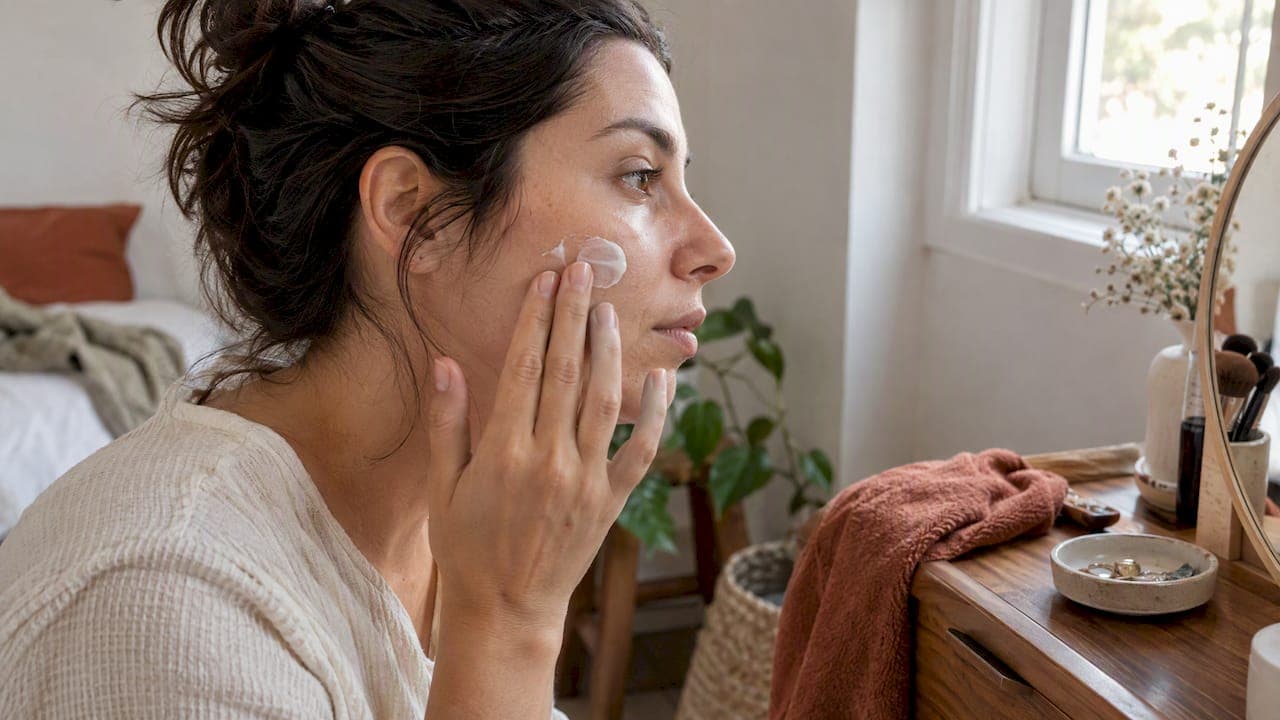
Azelaic acid is a naturally occurring dicarboxylic acid used on skin for acne, rosacea and dark marks left by inflammation. It is anti-inflammatory, antimicrobial and pigment-modulating, according to a clinical review of its mechanism and preparations. It works slowly. Weeks for acne, months for rosacea. Evidence is strongest for those conditions. It is not a universal spot remover and not an anti-aging treatment.
TL;DR
- Best evidence: inflammatory acne, rosacea bumps, and post-inflammatory dark marks. Selected melasma too.
- Prescription strengths are 15% (gel, foam) and 20% (cream). Over-the-counter products vary and are not interchangeable with them.
- Routine: gentle cleanser, thin layer of azelaic acid, moisturizer, daytime broad-spectrum sunscreen.
- Expect tingling or dryness early. A breakout is not proof it works.
- Stop and see a clinician for swelling, blistering, severe pain or persistent irritation.
Table of Contents
- What azelaic acid is
- Azelaic acid benefits by concern
- Prescription vs. over-the-counter strengths
- Azelaic acid vs. niacinamide
- How to build a routine around azelaic acid
- Side effects and the breakout question
- Who should check with a professional first
- Our perspective
- Supporting skin while using azelaic acid
- FAQ
- Sources
What azelaic acid is
Azelaic acid is a saturated dicarboxylic acid with nine carbon atoms. It is naturally produced by the yeast Malassezia that lives on skin. Commercial products use a lab-made version.
It does several jobs at once:
- Reduces inflammation.
- Limits bacteria linked to acne.
- Normalizes how pores shed cells (anti-keratinizing).
- Slows pigment production.
The overlap is the point. The clinical value is the combination of anti-inflammatory and pigment-modulating action. It suits skin where red bumps and leftover discoloration appear together.
Azelaic acid benefits by concern
| Concern | Evidence level | What to expect |
|---|---|---|
| Inflammatory acne | Strong | Gradual improvement, often from about 4 weeks |
| Rosacea bumps and pustules | Strong | Slight change in 3 to 4 weeks, noticeable in 2 to 3 months |
| Post-inflammatory dark marks | Good | Fading over months |
| Melasma | Selected, condition-specific | Variable, clinician-guided |
| Anti-aging | Not established | Do not rely on it |
Acne
For acne, azelaic acid can help inflammatory and comedonal lesions and the dark marks left behind. A systematic review covered 16 acne studies. In that evidence, 20% azelaic acid reduced more lesions than erythromycin gel. DermNet reports that improvement may appear after about 4 weeks.
The Mayo Clinic describes topical cream for mild to moderately inflamed acne.

Redness and rosacea
For azelaic acid and redness, the distinction matters. The American Academy of Dermatology lists azelaic acid foam or gel for acne-like rosacea breakouts. It says slight improvement may come in 3 to 4 weeks and noticeable improvement commonly takes 2 to 3 months.

That treats bumps and pustules. Flushing and visible vessels are different features of rosacea. A prescriber decides what fits. More on the condition is in our guide to rosacea symptoms, causes and treatment options.
Dark spots
Azelaic acid inhibits tyrosinase and preferentially affects abnormal or hyperactive melanocytes. That is why it is used for post-inflammatory hyperpigmentation and some melasma. A randomized study in skin types IV to VI used 20% azelaic acid for 24 weeks. Pigment intensity ended significantly lower than with vehicle, with mild and transient side effects.
Two cautions:
- The evidence is condition-specific. Sun spots and freckles are not the same problem as post-acne marks.
- Post-inflammatory hyperpigmentation affects darker skin more often and more severely. Gentle, tolerable products matter, because irritation can add new marks.
Prescription vs. over-the-counter strengths
Reviews describe topical formulations from 5% to 20%. Common clinical strengths are 15% and 20%. Cosmetic products often use lower concentrations.
In the US:
- 15% gel or foam: prescription labeling for mild-to-moderate inflammatory rosacea.
- 20% cream: prescription labeling for mild-to-moderate inflammatory acne vulgaris.
- Cosmetic serums and creams: strength varies by brand and they are not equivalent to FDA-approved treatment.
Higher is not automatically better. The 2025 formulation review says delivery vehicle strongly affects tolerability and how much reaches the skin. A well-tolerated product used consistently can beat a stronger one that gets abandoned after a week of burning.
Azelaic acid vs. niacinamide
Both are used for dark spots. They work differently. A dermatologist comparison in Marie Claire describes azelaic acid as slowing pigment production at the source and niacinamide as reducing pigment transfer to surrounding cells.
| Azelaic acid | Niacinamide | |
|---|---|---|
| Main uses | Acne, rosacea bumps, post-inflammatory marks | Barrier support, tone, oil balance |
| Prescription forms | Yes (15%, 20%) | No |
| Typical early effects | Tingling, dryness, itching | Usually mild |
| Pairing | Moisturizer, sunscreen | Can sit in cleanser, toner, serum or moisturizer |
They are not rivals. Many routines use niacinamide for barrier support and tone while azelaic acid handles the active concern. Introduce one at a time so any reaction is traceable. For background, see the benefits of niacinamide and how to layer niacinamide with acids.
How to build a routine around azelaic acid
A practical order:
- Gentle cleanser. Mild or soapless. Pat dry.
- Azelaic acid. A thin layer on clean, dry skin. For rosacea medication, AAD guidance places it after gentle cleansing, and makeup can follow once it dries.
- Moisturizer. Supports the barrier and softens dryness.
- Sunscreen, daytime. Broad-spectrum. Sun darkens marks and aggravates rosacea.
Prescription labels direct topical use only and avoidance of the eyes. For rosacea, labeling for the 15% gel and foam calls for avoiding abrasive or peeling products.
What not to stack at the start
Avoid adding several exfoliating or irritating actives at once, especially on reactive or barrier-impaired skin. Hold off on:
- Scrubs.
- Peeling agents.
- Alcoholic astringents.
- A new retinoid in the same week.
For texture work, choose one exfoliant with care: glycolic vs. lactic acid covers the choice.
Morning and evening
The Finacea gel label specifies twice-daily use for the prescription product. Cosmetic products have their own directions. Follow the package, or the prescriber's instructions. A simple morning routine ends in sunscreen either way.
Side effects and the breakout question
Common early effects, per the Mayo Clinic:
- Burning
- Stinging
- Tingling
- Dryness
- Itching
- Peeling
- Redness
Most of this is a tolerance problem. It is not evidence the product is working. A breakout is not a required or reliable sign of progress either.
What to do:
- Use a thin layer on clean, dry skin.
- Reduce frequency if stinging persists.
- Add moisturizer.
- Stop if burning, swelling, rash or marked peeling develops.
For tips on managing early reactions and choosing a formula skin tolerates, reactive-skin care guidance from a skin-recovery brand covers soothing basics.
See a clinician for new widespread acne, worsening inflammation, severe pain, swelling, blistering or irritation that does not settle. Trouble breathing or swelling of the face, lips, tongue or throat is a possible serious allergic reaction. Seek urgent care.
Who should check with a professional first
- Anyone with suspected rosacea who has not had a diagnosis.
- Anyone with persistent or scarring acne.
- Anyone treating melasma. Causes include hormones and sun, and treatment is individual.
- Anyone who reacted badly to a topical before.
Estheticians and spa teams should separate treatment claims from cosmetic positioning. Clinical evidence is strongest for acne and rosacea, supports selected pigmentation concerns, and does not establish azelaic acid as an anti-aging treatment, per the systematic review.
Our perspective
We make vegan, cruelty-free, natural skincare with short, transparent ingredient lists. Our focus is barrier repair, sensitive skin and simple routines. We do not list an azelaic acid product. We still get asked about it, because it is one of the more useful actives for acne and rosacea.
Our view is plain. Azelaic acid is a treatment ingredient. The skin around it needs support. Cleanser that does not strip, a moisturizer that holds water, sunscreen every morning. Most failed azelaic acid trials we hear about are irritation problems, not ingredient problems.
So we recommend three things:
- Introduce one active at a time.
- Keep everything else simple.
- Give it weeks to months, not days.
For concerns that fit a prescription, see a dermatologist. For the daily routine around it, that is our work.
— Kelly
Supporting skin while using azelaic acid
The routine around an active matters as much as the active. Yuka+Face offers:
All are vegan and cruelty-free. Browse the full organic skincare range.
FAQ
Will azelaic acid clear my skin?
It can help inflammatory acne and rosacea bumps, and fade post-inflammatory dark marks. Results take weeks to months. DermNet reports acne improvement from about 4 weeks, and the AAD says noticeable rosacea improvement commonly takes 2 to 3 months. It does not treat every skin concern.
What products should I use with azelaic acid?
A gentle cleanser, a moisturizer and daytime broad-spectrum sunscreen. Avoid starting scrubs, peeling agents or alcoholic astringents at the same time. Add other actives one at a time.
Is it normal to break out after using azelaic acid?
Stinging, dryness and peeling are common early. A breakout is not a reliable sign of progress. If acne spreads or inflammation worsens, stop the product and ask a clinician.
Is over-the-counter azelaic acid as strong as a prescription?
Not necessarily. US prescription products are 15% gel or foam and 20% cream. Cosmetic products vary in strength and are not interchangeable with FDA-approved treatment.
Sources
- The multiple uses of azelaic acid in dermatology (PMC)
- Azelaic Acid: Mechanisms of Action and Clinical Applications (PMC)
- Azelaic acid and clinical value overview (PubMed)
- Systematic review of azelaic acid in acne, rosacea, melasma and skin aging
- DermNet: Azelaic acid
- Mayo Clinic: Azelaic acid (topical route)
- American Academy of Dermatology: Rosacea diagnosis and treatment
- A Comprehensive Review of Azelaic Acid (PMC, 2025)
- Postinflammatory Hyperpigmentation in Skin of Color (PMC)
- FDA label, azelaic acid 2024
- FDA label, Finacea foam
- FDA label, Finacea gel
- Marie Claire: Azelaic acid vs. niacinamide