
Choose an AHA for dullness, fine lines, and dark spots. Choose a BHA, meaning salicylic acid, for oily skin, clogged pores, and active breakouts. The difference comes down to solubility: AHAs dissolve in water and work on the skin's surface, while BHAs dissolve in oil and travel down into the pore lining itself, according to dermatology summaries from Cleveland Clinic.
If your skin is oily or acne-prone, start with a low-strength salicylic acid product, since the FDA's OTC acne monograph limits consumer salicylic acid concentration to within the regulated maximum. If you're dealing with dryness, sun damage, or early aging, glycolic or lactic acid will do more for texture and tone. If you have sensitive skin or a deeper skin tone, skip the strong stuff entirely and reach for mandelic acid or a PHA like gluconolactone. And no matter which acid you pick, the FDA has flagged AHAs specifically for increasing sun sensitivity, so daily SPF isn't optional. Yuka+Face builds its exfoliating formulas around this exact skin-type logic, favoring gentler, plant-derived acids over harsh synthetic peels.
Key Takeaways
The core rule is simple: AHAs treat surface concerns like texture and pigmentation, BHAs treat pore congestion and acne, and PHAs offer a gentler middle path for sensitive skin.
| Point | Details |
|---|---|
| AHAs target surface issues | Glycolic, lactic, and mandelic acids improve texture, fine lines, and dullness by speeding surface cell turnover. |
| BHAs target pores | Salicylic acid penetrates oil-filled pores to dissolve debris and calm acne-related inflammation. |
| Molecular size drives tolerance | Smaller molecules like glycolic acid penetrate fastest but irritate most; mandelic and PHAs are gentler. |
| Start low, build slowly | Patch test first, then start most acids at 1-2 uses a week before increasing frequency. |
| Sun protection is mandatory | FDA guidance links AHA use to increased UV sensitivity, so daily SPF 30+ is essential. |
| Yuka+Face favors gentler actives | Yuka+Face formulates vegan, plant-forward exfoliants built around lower-irritation ingredients like PHAs and milder AHAs. |
Table of Contents
- What Are AHAs and How Do They Exfoliate Skin?
- What Are BHAs and How Do They Work Inside Pores?
- AHA vs BHA: Mechanism, Penetration, and Best Uses Compared
- Which Acid Should You Use for Your Skin Type?
- Can You Use AHA and BHA Together?
- What Are the Safety Risks and Side Effects of AHAs and BHAs?
- Gentler Alternatives: PHAs, Gluconolactone, and Mandelic Acid
- Sample Routines by Skin Type
- Why Trust This Guide
- Sources
- FAQ
What Are AHAs and How Do They Exfoliate Skin?
Alpha-hydroxy acids are water-soluble acids that loosen the bonds holding dead skin cells together on the surface layer. Once those bonds break down, skin sheds old cells faster and reveals smoother, more evenly toned skin underneath. This is why AHAs show up in nearly every product marketed for fine lines, dullness, and dark spots, per Healthline's breakdown of exfoliant chemistry.
Not all AHAs behave the same way. Molecular size determines how deep and how fast each one penetrates:
- Glycolic acid has the smallest molecule of the common AHAs, so it penetrates fastest and delivers the most dramatic results, but it also carries the highest irritation risk.
- Lactic acid is a mid-sized molecule that tends to be gentler than glycolic while still improving texture and hydration.
- Mandelic acid has a larger molecular structure, which slows penetration and makes it one of the better AHA choices for sensitive or darker skin tones.
- Citric acid works as a milder AHA, often used in lower concentrations as a supporting ingredient rather than the primary exfoliant.
This molecular-size pattern, detailed by AestheticMedGuide, explains why two products both labeled "AHA" can feel completely different on your face.
Consumer leave-on products typically run moderate strengths of AHA concentration, formulated at a pH between 3 and 4 for effective exfoliation without excessive irritation. Here's the detail most people miss: the FDA's guidance on AHA-containing cosmetics notes that topical AHA use increases skin's sensitivity to UV radiation, and that sensitivity can linger for several days after you stop using the product. That's the basis for the sun-safety warning required on many AHA cosmetic labels.
Bottom line on what AHAs actually fix: fine lines, rough texture, dullness, and uneven pigmentation from sun damage or age.
What Are BHAs and How Do They Work Inside Pores?
Beta-hydroxy acids are oil-soluble, and salicylic acid is the one you'll actually find on ingredient lists. That single chemical difference, solubility in oil rather than water, changes everything about how the acid behaves on your face.
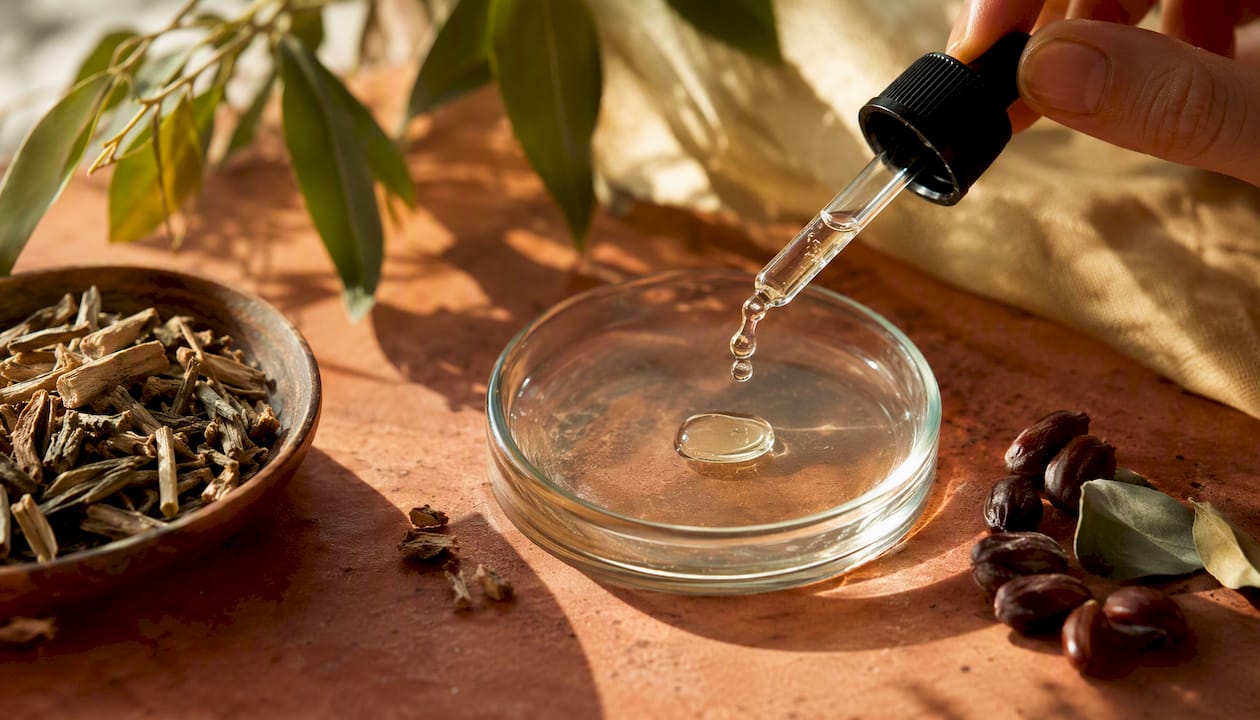
Because salicylic acid dissolves in lipids, it can travel down into a sebum-filled pore rather than just sitting on top of the skin. Once inside, it breaks apart the mix of dead cells and oil that forms blackheads and whiteheads, and it calms the inflammation that turns a clogged pore into a full breakout. That combination, comedone clearing plus anti-inflammatory action, is why salicylic acid remains the go-to acid for acne-prone and oily skin, according to Healthline.
Regulation matters here more than with AHAs. In the United States, salicylic acid used for acne treatment falls under the FDA's OTC acne drug monograph, which governs allowable concentrations and labeling. Consumer products typically use salicylic acid within the permitted low to moderate concentration range allowed for over-the-counter acne treatments. That's why a salicylic acid cleanser at 0.5% behaves very differently from a 2% leave-on treatment.
What salicylic acid delivers in practice: fewer blackheads, less oil buildup, calmer active breakouts, and a visible reduction in pore congestion over consistent use.
AHA vs BHA: Mechanism, Penetration, and Best Uses Compared
Neither acid wins outright. They solve different problems because they're built differently at the molecular level.
| Factor | AHA (glycolic, lactic, mandelic) | BHA (salicylic acid) |
|---|---|---|
| Solubility / mechanism | Water-soluble; loosens surface cell bonds | Oil-soluble; penetrates sebum inside pores |
| Best for | Dullness, fine lines, uneven tone, dry skin | Oily skin, blackheads, active acne, congestion |
| Typical consumer strength / pH | 5%-10%, pH 3-4 | 0.5%-2%, regulated under OTC monograph |
| Penetration & irritation risk | Surface-level; glycolic highest risk, mandelic lowest | Deeper into pore; moderate irritation, drying at higher strength |
| Frequency / routine placement | 1-2 nights/week to start, PM use preferred | Daily low-strength possible once acclimated; AM or PM |
For acne, salicylic acid usually outperforms AHAs because it addresses the oil and bacteria trapped inside the follicle, not just the surface. For aging and sun damage, glycolic or lactic acid drives more visible improvement in texture and tone since that damage lives in the upper skin layers. For hyperpigmentation, both classes help, but AHAs tend to be the first choice for sun-related dark spots, while salicylic acid is often better for the marks acne itself leaves behind.
Dry skin deserves a specific note: BHAs can be more drying than AHAs, since salicylic acid strips oil as part of how it works. If your skin already feels tight or flaky, an AHA, or better yet a PHA, will usually feel more comfortable.
The honest answer to "which is better, AHA or BHA" is that the question itself assumes a competition that doesn't exist. Match the acid to what your skin is actually doing.
Which Acid Should You Use for Your Skin Type?
Run through this quickly: oily or acne-prone skin points to salicylic acid. Dry, aging, or sun-damaged skin points to glycolic or lactic acid. Sensitive skin or deeper skin tones point to mandelic acid or a PHA like gluconolactone. Combination skin often does best mixing approaches by zone, salicylic acid on the T-zone and a milder AHA everywhere else.
Starting concentrations make or break the experience. Going in too strong is the single most common reason people give up on acids entirely.
| Acid | Typical starting strength | Suggested starting frequency |
|---|---|---|
| Glycolic acid | 5%-8% | 1-2 nights per week |
| Lactic acid | 5%-10% | 2-3 nights per week |
| Mandelic acid | 5%-10% | 2-4 nights per week |
| Salicylic acid | 0.5%-2% | Every other day, building to daily |
| Gluconolactone (PHA) | 5%-10% | 3-5 nights per week, or daily for very tolerant skin |
These starting points reflect the general acclimation pattern Healthline recommends: moderate-strength AHAs a couple of nights a week, low-strength salicylic acid more frequently once your skin adjusts.
Before any of that, patch test. Apply a small amount to your inner forearm or behind your ear, wait 24 to 48 hours, and check for redness, burning, or swelling before putting anything new on your face. If your first few uses leave skin tight, flaky, or stinging beyond a mild tingle, cut back to once a week and let your skin recalibrate before increasing frequency again. Persistent redness, burning that doesn't fade within minutes, or visible peeling means you've gone too far, too fast. Drop back to your last comfortable frequency and stay there for at least two weeks.
Can You Use AHA and BHA Together?
Yes, but not necessarily in the same application. Combining both actives can boost overall exfoliation, though it also raises irritation risk, which is why Healthline's clinical review recommends specific layering strategies rather than applying full-strength versions of each acid back to back.
Three approaches work well in practice:
- Alternate nights. Use your AHA on Monday, Wednesday, Friday, and your BHA on the other nights, giving your skin barrier recovery time between actives.
- Spatial separation. Apply BHA to the oilier T-zone where pores clog most, and AHA to the cheeks or drier areas that need texture help.
- Combination formulas. Some products blend both acids at lower concentrations specifically so you get partial benefits from each without stacking two full-strength treatments.
Build up gradually no matter which method you choose. Patch test each acid separately first, introduce one at a time starting once or twice a week, and only add the second acid once your skin tolerates the first without redness or flaking. Watch for the line between normal exfoliation and barrier damage: mild tingling and slight dryness the day after are typical, but tightness that doesn't ease with moisturizer, visible cracking, or a burning sensation that returns each time you apply anything are signs your barrier needs a break.
Pro Tip: If your skin starts looking shiny and feels tender to the touch rather than just "fresh," stop all acids for a week and focus on plain moisturizer and sunscreen. That shine is often compromised barrier, not renewed skin.
What Are the Safety Risks and Side Effects of AHAs and BHAs?
Both acid classes can cause stinging, redness, and flaking, especially in the first two to three weeks of use. In darker skin tones, using either acid too aggressively raises the risk of post-inflammatory hyperpigmentation, meaning the irritation itself leaves a mark that can take months to fade.
The sun-sensitivity issue deserves its own callout because it's the one most people underestimate. FDA guidance states that AHA use increases UV sensitivity, and that heightened sensitivity can persist for several days after you stop applying the product, which is why AHA cosmetic labels are advised to carry a sun-safety statement, per the FDA's own guidance. Daily broad-spectrum SPF 30 or higher isn't a suggestion here, it's the condition that makes AHA use safe at all.
A few interaction notes worth flagging. Avoid layering strong retinoids with high-strength AHAs or BHAs on the same night early in your routine, since both categories increase cell turnover and combining them at full strength often overwhelms the skin barrier. If you're pregnant or nursing, talk to your doctor before starting salicylic acid treatments, since oral salicylates carry known pregnancy cautions and topical use hasn't been fully studied at higher concentrations. This article offers general information, not personalized medical advice, so confirm anything specific to your health situation with a dermatologist or your physician.
Gentler Alternatives: PHAs, Gluconolactone, and Mandelic Acid
If AHAs and BHAs both sound like a lot for your skin, you're not out of options. Polyhydroxy acids, PHAs, work through the same basic mechanism as AHAs but with a larger molecular structure that slows penetration dramatically.
Gluconolactone is the most common PHA in skincare, and it's often described as a next-generation AHA because its size limits how deep it goes while still delivering real exfoliation, according to Incidecoder's ingredient breakdown. A study evaluating 10% and 30% gluconolactone chemical peels found low irritation alongside measurable improvements in skin hydration and barrier markers, supporting its use as a gentler option for reactive or post-procedure skin. That combination of exfoliation plus humectant benefit is unusual. Most exfoliating acids strip moisture; gluconolactone tends to add it back.
Mandelic acid sits in a different lane. It's still an AHA, but its larger molecule makes it noticeably gentler than glycolic acid while still addressing acne-related concerns, which makes it a solid pick if you have acne-prone skin that also reacts badly to standard treatments. Practitioners often favor mandelic acid for deeper skin tones specifically because its slower penetration lowers the risk of the post-inflammatory hyperpigmentation that faster-penetrating acids can trigger.
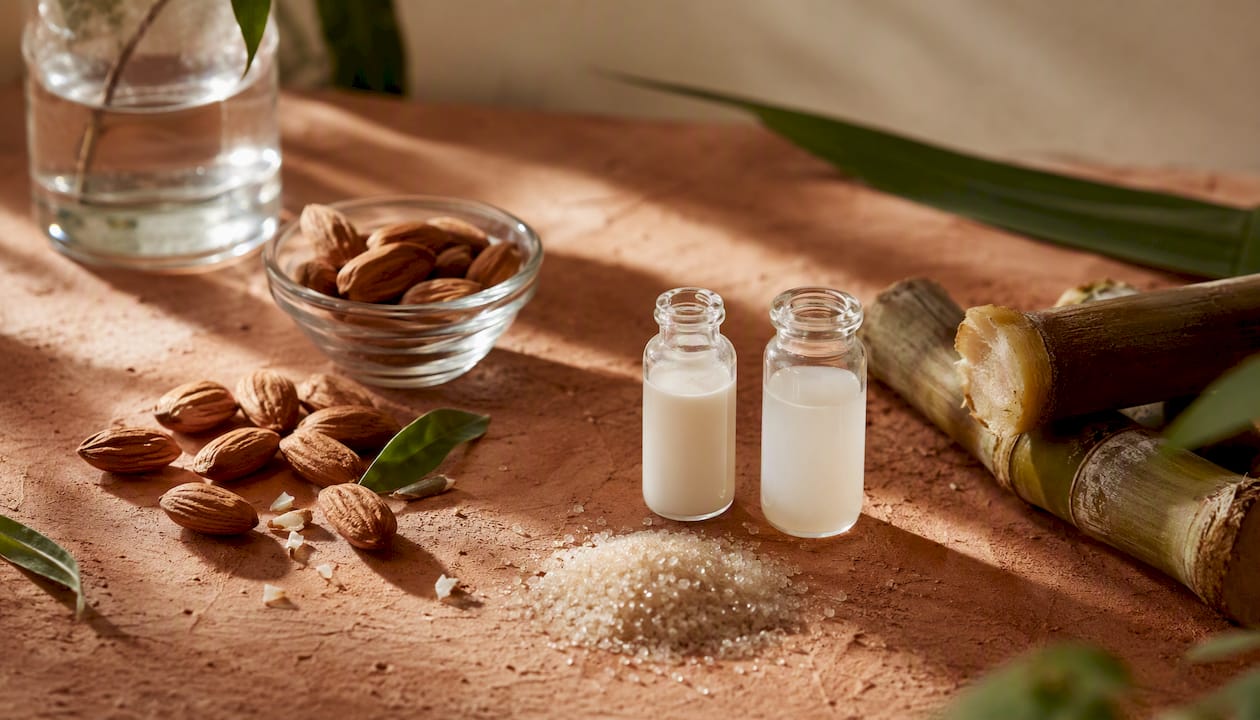
The practical split: choose mandelic acid if you're managing breakouts on sensitive or deeper skin, and choose a PHA like gluconolactone if you want exfoliation with barrier support, especially after a professional treatment or during a rosacea flare. If you're building a routine around gentler actives generally, Yuka+Face's guide to personalizing your skincare by skin type walks through how to layer these choices without guessing. For readers weighing at-home acids against in-office options, Enriched Med Spa's guide to facials for sensitive skin covers what professional gentle exfoliation looks like when at-home products still feel like too much.
Sample Routines by Skin Type
Here's how these acids actually fit into a daily routine, broken down by the skin types that ask about this most.
- Oily or acne-prone skin, PM routine: Cleanse with a gentle foaming cleanser, apply a 0.5% to 2% salicylic acid treatment (start every other night, build toward nightly), follow with an oil-free moisturizer. Skip acids on your "off" nights and just cleanse and moisturize.
- Dry or aging skin, PM routine: Cleanse with a cream or balm cleanser, apply a 5% to 8% lactic acid serum two to three nights a week, layer a hydrating serum and a rich moisturizer on top. On non-acid nights, add a peptide serum to support the barrier alongside your exfoliation schedule, something Yuka+Face's peptide guide covers in more depth.
- Combination skin, PM routine: Cleanse, apply salicylic acid to the T-zone only, apply a mandelic acid serum to the cheeks and drier areas, moisturize the whole face. This zone-based approach lets you treat two different skin behaviors in one session.
- Sensitive or reactive skin, PM routine: Cleanse gently, apply a gluconolactone (PHA) product three to five nights a week, follow with a barrier-repair moisturizer. Build frequency slowly and stop entirely if you notice any lingering redness.
Every one of these routines needs the same morning finish: a gentle cleanse or water rinse, your regular moisturizer, and broad-spectrum SPF 30 or higher, non-negotiable on any day you've used an AHA the night before given the sun-sensitivity window the FDA has flagged. On exfoliant nights, keep everything else in your routine simple. Skip the retinoid, skip the extra active serums, and let the acid do its job without competing for absorption. Yuka+Face's guide to structuring a full skin routine breaks down where each product step belongs if you're building this out from scratch.
Why Trust This Guide
The recommendations here draw on FDA regulatory guidance for both AHA labeling and the salicylic acid OTC monograph, alongside clinical dermatology reviews and peer-reviewed research on PHA formulations like gluconolactone. Where a claim involves a specific concentration, frequency, or regulatory limit, it traces back to a named source rather than general skincare folklore.
Kelly, who covers ingredient science and formulation trends for Yuka+Face, synthesized this guide from that regulatory and clinical literature rather than any single product test. Yuka+Face's own formulation philosophy, building exfoliating and active products around plant-derived, lower-irritation ingredients, informed how the gentler alternatives section frames PHAs and mandelic acid as legitimate first choices rather than fallback options for people who "can't handle" stronger acids.
A Publisher's Take on Choosing Gentle, Plant-Forward Acids
We'd rather see you succeed with a 5% mandelic acid serum used consistently for three months than watch you burn out on 10% glycolic acid in two weeks because it wrecked your barrier. That's not a hedge, it's what the molecular-size research actually supports: larger-molecule acids like mandelic and gluconolactone deliver real exfoliation with a much lower chance of the irritation that makes people quit entirely.
Yuka+Face formulates around that same logic. Every product stays vegan and cruelty-free, and we lean toward plant-derived actives that work with the skin barrier instead of stripping it, because we think long-term consistency beats aggressive short-term results every time. If you want to dig deeper into ingredient choices beyond this guide, our journal covers formulation topics in plain language, no dermatology degree required.
A Gentle Exfoliant Option Worth Considering
If you've read this far and landed on "I want the benefits of exfoliation without the irritation risk," a plant-forward, lower-strength formula is usually the right entry point, especially if you have sensitive skin, a deeper skin tone, or you're just starting out with acids for the first time. Compatibility matters here: any gentle exfoliant should layer cleanly under your regular moisturizer and sunscreen, and it should feel comfortable enough to become a routine step rather than a special occasion.
Yuka+Face's vegan skincare guide walks through how our formulations approach exfoliation and barrier support together, rather than treating them as separate steps competing for attention. If you're pairing acid exfoliation with an evening anti-aging routine, our Nighttime Ageless Peptide Serum is formulated to support skin the nights you're not exfoliating, helping maintain the barrier recovery your routine depends on. Patch test any new product on your inner arm for 24 to 48 hours before applying it to your face, same rule that applies to any acid or active you introduce. Browse the product page and see if it fits into the routine you've just mapped out for your skin type.
Sources
These sources were chosen for their direct relevance to consumer safety and formulation accuracy: FDA regulatory guidance on both AHA labeling and the salicylic acid OTC monograph, a peer-reviewed clinical evaluation of gluconolactone peels, and dermatology and ingredient-science references that explain acid mechanisms in practical terms.
Worth bookmarking if you want to go deeper: the FDA's AHA labeling guidance for the regulatory backbone of the sun-sensitivity warning, Cleveland Clinic's ingredient overview for a clinical summary of how each acid class functions, and the gluconolactone peel study if you want the clinical data behind PHA safety claims. A complete list of sources cited throughout this guide appears inline above.
This article is general information, not a substitute for advice from a qualified doctor. Consult a qualified healthcare professional about your own circumstances before acting on anything here.
- AHA vs. BHA: Choosing an Exfoliant, Acid Types, Products
- AHA vs BHA: Glycolic vs Salicylic Acid, and Which Exfoliant for Your Skin · AestheticMedGuide
- Guidance for industry: labeling cosmetics containing alpha hydroxy acids
- Evaluation of the effects of 10% and 30% gluconolactone chemical peel on sebum, pH, and TEWL
- Understanding the ingredients in skin care products | Cleveland Clinic
FAQ
Should I use a BHA or AHA?
Use a BHA (salicylic acid) if you have oily or acne-prone skin with clogged pores, and use an AHA (glycolic, lactic, or mandelic acid) if your main concerns are dullness, fine lines, or uneven tone. Combination skin can use both, applied to different areas or on alternating nights.
Which is better, niacinamide or AHA/BHA?
They're not competing products. Niacinamide calms inflammation and supports the skin barrier, while AHAs and BHAs exfoliate, so many routines use niacinamide alongside or between acid treatments rather than instead of them.
Does AHA cause skin darkening?
AHAs don't darken skin directly, but they do increase sun sensitivity, and unprotected sun exposure after AHA use can worsen existing dark spots or trigger new pigmentation. That's why the FDA recommends sun-safety labeling and daily SPF with AHA products.
Is AHA just salicylic acid?
No. Salicylic acid is a BHA, not an AHA. AHAs are a separate, water-soluble acid class that includes glycolic, lactic, and mandelic acid, while salicylic acid is the primary oil-soluble BHA used in skincare.