Choose glycolic acid when you want faster, deeper exfoliation and visible texture or anti-aging results. Choose lactic acid when you want gentler resurfacing that adds hydration, especially on sensitive, dry, or barrier-compromised skin. Glycolic carries a higher irritation risk because of its smaller molecule size; lactic tends to suit beginners and reactive skin types more easily. The sections below cover concentrations, layering rules, and how to progress safely with either.
TL;DR:
- Glycolic acid penetrates deeper and acts faster but carries a higher risk of irritation, especially at higher concentrations and with lower pH levels.
- Lactic acid is gentler, doubles as a humectant, and is better suited for sensitive, dry, or barrier-compromised skin, with lower irritation reports at comparable formulations.
- Starting with low concentrations (5% to 10%) and patch testing is essential, particularly for deeper skin tones or reactive skin to prevent hyperpigmentation and irritation.
- Avoid layering glycolic and lactic acids in the same session; alternate nights and keep retinoids and vitamin C separate to minimize irritation and maintain skin barrier health.
- Professional peels with higher concentrations deliver faster results for pigmentation but require supervision, while OTC products with 4-12% acids are safer for regular home use.
Table of Contents
- What Glycolic Acid and Lactic Acid Are and How AHAs Work
- Key Differences at a Glance
- Benefits and Skin-Type Guidance: Who Should Use Each
- Concentration, Formulation, and What "Strength" Actually Means
- How to Use Them Safely: Layering, Frequency, and What Not to Mix
- Peels and Clinical Evidence: What Studies Show About Efficacy and Safety
- Authoritative Perspective and How Yuka+Face Approaches AHAs
- A Short Note on Starting Slow
- Find Your Fit With Yuka+Face
- Sources
- FAQ
What Glycolic Acid and Lactic Acid Are and How AHAs Work
Both belong to the alpha hydroxy acid family, a group of water-soluble acids derived originally from fruit, milk, and sugarcane. AHAs exfoliate by loosening desmosomes, the protein structures that glue dead skin cells together in the stratum corneum, so cells shed faster and reveal smoother skin underneath.
Glycolic acid comes from sugarcane and has a molecular weight of about 76 Da, the smallest of the common AHAs. That small size lets it slip past the skin's outer barrier more easily, which is why it tends to work faster and deeper than other AHAs. Lactic acid, naturally found in fermented milk, has a molecular weight closer to 90 Da. It penetrates more slowly and, unlike glycolic, also functions as a humectant, pulling moisture into the skin at the same time it exfoliates.
pKa matters here too. Glycolic acid's pKa sits around 3.83, lactic acid's around 3.86, close enough that the real difference in how they feel on skin comes down to formulation pH and molecular size rather than acid strength alone.
| Property | Glycolic Acid | Lactic Acid |
|---|---|---|
| Molecular weight | ~76 Da | ~90 Da |
| pKa | ~3.83 | ~3.86 |
| Source | Sugarcane | Milk fermentation |
| Penetration | Deeper, faster | Slower, more surface-level |
| Extra property | None notable | Humectant (draws moisture) |
Key Differences at a Glance
Glycolic and lactic acid share a category, but they behave differently enough on skin that picking the wrong one can mean unnecessary redness or underwhelming results. Here's the split that matters most for choosing between them:
- Depth of action: Glycolic penetrates deeper due to its smaller molecular size; lactic works more superficially.
- Irritation risk: Equimolar testing found L(+) lactic acid produced fewer stinging complaints than glycolic acid at comparable concentrations.
- Hydration: Lactic doubles as a humectant; glycolic offers no meaningful moisturizing effect on its own.
- Best for: Glycolic suits rough texture, photoaging, and stubborn pigmentation. Lactic suits sensitive, dry, or newly-exfoliating skin.
- Formulation dependence: A 10% lactic serum at pH 4.5 can feel milder than a 5% glycolic serum at pH 3.2. Percentage alone never tells the whole story.
Neither acid is universally "better." Dermatology-focused comparisons consistently frame lactic as the gentler entry point and glycolic as the choice for more intensive results, which lines up with what the molecular data shows. The real decision hinges on what your skin can tolerate right now, not what sounds more powerful on a label.
Benefits and Skin-Type Guidance: Who Should Use Each
Glycolic acid earns its reputation with rough texture, uneven skin tone, and early signs of photoaging. Because it penetrates more deeply, it also tends to deliver visible smoothing faster than lactic, provided your skin can handle the exfoliation rate. If you have normal to resilient skin and want to fade the look of sun damage or refine texture, glycolic is usually the stronger pick.
Lactic acid fits a different job. Its humectant property makes it a better match for skin that's dry, reactive, or has a compromised barrier from over-exfoliation, weather, or retinoid use. You get resurfacing without the moisture loss that stronger acids can cause.
Here's a practical way to start either one:
- Patch test first. Apply a small amount behind your ear or on your inner forearm for two nights before using it on your face.
- Lactic starters: Begin with a 5% formula two to three times a week, applied at night, then build frequency as tolerance improves.
- Glycolic starters: For non-sensitive skin, 5 to 10% two to three times a week is a reasonable starting point, increasing gradually.
- Watch for redness or peeling that lasts more than a day. That's your signal to cut back before increasing further.
- Reassess every two to three weeks and adjust strength or frequency based on how your skin responds, not on a fixed schedule.
If you have deeper skin tones (higher Fitzpatrick types), go slower with either acid. Post-inflammatory hyperpigmentation risk rises with irritation, so lower frequency, gradual buildup, and professional supervision for anything beyond OTC strength are worth prioritizing over speed.
Pro Tip: If your skin flushes or stings within seconds of applying an AHA, that's not a sign it's "working harder." It usually means your barrier isn't ready for that strength yet. Back off before you push through it.
Concentration, Formulation, and What "Strength" Actually Means
A product's listed percentage tells you how much acid is in the bottle, not how much of it is actually active on your skin. That depends on pH. AHAs exist in a chemical balance between their acidic form and a neutralized salt form, and only the acidic form does the exfoliating work. Effective AHA formulations typically sit around pH 3.5 to 4.0 to keep enough free acid active without being harsh.
A 10% lactic acid product formulated at pH 4.5 will likely feel milder than a 7% glycolic acid product at pH 3.0, because more of that glycolic is in its active free-acid form. Glycolic acid's smaller molecular size also gives it a penetration advantage that lactic doesn't have, even at matched concentrations.
Rough concentration bands you'll see across the market:
- OTC daily serums and toners: roughly 4 to 12%, meant for repeated home use.
- At-home treatment masks or peel pads: often higher, used weekly rather than daily.
- Professional in-office peels: 30 to 80%, applied under controlled conditions.
Partially neutralized lactic acid formulas behave more like moisturizers than exfoliants, which explains why two products listing the same percentage can feel completely different on your skin. Read a label's percentage as a starting clue, not the full picture.
How to Use Them Safely: Layering, Frequency, and What Not to Mix
Start with one acid, at low strength, two to three nights a week, before adding anything else to your routine. Watch how your skin responds for at least ten days before increasing frequency or introducing a second active ingredient.
- Don't layer glycolic and lactic acid in the same session. Alternate nights instead, or pick one as your primary exfoliant.
- Skip pairing AHAs with retinoids on the same night. Both increase cell turnover, and combining them raises irritation risk sharply. Alternate them across your week instead.
- Space out vitamin C. A very acidic environment from AHAs can destabilize some vitamin C formulas; using them at different times of day is the safer route.
- Apply sunscreen every morning, no exceptions. AHA-treated skin is more sensitive to UV damage, and skipping SPF undoes much of the benefit.
- Support your barrier with ceramides and niacinamide. These help offset dryness and reinforce the skin barrier while you exfoliate. Our guide to layering actives with niacinamide covers sequencing in more detail.
Dermatology guidance generally recommends alternating strong exfoliants rather than combining them, and that advice holds whether you're mixing two AHAs or an AHA with a BHA. If you're also curious how salicylic acid fits into this picture, our breakdown of AHA versus BHA walks through when each makes more sense.
Pro Tip: Tingling isn't a performance metric. Intense stinging is more often a sign your barrier needs recovery time than proof the product is working.
Stop using either acid and consult a dermatologist if you notice persistent burning, cracking, or peeling that doesn't resolve within a few days of stopping use.
Peels and Clinical Evidence: What Studies Show About Efficacy and Safety
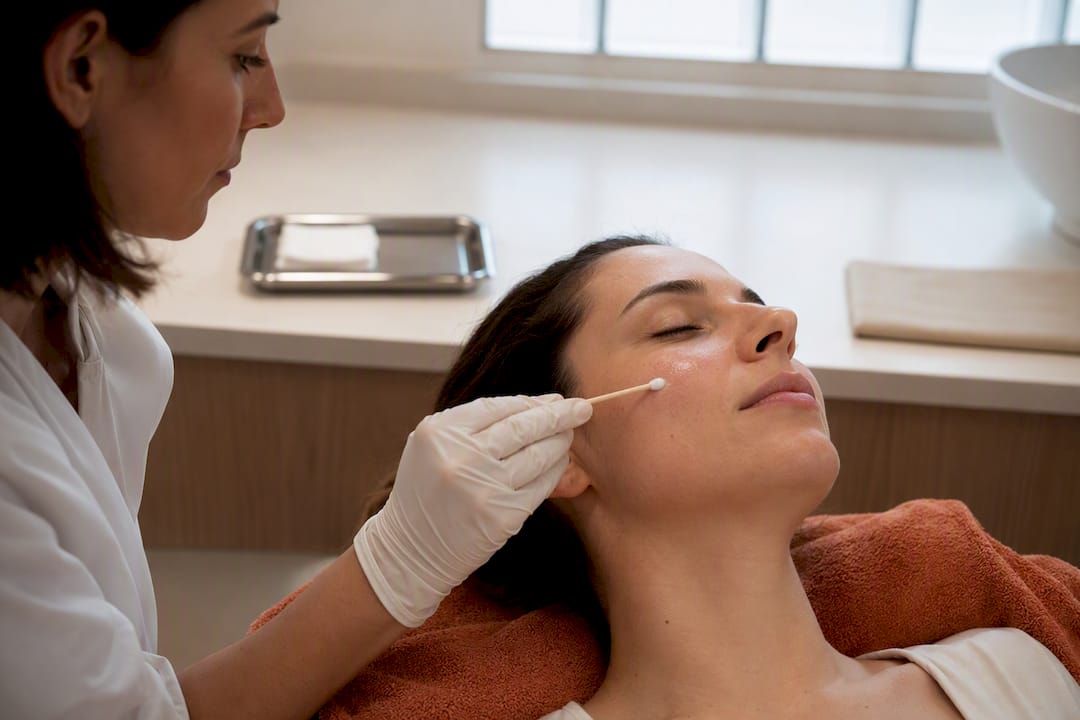
Home-use serums and professional peels operate in entirely different concentration territory, and the clinical data reflects that gap. A randomized trial comparing peels for melasma found that 50% glycolic acid peels reduced MASI pigmentation scores more than 80% lactic acid peels, with a median MASI decrease of 2.85 versus 1.8. That's a meaningful efficacy gap for a pigmentary condition, though the study noted side-effect differences between the two peels weren't statistically significant.
Separate testing across several AHAs at equimolar concentrations found that L(+) lactic and glycolic acid were both among the most effective for skin renewal, with lactic showing a slight edge in tolerability.
Key takeaways from the clinical picture:
- Higher-concentration peels (50 to 80%) deliver faster pigmentation improvement than anything available over the counter.
- Faster results don't automatically mean equally higher risk. In that melasma trial, side effects were comparable between the stronger glycolic peel and the higher-percentage lactic peel.
- Professional protocols exist precisely to manage acute irritation and post-inflammatory hyperpigmentation risk that untrained at-home use of peel-strength acid would carry.
If you're chasing peel-level pigment correction, an in-office glycolic peel under professional supervision is the evidence-backed route, not a jump to a higher percentage serum at home.
Authoritative Perspective and How Yuka+Face Approaches AHAs
Our approach to exfoliation centers on protecting the skin barrier. Our approach favors natural, vegan AHA sources and transparent concentration labeling, so you know what you're applying and why. Gentle, incremental exfoliation is the philosophy behind our routine recommendations, not maximum strength for its own sake.
For readers who want AHA benefits without the irritation gamble, a lower-concentration lactic-forward formula paired with barrier-supporting ingredients like ceramides is the more sustainable path. It's the same logic clinical data supports: start conservative, build tolerance, protect the barrier throughout.
A Short Note on Starting Slow
Every irritation complaint I've seen traced back to one mistake: starting too strong, too fast. Glycolic's depth and lactic's gentleness are both genuine advantages, but neither works in your favor if your barrier is compromised before you begin. My own rule is simple: introduce one acid, watch for a week, and never skip sunscreen the morning after.
— Kelly
Find Your Fit With Yuka+Face
If lactic acid's gentler profile sounds like the better starting point for your skin, this philosophy is incorporated into formulations using natural, vegan ingredients to clarify active exfoliating components versus moisturizing ones. Our vegan skincare formulation guide walks through how we approach active ingredients without synthetic fillers or harsh stabilizers.
For a barrier-supporting product to pair with your exfoliation routine, the Nighttime Ageless Peptide Serum is designed to work alongside gentle acids rather than against your skin's recovery time. If you're building a full routine around it, our guide to structuring a skincare routine shows where exfoliation, hydration, and repair steps each belong. Start there, then shop the serum to see how it fits your nightly routine.
Sources
- Comparative evaluation of AHAs (PMC11055559)
- Comparative effectiveness of α‐hydroxy acids on skin properties
- Glycolicacid
FAQ
Which Is Stronger, 10% Lactic Acid or 7% Glycolic Acid?
It depends on formulation pH, not just percentage.
Can Lactic Acid Get Rid of Blackheads?
Lactic acid can help by loosening the dead skin cells and debris that contribute to clogged pores, though it works more gradually than stronger exfoliants like glycolic or salicylic acid. Consistent, gentle use over several weeks tends to show the clearest improvement.
What Should You Never Mix With Glycolic Acid?
Avoid layering glycolic acid with retinoids or other strong exfoliants in the same session, since both increase cell turnover and compound irritation risk. Space vitamin C out to a different time of day as well, since the low pH environments can clash.
Can I Use Glycolic Acid and Lactic Acid Together?
You can alternate them on different nights, but combining both in a single application raises irritation risk without adding meaningful benefit. Most dermatology guidance favors alternation over simultaneous use for exactly this reason.