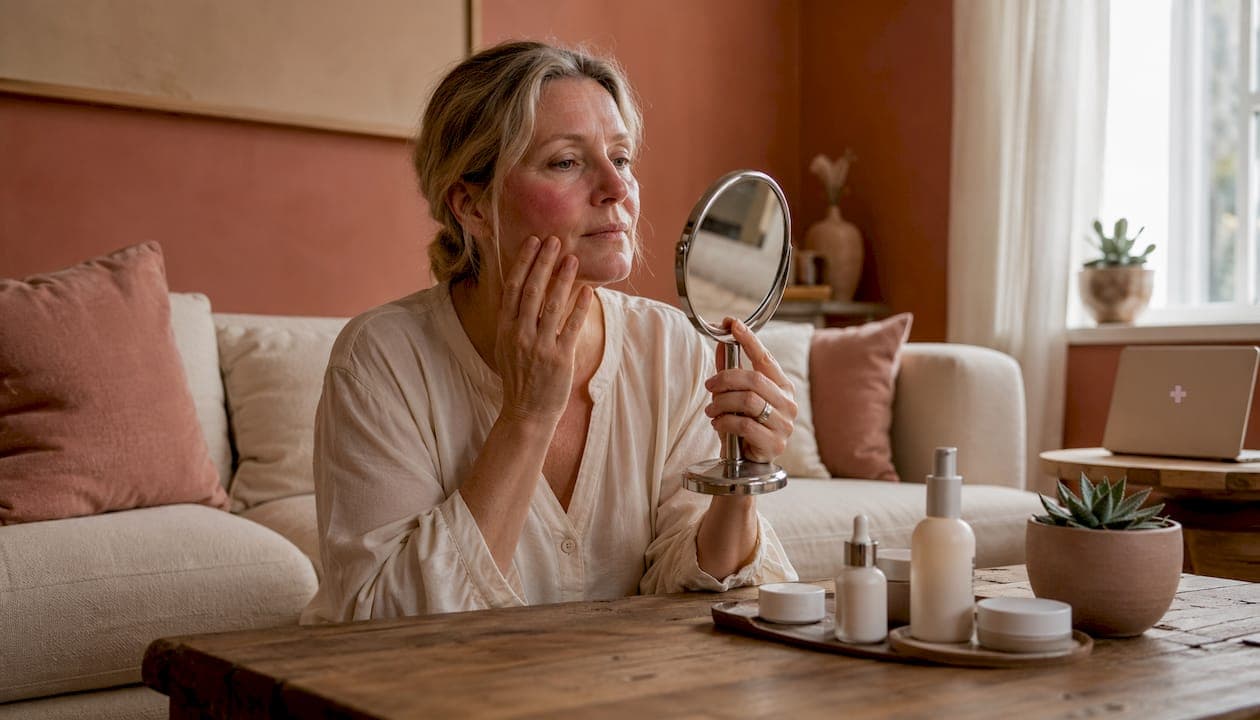
Rosacea is a chronic inflammatory skin condition affecting more than 14 million people in the United States. It primarily targets the central face: the nose, cheeks, forehead, and chin. Symptoms typically appear in adulthood and tend to come and go in episodes.
Key facts at a glance:
- Persistent facial redness, flushing, and visible blood vessels are the hallmark signs
- Papules and pustules can appear, often mistaken for adult acne
- Ocular symptoms affect up to 50% of patients
- Rhinophyma, a thickening of nasal skin, occurs more often in men
- Rosacea is not contagious and has no known cure, but symptoms can be managed effectively
- Four recognized subtypes: erythematotelangiectatic, papulopustular, phymatous, and ocular
What does rosacea actually look like?
Rosacea presents differently from person to person, and recognizing the full range of symptoms helps avoid misdiagnosis.
Common symptoms:
- Facial flushing that comes and goes, often lasting a few minutes
- Persistent redness across the nose, cheeks, forehead, and chin
- Telangiectasia: small, visible blood vessels that do not fade
- Papules and pustules (red bumps, sometimes filled with yellowish fluid)
- Burning or stinging when applying water or skincare products
- Dry, swollen, or flaky skin
- Eye irritation, dryness, grittiness, or redness (ocular rosacea)
- Thickened nasal skin in advanced cases (rhinophyma)
Skin tone significantly changes how rosacea appears. On fair skin, redness is typically pink or red and easy to spot. On darker complexions, the same redness may appear purple or brown, making it harder to detect and leading to delayed diagnosis in non-white populations.
| Symptom | Fair skin | Darker skin |
|---|---|---|
| Flushing / redness | Pink to red, clearly visible | Purple or brown tone, easily missed |
| Papules / pustules | Red-based bumps | May appear darker or hyperpigmented |
| Telangiectasia | Bright red vessels visible | Vessels less visible against skin tone |
| Rhinophyma | Bulbous, reddened nose | Thickening present, color change subtle |
Ocular rosacea deserves special attention. Eye symptoms can appear independently of any skin changes, and patients often mistake them for allergies. Symptoms include tearing, redness, light sensitivity, and a gritty sensation. Left untreated, ocular rosacea can progress to corneal damage and vision loss.
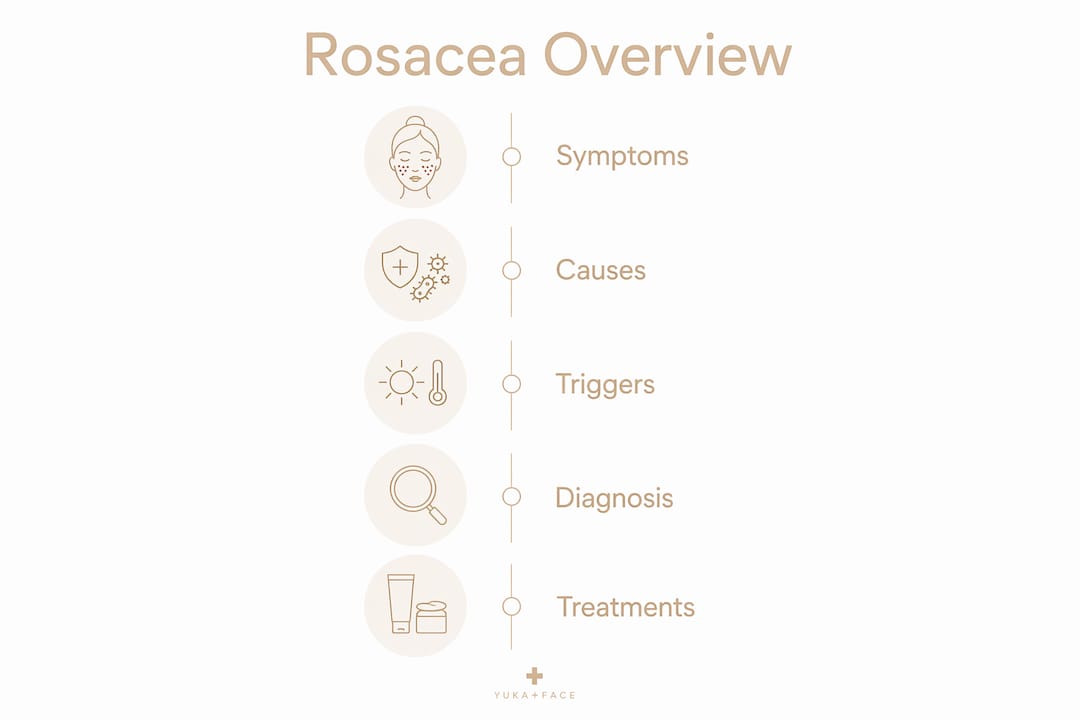
What causes rosacea, and what makes it flare up?
The exact cause of rosacea remains unknown. Current research points to a combination of neurovascular dysregulation, immune response, and genetic predisposition. Demodex mites, which live naturally near hair follicles, appear in higher numbers on rosacea-affected skin, though whether they cause the condition or simply thrive in it is still debated.

Genetic factors play a clear role. People with a family history of rosacea face a higher risk, and fair-skinned individuals (phototypes I and II) are diagnosed most often. That said, rosacea occurs across all skin tones and ethnicities.
Common triggers that worsen symptoms:
- Sun exposure and UV light
- Stress and emotional upset
- Hot beverages (coffee, tea)
- Spicy foods
- Alcohol, particularly red wine
- Extreme heat or cold
- Aerobic exercise
- Certain medications that dilate blood vessels
Triggers vary by individual. What causes a flare-up for one person may have no effect on another. Keeping a symptom diary helps identify personal patterns over time.
Pro Tip: Track your meals, activities, weather conditions, and skincare products alongside any flare-ups for at least four weeks. Patterns usually become clear within a month.
How is rosacea diagnosed, and what can it be confused with?
Rosacea is a clinical diagnosis. A dermatologist examines the skin, reviews symptom history, and looks for the characteristic centrofacial distribution of signs. No blood test or biopsy is required in most cases, though an eye exam is recommended when ocular symptoms are present.
Key diagnostic signs include:
- Persistent central facial redness with or without flushing
- Papules and pustules without blackheads
- Visible blood vessels on the nose and cheeks
- Ocular symptoms alongside skin changes
- Symptom history of episodic flare-ups linked to known triggers
The absence of blackheads (comedones) is one of the most useful distinguishing features. Blackheads point to acne vulgaris, not rosacea. Rosacea is also frequently confused with:
- Acne vulgaris: Similar bumps and pustules, but acne includes blackheads and is driven by excess oil production
- Seborrheic or contact dermatitis: Causes redness and flaking, but typically involves different distribution patterns
- Lupus: The butterfly rash of lupus can mimic rosacea's facial redness, but lupus involves systemic symptoms and specific lab markers
- Keratosis pilaris: Rough, bumpy texture on the face or arms, without the vascular component
Diagnosis in darker skin tones requires extra clinical vigilance. The classic redness is less obvious, so dermatologists must rely more on texture changes, patient history, and symptom patterns rather than visual color cues alone.
What are the treatment options for rosacea?
Rosacea has no cure, but treatment focuses on controlling symptoms and maintaining remission. Initial improvement is typically seen within 3–4 weeks of starting treatment, with significant changes appearing after 2–3 months. The right approach depends on which subtype and symptoms are present.
Topical treatments (applied to skin):
- Azelaic acid: Reduces inflammation and prevents pore blockage; applied morning and evening
- Ivermectin: Fights inflammation and targets Demodex mites; applied once daily
- Metronidazole: An antibiotic gel or cream that reduces redness and bumps; used once or twice daily
- Brimonidine gel: Temporarily narrows blood vessels to reduce redness; best used for specific events rather than daily
Oral treatments:
- Doxycycline: The standard oral antibiotic for moderate to severe papulopustular rosacea; used at lower doses than for bacterial infections
Procedures:
- Laser therapy and intense pulsed light (IPL): Target visible blood vessels and persistent redness by cauterizing small vessels with heat
- Surgery: Reserved for severe rhinophyma to remove excess tissue and restore nasal shape
Skincare and lifestyle:
- Use a gentle, pH-balanced cleanser (not soap)
- Apply broad-spectrum SPF 30 sunscreen daily, every day
- Moisturize regularly to support the skin barrier
- Avoid known irritants in skincare products (fragrances, alcohol-based toners, harsh exfoliants)
- Wash with lukewarm water; hot or cold water can trigger flushing
A personalized skincare routine built around gentle, non-irritating products is one of the most consistent recommendations dermatologists make for rosacea management.
Expert insights on managing rosacea effectively
Clinical experience reveals several nuances that general guides often overlook.
Expert recommendations:
- Avoid topical steroids: they can cause rebound flaring and worsen rosacea over time
- Use brimonidine cautiously: overuse leads to rebound flushing, so reserve it for specific occasions rather than daily application
- Screen all rosacea patients for ocular symptoms, even when eye complaints are absent
- Refer to an ophthalmologist promptly if any eye symptoms develop
- Individualize trigger avoidance: generic lists are a starting point, not a prescription
- Seek early diagnosis to prevent progression to rhinophyma or corneal damage
Ocular involvement affects up to 50% of rosacea patients and can occur without any visible skin symptoms, making routine eye screening critical.
Misdiagnosis remains a real problem, particularly in patients with darker skin tones where redness is less visible. Dermatologists emphasize that rosacea requires clinical assessment focused on centrofacial symptom patterns and individualized trigger identification. Untreated severe rosacea risks permanent disfigurement from rhinophyma and vision impairment from corneal damage, both of which are preventable with prompt care.
Long-term monitoring and follow-up care
Rosacea is a chronic condition, which means management does not stop when symptoms improve. Regular follow-up with a dermatologist, typically every 3–6 months during active treatment and annually once stable, helps catch any progression early.
Patients should monitor for new or worsening eye symptoms and report them promptly. Ocular rosacea can progress silently, and early intervention with lid hygiene, warm compresses, and appropriate eye drops prevents lasting damage. Anyone experiencing eye pain, blurred vision, or light sensitivity alongside rosacea should seek urgent evaluation, as these can signal keratitis, a corneal inflammation that can threaten vision.
Trigger diaries remain useful long-term, not just at diagnosis. Triggers can change with age, season, or hormonal shifts. Reviewing the diary at each appointment gives the dermatologist concrete data to adjust treatment. Maintaining a consistent daily skincare routine with gentle products and daily SPF 30 sunscreen is the single most reliable long-term strategy for keeping flare-ups infrequent.
The psychological impact of living with rosacea
Rosacea affects more than skin. Visible facial redness and bumps can cause anxiety, embarrassment, and depression, and the condition has a documented impact on quality of life. People with rosacea often report avoiding social situations, feeling self-conscious at work, or worrying that others will assume their redness is caused by alcohol consumption.
Acknowledging this psychological dimension is part of complete care. Telling trusted friends, family, or colleagues about the condition reduces the social burden and corrects misconceptions. A dermatologist can also recommend skin-friendly, green-pigmented foundations or concealers that neutralize redness without irritating the skin. Oily or greasy cosmetics should be avoided, as they are harder to remove and can worsen inflammation.
Stress management directly affects rosacea outcomes, since stress is one of the most common triggers. Practices such as mindfulness, regular low-intensity exercise (avoiding high-intensity aerobic activity that causes flushing), and adequate sleep all support both skin health and mental well-being. Yuka+Face's mindfulness skincare approach connects daily skincare rituals with stress reduction, a practical pairing for anyone managing a stress-sensitive skin condition.
Gentle, natural skincare supports rosacea management every day. Yuka+Face offers vegan, cruelty-free formulas designed for sensitive skin, with no harsh irritants. Start with a morning skincare routine built for calm, reactive skin.

Key Takeaways
Rosacea is a chronic inflammatory skin condition affecting millions of Americans, with no cure but effective management through targeted treatments, trigger avoidance, and consistent gentle skincare.
| Point | Details |
|---|---|
| Prevalence and onset | Rosacea affects millions of people in the U.S. and typically appears in adulthood. |
| Ocular involvement | Up to 50% of rosacea patients experience eye symptoms, which can occur without any skin signs. |
| Treatment timeline | Initial improvement appears within a few weeks; significant changes take a few months. |
| Skin tone variability | Redness appears purple or brown on darker skin, causing delayed diagnosis in non-white patients. |
| Daily SPF is non-optional | Broad-spectrum SPF 30 sunscreen applied daily is a core recommendation for all rosacea subtypes. |
FAQ
What is the biggest trigger of rosacea?
Sun exposure is the most consistently reported trigger across rosacea subtypes, followed closely by stress and hot beverages. Individual triggers vary, so keeping a symptom diary helps identify personal patterns.
What are 5 symptoms of rosacea?
The five hallmark symptoms are facial flushing, persistent central facial redness, visible blood vessels (telangiectasia), papules and pustules, and eye irritation or dryness. Rhinophyma, a thickening of nasal skin, can develop in advanced cases.
How do you clear up rosacea?
Rosacea cannot be cured, but symptoms are controlled with topical agents such as azelaic acid, ivermectin, or metronidazole, oral doxycycline for moderate cases, laser therapy for visible vessels, and daily SPF 30 sunscreen. Improvement is typically visible within 3–4 weeks of consistent treatment.
What can get mistaken for rosacea?
Rosacea is most often confused with acne vulgaris, seborrheic dermatitis, contact dermatitis, and lupus. The key distinguishing feature from acne is the absence of blackheads; lupus involves systemic symptoms and specific lab findings that rosacea does not.