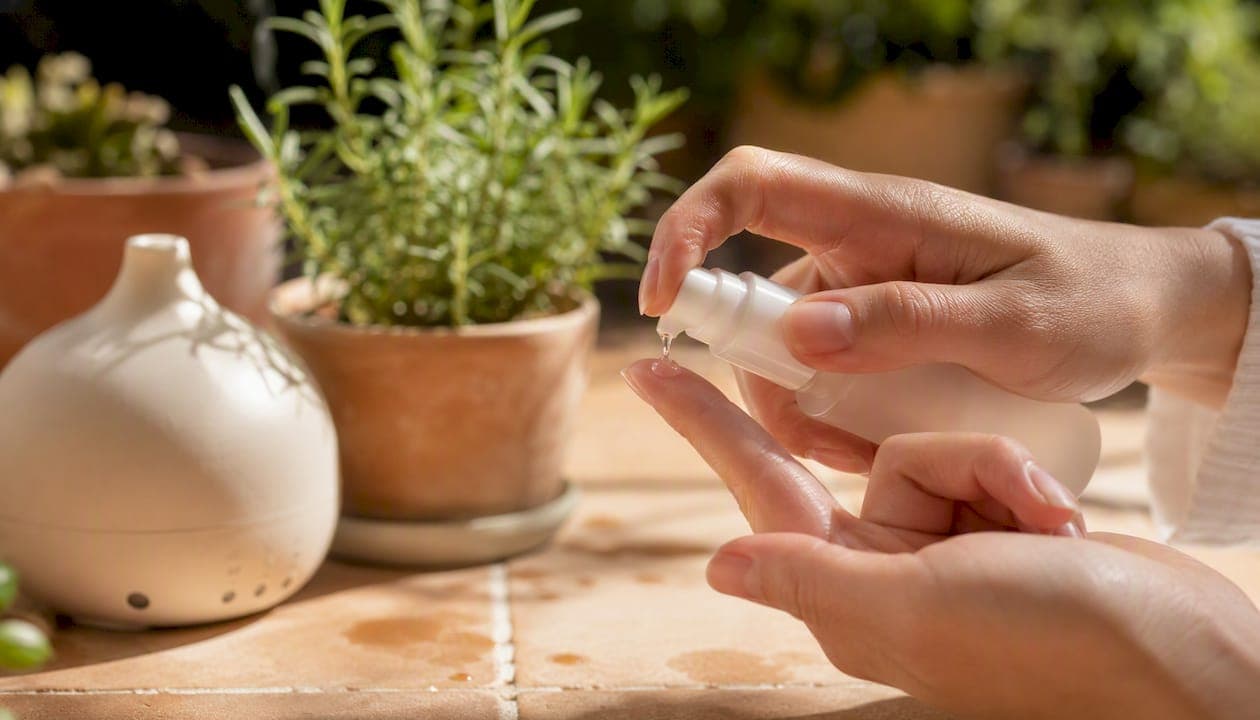
A complete vegan skincare routine follows the same core logic every day: cleanse, treat, moisturize, and protect in the morning; cleanse, treat, and repair at night. No animal-derived ingredients. No guesswork.
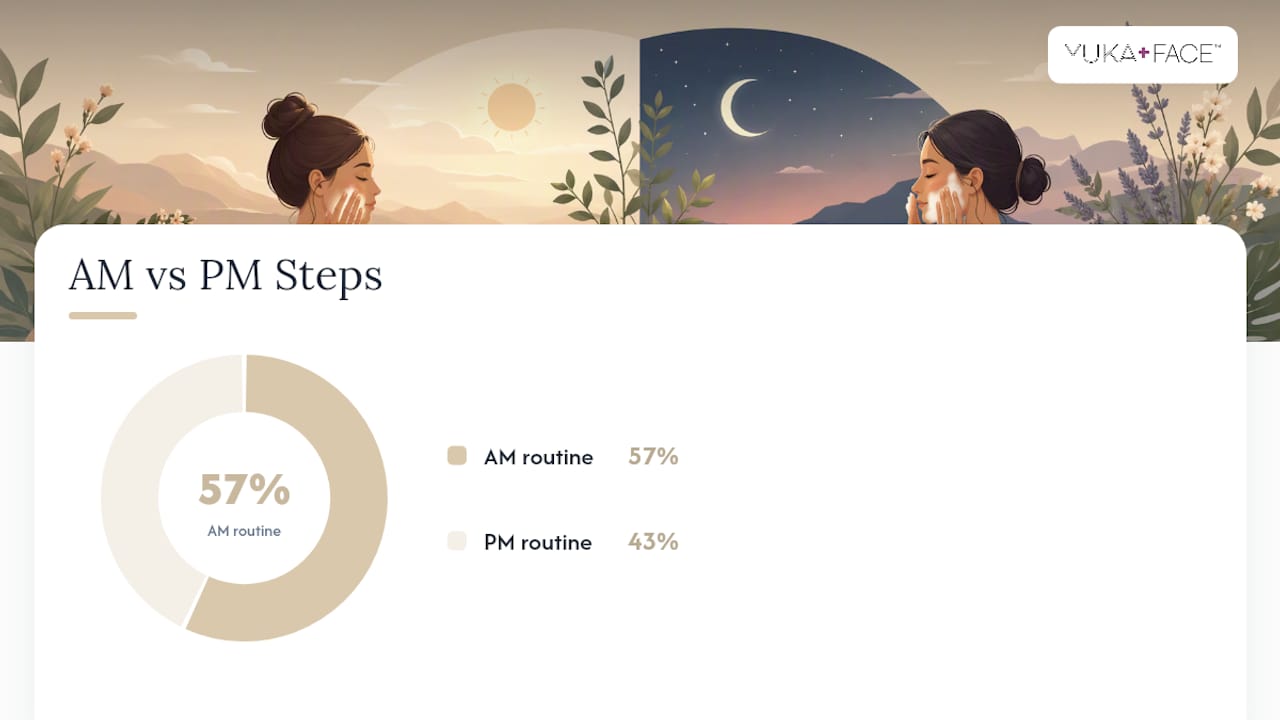
AM routine: Gentle cleanser → hydrating serum (plant-sourced hyaluronic acid or antioxidant serum) → moisturizer → broad-spectrum SPF.
PM routine: Cleanse (double cleanse if you wore SPF or makeup) → targeted treatment (retinoid alternative, peptides, or vitamin C) → moisturizer or repair cream.
| Step | AM | PM |
|---|---|---|
| Cleanse | Gentle vegan cleanser | Oil cleanser + water-based cleanser |
| Treat | Antioxidant or hydrating serum | Retinoid alternative, peptides, or vitamin C |
| Moisturize | Lightweight moisturizer | Richer moisturizer or repair cream |
| Protect | Broad-spectrum SPF 30+ | Skip (SPF is a daytime step) |
Pro Tip: Layer thinnest to thickest. Serum before moisturizer, moisturizer before SPF. Fewer products applied correctly outperform a seven-step routine applied in the wrong order.
Key Takeaways
A consistent vegan skincare routine built on cleanse, treat, moisturize, and protect, adapted by skin type and season, delivers results within 2–8 weeks of stable use.
| Point | Details |
|---|---|
| SPF is non-negotiable | Apply broad-spectrum SPF every morning; reapply every 2 hours outdoors. |
| Keep AM/PM simple | A 3-step routine (cleanser, moisturizer, SPF) is a complete and effective starting point. |
| Patch test every new product | Apply to the inner forearm, wait 24–48 hours, then introduce to your face. |
| Adapt texture by season | Switch to gel in summer and richer cream in winter; SPF stays year-round. |
| Yuka+Face starter kit | Plant-based cleanser, serum, moisturizer, and SPF cover the full AM routine with verified vegan formulations. |
Table of Contents
- What "vegan skincare" means and how it differs from "cruelty-free"
- Step-by-step vegan skincare routines for morning and night
- How to tailor your routine by skin type
- Weekly extras: exfoliation, masks, and active treatments
- Seasonal adjustments and travel tips
- Animal-derived ingredients to avoid and vegan substitutes
- How to read certifications and spot labeling pitfalls
- How to switch to a vegan skincare routine safely
- Dermatologist guidance on sunscreen and active ingredients
- Are vegan products better for your skin? Benefits and realistic limits
- Why Yuka+Face prioritizes plant-based, clinically mindful formulations
- Build your vegan starter kit with Yuka+Face
- Sources
- FAQ
What "vegan skincare" means and how it differs from "cruelty-free"
Vegan skincare contains no animal-derived ingredients. That is the definition, full stop. Cruelty-free is a separate claim: it means the product or its ingredients were not tested on animals, but the formula may still contain beeswax, lanolin, or collagen.
A product can be cruelty-free but not vegan. A product can also be vegan but not cruelty-free if it was tested on animals in markets that require it. The two labels are not interchangeable, and many brands use one without the other.
Three organizations provide third-party verification worth trusting:
- Leaping Bunny: Verifies no animal testing at any stage of production. The most widely recognized cruelty-free standard in the US.
- Vegan Society: Certifies that a product contains no animal-derived ingredients and was not tested on animals.
- Vegan: Provides vegan certification and consumer resources for verifying ingredient sourcing.
Verification checklist when shopping:
- Look for the Leaping Bunny or Vegan Society logo on packaging.
- Cross-check the brand's name on the Leaping Bunny database at leapingbunny.org.
- Read the full ingredient list, not just the front-label claim.
- Confirm the brand's policy on selling in markets that mandate animal testing.
The biggest labeling pitfall: "natural" does not mean vegan. Beeswax, lanolin, and honey are natural. They are not vegan. An incomplete ingredient list or a vague "plant-based" claim on the front label is not a substitute for certification. Read the back panel. For a deeper look at what vegan skincare actually means in practice, Yuka+Face's ingredient guide covers the key distinctions clearly.
Pro Tip: "Vegan" printed on packaging is a marketing claim, not a certification. Only a third-party logo (Leaping Bunny, Vegan Society) confirms independent verification.
Step-by-step vegan skincare routines for morning and night
AM routine
- Gentle cleanser. Removes overnight sebum and product residue. Use a low-pH, sulfate-free formula. Massage for 30–60 seconds, rinse with lukewarm water.
- Antioxidant or hydrating serum. Plant-sourced hyaluronic acid pulls moisture into the skin; vitamin C serums (L-ascorbic acid or stabilized derivatives) protect against UV-induced oxidative stress. Apply to damp skin for better absorption.
- Moisturizer. Seals in the serum and supports the skin barrier. Gel or fluid textures work for most skin types in the morning.
- Broad-spectrum SPF. The non-negotiable final step. Mineral options (zinc oxide, titanium dioxide) are vegan-compatible and reef-safe. Apply as the last product, every morning, year-round.
PM routine
- First cleanse (if needed). An oil-based or micellar cleanser removes SPF and makeup without stripping.
- Second cleanse. A water-based cleanser clears residue from the first cleanse and preps skin for actives.
- Treatment serum. Retinoid alternatives (bakuchiol, plant-based peptides), AHAs, BHAs, or vitamin C. Choose one active per night and rotate if needed.
- Moisturizer or repair cream. Richer than your AM formula. Look for plant-derived squalane, ceramide alternatives, or shea butter to support overnight barrier repair.
Layering rules
- Thinnest to thickest: toners and essences first, serums next, creams last.
- pH-sensitive actives (vitamin C, AHAs, BHAs) work best on clean, dry skin before moisturizer.
- Wait 1–2 minutes after a low-pH active before applying the next product if your skin is reactive.
- Never layer a retinoid with an AHA or BHA in the same application.
Routine variants
- Starter 3-step: Cleanser + moisturizer + SPF (AM only). Build from here.
- Targeted 5-step: Add a hydrating serum (AM) and a treatment serum (PM).
- Full 7-step: Add a toner/essence, eye cream, and an occlusive overnight layer.
Plant-derived squalane (from olives or sugarcane) and fermentation-derived hyaluronic acid are the two most versatile vegan ingredients across all three variants. Both perform on par with their animal-sourced counterparts.
Pro Tip: Start with the 3-step. Add one product every two weeks. Skin adapts better to gradual change, and you will know exactly what caused any reaction.
How to tailor your routine by skin type
Every skin type uses the same AM/PM framework. What changes is texture, ingredient focus, and how aggressively you treat.
| Skin Type | Core Goal | Recommended Ingredients | Best Textures |
|---|---|---|---|
| Dry | Deep hydration + barrier repair | Hyaluronic acid, plant squalane, shea butter | Rich cream, facial oil |
| Oily | Oil control + pore clarity | Niacinamide, salicylic acid (BHA), green tea | Gel, fluid, oil-free lotion |
| Combination | Balance T-zone + hydrate cheeks | Niacinamide, lightweight hyaluronic acid | Gel-cream, lightweight lotion |
| Sensitive | Calm + barrier support | Centella asiatica, oat extract, allantoin | Fragrance-free cream, gentle gel |
| Mature | Anti-aging + firmness | Bakuchiol, peptides, vitamin C, plant squalane | Rich serum, nourishing cream |
| Acne-prone | Clear pores + reduce inflammation | Salicylic acid, tea tree (diluted), niacinamide | Oil-free gel, lightweight serum |

Vegan moisturizers now span every texture category, from water-thin gels to dense overnight creams, making it possible to find a plant-based option for any skin need.
Dos and don'ts by skin type:
- Dry skin: Do layer a hydrating serum under a rich cream. Don't skip an occlusive at night.
- Oily skin: Do use a gel moisturizer. Don't skip moisturizer entirely; dehydrated skin overproduces oil.
- Sensitive skin: Do introduce one new product at a time. Don't use fragrance, essential oils, or high-concentration actives without patch testing.
- Acne-prone skin: Do use non-comedogenic formulas. Don't combine multiple actives in one routine without spacing them out.
For men adapting these steps to specific skin concerns, Yuka+Face's men's skincare guide covers texture choices and routine simplification. A broader breakdown of vegan formulations for every skin type is available in Yuka+Face's holistic skin type guide.
Prioritize one change at a time. Swap your moisturizer texture first. Once your skin is stable, add a serum. This approach reduces the chance of a reaction and makes it easier to identify what works.
Weekly extras: exfoliation, masks, and active treatments
Daily cleansing and moisturizing cover the baseline. Weekly treatments address texture, congestion, and targeted concerns.
Exfoliation frequency:
- Physical exfoliation (scrubs, konjac sponges): 1–2 times per week for most skin types; once per week for sensitive or acne-prone skin.
- Chemical exfoliation (AHAs like glycolic or lactic acid, BHAs like salicylic acid): 2–3 times per week for tolerant skin; start at once per week.
- Enzyme peels (papain from papaya, bromelain from pineapple): 1–2 times per week; gentler than AHAs and a good starting point for sensitive skin.
Mask types and timing:
- Hydrating masks (hyaluronic acid, aloe vera): Use any night, including after exfoliation to replenish moisture.
- Clay masks (kaolin, bentonite): Best for oily or congested skin, once per week. Do not leave on until fully dry; remove when still slightly tacky.
- Enzyme masks: Use in place of chemical exfoliation, not on top of it.
Active interaction rules:
- Vitamin C (AM) and retinoid alternatives like bakuchiol (PM) can coexist in a routine on different schedules.
- AHAs and BHAs should not be combined in the same application unless the product is specifically formulated for it.
- Retinoids (or bakuchiol) and physical exfoliation should not be used on the same night.
Pro Tip: If your skin feels tight, red, or flaky, pause all actives and exfoliants for 5–7 days. Restore the barrier with plain moisturizer and SPF before reintroducing anything. Over-exfoliation is the most common self-inflicted skin barrier problem.
Seasonal adjustments and travel tips
Skin needs change with temperature and humidity. Two product swaps per season are usually enough.

| Season | Key Adjustment | SPF Strategy | Night Focus |
|---|---|---|---|
| Summer | Switch to gel or fluid moisturizer | Reapply SPF every 2 hours outdoors; choose water-resistant mineral SPF | Lightweight repair serum |
| Winter | Switch to richer cream or add facial oil | Daily SPF still required; UV reflects off snow | Occlusive layer (plant squalane, shea) to prevent moisture loss |
| Travel | Carry travel-size cleanser, SPF, and moisturizer | Pack SPF in carry-on; never check it | Hydrating sheet mask for long flights |
The Vegan Society recommends prioritizing vegan-compatible SPF in summer and adjusting routine textures as UV exposure increases. UV exposure is the primary driver of photoaging, and daily broad-spectrum sunscreen use reduces long-term photoaging risk regardless of season.
Summer checklist:
- Swap cream moisturizer for gel or fluid.
- Add an antioxidant serum (vitamin C) in the AM.
- Reapply SPF every 2 hours when outdoors.
- Use a lightweight overnight serum instead of a heavy cream.
Winter checklist:
- Add a facial oil or richer cream over your standard moisturizer.
- Apply a humectant serum (hyaluronic acid) before moisturizer to prevent transepidermal water loss.
- Use an occlusive layer (plant squalane, shea butter) as the final PM step.
- Keep SPF in your routine even on overcast days.
For a detailed seasonal product swap guide, Yuka+Face's fall skincare transition resource covers the shift from summer to cooler months step by step.
Travel packing list: Gentle cleanser (travel size), SPF 30+ (carry-on), moisturizer, and one treatment serum. That is a complete on-the-go routine in four products.
Animal-derived ingredients to avoid and vegan substitutes
These ingredients appear regularly in mainstream skincare and are not vegan:
- Beeswax (Cera Alba): Used in lip balms, creams, and balms as an emollient and thickener. Vegan substitute: candelilla wax or carnauba wax.
- Lanolin: Derived from sheep's wool; used in heavy moisturizers and lip products. Vegan substitute: plant-derived shea butter or mango butter.
- Collagen: Typically bovine or marine-sourced; used in anti-aging creams. Vegan substitute: plant peptides or fermented ingredients that support collagen synthesis.
- Carmine (CI 75470): A red pigment from crushed cochineal insects; found in blushes and tinted products. Vegan substitute: plant-based pigments (beet extract, iron oxides).
- Squalene (animal-sourced): Historically derived from shark liver oil. Vegan substitute: plant-derived squalane (from olives or sugarcane), which is also more stable.
- Glycerin (animal-derived): Glycerin can come from animal fat or plant sources. Look for "vegetable glycerin" or confirm the brand's sourcing policy.
- Keratin: Derived from animal hair and hooves; used in hair and skin products. Vegan substitute: plant proteins (wheat, soy, or rice protein).
- Silk proteins (Sericin, Fibroin): From silkworm cocoons. Vegan substitute: plant-based amino acid blends.
How to spot ambiguous terms: Ingredients like "glycerin," "stearic acid," and "lactic acid" can be plant-derived or animal-derived. When the source is not specified, contact the brand directly or look for third-party vegan certification.
On synthetics: Some synthetic versions of animal-derived ingredients are vegan. Synthetic squalane, synthetic beeswax alternatives, and lab-fermented hyaluronic acid are all vegan-compatible. The key is confirming the manufacturing source, not just the ingredient name.
How to read certifications and spot labeling pitfalls
Leaping Bunny
Leaping Bunny is the most recognized cruelty-free certification in the US. It verifies that no animal testing occurred at any stage of production, including by ingredient suppliers. Brands must recommit annually. You can confirm a brand's status by searching the Leaping Bunny database directly at leapingbunny.org.
Vegan Society
The Vegan Society's Vegan Trademark certifies that a product contains no animal-derived ingredients and was not tested on animals. It covers both the finished product and the ingredient supply chain. The sunflower logo is the mark to look for on packaging.
Reading "vegan" on packaging
"Vegan" printed on a label without a third-party logo is a self-declared claim. No US federal regulation currently mandates independent verification for the word "vegan" on cosmetics. That means a brand can print it without any external audit.
Red flags to watch for:
- "Natural" or "plant-based" without an ingredient list to back it up.
- No third-party certification logo.
- Small-print caveats ("formulated without animal ingredients" does not address testing).
- Brands that sell in markets requiring animal testing by law but still claim cruelty-free status.
Certifications like Leaping Bunny and Vegan Society are the most reliable quick checks for consumers who want verified cruelty-free and vegan claims. Self-declared labels require you to do the verification work yourself.
How to switch to a vegan skincare routine safely
Switching all at once is the fastest way to trigger a reaction and not know what caused it. A product-by-product approach takes longer but gives your skin time to adjust and gives you clear information about what works.
- Start with your cleanser. It contacts skin briefly and rinses off, making it the lowest-risk swap. Use the new vegan cleanser for two weeks before changing anything else.
- Patch test every new product. Apply a small amount to the inner forearm or behind the ear. Wait 24–48 hours. If no redness, itching, or swelling appears, the product is likely safe to use on your face.
- Swap your moisturizer next. Once your cleanser is stable, introduce a vegan moisturizer. Use it for two weeks.
- Maintain SPF throughout. Do not swap your sunscreen until you have a confirmed vegan alternative ready. Sun protection is non-negotiable during any transition.
- Introduce actives one at a time. Wait at least two weeks between adding new active ingredients (vitamin C, AHAs, bakuchiol). This spacing lets you identify any irritation source.
- Track changes for 2–8 weeks. Skin barrier stability and tolerance to new actives typically establish within this window. If persistent redness, breakouts, or peeling occur beyond two weeks, consult a dermatologist.
- Check shelf life. Plant-based products often use fewer synthetic preservatives. Check the PAO (period-after-opening) symbol on packaging and store products away from direct sunlight and heat to extend stability.
The AAD recommends age-appropriate adjustments to skincare, including barrier repair and antioxidant support, which align directly with the active-introduction approach above.
Dermatologist guidance on sunscreen and active ingredients
Sunscreen: the non-negotiable step
UV exposure is the primary cause of photoaging, and daily broad-spectrum sunscreen use reduces long-term photoaging risk. The AAD recommends SPF 30 or higher, broad-spectrum coverage, and reapplication every two hours during outdoor exposure.
For vegan routines, mineral sunscreens (zinc oxide, titanium dioxide) are the clearest choice. They contain no animal-derived ingredients, and many are reef-safe. Chemical sunscreen filters like oxybenzone and octinoxate are synthetic and technically vegan, but some consumers prefer mineral options for environmental reasons.
Dermatology guidance from the AAD: Daily sunscreen is the single most effective product for preventing photoaging and long-term skin damage. Dermatologists recommend broad-spectrum SPF 30+ every morning, with reapplication every two hours during outdoor activity. For people in their 40s and 50s, adding barrier-repair ingredients and antioxidant support alongside SPF addresses both protection and active skin concerns. Source: American Academy of Dermatology
Actives: cautions and spacing
- Retinoids and retinoid alternatives (bakuchiol): Start at the lowest concentration, two nights per week. Increase frequency gradually. Do not combine with AHAs or BHAs in the same application.
- AHAs (glycolic, lactic acid): Increase sun sensitivity. Always follow with SPF the next morning. Limit to 2–3 times per week.
- BHAs (salicylic acid): Better tolerated than AHAs for sensitive skin. Still increases photosensitivity; SPF is required.
- Vitamin C: Use in the AM. Unstable in high heat or light; store in a cool, dark place.
When to seek medical help
See a dermatologist if you experience persistent redness lasting more than two weeks, a rash that spreads, swelling, or any sign of an allergic reaction (hives, difficulty breathing). Skin purging from a new active typically resolves within four weeks; anything beyond that warrants professional review.
Are vegan products better for your skin? Benefits and realistic limits
The honest answer: vegan skincare can be excellent. It is not automatically better.
Realistic benefits:
- Fewer animal-derived allergens (lanolin, beeswax, and collagen are common sensitizers for some skin types).
- Plant antioxidants (vitamin C, green tea, resveratrol) have well-documented skin benefits.
- Alignment with ethical values, which for many people increases routine consistency.
- Plant-derived squalane and fermentation-sourced hyaluronic acid perform on par with animal-sourced versions.
Realistic limitations:
- "Vegan" does not mean hypoallergenic. Botanical extracts (tea tree, lavender, citrus) are common irritants.
- Efficacy depends on formulation and concentration, not on whether the source is plant-based.
- Some clinically proven ingredients (certain retinoids, marine collagen) have no exact vegan equivalent yet, though plant-based alternatives are improving.
- Natural preservative systems in vegan products can have shorter shelf lives.
When to choose vegan vs. stick with a proven non-vegan product:
- Choose vegan when you are sensitive to common animal-derived ingredients or when ethical alignment matters to you.
- Stick with a clinically proven non-vegan product if it is managing a medical skin condition (acne, rosacea, eczema) and your dermatologist recommends it.
- Never switch a medically managed product without consulting a professional first.
Quick pros/cons:
- Pro: Fewer animal allergens, strong antioxidant options, ethical alignment.
- Pro: Plant-derived squalane and hyaluronic acid match animal-sourced performance.
- Con: Not inherently gentler; botanicals can irritate.
- Con: Efficacy is formula-dependent, not source-dependent.
- Con: Some vegan preservative systems reduce shelf life.
Why Yuka+Face prioritizes plant-based, clinically mindful formulations
Yuka+Face builds every product around one principle: plant-derived ingredients, verified sourcing, and formulations that work for all skin types and ages. The range covers cleansers, serums, moisturizers, and targeted treatments, all without animal-derived ingredients.
The approach is not about removing ingredients for the sake of it. Yuka+Face uses botanical research alongside formulation expertise to select plant actives that deliver results: fermentation-sourced hyaluronic acid for hydration, plant-derived squalane for barrier support, and antioxidant-rich botanical extracts for protection against environmental stress. For a skin concern like dry, compromised barrier skin, the formulation uses richer plant oils and ceramide-compatible plant lipids rather than lanolin or animal collagen.
Readers who want to go deeper on the brand's vegan philosophy and product approach can start with the Yuka+Face vegan guide.
Build your vegan starter kit with Yuka+Face
A complete starter kit covers four products: a gentle cleanser, a hydrating serum, a moisturizer, and a broad-spectrum SPF. That is the full AM routine in one purchase.

Yuka+Face offers plant-based formulations across all four categories, with texture variants suited to different skin needs. Dry skin benefits from a richer moisturizer and a plant squalane serum. Oily or combination skin works better with a gel moisturizer and a niacinamide-based serum. Sensitive skin calls for fragrance-free, low-active formulas with calming botanicals like centella asiatica or oat extract.
The Yuka+Face morning skincare routine resource pairs specific products to each AM step, making it straightforward to assemble a kit that matches your skin type. Browse the full range and start with the cleanser and moisturizer, then add a serum once your skin has adjusted.
Sources
FAQ
What is a basic vegan skincare routine?
A basic vegan skincare routine uses three steps: a gentle plant-based cleanser, a vegan moisturizer, and a mineral broad-spectrum SPF in the morning. At night, replace SPF with a repair moisturizer or treatment serum.
What ingredients are avoided in vegan skincare?
Vegan skincare avoids animal-derived ingredients including beeswax, lanolin, collagen (bovine or marine), carmine, animal-sourced squalene, and animal-derived glycerin. Plant-based substitutes like candelilla wax, shea butter, and plant-derived squalane perform comparably.
Is vegan skincare better for your skin?
Vegan skincare can reduce exposure to common animal-derived allergens like lanolin and beeswax, and plant antioxidants offer well-documented skin benefits. However, efficacy depends on formulation and concentration, not ingredient origin alone.
What is the difference between vegan and cruelty-free skincare?
Vegan means no animal-derived ingredients in the formula. Cruelty-free means no animal testing at any stage of production. A product can be one without being the other; look for both Leaping Bunny and Vegan Society certification to confirm both claims.
How long does it take to see results from a vegan skincare routine?
Skin barrier stability and tolerance to new products typically establish within 2–8 weeks. Introduce one new product at a time and track changes over that window before adjusting the routine further.