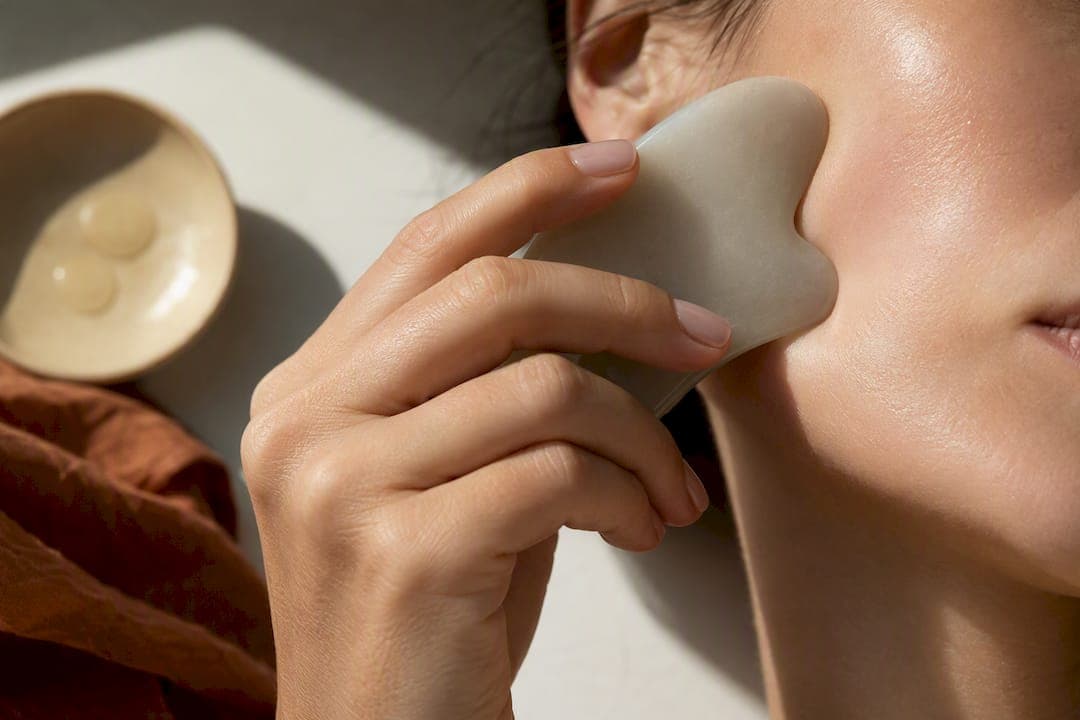
Gua sha comes after cleansing, on skin prepped with a product that has enough slip. That means oil, serum, or moisturizer, depending on your skin type, applied generously enough that the tool glides rather than tugs. The American Institute of Alternative Medicine and Cleveland Clinic both frame gua sha as a short-term de-puffing and relaxation tool, rather than a permanent lifting treatment. Some skincare brands build their routines around that same principle: clean skin, real slip, realistic expectations.
TL;DR:
- Gua sha provides only short-term de-puffing and relaxation, with no evidence of lasting contouring or structural changes.
- Use a facial oil or rich serum for dry or normal skin, while lighter, non-comedogenic products suit oily or sensitive skin for better slip.
- Proper prep, including cleansing and applying generous, appropriate skincare, is crucial to prevent irritation and ensure a smooth glide.
- A typical routine takes 3 to 10 minutes, focusing on light, slow strokes in one direction to avoid skin damage or discomfort.
- Aftercare includes cleaning the tool after every use, avoiding active ingredients if skin feels irritated, and always applying sunscreen during daytime sessions.
Table of Contents
- What to Put on Your Face Before Gua Sha
- Step-by-Step Gua Sha Routine With Skincare
- Safety, Contraindications, and Aftercare
- What the Research Actually Shows About Gua Sha
- Building Gua Sha Into a Gentle Routine
- A Ritual, Not a Miracle
- Gentle Products That Pair Well With Gua Sha
- Sources
- FAQ
What to Put on Your Face Before Gua Sha
Slip is the entire game. Without it, the tool drags across skin, creates friction, and can leave irritation instead of relief. Water-based serums tend to absorb fast, which leaves you re-gliding a dry stone within a minute or two. Facial oils and richer creams hold their slip far longer, which is why most guidance recommends applying a facial oil, serum, or moisturizer before gua sha rather than relying on a lightweight essence alone.
The right product depends on your skin type:
- Dry or normal skin: a facial oil or an oil-serum combination gives the longest-lasting glide.
- Oily or acne-prone skin: a lightweight, non-comedogenic lotion or hydrating serum avoids clogging pores while still providing enough cushion.
- Sensitive or reactive skin: fragrance-free, minimal-ingredient formulas reduce the chance of stinging under repeated contact.
Patch-test any new oil before working it across your whole face, especially if you're prone to breakouts. Applying facial oils correctly matters just as much for gua sha as it does for everyday hydration.
Pro Tip: Test your slip before you start the routine. Rest the tool on your cheek and try a short stroke. If it glides smoothly, you're set. If it catches or tugs, add another small amount of product before continuing.
Step-by-Step Gua Sha Routine With Skincare
Once your skin is prepped, the actual technique is simple. The prep matters more than most people assume, and skipping it is where irritation usually starts.
Before you start:
- Wash your hands.
- Cleanse your face so you're working on a clean surface, not last night's residue.
- Clean the gua sha tool with soap and water or a gentle disinfectant wipe.
- Apply your chosen oil, serum, or moisturizer generously across the treatment area.
The sequence itself follows a set path, starting at the neck and moving upward:
- Neck: long upward strokes from the base to the jaw, one direction only.
- Jawline: glide from chin to ear, 3 to 5 passes per side.
- Cheeks: angle the tool along the cheekbone, moving outward toward the hairline.
- Under-eye area: use the flat edge along the orbital bone with very light pressure, never dragging the skin itself.
- Brow: short strokes from the inner brow outward.
- Forehead: sweep from the center outward toward the temples.
Hold the tool nearly flat against your skin rather than at a steep angle. Pressure should stay light, especially around the eyes, where the skin is thinnest. Cleveland Clinic's guidance recommends slow, one-direction strokes repeated 3 to 5 times per area rather than fast back-and-forth motion, which tends to cause friction instead of relief.
A full session typically runs 3 to 10 minutes. If the tool starts catching partway through, that's your cue to reapply a small amount of oil or serum rather than pushing through the drag.
When you finish, clean the tool again and take a quick look at your skin. A little pink flush is normal and usually fades within an hour. Persistent redness, bruising, or pain means you pressed too hard or moved too fast, and it's worth easing off next time.
Safety, Contraindications, and Aftercare
Gua sha isn't right for every skin condition on every day. Skip it entirely over active rashes, sunburn, open wounds, inflamed acne, recent injectable treatments, or a rosacea flare. The American Academy of Dermatology specifically warns against massaging over irritated or flaring skin, since the friction and pressure can worsen inflammation rather than calm it.
A few situations call for a conversation with a clinician before you pick up a gua sha tool:
- You're on blood thinners.
- You're undergoing chemotherapy.
- You manage diabetes, which can affect skin healing and sensation.
Mild, temporary redness and the occasional light bruise are within the normal range for gua sha. Sharp pain during the session is not. Pain is your signal that pressure is too high, and it's worth stopping immediately rather than pushing through.
Right after your session, hold off on scrubs, strong acids, and retinoids if your skin still feels warm or flushed. A bland, barrier-friendly moisturizer is the safer move, and sunscreen is non-negotiable if you're doing this during the day. Protecting your skin after any facial treatment follows the same logic.
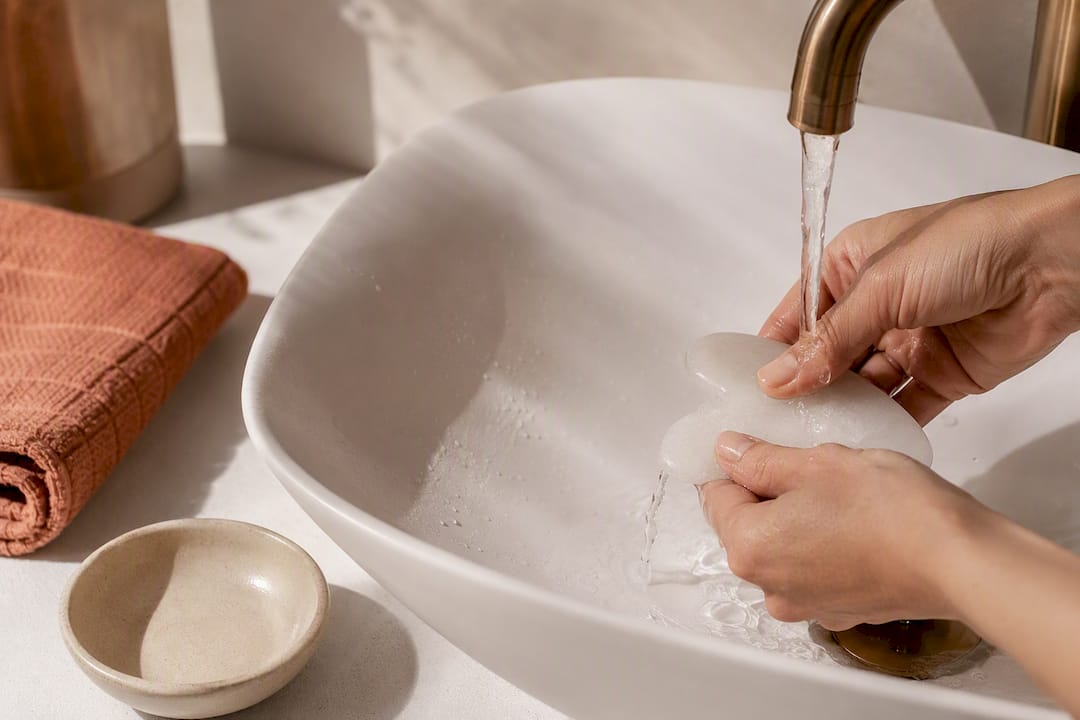
Clean your tool after every single use, not just when it looks dirty. It makes repeated contact with your skin, and residue or bacteria can transfer just as easily as they would from a shared makeup brush. Never share your gua sha tool with anyone else.
What the Research Actually Shows About Gua Sha
Gua sha's real, measurable effects are smaller and shorter-lived than the marketing around it suggests. A pilot study using laser Doppler imaging found microcirculation in treated skin jumped fourfold in the first 7.5 minutes after treatment and stayed elevated for about 25 minutes. That's the mechanism behind the temporary de-puffed, flushed look people notice right after a session.
The stronger claims about contouring have thinner support. A small randomized controlled trial with 34 participants found measurable short-term changes in facial contour and muscle tone after an 8-week protocol of 10-minute sessions, five times a week. That's a real signal, but a 34-person trial over 8 weeks doesn't prove anything permanent, and the results were almost certainly maintenance-dependent rather than lasting.
The honest summary: increased blood flow, some lymphatic drainage, and muscle relaxation explain the temporary tightening and reduced puffiness people feel. Facial massage in general supports fluid movement and muscle relaxation with light pressure alone, no aggressive force required. Permanent structural change isn't something the current evidence backs.
Building Gua Sha Into a Gentle Routine
Gentle, fragrance-free, non-comedogenic products make the most sense for gua sha, since you're applying pressure and friction repeatedly to the same patches of skin. Anything harsh or heavily fragranced has more opportunity to irritate under that kind of repeated contact.
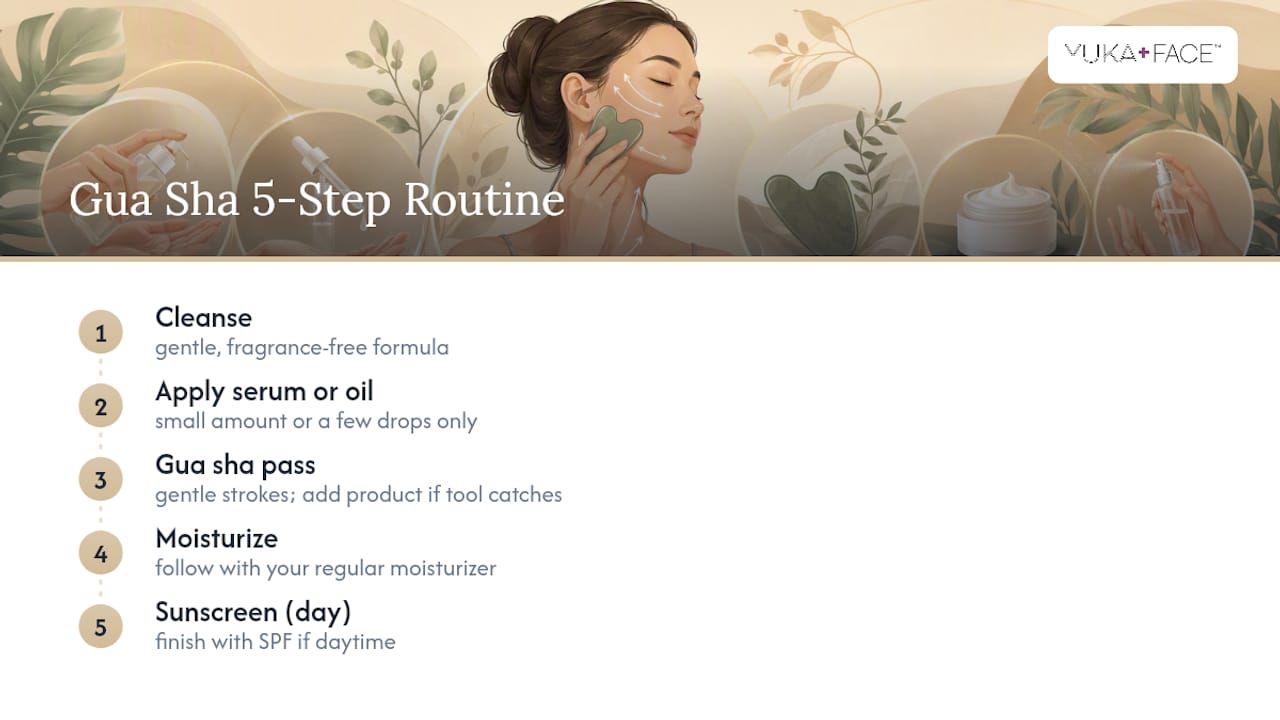
A simple pairing that works for most skin types: cleanse, apply a small amount of hydrating serum or a few drops of facial oil, do your gua sha pass, follow with moisturizer, then finish with sunscreen if it's daytime. Start with less product than you think you need. If the tool starts catching mid-pass, add a bit more rather than loading up from the start.
Save your actives, like retinoids or strong acids, for a separate part of your routine that doesn't involve massage. Gua sha days call for calmer formulas.
A Ritual, Not a Miracle
Gua sha earns its place in a routine as a maintenance ritual, not a treatment with lasting structural payoff. Used consistently, it offers a genuine moment of relaxation and a temporary de-puffed look that plenty of people find worth the few minutes it takes. The mistake is expecting it to replace sunscreen, moisturizer, or consistent cleansing. It works best as an addition to those habits, not a substitute for them. Treat it as the calm five minutes in your routine, not the whole routine.
— Kelly
Gentle Products That Pair Well With Gua Sha
Gua sha depends entirely on what's underneath the stone, and that's where product choice matters more than tool material. Certain brands make vegan, cruelty-free formulas built around short ingredient lists and barrier support, which is exactly the profile you want for a tool that's going to glide across your face repeatedly.

A simple pairing to try: cleanse with a gentle formula, smooth on the Vitamin C Glow Oil for slip on dry or normal skin, work through your gua sha sequence, then lock in hydration afterward. If you have oilier or reactive skin, look for a lighter serum instead of a heavier oil, and always patch-test a new formula on your inner arm before working it across your face. Browse the full range of oils, serums, and moisturizers built for this kind of gentle, natural routine, and find the pairing that fits your skin type.
Sources
- How to Use Gua Sha: A Step-by-Step Guide - American Institute of Alternative Medicine
- Gua sha: Benefits and how to do it - Cleveland Clinic
- Comparative effects of facial roller and gua sha massage on facial contour, muscle tone, and skin elasticity: Randomized controlled trial - PubMed
- American Academy of Dermatology - rosacea triggers and tips
FAQ
Should You Gua Sha Before or After Skincare?
Gua sha goes after cleansing but before your heavier, more active products. Apply a light layer of oil, serum, or moisturizer first for slip, then do your gua sha pass, and follow with any remaining steps like moisturizer or sunscreen.
What Should Be Avoided After Gua Sha?
Skip scrubs, strong exfoliating acids, and retinoids if your skin still feels warm or flushed after your session, since massaging irritated skin can worsen inflammation. Stick with a bland moisturizer, and always wear sunscreen if you're doing this during daylight hours.
Is It Okay to Use Moisturizer When Using Gua Sha?
Yes, moisturizer works well as a slip product, especially for drier skin types that need more cushion for the tool to glide smoothly. If it's too thick to spread evenly, thin it slightly with a drop of facial oil before you start.
What Should I Put on My Face Before Using Gua Sha?
Use a facial oil, serum, or moisturizer, choosing based on your skin type, since oils tend to hold slip longer than fast-absorbing water-based serums. Dry skin usually does best with oil, while oily or acne-prone skin does better with a lighter, non-comedogenic lotion.