
TL;DR:
- Glass skin is a luminous, hydration-driven complexion resulting from a consistent skincare routine supporting a healthy skin barrier. Achieving it involves layering cleansing, hydration, and sun protection daily while customizing for skin type and avoiding over-exfoliation. Results typically appear after four to six weeks of dedicated effort and gentle, supportive care.
Glass skin is defined as a luminous, smooth, and deeply hydrated complexion that appears almost reflective and dewy, not oily or greasy. The term comes from Korean beauty culture, but the underlying principle is universal: a well-supported skin barrier that holds moisture and reflects light naturally. Knowing how to get glass skin means understanding that this look is built through consistent daily habits, the right ingredients, and a routine tailored to your skin type. This guide covers every step, from cleansing to SPF, plus the lifestyle factors that make the biggest difference.
What products and tools does a glass skin routine need?
A glass skin routine requires five core product categories: a cleanser duo, a toner, a serum, a moisturizer, and SPF. Each category plays a specific role in building and maintaining the hydrated, smooth surface that defines this look. Skipping any one of them creates gaps that prevent the finish from forming.
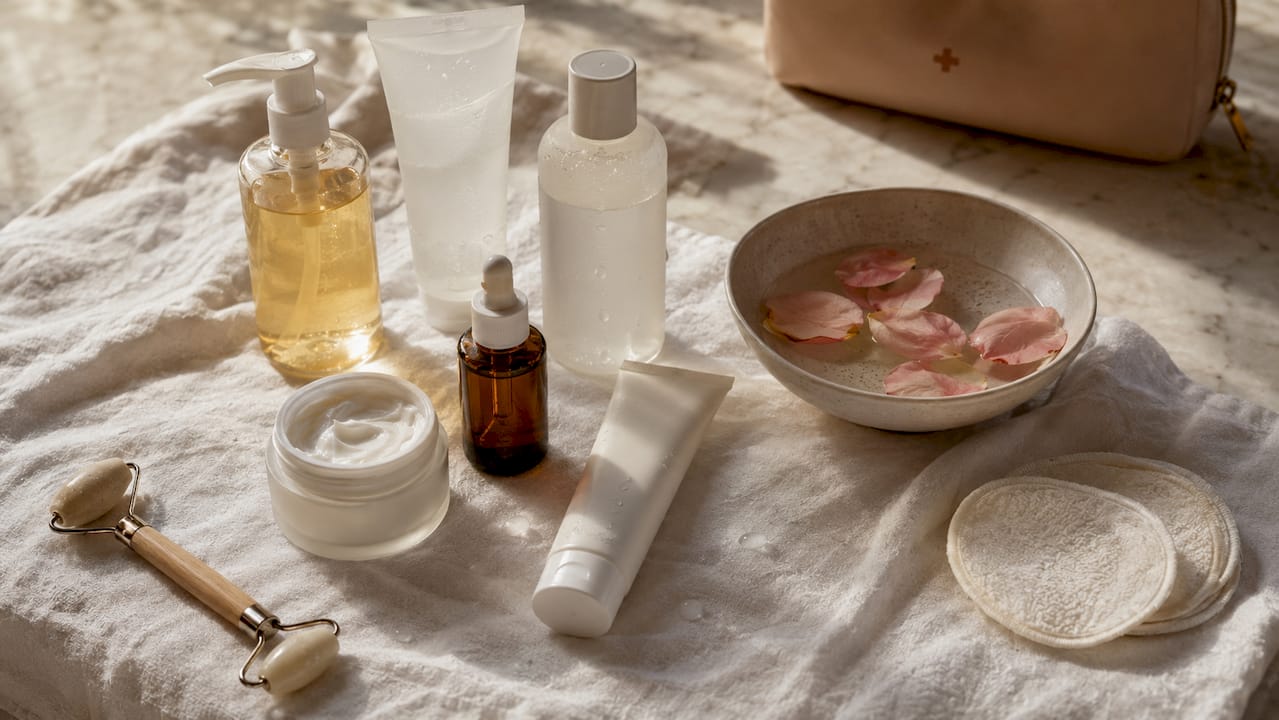
Double cleansing uses an oil-based cleanser first to dissolve makeup and sebum, then a gentle water-based cleanser to remove any remaining residue. This two-step method clears the skin without stripping it, which is the foundation of every effective glass skin routine. After cleansing, a hydrating toner restores the skin's pH balance and preps it to absorb the layers that follow.
Serums carry the active ingredients that do the most targeted work. Vitamin C addresses uneven tone and brightens. Niacinamide reduces redness and tightens pores. Hyaluronic acid and ceramides repair the skin barrier and add visible plumpness. Face oils and sheet masks are optional additions that boost hydration on days when skin needs extra support.
| Product Category | Role in the Routine |
|---|---|
| Oil-based cleanser | Removes makeup, sunscreen, and excess sebum |
| Water-based cleanser | Clears remaining impurities gently |
| Hydrating toner | Restores pH balance and preps skin for absorption |
| Essence or serum | Delivers active ingredients like niacinamide and hyaluronic acid |
| Moisturizer | Seals hydration and supports the skin barrier |
| SPF | Protects against UV damage that dulls and discolors skin |
Pro Tip: A starter skincare routine does not need to be expensive. One well-formulated product in each category outperforms a shelf full of products used in the wrong order.
How to get glass skin with a daily step-by-step routine
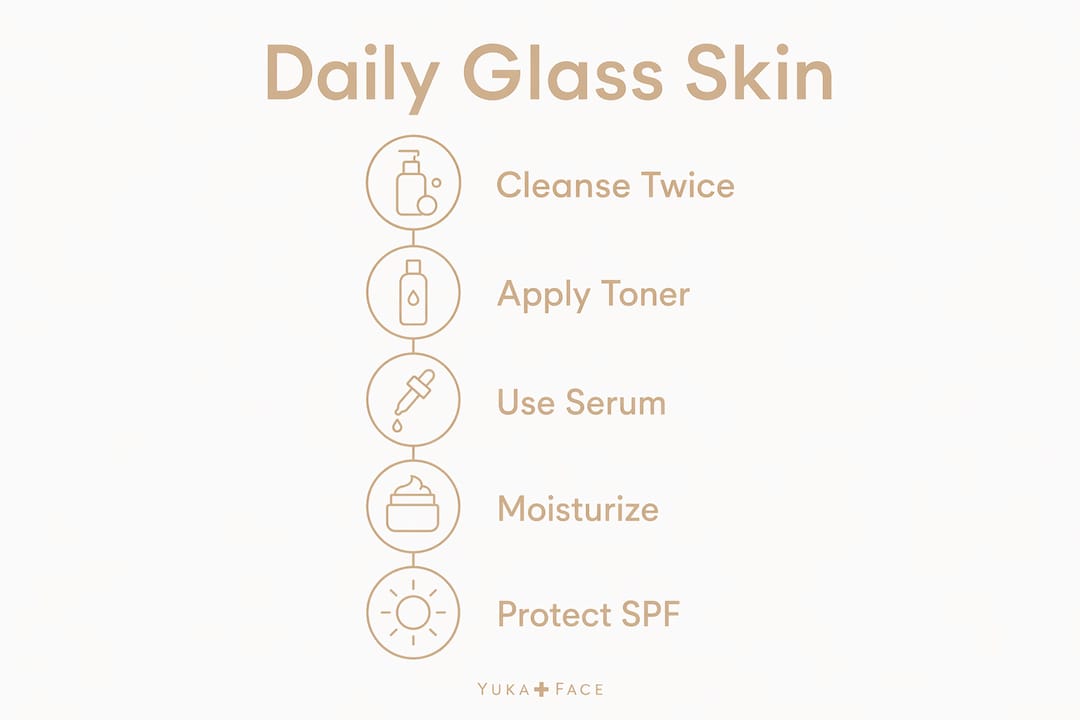
The daily glass skin routine follows a specific sequence because order determines how well each product absorbs. Proper layering, from essence before serum before moisturizer, maximizes what each product delivers. Applying a rich moisturizer before a serum, for example, blocks the serum from reaching the skin effectively.
Morning routine steps
- Oil-based cleanse — Start with an oil cleanser to remove overnight buildup and any residual products from the night before.
- Water-based cleanse — Follow with a gentle, low-pH cleanser to clear the skin without disrupting its barrier.
- Toner — Apply a hydrating toner by pressing it into the skin with clean hands. This step primes the skin for everything that follows.
- Essence or serum — Layer a brightening or hydrating serum. Vitamin C works well in the morning for its antioxidant protection.
- Moisturizer — Apply a moisturizer suited to your skin type. Skipping moisturizer triggers compensatory oil production, which works against the glass skin finish.
- SPF — Apply broad-spectrum sunscreen as the final morning step. UV damage causes discoloration and collagen loss, both of which dull the skin over time.
Evening routine steps
- Double cleanse — Remove the day's SPF, pollution, and makeup with an oil cleanser, then follow with a water-based cleanser.
- Exfoliate (2–3 times per week) — Use a chemical exfoliant like an AHA, BHA, or PHA to break the bonds holding dead skin cells to the surface. This step smooths texture without the friction of physical scrubs.
- Toner — Rebalance and hydrate after cleansing.
- Serum — Switch to a niacinamide or retinol serum in the evening if your skin tolerates it.
- Moisturizer — Use a slightly richer formula at night to support overnight repair.
Pro Tip: Adjust exfoliation frequency to your skin's tolerance. Sensitive skin does well with once-weekly PHAs. Oily or acne-prone skin can handle BHAs two to three times per week. More is not better here.
How to personalize your routine for your skin type
Achieving glass skin looks different depending on your skin type. A one-size routine rarely delivers the best results. Small adjustments to product texture, exfoliant choice, and frequency make a significant difference.
Dry skin:
- Use a cream or balm oil cleanser that does not strip moisture.
- Choose AHAs like glycolic or lactic acid for exfoliation. They work on the surface and also attract moisture.
- Apply a rich, occlusive moisturizer at night to lock in hydration.
- Layer a hydrating serum with hyaluronic acid before moisturizer for extra plumpness.
Oily and acne-prone skin:
- Use a lightweight, gel-based water cleanser as the second cleanse step.
- BHAs like salicylic acid penetrate pores and reduce breakouts. Use 1–3 times weekly based on tolerance.
- Do not skip moisturizer. A lightweight, oil-free gel moisturizer prevents the compensatory oil production that worsens texture.
- Niacinamide serum helps reduce pore appearance and calm redness.
Sensitive skin:
- Avoid fragrance in every product category.
- PHAs are the gentlest chemical exfoliant option and work on the skin's surface without penetrating deeply.
- Stick to ceramide-rich moisturizers that repair the skin barrier without irritating it.
- Introduce one new product at a time and wait two weeks before adding another.
Combination skin:
- Use a balanced, low-pH cleanser that does not over-dry the cheeks or leave the T-zone oily.
- Apply lighter moisturizer to oily zones and a richer formula to dry patches.
- Personalize your skincare routine by treating different zones of your face separately when needed.
What lifestyle habits support glass skin?
Skincare products build the foundation, but lifestyle factors determine how far that foundation goes. Sleep, water intake, diet, and exercise all directly affect skin luminosity. No serum compensates for chronic sleep deprivation or dehydration.
Hydration is the most direct lifestyle lever. Hydrated skin physically reflects light better, which is the core mechanism behind the glass skin glow. Drinking adequate water throughout the day supports this from the inside, while topical humectants like hyaluronic acid lock moisture in from the outside. Both matter.
Sleep is when skin repairs itself. Collagen production, cell turnover, and barrier recovery all peak during deep sleep. Consistently getting less than seven hours disrupts these processes and shows up as dullness, puffiness, and uneven tone. Stress compounds this by raising cortisol, which increases inflammation and oil production.
Diet plays a supporting role through antioxidants and anti-inflammatory compounds. Foods rich in vitamins C and E, omega-3 fatty acids, and zinc support collagen synthesis and reduce oxidative stress. Processed sugar and dairy have been linked to increased breakouts in some people, though individual responses vary.
Sun protection is non-negotiable as a lifestyle habit, not just a product step. Wearing SPF daily, even indoors near windows, prevents the UV-driven collagen loss and pigmentation that make skin look dull and uneven over time. A morning skincare checklist that ends with SPF is the single most effective anti-aging and glow-preserving habit available.
Pro Tip: Over-exfoliating is the most common mistake people make when chasing glass skin. A damaged barrier cannot hold moisture, which means the skin looks dull and feels tight instead of dewy. If your skin stings after cleansing, scale back exfoliation immediately.
Key Takeaways
Glass skin requires a consistent, layered routine built on barrier health, deep hydration, and daily sun protection.
| Point | Details |
|---|---|
| Double cleanse daily | Use an oil cleanser then a water-based cleanser to clear skin without stripping it. |
| Layer products in order | Apply essence before serum before moisturizer to maximize absorption of each step. |
| Exfoliate carefully | Use chemical exfoliants 1–3 times per week and adjust frequency to your skin's tolerance. |
| Never skip moisturizer | Skipping it triggers oil overproduction that prevents the smooth, dewy finish. |
| Protect with SPF daily | UV damage causes discoloration and collagen loss that dull skin over time. |
Glass skin is a long game, not a quick fix
I have seen people abandon a glass skin routine after two weeks because they expected instant results. That is the most common mistake, and it is completely understandable. The skin barrier takes time to repair, and cell turnover cycles run about four weeks. Real improvement shows up around the six-week mark for most people.
The other mistake I see constantly is overcomplicating the routine. People stack five serums, three acids, and a retinol all at once, then wonder why their skin is red and reactive. The skin barrier is not a problem to be aggressively treated. It is a system to be supported. Gentle, consistent care beats aggressive intervention every time.
What actually works is boring: double cleanse, hydrate, protect, repeat. The mindfulness aspect of a skincare routine matters too. Treating your routine as a daily ritual rather than a chore changes how consistently you follow it. Consistency is the only variable that separates people who achieve glass skin from those who do not.
Start with the basics. Add one new product every two weeks. Pay attention to how your skin responds. That measured approach produces better results than any ten-step routine applied all at once.
— Kelly
Yuka+Face: clean products for clearer skin
Yuka+Face formulates every product with vegan, natural ingredients designed to support the skin barrier and build lasting hydration. No harsh chemicals. No unnecessary fillers. Just botanically grounded formulas that work with your skin, not against it.

The Yuka+Face morning skin care routine guide walks through each step with product recommendations suited to every skin type. For those new to vegan skincare, the guide to vegan skincare explains exactly what to look for and what to avoid. Clean ingredients. Clear skin. That is the Yuka+Face standard.
FAQ
What is glass skin exactly?
Glass skin is a smooth, clear, luminous complexion that appears reflective and dewy. It is achieved through consistent hydration and a healthy skin barrier, not makeup.
How long does it take to achieve glass skin?
Most people see noticeable improvement after four to six weeks of consistent routine use. Skin cell turnover takes roughly four weeks, so results require patience.
Can oily skin achieve the glass skin look?
Yes. Oily skin benefits from lightweight, oil-free moisturizers and BHA exfoliants. Skipping moisturizer worsens oiliness, so hydration remains essential for every skin type.
What is the most important ingredient for glass skin?
Hyaluronic acid and ceramides are the most critical ingredients. They repair the skin barrier and retain moisture, which is the physical basis for the reflective, dewy appearance.
Do I need to wear SPF every day for glass skin?
Yes. Daily SPF prevents UV-driven discoloration and collagen loss that dull the skin. It is the most protective step in any glass skin routine.