
Do these four things within minutes of finishing a workout: wipe or rinse sweat, mist with a calming spray, apply a lightweight moisturizer, and reapply sunscreen if you're heading outside.
- Cleanse or wipe sweat, oil, and bacteria off your face within 10 to 30 minutes of finishing.
- Mist with a calming, antimicrobial spray (look for hypochlorous acid) if your skin is flushed or a shower isn't happening soon.
- Apply a lightweight, non-comedogenic moisturizer while skin is still slightly damp.
- Reapply SPF if you're stepping back outside.
That's the whole routine. Everything below explains why it works and how to adjust it for your skin.
TL;DR:
- Cleansing within 10 to 30 minutes after exercise removes sweat, oil, and bacteria, reducing the risk of acne mechanica and folliculitis.
- Hypochlorous acid sprays effectively calm skin, reduce redness, and lower bacterial load without disrupting the skin barrier.
- Moisturizing on damp skin with products containing ceramides, glycerin, or hyaluronic acid helps reinforce the skin barrier and prevent dehydration.
- Reapplying SPF becomes essential if you step outdoors again, as sweat and toweling diminish sun protection effectiveness.
- Post-workout actives like retinoids and acids should be delayed several hours until skin cools and pH stabilizes to prevent irritation.
Table of Contents
- Why Your Post-Workout Skincare Routine Can't Wait
- The Core Routine: Cleanse, Calm, Repair, Protect
- Adjusting the Routine for Your Skin Type
- Preventing Body Breakouts After Exercise
- When You Can't Shower: The 3-Step Quick Fix
- When to Bring Back Retinoids and Exfoliating Acids
- Building a Gym-Bag Kit With Yuka+Face
- Key Takeaways
- What Actually Matters in a Post-Workout Routine
- Get Your Post-Workout Routine Right With Yuka+Face
- Sources
- FAQ
Why Your Post-Workout Skincare Routine Can't Wait
Sweat itself doesn't cause breakouts. The problem starts when sweat mixes with sebum, dead skin cells, and bacteria, then gets trapped under tight clothing or a helmet strap. Dermatologists call the resulting bumps acne mechanica, and it shows up in exactly the spots where gear presses against skin: your forehead under a headband, your back under a sports bra strap, your chin under a chin strap.
Exercise also raises your skin temperature and increases blood flow, which makes your skin more permeable than usual. That's not a bad thing on its own, but it means whatever is sitting on your skin, sweat, dirt, leftover sunscreen, gets absorbed more easily. Cleansing promptly after exercise removes sweat, oil, and bacteria before that absorption window closes. Skip it repeatedly and you're looking at recurring breakouts, chafing, and occasionally folliculitis, an infection of the hair follicles that thrives in warm, damp conditions.

The Core Routine: Cleanse, Calm, Repair, Protect
Here's the sequence dermatology sources consistently recommend, broken into five practical steps.
- Remove sweat immediately. If you can rinse, do it with a gentle, sulfate-free gel cleanser. If a sink isn't available, wiping with a clean towel or alcohol-free wipe buys you time. If you're acne-prone, a cleanser with salicylic acid a few times a week helps clear pore-clogging debris, but daily use can strip your barrier.
- Calm and reduce bacteria. Hypochlorous acid sprays provide antimicrobial and anti-inflammatory benefits and work well right after you towel off, especially if your face is red or irritated. HOCl mists mimic a compound your own white blood cells produce to fight infection, which is part of why they're gentle enough for daily use.
- Shower with a pH-balanced body wash. Regular soap can push your skin's surface toward a more alkaline pH, which disrupts the barrier and makes it easier for acne-causing bacteria to thrive. A pH-balanced, non-stripping formula keeps that barrier intact.
- Moisturize while skin is damp. This locks in water rather than letting it evaporate. Look for ceramides to reinforce your barrier, glycerin or hyaluronic acid to pull in moisture, and a non-comedogenic label so pores stay clear.
- Reapply sunscreen if you're heading back outside. Sweat and toweling both degrade SPF, so a fresh layer of broad-spectrum protection matters as much post-workout as it did before you started.
Pro Tip: Keep your post-workout moisturizer in the fridge during summer months. The cooling effect calms flushed skin on contact and feels genuinely good after a hot session.
Adjusting the Routine for Your Skin Type
The core steps stay the same, but the details shift depending on what your skin tends to do.
- Acne-prone skin: Use a salicylic acid cleanser two to three times a week, not daily, and reach for a targeted spot treatment rather than a full-face harsh scrub. Over-exfoliating right after a workout, when skin is already sensitized, tends to backfire.
- Sensitive or rosacea-prone skin: Rinse with cool water instead of hot, choose fragrance-free formulas across the board, and hold off on any actives until your skin has fully calmed down. Redness that lingers past 30 minutes is your skin telling you to skip anything with acids or retinoids that day.
- Dehydrated skin: Prioritize humectants like hyaluronic acid immediately after cleansing, then seal with a lightweight moisturizer. Different skin types need slightly different immediate steps, and dehydrated skin specifically benefits from layering a hydrating essence before your moisturizer rather than relying on one product to do everything.
Preventing Body Breakouts After Exercise
Your face gets most of the attention, but back and chest breakouts (sometimes called "bacne") follow the same acne mechanica pattern, just with more surface area and tighter fabric involved.
- Shower promptly with a pH-balanced, non-stripping body wash rather than whatever bar soap is sitting in your gym bag.
- If body breakouts are a recurring problem, a wash with salicylic acid or benzoyl peroxide left on for 60 to 90 seconds before rinsing targets the same bacteria and buildup that cause facial acne.
- Change out of sweaty clothes as soon as you reasonably can, and choose moisture-wicking fabrics over cotton, which holds onto moisture against your skin far longer.
That last point gets overlooked constantly. Changing out of sweaty clothing and choosing breathable fabrics matters as much as anything you put on your skin, because fabric choice determines how long bacteria sit against you after the workout ends.
When You Can't Shower: The 3-Step Quick Fix
Not every workout ends near a shower. Here's what to carry instead.
- Wipe down with an alcohol-free facial wipe or micellar cloth to lift sweat, oil, and leftover SPF without stripping your skin.
- Mist with a hypochlorous acid or hydrating facial spray to calm redness and cut down on bacterial load until you can properly cleanse.
- Apply a travel-size lightweight moisturizer. Skip heavy creams and skip makeup entirely until you've had a real cleanse. Alcohol-free wipes are a reasonable temporary alternative precisely because they remove pore-clogging debris without the harshness of alcohol-based products.
Pack these three items in a small pouch and keep it in your gym bag permanently, so the routine happens automatically instead of depending on whether you remembered.
When to Bring Back Retinoids and Exfoliating Acids
Freshly worked-out skin is warmer, more permeable, and more reactive than usual, which is exactly why this is the wrong moment for retinoids, AHAs, or BHAs.
- Let your skin cool down and your natural pH normalize before introducing anything strong, typically a matter of hours rather than minutes.
- If your normal routine includes a retinoid at night, that's fine. Just don't layer it onto skin that's still flushed from a midday workout.
- Dermatologists recommend avoiding strong exfoliating acids immediately post-exercise since irritated, permeable skin absorbs actives faster and reacts more intensely to them.
- If you notice stinging, redness, or breakouts after adjusting your timing, back off the active entirely and check in with a dermatologist rather than pushing through.
Building a Gym-Bag Kit With Yuka+Face
The routine above works best when the right product classes are already in your bag, not sitting at home in your bathroom cabinet.
- A gentle cleansing oil or gel to lift sweat and residual sunscreen without disrupting your barrier.
- A hydrating mist for the calm-and-refresh step between cleansing and moisturizing, especially on days you're stuck without a shower.
- A lightweight, non-comedogenic moisturizer sized for travel, so it fits in a gym bag pocket instead of getting left behind.
Every Yuka+Face formula is vegan, cruelty-free, and built on botanical ingredients paired with scientific formulation, which matters if you're applying products to skin that's already working harder than usual post-workout.
Pro Tip: Decant your cleanser and moisturizer into small travel bottles once and leave them permanently in your gym bag. You'll actually use the routine instead of skipping it because the full-size bottles are at home.
Key Takeaways
A post-workout skincare routine works when you cleanse within 30 minutes, calm skin with an antimicrobial mist, moisturize while damp, and protect with sunscreen if you're outdoors.
| Point | Details |
|---|---|
| Cleanse within the window | Remove sweat, oil, and bacteria within 10 to 30 minutes of finishing to limit acne mechanica risk. |
| Use HOCl for calming | Hypochlorous acid mists reduce redness and bacterial load without stripping the skin barrier. |
| Match ingredients to skin type | Acne-prone skin benefits from occasional salicylic acid; sensitive skin needs cooling and fragrance-free formulas. |
| Delay strong actives | Wait until skin cools and pH normalizes before applying retinoids or exfoliating acids. |
| Pack a portable kit | Yuka+Face's cleansing oil, hydrating mist, and lightweight moisturizer travel well for gym-bag use. |
What Actually Matters in a Post-Workout Routine
Most advice on this topic buries the useful part under too many steps. The reader doesn't need a ten-product regimen after leg day. They need to know that the first 30 minutes carry more weight than anything else in their skincare routine that week, and that a wipe and a mist beat a perfect routine you do inconsistently.
Where conventional advice falls short is the assumption that everyone has shower access right after training. Plenty of people work out on a lunch break, at an outdoor track, or in a gym with a line for the shower. Building the routine around that reality, rather than an idealized locker room scenario, is the actual gap most guides miss.
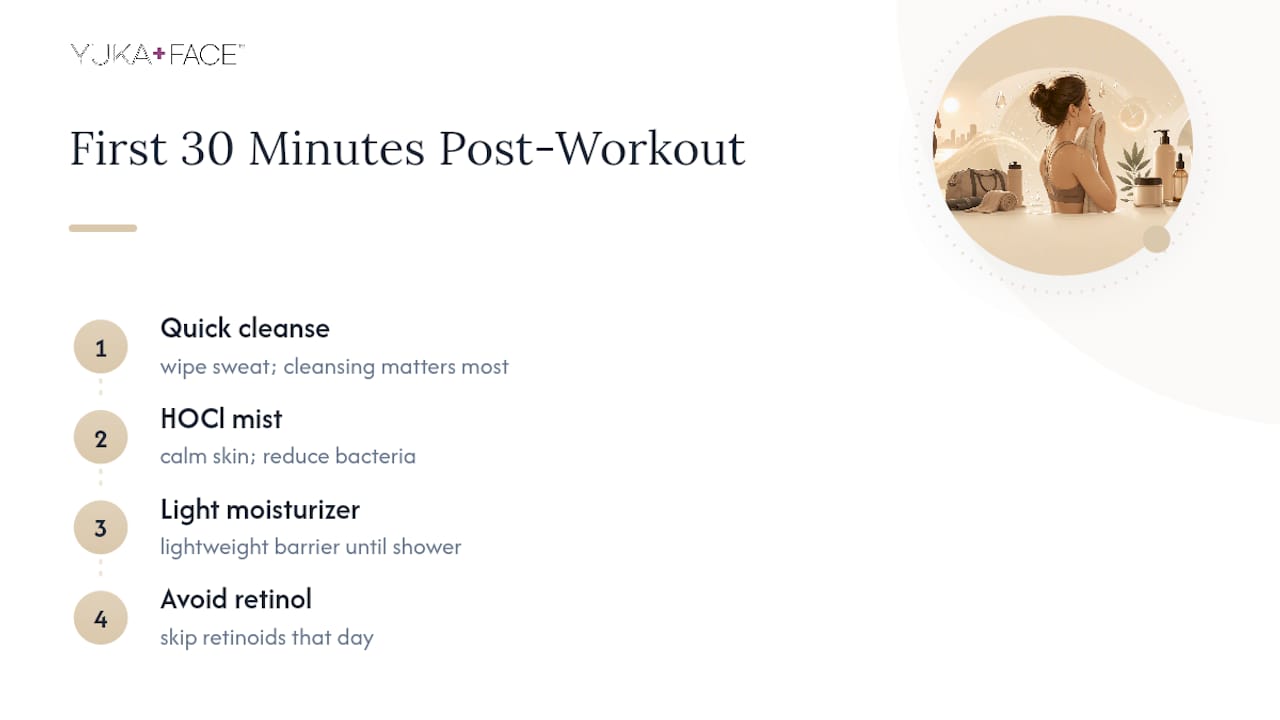
Prioritize the mist-and-moisturize step over anything else if you're short on time. Cleansing matters most, but a calming HOCl mist plus a lightweight moisturizer covers you reasonably well until you can properly wash up. Skip the retinol that day. Your skin will not miss one application, but it will hold a grudge against irritation stacked on top of a hard workout.
— Kelly
Get Your Post-Workout Routine Right With Yuka+Face
Yuka+Face builds its cleansers, mists, and moisturizers around the same logic your skin needs after a workout: gentle enough for daily use, effective enough to actually calm and protect. Every formula is vegan, cruelty-free, and grounded in botanical ingredients backed by real formulation science, not just marketing language.

If you're putting together a gym-bag kit, start with a gentle cleansing option and a lightweight moisturizer built for damp skin application. The vegan skincare approach behind every Yuka+Face product means you're not trading effectiveness for ingredients you'd rather avoid. Browse the current lineup and build your own post-workout kit at Yukaface, starting with whichever product class your routine is missing right now.
Sources
Dermatologist-backed guidance on this topic comes from Jane Yoo, MD, Byrdie, and Everyday Health, covering cleansing timing, HOCl use, and body acne prevention.
- Post-Workout Skin Protocol Dermatologists Recommend
- Post-Race and Post-Training Skin Recovery - Jane Yoo MD
- The Ultimate Post-Workout Skincare Routine
FAQ
What is the golden hour after a workout for skincare?
It refers to the window right after exercise, generally within 10 to 30 minutes, when cleansing is most effective at preventing sweat and bacteria from clogging pores.
What should I avoid doing immediately after a workout?
Avoid leaving sweat on your skin, applying heavy makeup, and using strong exfoliating acids or retinoids, since warmed, permeable skin reacts more intensely to actives right after exercise.
Can I use hypochlorous acid every day after workouts?
Yes. HOCl mists are gentle enough for daily use both before and after exercise, making them a practical daily step rather than an occasional treatment.
What if I can't shower right after exercising?
Wipe down with an alcohol-free facial wipe, mist with a calming HOCl or hydrating spray, and apply a lightweight moisturizer. This on-the-go approach, paired with travel-size options like those in the Yuka+Face lineup, covers you until you can properly cleanse.
Do I need a different face wash for gym days versus normal days?
Not necessarily a different product, but a gentler approach: skip daily harsh scrubs after workouts and reserve salicylic acid cleansers for a few times a week if you're acne-prone.