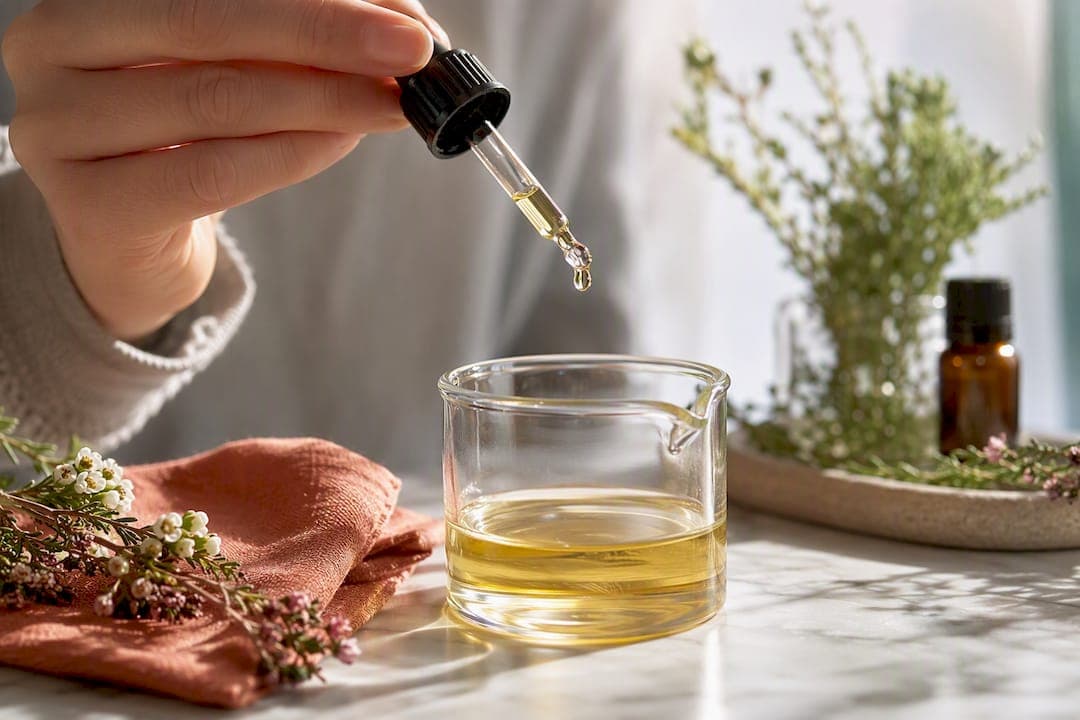
Yes, essential oils belong on your face, but only under three conditions: the oil is diluted to a low percentage, it passes a patch test, and it never touches broken or actively irritated skin. Tea tree and lavender carry the strongest safety data, and both work best mixed into a carrier like jojoba or rosehip rather than applied alone. If you have active rosacea, eczema, or use a prescription retinoid or acid, check with a dermatologist before adding any oil to your routine.
TL;DR:
- Proper dilution of essential oils on the face ranges from 0.5% to 1%, and dilutions above this can cause irritation or reactions.
- Tea tree and lavender oils have the strongest safety and efficacy data for skin, especially for acne and redness reduction when diluted correctly.
- Citrus oils and high-irradiance oils like cinnamon and peppermint should be avoided on the face due to phototoxicity and irritation risks, especially in sunlight.
- Using pre-diluted, lab-tested face oils ensures consistent, safe concentrations, reducing the risk of reactions from DIY mixing errors.
- Always patch-test essential oils and avoid applying them to broken skin, active lesions, or before sun exposure to prevent worsening reactions.
Table of Contents
- Which Essential Oils Actually Work on Facial Skin?
- How Do You Safely Dilute Essential Oils for Your Face?
- How Should You Apply Essential Oils Without Irritating Your Skin?
- When Should You Avoid Essential Oils on Your Face?
- What Do Clinical Studies Actually Show?
- Why a Conservative Approach Wins
- Skip the Math: Pre-Diluted Face Oils Done Right
- Sources
- FAQ
Which Essential Oils Actually Work on Facial Skin?
Not every oil sold as "good for skin" has earned that reputation. A 2025 systematic review covering 70 studies found real anti-inflammatory, antimicrobial, and antioxidant activity in several essential oils, tea tree, lavender, chamomile, and rosemary among them, though the authors flagged a need for longer, standardized human trials before anyone calls the case closed.
Here's how the most-discussed oils actually stack up by function:
- Tea tree (Melaleuca alternifolia): antimicrobial, best supported for acne. Works by disrupting bacterial cell membranes.
- Lavender (Lavandula angustifolia): calming, reduces visible redness and supports barrier-stressed skin.
- Chamomile (Matricaria chamomilla): soothing, often paired with lavender for reactive or sensitized skin.
- Frankincense (Boswellia species): used for fine lines and scar texture, though evidence here is thinner than for tea tree.
Now the oils to leave off your face entirely. Citrus oils (bergamot, lemon, lime, bitter orange) contain furanocoumarins that turn phototoxic in sunlight and can cause burns or dark patches. Cinnamon, clove, oregano, and peppermint carry high concentrations of irritant compounds like eugenol and carvacrol; on facial skin, which is thinner and more reactive than skin on the body, these routinely cause stinging and redness even when diluted.
When you're shopping for a pure oil, check the label for the Latin botanical name, a batch or lot number, and country of origin. If the ingredient list says "fragrance oil" or "parfum" instead of naming the plant, it's not a therapeutic-grade essential oil and it won't behave like one.
How Do You Safely Dilute Essential Oils for Your Face?
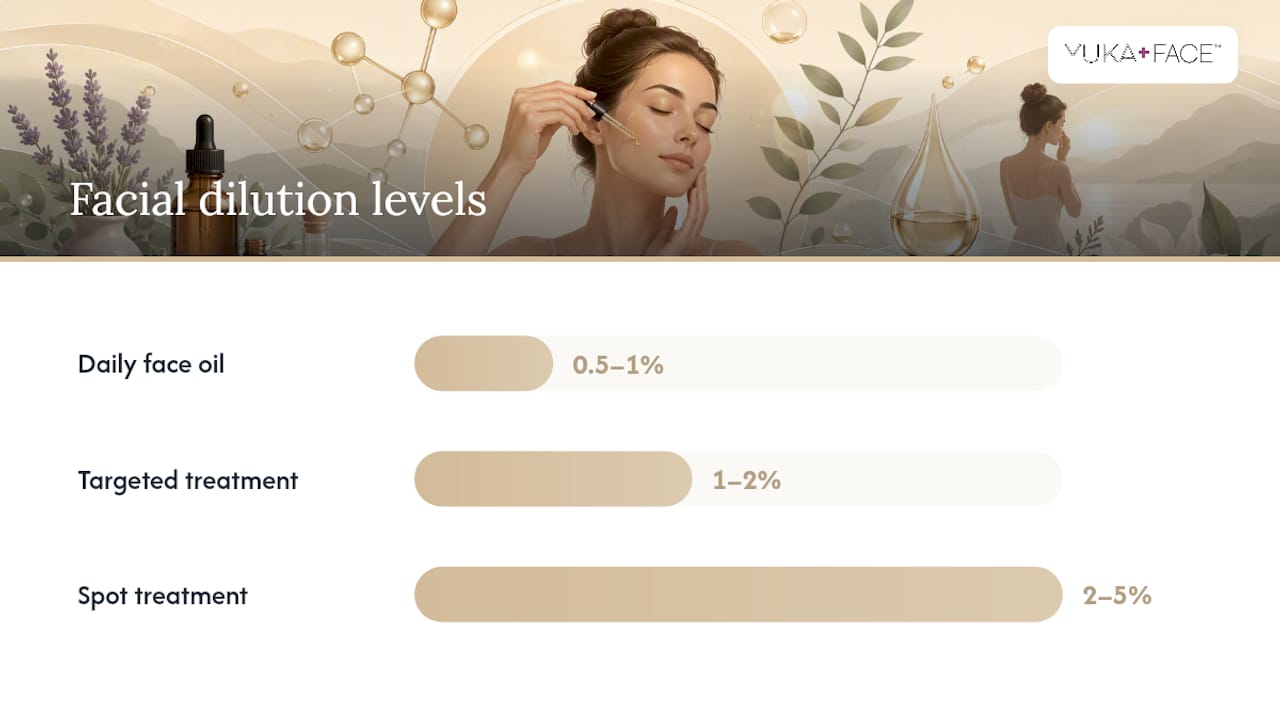
Facial skin tolerates roughly half the dilution the rest of your body can handle. The 2 to 3% dilution common for body oils is too aggressive for daily face use. Here's the breakdown that keeps you safe:
- Daily face oil: 0.5–1% dilution, or 3 to 6 drops of essential oil per 1 ounce (30 mL) of carrier oil.
- Targeted treatment on a larger area: up to 1–2%.
- Spot treatment on a single blemish: 2–5%, applied briefly and only for a short stretch, not daily.
Mix the essential oil into your carrier oil in a small dark glass bottle, cap it, and store it somewhere cool and out of direct light. Heat and UV exposure degrade essential oils faster than most people expect, which is why the amber or cobalt bottles aren't just aesthetic.
Your carrier oil matters as much as the essential oil you're diluting. Jojoba mimics your skin's natural sebum and rarely clogs pores, making it a safe default for most skin types. Rosehip carries vitamin A precursors and works well for pigmentation and early aging concerns. Squalane is the lightest of the three, absorbs fast, and suits oily or combination skin that resists heavier oils. For a full walkthrough on picking between them, this guide to face oil benefits and types breaks down the differences further.
Pro Tip: Cut every adult dilution in half for children over age 6, and skip essential oils on the face entirely for children under 6. Their skin absorbs faster and reacts harder.
If you're pregnant, treat essential oils with the same caution: several common oils are best avoided in pregnancy, and a conversation with your doctor beats guessing.
How Should You Apply Essential Oils Without Irritating Your Skin?
Before anything touches your face, it needs to survive a patch test. Dilute the oil exactly as you would for facial use, apply a small amount to the inside of your forearm, and wait a full 24 hours before deciding it's safe. Contact dermatitis often shows up late, not immediately, so a clean check at the two-hour mark tells you nothing about how your skin will react by tomorrow.
Once an oil passes that test, here's how to work it into your routine:
- Apply after serums but before heavier moisturizers, so the oil seals in what's already on your skin.
- Warm a few drops between your palms, then press gently into skin rather than rubbing.
- Keep it away from your eyelids and any mucous membranes.
- Skip phototoxic oils before daytime sun exposure, and wear sunscreen regardless of which oil you're using.
If you notice stinging, burning, or spreading redness, rinse the area with cool water immediately, stop using the oil, and apply a cool compress. Reactions that persist past a few hours or that involve swelling deserve a call to a dermatologist, not a wait-and-see approach. This step-by-step guide to applying facial oils covers layering order in more detail if you're building a full routine around it.
When Should You Avoid Essential Oils on Your Face?
Broken skin, sunburn, and active infected lesions absorb oils faster and harder than intact skin does, which raises your risk of a strong reaction instead of a helpful one. Treat these as flat no-go zones until the skin heals.
- Never apply citrus oils like bergamot, lemon, or bitter orange before sun exposure. Their phototoxic compounds react with UVA rays and can cause burns or lasting dark patches.
- If you're using a topical prescription (retinoids, benzoyl peroxide, prescription acids), talk to a dermatologist before layering an essential oil on top. Combined irritation isn't always predictable.
- Repeated neat, undiluted application builds cumulative exposure over time, and that accumulation, not any single use, is what tends to trigger contact dermatitis in previously tolerant skin.
- Watch for delayed sensitization: an oil you've used safely for months can still trigger a reaction later if your skin barrier changes (dryness, weather, other products).
None of this means essential oils are off-limits. It means they demand the same respect you'd give any active ingredient with real biological effects.
What Do Clinical Studies Actually Show?
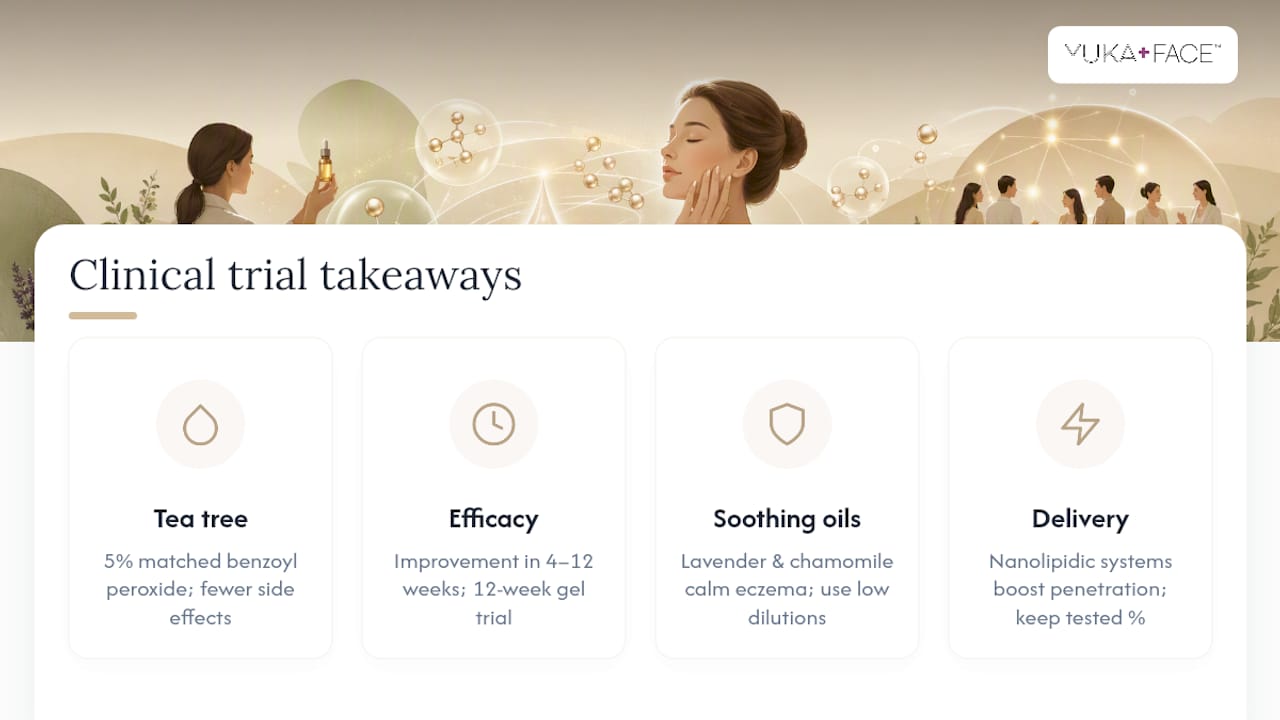
The clearest data belongs to tea tree oil. In a 12-week gel study, topical tea tree formulations produced significant drops in facial acne lesion counts, with adverse effects that were mostly mild and temporary. One comparative trial found tea tree oil at 5% performed similarly to benzoyl peroxide for acne, with fewer reported side effects, a notable result given how often benzoyl peroxide causes dryness and peeling.
Most reviewers researching tea tree oil's effect on acne report a realistic improvement window of 4 to 12 weeks, not overnight results. Lavender and chamomile show supportive signals for calming inflammation and easing eczema-related irritation, particularly at the lower dilutions recommended for sensitive skin.
One caveat worth knowing: nanolipidic delivery systems, the kind used in some newer serums, can push essential oils deeper into skin and improve how well they work. That same improved penetration can also shift how the oil behaves on your skin barrier, which is exactly why sticking to tested dilution ranges matters even as formulation science advances. A stronger delivery method isn't an invitation to use more oil; it's a reason to trust the tested percentage even more.
Why a Conservative Approach Wins
Most of the damage I see traced back to essential oils isn't from the oils themselves. It's from skipping the patch test or eyeballing a dilution instead of measuring it. The oils-and-skin-types guide Yuka+Face publishes exists for exactly this reason: fewer guesses, fewer reactions. If you want the benefits without babysitting a dilution ratio, a pre-diluted, lab-tested face oil removes the guesswork entirely.
— Kelly
Skip the Math: Pre-Diluted Face Oils Done Right
Getting dilution right takes a scale, a dark bottle, and patience most people don't have on a Tuesday night. Yuka+Face's Vitamin C Glow Oil and its other vegan, cruelty-free formulas arrive pre-diluted in stable carrier bases, so the concentration is controlled at the batch level, not eyeballed on your bathroom counter.

That control matters more than it sounds. A stable carrier oil resists rancidity longer than an oil you mix yourself, and quality control at the formulation stage catches inconsistencies before they ever reach your skin. It's the same "unbothered skin" philosophy behind short, transparent ingredient lists: fewer variables, fewer surprises. Browse the full shop to see which formula matches your skin's needs, or start with the brand's organic skincare lineup if you're building a routine from the ground up.
Sources
For deeper clinical context, the Frontiers in Medicine systematic review covers efficacy across multiple oils, while WebMD's essential oil safety guide lays out dilution and patch-test basics. For a comparison of topical versus inhaled aromatherapy safety, see this diffuser versus candle breakdown.
This article is general information, not a substitute for advice from a qualified doctor. Consult a qualified healthcare professional about your own circumstances before acting on anything here.
- Essential oils in cosmetic and dermatological applications: systematic review (Frontiers in Medicine)
- Clinical evidence for essential oils in dermatologic applications (PMC article)
- The best essential oils for your skin (Healthline)
FAQ
Is It Good to Put Essential Oils on Your Face?
Yes, when diluted to 0.5 to 1% for daily use and patch-tested first. Applied undiluted or without testing, essential oils are a common cause of facial contact dermatitis.
What Is the Best Essential Oil to Put on Your Face?
Tea tree oil has the strongest clinical backing, particularly for acne, with trials showing meaningful lesion reduction over 4 to 12 weeks. Lavender and chamomile are better choices if your main concern is redness or sensitivity rather than breakouts.
Which Essential Oil Is Compared to Botox for Wrinkles?
Frankincense is sometimes marketed this way for its association with reduced fine lines and scar texture, but no essential oil produces Botox-like muscle relaxation. Treat that comparison as marketing language rather than a clinical equivalence.
What Is the Best Oil for Aging Skin on the Face?
Rosehip carrier oil, rich in vitamin A precursors, is the most commonly recommended option for mature or pigmented skin, often paired with a small amount of frankincense essential oil in a proper dilution.
Does Yuka+Face Sell Pre-Diluted Face Oils?
Yes. Yuka+Face's shop carries formulated face oils, including the Vitamin C Glow Oil, diluted and quality-controlled at the batch level so you skip the DIY measuring step.