
TL;DR:
- Face oil seals in hydration, nourishes the skin barrier, and enhances radiance across all skin types with proper use. Applying oil onto damp skin after moisturizer ensures better absorption and effectiveness. Consistent use for at least four weeks yields visible improvements in skin softness, elasticity, and glow.
Face oil is a moisturizing skincare product that seals in hydration, nourishes the skin barrier, and enhances radiance across all skin types when used correctly. Unlike a standard moisturizer, a facial oil works as an emollient and occlusive, softening skin texture while locking in moisture that would otherwise evaporate. Dermatologist Dr. Viola confirms that oils support the skin barrier and make fine lines appear softer over time. Yuka+Face builds its entire product philosophy around this principle: plant-derived vitamins, antioxidants, and fatty acids working together to deliver real, visible results without synthetic fillers.
How to choose the best face oil for your skin type
Matching the right oil to your skin type is the single most important decision you make before buying. The wrong oil can clog pores or sit on the surface without absorbing. The right one transforms your skin's texture within weeks.
Dermatologists consistently emphasize that oil type must match skin needs. Lightweight oils absorb quickly and do not overload sebum production. Richer oils deliver deep nourishment for skin that is chronically dry or losing elasticity with age.
Oils by skin type
- Oily and combination skin: Jojoba oil closely mimics the skin's natural sebum, making it widely compatible without triggering breakouts. Squalane is another strong option. It is featherlight, absorbs fast, and suits sensitive or oily skin without disrupting the skin's oil balance.
- Dry and mature skin: Rosehip oil and evening primrose oil are richer in fatty acids and absorb more slowly, giving dry or mature skin the extended nourishment it needs. Natural oils provide plant-derived vitamins and antioxidants that support healthy skin over time.
- Acne-prone skin: The comedogenicity scale rates oils by their likelihood of clogging pores. Marula, coconut, and olive oils carry a higher comedogenic risk, while jojoba, rosehip, and squalane are safer choices for skin prone to breakouts.
- Sensitive skin: Fragrance-free, single-ingredient oils are the safest starting point. Squalane and jojoba are the most widely tolerated options across sensitive skin types.
Ingredient transparency matters here. Oils with short, recognizable ingredient lists give you a clear picture of what you are applying. Yuka+Face prioritizes this with vegan, natural formulations designed for all skin types.
Pro Tip: Check the comedogenicity rating of any oil before buying. A rating of 0–2 on the scale is generally safe for acne-prone and sensitive skin.
What is the proper way to apply face oil?
Application technique determines whether a facial oil works or simply sits on the surface. Most people apply it incorrectly, and the result is a greasy finish with no real benefit.

The most common mistake is applying oil before moisturizer or onto completely dry skin. Both errors reduce how much moisture the oil actually seals in. Face oils lack humectants like glycerin or hyaluronic acid that draw water into skin. That means they need existing moisture to lock in, which is why damp skin application is the standard recommendation.
Step-by-step application
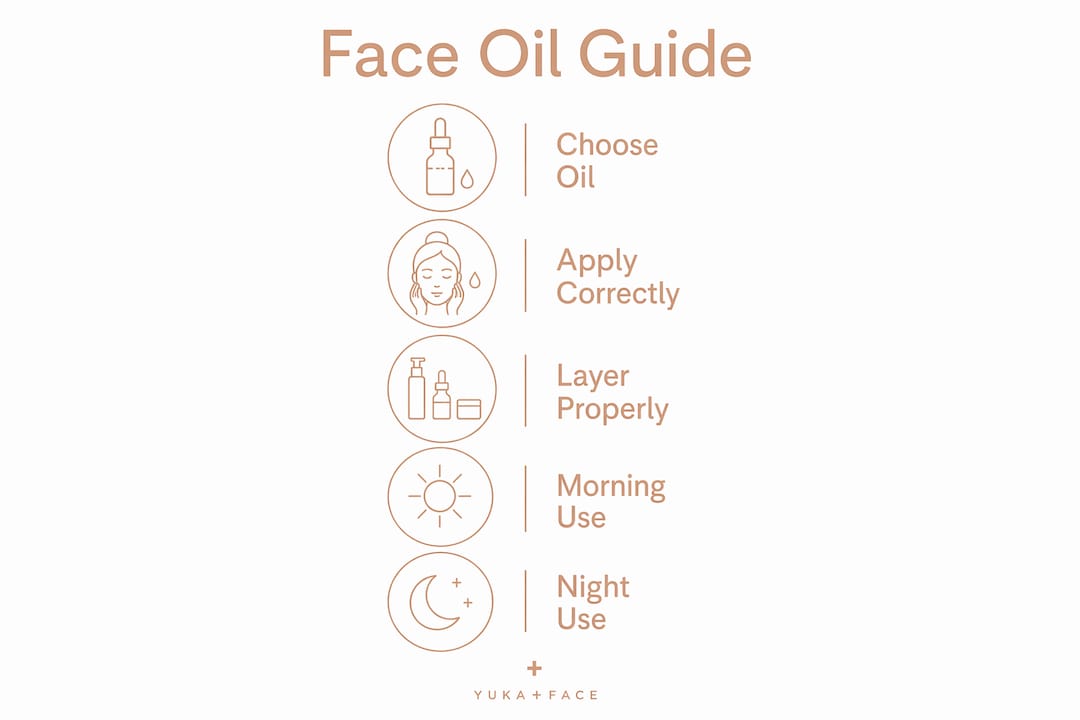
- Cleanse and tone. Start with clean skin. Apply your toner or essence and let it absorb for 30 seconds.
- Apply your serum. Serums contain active ingredients that need direct contact with skin. Oil applied before a serum blocks absorption.
- Moisturize. Apply your moisturizer and let it settle for about one minute.
- Warm the oil. Dispense 3–5 drops into your palms and rub them together gently to warm the oil.
- Press onto damp skin. Press your palms flat against your face rather than rubbing. This technique maximizes oil efficacy and avoids disrupting the layers beneath.
- Finish with SPF in the morning. Apply sunscreen as the absolute last step during the day.
Pro Tip: Apply your facial oil immediately after stepping out of the shower while skin is still slightly damp. The residual moisture gives the oil something to seal in, and absorption is noticeably faster.
Nighttime is the best window for richer botanical oils. Nighttime application allows longer absorption and repair, especially for dry or compromised skin. In the morning, stick to lighter oils that sit comfortably under makeup and SPF.
What are the benefits of face oils for dryness, aging, and dullness?
Face oils address three of the most common skin concerns: chronic dryness, visible signs of aging, and a lack of radiance. Each benefit connects directly to how oils interact with the skin barrier.
- Moisture retention: Face oils deliver lipids and lock moisture into the skin, reducing transepidermal water loss. This is the core mechanism behind why skin feels softer and more supple after consistent use.
- Fine line reduction: Oils act as emollients that soften fine lines by increasing skin suppleness over time. They do not erase wrinkles, but they visibly plump and smooth skin texture with regular use.
- Antioxidant protection: Plant-derived oils rich in vitamins C and E protect skin against environmental stressors like UV exposure and pollution. This protection reduces oxidative damage, which is a primary driver of premature aging.
- Radiance boost: Oils smooth the skin's surface, which improves how light reflects off it. The result is a visible glow that no amount of highlighter fully replicates.
"Face oils are supportive players in skincare, improving suppleness and radiance but rarely acting as corrective treatments on their own." — Allure
For mature skin specifically, vitamin-rich oils like rosehip and sea buckthorn deliver concentrated fatty acids that support collagen structure and improve skin elasticity. Yuka+Face formulations are built around this principle, using botanical research to select ingredients that age beautifully alongside your skin.
How to incorporate face oil into your daily skincare routine
Integrating a facial oil into your routine requires more than just adding it at the end. Timing, layering order, and seasonal adjustments all affect how well it performs.
The table below outlines how to adapt your oil use across different contexts.
| Context | Recommendation |
|---|---|
| Morning routine | Use a lightweight oil like squalane or jojoba under SPF. Apply after moisturizer, before sunscreen. |
| Evening routine | Use a richer oil like rosehip or evening primrose as the final step after moisturizer. |
| Under makeup | Lightweight oils absorb within 60 seconds and create a smooth base for foundation. |
| Winter skin | Increase oil amount or switch to a richer formula to compensate for cold, dry air. |
| Summer skin | Reduce to 2–3 drops of a lighter oil. Check the Yuka+Face summer skincare guide for seasonal adjustments. |
| Acne-prone days | Drop to 2 drops of a low-comedogenic oil like squalane. Skip on active breakout areas. |
Layering order follows a simple rule: thinnest to thickest. Cleanser, toner, serum, moisturizer, then oil. Sunscreen always goes last in the morning. Skipping this order reduces the effectiveness of every product in the sequence.
Building a skincare routine around a face oil also means giving it time. Consistent commitment to an appropriate oil for at least four weeks is necessary to see meaningful results. Skin cell turnover takes time, and so does barrier repair.
Key Takeaways
The most effective way to use a face oil is to apply 3–5 drops onto damp skin as the final step after moisturizer, using an oil matched to your specific skin type and concern.
| Point | Details |
|---|---|
| Match oil to skin type | Lightweight oils suit oily and sensitive skin; richer oils suit dry and mature skin. |
| Apply as the final step | Face oil goes on after moisturizer to seal in hydration, not before it. |
| Use on damp skin | Pressing oil onto damp skin locks in existing moisture and improves absorption. |
| Check comedogenicity | Oils rated 0–2 on the comedogenicity scale are safest for acne-prone skin. |
| Commit to four weeks | Meaningful results from a facial oil require at least four weeks of consistent use. |
What I have learned from years of testing face oils
The biggest mistake I see is people treating face oil as a luxury add-on rather than a functional step. They use it once, feel greasy, and abandon it. The greasiness almost always comes from applying too much or skipping the damp-skin step.
I have tested lightweight and rich oils across different seasons and skin conditions. The clearest pattern I have found: the oil that works in january rarely works in july. Skin changes with climate, stress, and hormones. Treating your oil selection as fixed is the fastest way to get disappointing results.
The trend toward multi-ingredient "facial oil blends" is worth scrutinizing. A single-ingredient oil like squalane or rosehip gives you a clear baseline. You know exactly what is working and what is not. Blends can be excellent, but they make it harder to identify what your skin actually responds to.
My honest recommendation: start with one well-sourced, single-ingredient oil suited to your skin type. Use it consistently for a full month. Then layer or switch based on what you observe. Skincare is not about collecting products. It is about finding what works and repeating it. For mature skin, the practical guide to mature skin care is worth reading before you commit to any oil.
— Kelly
Yuka+Face: natural face oils for every skin type
Yuka+Face offers a range of vegan, plant-based skincare products built around the same principles covered here. Every formulation is 100% natural, cruelty-free, and designed for all skin types and ages.

The vegan skincare guide covers natural face oil options aligned with a clean beauty approach. The morning skincare routine guide shows exactly where a facial oil fits into a full daily sequence. Both resources are practical, product-specific, and free to access on the Yuka+Face journal.
FAQ
What does face oil actually do for skin?
Face oil acts as an emollient and occlusive, sealing in moisture and softening skin texture. It supports the skin barrier and, with consistent use, improves suppleness and radiance.
Can face oil be used on oily skin?
Yes. Lightweight oils like squalane and jojoba are well-suited for oily skin because they absorb quickly and do not disrupt the skin's natural sebum balance.
What is the comedogenicity scale?
The comedogenicity scale rates oils from 0 to 5 based on their likelihood of clogging pores. Oils rated 0–2 are generally safe for acne-prone skin; oils rated 4–5 carry a higher risk of breakouts.
Should face oil go before or after moisturizer?
Face oil goes after moisturizer. Oils lack humectants and cannot draw water into skin on their own, so they work best when applied over a moisturizer to seal in existing hydration.
How long does it take to see results from a facial oil?
Consistent use of an appropriate facial oil for at least four weeks is necessary to see meaningful results, as skin cell turnover and barrier repair both take time.