TL;DR:
- Essential oils support skin health by offering targeted benefits for specific concerns when used appropriately. The most supported oil for acne is tea tree at 5% dilution, matching the effectiveness of benzoyl peroxide with fewer side effects. For regeneration and anti-aging, frankincense and rosehip seed oils promote collagen production and skin renewal, especially when combined thoughtfully.
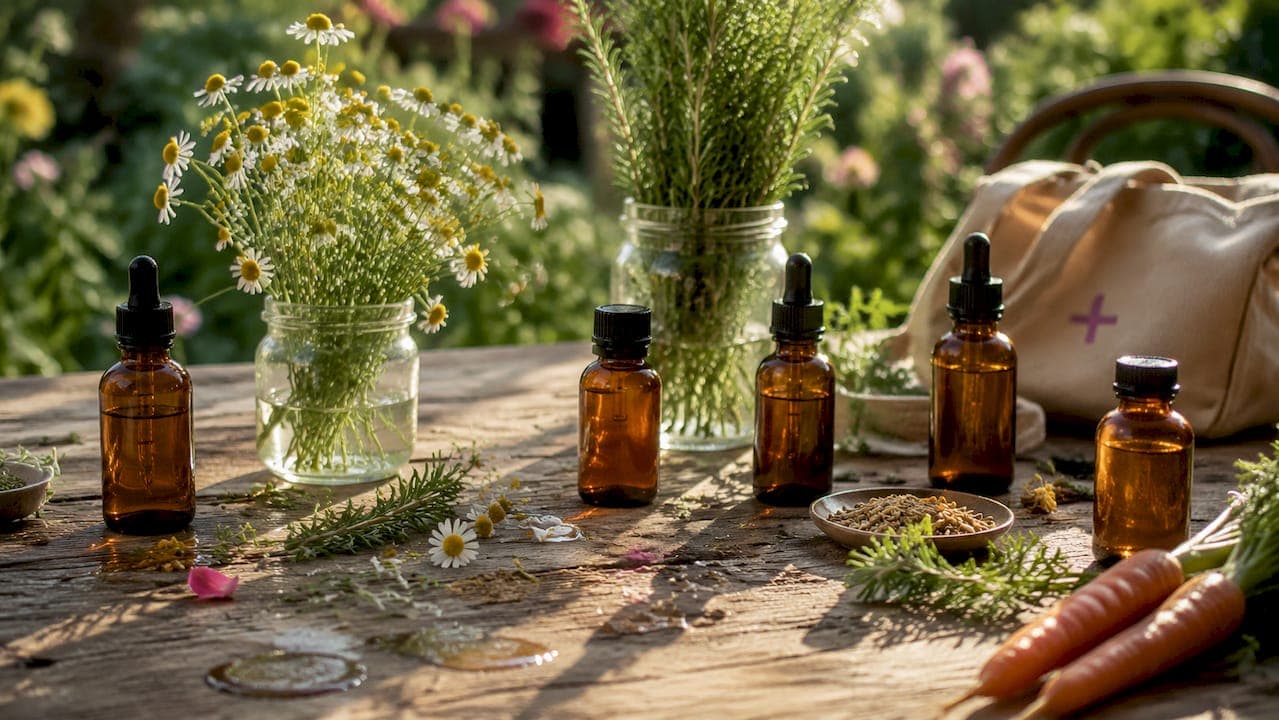
Essential oils for skin are highly concentrated plant extracts that deliver targeted benefits when chosen and applied correctly. The term "essential oil" covers a wide range of botanical distillates, and dermatologists classify them by their primary skin action: antimicrobial, regenerative, or soothing. Knowing the types of essential oils for skin that match your specific concern cuts through the noise and gets you to results faster. Yuka+Face builds its entire product philosophy around this principle: botanical research paired with scientific expertise, not guesswork.
1. What are the types of essential oils for acne-prone skin?
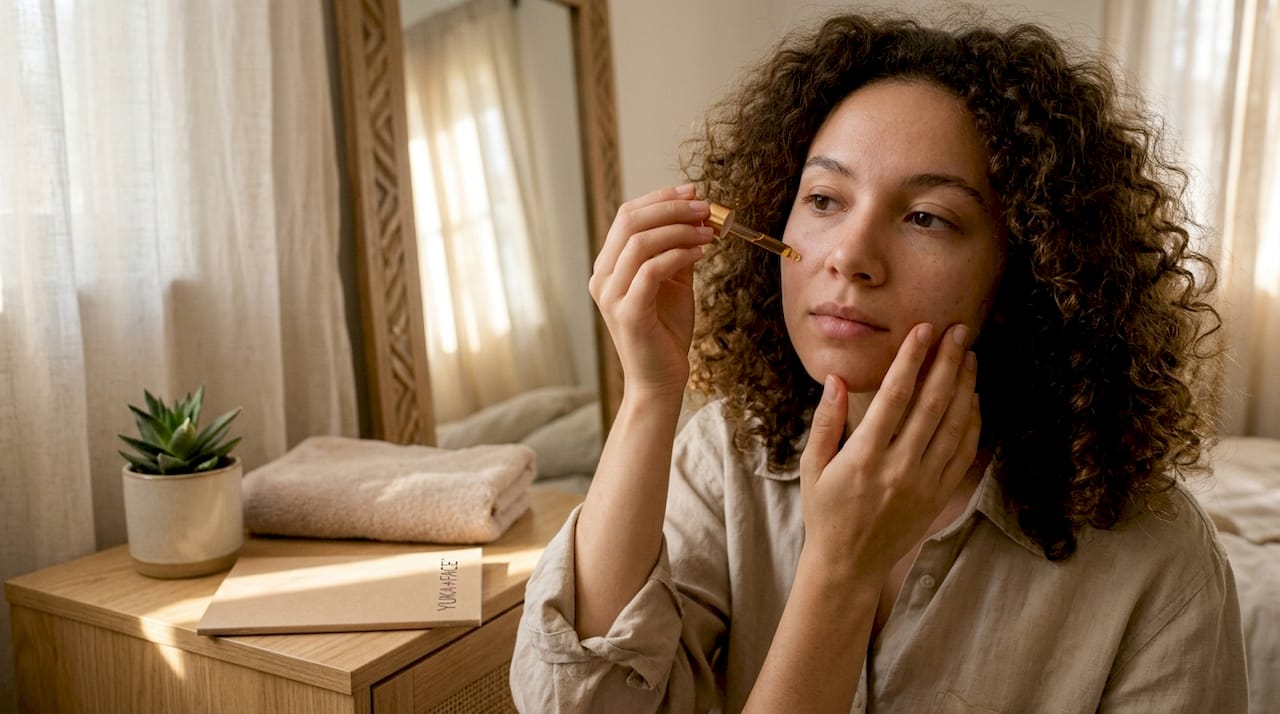
Tea tree oil is the most clinically supported essential oil for acne. A 5% concentration matches the efficacy of 5% benzoyl peroxide in randomized controlled trials, with fewer side effects. That finding comes from a systematic review of seven studies covering 445 patients, which makes it one of the strongest evidence bases any botanical ingredient has earned in dermatology.
Peppermint oil offers antimicrobial and anti-inflammatory properties with experimental support. It works best in formulations rather than direct application, since its high menthol content can irritate bare skin. Research into biopolymeric delivery systems shows that pairing peppermint with carrier structures like nanoemulsions improves both safety and localized action.
Key points for acne-prone skin:
- Tea tree oil: Use at 5% dilution in a carrier oil or gel base. Do not apply undiluted.
- Peppermint oil: Effective in formulated products; patch test before use.
- Avoid: Coconut oil as a carrier for acne-prone skin. Its fatty acid profile can encourage yeast overgrowth and worsen fungal acne.
- Dilution rule: Never exceed 2% concentration for daily facial use.
Pro Tip: Apply tea tree oil treatments at night. Skin repair peaks during sleep, and nighttime application avoids any UV interaction with the oil.
2. Essential oils for skin regeneration and anti-aging
Frankincense oil is the go-to botanical for scar support and fine line reduction. It contains boswellic acids that reduce skin inflammation and support collagen activity. Practitioners in traditional Ayurvedic and Middle Eastern medicine have used it on scar tissue for centuries, and modern formulation science has confirmed its skin-calming profile.
Helichrysum and carrot seed oils are two of the most nutrient-dense options for skin renewal. Carrot seed oil contains carotenoids and beta-carotene, both associated with improved skin tone and antioxidant protection. Helichrysum is rich in flavonoids that reduce redness and support tissue repair after sun exposure or blemishes.
Rosehip seed oil is technically a carrier oil, but its skin benefits rival many essential oils. It contains approximately 0.4 mg carotenoids per mL and 30–50% linoleic acid, which supports cell turnover and helps normalize uneven pigmentation. Linoleic acid is the fatty acid most commonly deficient in acne-prone and aging skin, making rosehip seed a dual-purpose addition to any routine.
Blending tips for regeneration:
- Mix frankincense (1%) with rosehip seed oil as the carrier for a daily facial serum.
- Add helichrysum (0.5%) to a moisturizer targeting post-blemish marks.
- Use carrot seed oil at 1% in a nighttime blend for antioxidant support.
Pro Tip: Vitamin-rich oils work best on damp skin. Apply your blend within 60 seconds of cleansing to lock in moisture and improve absorption.
For more on how botanical oils support skin health, the Yuka+Face blog covers the science behind eco-conscious formulation.
3. Best essential oils for dry or sensitive skin
Lavender oil is the most widely recommended essential oil for sensitive and eczema-prone skin. At low dilutions of 0.5–1%, it calms inflammation without stripping the skin barrier. Its linalool content does carry a sensitization risk at higher concentrations, so staying within that 0.5–1% range is non-negotiable for reactive skin.
Sea buckthorn oil delivers one of the richest nutrient profiles available in botanical skincare. It contains omega-7 fatty acids, vitamin E, and carotenoids that actively repair the skin barrier and restore hydration. Sea buckthorn and tamanu oils both support barrier function and nourishment, making them strong choices for skin that feels tight, flaky, or compromised.
Tamanu oil has a long history of traditional use in Polynesian skincare for wound healing and skin nourishment. Its calophyllic acid content gives it anti-inflammatory properties that work well on dry, irritated patches. One caution: tamanu is a tree nut derivative, so anyone with nut allergies should consult a dermatologist before use.
Oils to use with caution on sensitive skin:
- Citrus oils (bergamot, lemon): High phototoxicity risk. Use only furanocoumarin-free versions.
- Clove and cinnamon: Too irritating for facial use on sensitive skin types.
- Eucalyptus: Effective antimicrobial but too strong for daily facial application on reactive skin.
4. How to use essential oils on skin safely
Dilution is the single most important safety practice in essential oil skincare. Applying any essential oil undiluted to the face risks chemical burns, contact dermatitis, and long-term sensitization. The standard dilution for facial use is 1–2% essential oil in a carrier oil, which equals roughly 6–12 drops per ounce of carrier.
Carrier oils are not passive vehicles. Jojoba, rosehip seed, and squalane each bring their own skin benefits and affect how the essential oil absorbs. Advances in nanoemulsion delivery show that encapsulating essential oils in biopolymeric carriers improves stability and reduces irritation, which is why well-formulated products outperform DIY blends in clinical comparisons.
Phototoxicity is a real and underestimated risk. Citrus oils like bergamot and lemon contain furanocoumarins that cause phytophotodermatitis: a chemical reaction triggered by UV exposure that produces dark, permanent hyperpigmentation. This risk applies even to diluted applications if you go outdoors within 12–18 hours of use.
Fragrance allergens are present in many popular essential oils. Linalool (found in lavender) and limonene (found in citrus) are both listed as common fragrance allergens by European regulatory standards. Sensitization builds over time, meaning an oil you tolerate today can trigger a reaction after months of repeated use.
Safe usage steps:
- Choose a carrier oil suited to your skin type (jojoba for oily, rosehip for aging, squalane for sensitive).
- Dilute to 1% for sensitive skin, 2% for normal skin.
- Patch test on the inner forearm for 48 hours before facial application.
- Introduce one new oil at a time, waiting one week between additions.
- Avoid citrus oils before sun exposure, or choose furanocoumarin-free versions.
Pro Tip: Store essential oils in dark glass bottles away from heat. Oxidized oils lose efficacy and increase the risk of skin sensitization.
For practical guidance on building a natural skincare routine that incorporates these oils safely, Yuka+Face has a step-by-step resource worth bookmarking.
Key takeaways
The most effective approach to essential oils for skin is matching the oil's clinical profile to your specific skin concern, then applying it at the correct dilution with a compatible carrier oil.
| Point | Details |
|---|---|
| Tea tree oil for acne | Use at 5% dilution; clinically comparable to benzoyl peroxide with fewer side effects. |
| Rosehip seed for aging | Contains 30–50% linoleic acid and carotenoids that support cell turnover and pigment balance. |
| Lavender for sensitive skin | Safe at 0.5–1% dilution; calms inflammation without disrupting the skin barrier. |
| Citrus oils need caution | Bergamot and lemon cause permanent hyperpigmentation after UV exposure if not furanocoumarin-free. |
| Dilution is non-negotiable | Always use 1–2% essential oil in a carrier; undiluted application risks burns and sensitization. |
What I've learned from years of working with botanical skincare
The most common mistake I see is treating "natural" as a synonym for "safe." Tea tree oil at full concentration is more irritating than most synthetic acne treatments. Lavender oil, beloved for its calming reputation, contains linalool, a documented allergen that builds sensitivity with repeated use. The dose and the delivery method matter as much as the ingredient itself.
What actually works is pairing the right essential oil with the right carrier and using both at evidence-based concentrations. Frankincense in a rosehip seed base, applied at night, is a genuinely effective anti-aging protocol. Sea buckthorn in a squalane carrier addresses dry skin at a level that most synthetic moisturizers cannot match. The synergy between botanical extracts and their carriers is where real skin results happen, not in single-ingredient applications.
My honest advice: start with one oil, patch test it properly, and give it four weeks before judging results. Skin turnover takes 28 days. Most people quit or pile on more products before a single ingredient has had time to work. Restraint and consistency outperform complexity every time.
— Kelly
Yuka+Face and natural essential oil skincare
Yuka+Face formulates every product around the same principles covered in this article: botanical efficacy, ethical sourcing, and skin-safe concentrations.

The vegan skincare guide on the Yuka+Face site covers ingredient sourcing, carrier oil selection, and how to build a routine that works for your skin type. For those focused on hydration and barrier repair, the hydration and restoration journal entry goes deeper into the role of natural oils in skin barrier health. All Yuka+Face products are 100% natural, cruelty-free, and formulated for every skin type and age.
FAQ
What essential oil is best for acne?
Tea tree oil at 5% concentration is the most clinically supported option, with efficacy comparable to 5% benzoyl peroxide across multiple randomized controlled trials.
Can essential oils damage sensitive skin?
Yes. Undiluted essential oils and citrus oils used before sun exposure can cause burns, sensitization, and permanent hyperpigmentation. Always dilute to 0.5–1% for sensitive skin and patch test first.
What are the best essential oils for dry skin?
Lavender at 0.5–1% dilution, sea buckthorn, and tamanu oil are the strongest options. They repair the skin barrier and restore hydration without irritating reactive skin.
Do essential oils help with scars and aging?
Frankincense, helichrysum, and rosehip seed oil all support skin regeneration. Rosehip seed contains linoleic acid and carotenoids that improve cell turnover and reduce uneven pigmentation over time.
How do you dilute essential oils for face use?
Mix 6–12 drops of essential oil per ounce of carrier oil to reach a 1–2% dilution. Use jojoba, rosehip seed, or squalane as your carrier depending on your skin type.