
TL;DR:
- Sensitive skin affects a large portion of adults worldwide and results from a compromised skin barrier.
- A minimalist routine with fragrance-free cleansers, barrier-repair moisturizers, and SPF supports healing and reduces irritation.
Sensitive skin is defined as skin that reacts to stimuli that normal skin tolerates, producing redness, stinging, burning, or tightness in response to products, temperature changes, or environmental stress. Knowing how to care for sensitive skin starts with one core principle: protect and repair the skin barrier. Sensitive skin affects 50–70% of adults worldwide, making it one of the most common skin concerns in dermatology. That prevalence means most generic skincare advice is not built for you. A minimalist approach using fragrance-free cleansers, ceramide-based moisturizers, and broad-spectrum SPF gives your barrier the support it needs without adding unnecessary stress.
How to care for sensitive skin: what's really happening
Sensitive skin is not just a personality trait for your face. It is a measurable condition rooted in skin barrier dysfunction. The skin barrier is a layered structure of lipids and proteins that locks moisture in and keeps irritants out. When it breaks down, water escapes and allergens enter more easily.
The technical term for that water loss is transepidermal water loss, or TEWL. An increase of just 1% in TEWL signals barrier damage and activates the skin's repair process. That signal matters. Treatments that mask it rather than support repair can actually slow healing. The therapeutic goal is to work with that biological process, not override it.
Several everyday factors accelerate barrier breakdown:
- Fragrance and essential oils in skincare products trigger contact dermatitis even in formulas labeled "natural"
- Hot water strips the skin's natural lipid layer during cleansing or showering
- Harsh surfactants like sodium lauryl sulfate disrupt the skin's pH and remove protective oils
- Over-exfoliation with acids or physical scrubs removes the outer layer faster than it can regenerate
- Environmental stressors including wind, cold air, and pollution increase TEWL and reduce barrier integrity
Strengthening the skin barrier restores water balance and reduces the frequency and severity of sensitivity reactions. Understanding these triggers is the first step toward building a routine that actually works.
How do you build a gentle skincare routine for sensitive skin?
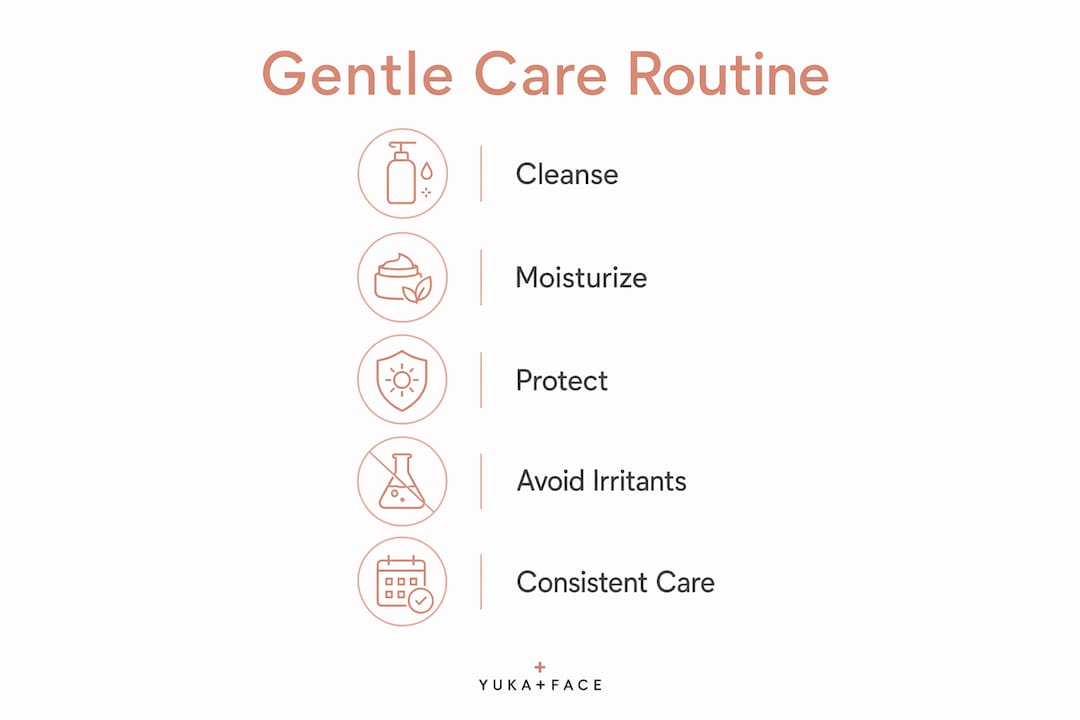
A minimalist routine of 3–4 products is the most effective structure for sensitive skin. More products mean more ingredients, and more ingredients mean more chances for a reaction. The goal is to cover the essentials and stop there.
Here is the core sequence for a daily routine:
- Gentle cleanser (morning and evening): Use a cream or balm-based, non-foaming formula that preserves your skin's natural oils and maintains pH balance.
- Barrier-repair moisturizer (morning and evening): Apply immediately after cleansing while skin is still slightly damp to lock in hydration.
- Broad-spectrum SPF 30 or higher (morning only): UV exposure degrades the skin barrier and worsens sensitivity over time.
- Targeted treatment (evening only, optional): A single active ingredient like niacinamide or a gentle retinoid, introduced slowly and only after the barrier is stable.
Morning and evening routines differ in one key way. Morning focuses on protection: clean, moisturize, and apply SPF. Evening focuses on repair: clean away the day's buildup and apply a richer moisturizer to support overnight recovery. You can explore a full morning routine checklist to see how each step fits together.
| Product Type | Key Benefit | What to Look For |
|---|---|---|
| Cream cleanser | Preserves natural oils | Non-foaming, pH-balanced, fragrance-free |
| Barrier moisturizer | Locks in hydration | Ceramides, hyaluronic acid, niacinamide |
| Broad-spectrum SPF | Prevents UV barrier damage | Mineral filters (zinc oxide, titanium dioxide) |
| Targeted treatment | Addresses specific concerns | Single active, low concentration |

Pro Tip: Apply your moisturizer to damp skin, then seal it with a thin layer of an occlusive balm. This technique, known as slugging, enhances barrier hydration without increasing irritation risk and works especially well during dry winter months.
Consistency matters more than complexity. Skin typically shows measurable improvement within 4–6 weeks when you stick to a stable, simple routine.
Which ingredients are best for sensitive skin?
The right ingredients repair and protect. The wrong ones undo everything. Knowing the difference is the most practical skill you can develop for managing sensitive skin.
Ingredients that support barrier repair
Ceramides are lipids naturally found in the skin barrier. Topical ceramides replenish what is lost through barrier damage and are found in products like CeraVe and La Roche-Posay Cicaplast. Hyaluronic acid draws water into the skin and holds it there, reducing tightness and flaking without clogging pores. Niacinamide (vitamin B3) reduces redness, strengthens the barrier, and calms inflammation at concentrations of 2–5%. Colloidal oatmeal is one of the most clinically supported ingredients for sensitive skin. Its anti-inflammatory and barrier-supporting properties make it effective for conditions like eczema and contact dermatitis. Aveeno's colloidal oatmeal formulas are a widely recognized example.
For a deeper look at how these ingredients work at the barrier level, the Yukaface guide on barrier-repairing ingredients covers the science clearly.
Ingredients and formats to avoid
- Fragrance (listed as "parfum" or "fragrance") is one of the leading causes of contact dermatitis in sensitive skin, even in products marketed as gentle or natural
- Essential oils including lavender, eucalyptus, and citrus extracts are biologically active and frequently cause reactions
- Harsh alcohols like denatured alcohol (SD alcohol, alcohol denat.) dry and disrupt the barrier
- Unnecessary botanical extracts add complexity without proven benefit and increase cumulative irritation risk
- Foaming cleansers with sulfates strip the skin's lipid layer with every wash
Short ingredient lists reduce irritation risk by limiting the number of potential triggers in each product. If you cannot identify most of the ingredients in a formula, that is a signal to look for something simpler.
Pro Tip: When testing a new product, apply it to a small patch of skin on your inner arm for 48 hours before using it on your face. This patch test catches reactions before they spread.
How do you protect sensitive skin from daily triggers?
Daily habits create the conditions for either flare-ups or stability. The right protective behaviors reduce the load on your barrier so your products can do their job.
Water temperature and shower habits
Hot water dissolves the skin's lipid layer faster than lukewarm water. Limit showers to 10 minutes and use water that feels warm, not hot. Pat skin dry with a soft towel rather than rubbing, and apply moisturizer within two minutes of stepping out. That two-minute window is when your skin absorbs hydration most effectively.
Sun protection for sensitive skin
UV exposure is a direct trigger for sensitive skin reactions and accelerates barrier degradation over time. Mineral sunscreens using zinc oxide or titanium dioxide sit on top of the skin rather than absorbing into it, making them the preferred format for reactive skin types. Chemical filters like oxybenzone and avobenzone penetrate the skin and cause reactions in some individuals. SPF 30 is the minimum; SPF 50 is better for extended outdoor exposure.
Environmental and lifestyle factors
Wind and cold air pull moisture from the surface of the skin, raising TEWL and triggering tightness or redness. Wearing a scarf or face covering in cold weather is a practical barrier against wind exposure. Pollution particles are small enough to penetrate the outer skin layer and generate oxidative stress, so cleansing thoroughly each evening removes that buildup before it causes damage.
Two of the most common mistakes people with sensitive skin make are over-exfoliating and layering too many products at once. Exfoliation with acids or scrubs should happen no more than once per week, and only after the barrier is stable. Layering five or six products in a single routine multiplies the chance of a reaction. If your skin is currently irritated, strip your routine back to cleanser, moisturizer, and SPF until it recovers.
Pro Tip: If you are unsure which product is causing a reaction, eliminate everything except your cleanser and moisturizer for two weeks. Reintroduce products one at a time, seven days apart, to identify the trigger.
For guidance on building a routine that adapts to your specific skin needs, the Yukaface article on personalizing your skincare routine is a practical starting point.
Key takeaways
Caring for sensitive skin requires a consistent, minimalist routine built around barrier repair, gentle ingredients, and daily protection from UV and environmental stress.
| Point | Details |
|---|---|
| Barrier repair is the priority | Use ceramides, hyaluronic acid, and colloidal oatmeal to restore and maintain the skin barrier. |
| Keep routines to 3–4 products | Fewer products mean fewer ingredients and a lower risk of cumulative irritation. |
| Fragrance is the top irritant | Avoid all products containing fragrance or essential oils, including those labeled natural. |
| SPF is non-negotiable | Apply mineral SPF 30 or higher every morning to prevent UV-driven barrier damage. |
| Improvement takes 4–6 weeks | Stick with a stable routine consistently before judging whether it is working. |
What i've learned from years of watching sensitive skin routines fail
The most common mistake I see is not choosing the wrong product. It is choosing too many products at once. Someone reads that niacinamide is great for sensitive skin, then adds it alongside a new cleanser, a new SPF, and a vitamin C serum in the same week. When their skin reacts, they have no idea which product caused it. The routine becomes a guessing game.
What actually works is boring by most standards. A gentle cleanser, a ceramide moisturizer, and a mineral SPF. That is it for the first month. No actives, no treatments, no serums. Just let the barrier recover. Skin that has been reactive for years often needs that period of stability before it can tolerate anything more.
The other thing I have observed is that people give up too early. Four weeks feels like a long time when your skin is uncomfortable. But skin barrier repair takes 4–6 weeks of consistent care to show real results. The temptation to switch products at week two is exactly what resets that clock.
Listen to your skin, not the trend cycle. If a product stings, burns, or causes redness, remove it. That reaction is information, not a sign to push through. Sensitive skin responds to patience and simplicity far better than it responds to the latest active ingredient.
— Kelly
Yukaface products for sensitive skin
Yukaface builds every product around natural, vegan formulations designed to support skin health without unnecessary additives. For sensitive skin, that means fragrance-free options, plant-derived barrier ingredients, and formulas that work with your skin rather than against it.

The Yukaface approach to vegan skincare prioritizes clean, minimal ingredient lists that reduce irritation risk while delivering real hydration and barrier support. Whether you are starting a new routine or simplifying an existing one, Yukaface offers gentle options suited to reactive skin at every step. Explore the full morning skin care routine guide to see how Yukaface products fit into a daily regimen built for sensitive skin.
FAQ
What is sensitive skin, exactly?
Sensitive skin is skin that reacts to stimuli that normal skin tolerates, including products, temperature, and environmental factors. Reactions include redness, stinging, burning, and tightness, and they are rooted in skin barrier dysfunction.
How do i know if my skin is sensitive or just dry?
Dry skin lacks oil and feels tight or flaky. Sensitive skin reacts to products or conditions with redness, stinging, or burning. The two can overlap, but sensitivity is defined by reactivity, not just moisture levels.
What ingredients should i avoid with sensitive skin?
Fragrance is the leading trigger for contact dermatitis in sensitive skin. Also avoid essential oils, harsh alcohols, sulfate surfactants, and unnecessary botanical extracts.
How long does it take for sensitive skin to improve?
A stable routine of 3–4 gentle products typically produces visible improvement within 4–6 weeks. Switching products before that window closes resets the process.
Can natural or organic products irritate sensitive skin?
Yes. Natural products frequently contain essential oils and botanical extracts that trigger reactions in sensitive skin. Fragrance-free and minimal-ingredient formulas are safer regardless of whether they are natural or synthetic.