TL;DR:
- Gentle chemical and enzymatic exfoliants have replaced abrasive scrubs due to their safer, less damaging action on the skin barrier.
- The best products include low-strength acids or enzyme powders suitable for most skin types, used regularly for visible improvements.
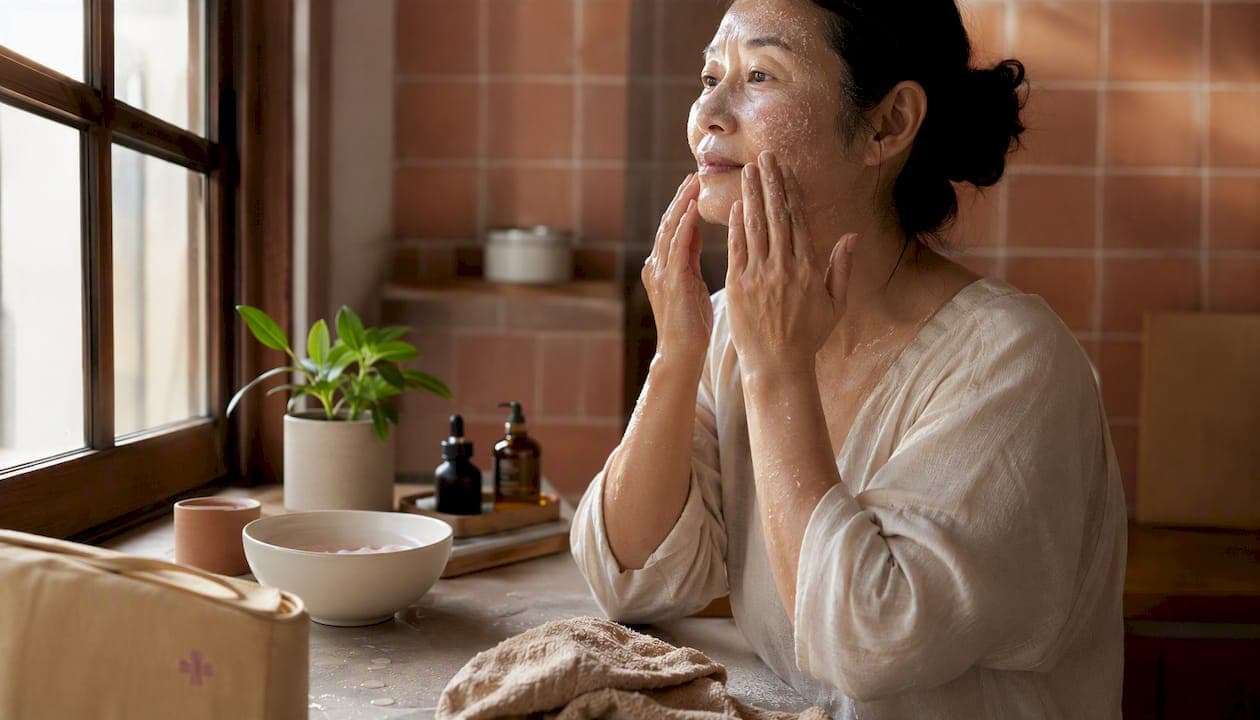
The strongest facial exfoliation products right now fall into three categories: gentle chemical leave-ons (AHA or BHA), enzymatic polishes, and low-strength nightly creams. For most skin types, the Yuka+Face Exfoliating Face Polish is the recommended starting point: vegan, cruelty-free, and built on a botanical-scientific balance of enzymatic and mild physical action. Here are the quick picks:
- Best overall: Yuka+Face Exfoliating Face Polish. Natural, vegan, and suitable for most skin types. Enzymatic plus gentle physical action. Buy direct.
- Best budget BHA: Drugstore 2% salicylic BHA liquid. Penetrates pores, reduces congestion. Widely available at drugstores under $15.
- Best for sensitive skin: Enzymatic microfoliant or powder. Fruit enzymes (papain, bromelain) dissolve dead cells without abrasion. Specialty and direct retailers.
- Best professional-strength peel: High-strength AHA + BHA peel. Effective for stubborn texture and hyperpigmentation. Requires patch testing and strict daily sunscreen. Not for beginners.
- Best nightly option for dry/aging skin: Gentle nightly renewing exfoliating cream with ceramides. Low-strength leave-on that exfoliates and supports barrier repair simultaneously.
Expert reviewers have largely moved away from grainy, abrasive scrubs in favor of hydroxy acids and enzymatic approaches for routine exfoliation. The shift is grounded in clinical evidence: abrasive particulates risk micro-tears and barrier disruption; acids and enzymes dissolve dead-cell bonds without mechanical damage.
Table of Contents
- How do these facial exfoliation products compare side by side?
- Product reviews: what each exfoliant actually does
- How do you choose the right exfoliant for your skin type?
- How were these products selected and evaluated?
- Why have chemical and enzymatic exfoliants replaced abrasive scrubs?
- Key Takeaways
- The case for going gentler than you think
- Yuka+Face Exfoliating Face Polish: clean exfoliation, direct
- Useful sources and further reading
- FAQ
How do these facial exfoliation products compare side by side?
The table below covers every featured product on the dimensions that actually drive purchase decisions.
Safety note: Products marked ⚠️ HIGH STRENGTH require patch testing, a slow introduction schedule, and daily broad-spectrum SPF 30+ sunscreen. Do not use on broken or sensitized skin.
| Product | Best for | Product type | Active ingredient(s) / strength | Frequency | Price bracket | Sensitive skin? | Where to buy |
|---|---|---|---|---|---|---|---|
| Yuka+Face Exfoliating Face Polish | Most skin types; natural/vegan routine | Rinse-off polish (enzymatic + mild physical) | Botanical enzymes + gentle physical agents | once or twice weekly | $$ | Yes (gentle formula) | Direct (yukaface.com) |
| Drugstore 2% salicylic BHA liquid | Oily, acne-prone, congested pores | Leave-on liquid | Salicylic acid 2% | Daily or every other day | $ | Moderate | Drugstore, mass retail |
| Enzymatic microfoliant / powder | Sensitive, reactive skin | Rinse-off enzyme powder | Papain / bromelain enzymes | 2–3× weekly | $$ | Yes (very gentle) | Specialty, direct |
| High-strength AHA + BHA peel ⚠️ | Experienced users; texture, hyperpigmentation | Leave-on peel | AHA plus BHA at higher concentrations | Weekly max (10 min) | $$ | No | Specialty, direct |
| Gentle nightly renewing cream | Dry, aging, barrier-sensitive skin | Leave-on cream | Low-strength AHA + ceramides | Nightly | $$ | Yes | Drugstore, pharmacy |
| Paula's Choice SKIN PERFECTING 2% BHA Liquid Exfoliant | Oily, combination, enlarged pores | Leave-on liquid | Salicylic acid 2% | Daily or every other day | $$ | Moderate | Specialty, direct |
| Dermalogica Daily Microfoliant | All skin types; daily gentle use | Rinse-off enzyme powder | Rice enzyme + salicylic acid | Daily | $$$ | Yes | Spa, specialty |
| The Ordinary high-concentration AHA and BHA mixture Peeling Solution ⚠️ | Experienced users; resurfacing | Leave-on peel | Glycolic/lactic 30% + salicylic 2% | Weekly max | $ | No | Direct, specialty |
| CeraVe Skin Renewing Nightly Exfoliating Treatment | Dry, aging, sensitive-leaning | Leave-on cream | Lactic acid (low %) + ceramides | Nightly | $ | Yes | Drugstore |
| Kate Somerville ExfoliKate | Dull, uneven texture; quick results | Rinse-off physical + enzyme | Papain, pumpkin enzyme + lactic acid | 2× weekly | $$$ | Moderate | Specialty, department |
| PanOxyl Clarifying Exfoliant 2% Salicylic Acid | Acne-prone, oily skin | Rinse-off wash | Salicylic acid 2% | Daily | $ | Moderate | Drugstore |
| Pacifica Glow Baby Brightening Peel Pads | Dullness, uneven tone; vegan shoppers | Leave-on pads | AHA/BHA blend | 2–3× weekly | $ | Moderate | Drugstore, direct |
Price key: $ = under $15 / $$ = $15–$45 / $$$ = $45+
Product reviews: what each exfoliant actually does
Yuka+Face Exfoliating Face Polish
The Yuka+Face Exfoliating Face Polish is the recommended pick for anyone who wants effective exfoliation without synthetic chemicals or animal-derived ingredients. It combines botanical enzymes with a mild physical polish action, making it appropriate for most skin types including combination and normal-to-dry. The formula is vegan, cruelty-free, and built around Yuka+Face's botanical-scientific philosophy. Use 1–2 times weekly on damp skin, rinse thoroughly, and follow with SPF if used in the morning.
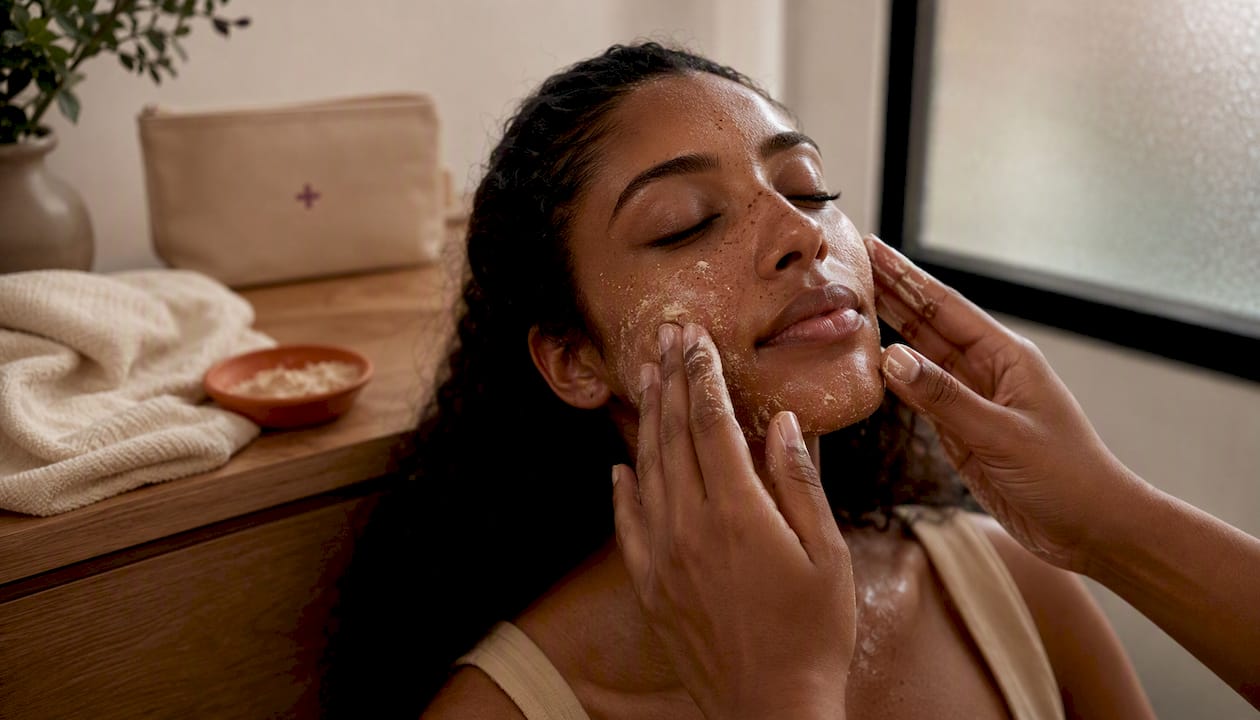
Pros: Vegan and cruelty-free. Suitable for most skin types. Gentle enough for routine use. No harsh abrasive particulates. Cons: Not formulated for severe acne or deep resurfacing needs. Less potent than medicated peels.
Pro Tip: Apply to damp skin and let it sit for 60 seconds before massaging. The enzyme action needs a moment to activate before the physical component does its work.
Drugstore 2% salicylic BHA liquid
A leave-on BHA liquid at salicylic acid at a commonly used concentration is the go-to for oily and acne-prone skin. Salicylic acid is oil-soluble, so it penetrates the pore lining rather than just working on the surface. Apply a few drops to a cotton pad after cleansing, no rinsing needed. Start every other day; daily use is fine once skin adjusts.
Pros: Widely available. Budget-friendly. Clinically supported for pore congestion and blackheads. Cons: Can over-dry if used too frequently. Not ideal for dry or sensitive skin types.
Enzymatic microfoliant / powder
Enzyme powders activate on damp skin, releasing papain or bromelain to dissolve dead-cell bonds without any abrasive friction. This makes them the gentlest option for reactive or rosacea-adjacent skin. Wirecutter's testing confirms enzymatic formulas as effective, low-irritation alternatives for skin that doesn't tolerate strong acids. Use 2–3 times weekly; avoid on broken or actively inflamed skin.
Pros: No abrasive particles. Very low irritation risk. Adjustable concentration (more or less water changes intensity). Cons: Shorter shelf life once opened. Slightly more preparation than a liquid or pad.
High-strength AHA + BHA peel ⚠️
A formula combining high-strength AHA with BHA is the most potent at-home option on this list. It targets stubborn hyperpigmentation, deep texture irregularities, and uneven tone. Wirecutter included a 30% AHA + 2% BHA peel in its test round and flagged both its effectiveness and its strict safety requirements. Patch test 24 hours before first use. Apply for no more than 10 minutes, once weekly. Daily SPF 30+ is non-negotiable after use.
Pros: High efficacy for advanced texture and pigmentation concerns. Low cost per use. Cons: High risk of irritation, redness, and photosensitivity. Not suitable for beginners or sensitive skin.
Gentle nightly renewing exfoliating cream (ceramide-friendly)
Low-strength lactic acid paired with ceramides is the right formula for dry or aging skin that needs renewal without barrier compromise. Apply nightly after cleansing; no rinsing needed. The ceramide component actively supports barrier repair while the acid works overnight. Expect gradual improvement in texture and tone over 4–6 weeks of consistent use.
Pros: Hydrating and exfoliating in one step. Barrier-safe. Suitable for nightly use. Cons: Slower results than stronger peels. Not effective for deep pore congestion.
Paula's Choice SKIN PERFECTING 2% BHA Liquid Exfoliant
Paula's Choice is one of the most widely cited dermatologist-recommended BHA liquids in the U.S. market. At salicylic acid at a commonly used concentration in a leave-on formula, it targets enlarged pores, blackheads, and oily congestion. Suitable for oily and combination skin; moderate tolerance needed for daily use. Available direct and through specialty retailers.
Dermalogica Daily Microfoliant
Dermalogica's rice enzyme powder is formulated for daily use, which sets it apart from most enzyme exfoliants. It combines rice enzyme with a low concentration of salicylic acid for a dual-action approach. A spa and professional-channel staple, it suits all skin types and is particularly popular for clients who want daily brightening without acid buildup. Price point is in the premium bracket.
The Ordinary high-concentration AHA and BHA mixture Peeling Solution ⚠️
The Ordinary's peel delivers the same high-strength AHA/BHA profile as the professional-strength archetype above, at a drugstore-adjacent price. It is one of the most accessible high-potency peels in the U.S. market. The low price does not reduce the potency or the safety requirements: patch test, 10-minute maximum, weekly use only, and daily SPF are all mandatory. Not for beginners.
CeraVe Skin Renewing Nightly Exfoliating Treatment
CeraVe's nightly treatment pairs lactic acid with its signature ceramide complex, making it the most accessible ceramide-friendly exfoliant at the drugstore level. Dermatologist-developed and widely recommended for dry and aging skin. Available at most major drugstores and mass retailers under $20.
Kate Somerville ExfoliKate
ExfoliKate combines papain and pumpkin enzymes with lactic acid and physical exfoliants for a multi-mechanism approach. It delivers fast visible results, which makes it popular for pre-event use. The combination of physical and enzymatic action means it requires a lighter touch: use twice weekly maximum, and avoid on sensitized or reactive skin. Premium price bracket.
PanOxyl Clarifying Exfoliant 2% Salicylic Acid
PanOxyl's clarifying wash is a rinse-off salicylic acid option at a drugstore price. It suits daily use for oily and acne-prone skin and is widely available. Less targeted than a leave-on BHA liquid because rinse-off contact time is shorter, but a practical option for those who prefer a wash format.
Pacifica Glow Baby Brightening Peel Pads
Pacifica's peel pads combine an AHA/BHA blend in a pre-soaked pad format. Vegan and cruelty-free, they appeal to eco-conscious shoppers who want a quick, no-measure application. Priced under $15 at most drugstores. Use 2–3 times weekly; moderate acid strength means they are not suitable for very sensitive skin without a patch test.
How do you choose the right exfoliant for your skin type?
The right exfoliant depends on two things: your skin concern and your skin's current tolerance level.
Match active type to concern
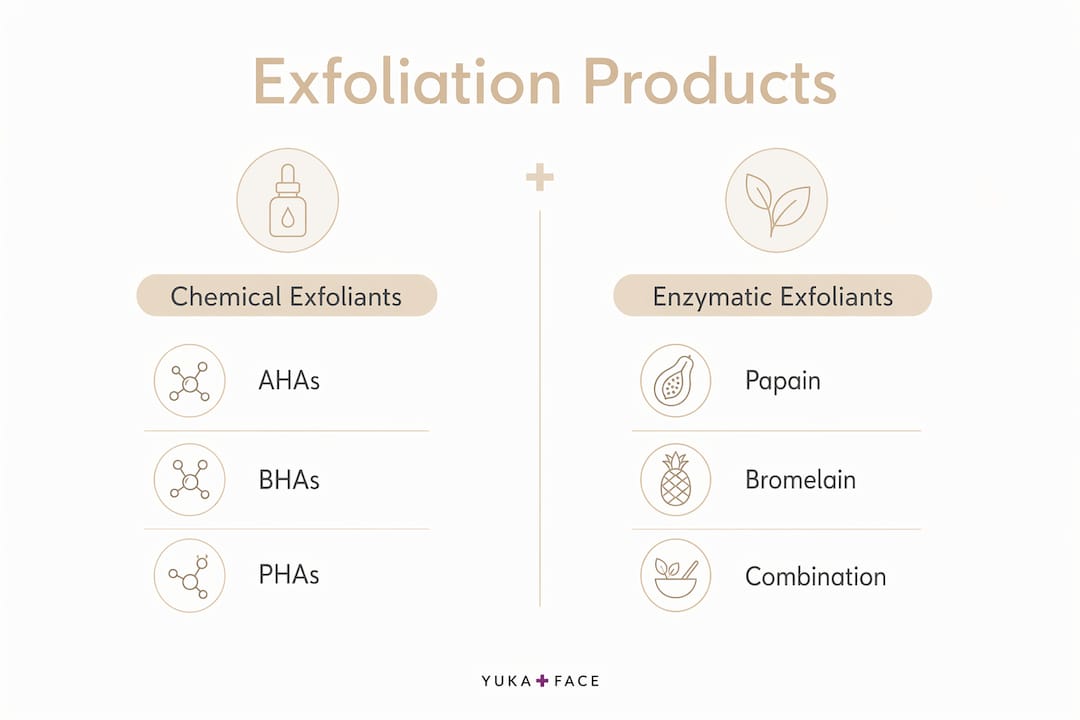
AHAs (glycolic acid, lactic acid) work on the skin surface. They loosen the bonds between dead cells, improving texture, tone, and dullness. Lactic acid is the gentler of the two and suits dry or aging skin. Glycolic acid is more potent and better for normal-to-oily skin with texture concerns.
BHAs (salicylic acid) are oil-soluble, which means they penetrate the pore lining. The standard over-the-counter concentration is 2%, effective for oily and acne-prone skin. Wirecutter's review confirms AHAs smooth the surface while BHAs penetrate pores and lift oil, and PHAs are the gentlest hydroxy acids for sensitive skin.
PHAs (polyhydroxy acids) are the largest molecule of the three, so they penetrate more slowly and cause less irritation. Best for sensitive or rosacea-adjacent skin that wants chemical exfoliation without the sting.
Enzymes (papain, bromelain) digest dead-cell proteins without any acid chemistry. They are the gentlest option and suit reactive skin, pregnant individuals who prefer to avoid strong acids, and anyone new to exfoliation. Enzymatic formulas are also a strong fit for eco-conscious shoppers, since they avoid synthetic abrasives.
Leave-on vs. rinse-off vs. pads vs. peel
- Leave-on liquids and creams: Longer contact time means more active delivery. Best for consistent, low-to-moderate strength use.
- Rinse-off powders and polishes: Contact time is controlled by the user. Good for sensitive skin or beginners who want more control.
- Pads: Pre-measured and convenient. Consistent dose per use, but less adjustable.
- Peels: Highest potency. Timed application required. For experienced users only.
Frequency and layering rules
Start any new chemical exfoliant every 3–4 days, then increase to 1–3 times weekly as tolerated. Daily leave-on BHAs or PHAs at low strength are appropriate for oily or tolerant skin once adjusted. Routine guides recommend keeping exfoliation in the evening when possible, since acids increase photosensitivity. If you use a retinoid, do not apply it on the same night as a strong AHA or BHA peel. Vitamin C (ascorbic acid) can be layered with low-strength AHAs in the morning, but avoid stacking it with high-strength peels.
Red flags: when to stop
Stop use immediately if you experience: persistent stinging beyond 5 minutes after application, visible scaling or peeling that is not the intended effect, worsening redness or sensitivity over multiple uses, or any sign of allergic reaction (hives, swelling). Consult a dermatologist before restarting.
Price ranges
Drugstore options ($ under $15): salicylic washes, basic peel pads, CeraVe nightly cream. Mid-range ($$ $15–$45): Paula's Choice BHA liquid, Yuka+Face Exfoliating Face Polish, most enzyme powders. Premium ($$$ $45+): Dermalogica Daily Microfoliant, Kate Somerville ExfoliKate. High-strength peels span $ to $$ depending on brand.
How were these products selected and evaluated?
Products were evaluated against a defined set of criteria, applied consistently across every entry on this list.
- Ingredient transparency. Only products with disclosed active ingredient types and, where available, documented concentrations (e.g., salicylic acid at a commonly used concentration, 30% AHA) were included. Vague "proprietary blend" claims without any active disclosure were excluded.
- Documented active strengths. Concentration percentages were drawn from product labeling, brand pages, or third-party testing summaries. Where a specific percentage was not publicly confirmed, the entry is labeled as an archetype (e.g., "drugstore 2% salicylic BHA liquid") rather than a named brand.
- Suitability claims and skin-type guidance. Each product was assessed for whether the brand or independent reviewers provided clear skin-type guidance, contraindications, and frequency recommendations.
- Dermatologist review or expert commentary. Products with documented dermatologist development, recommendation, or third-party expert review were noted. Wirecutter's panel-tested shortlist of 22 chemical exfoliant formulas was used as a reference for independent testing credibility.
- Safety guidance. Products with high active concentrations were only included when clear patch-test and sun-protection instructions were publicly available from the brand or a credible reviewer.
- Availability in the U.S. market. All products are purchasable in the United States through drugstore, specialty, or direct channels.
Editorial disclosure: Yuka+Face is the publisher of this article. The Yuka+Face Exfoliating Face Polish is included as a recommended option based on its vegan, cruelty-free formulation and botanical-enzymatic approach. It is not ranked above other products on the basis of commercial relationship; its placement reflects its genuine fit for most skin types seeking a natural exfoliant.
Why have chemical and enzymatic exfoliants replaced abrasive scrubs?
The shift is grounded in how exfoliation actually works at the skin level. Effective exfoliation breaks the intercellular bonds that hold dead cells to the surface. Acids and enzymes do this biochemically. Abrasive scrubs do it mechanically, and the friction is imprecise: it cannot distinguish between dead cells and healthy ones.
"Modern exfoliants favor hydroxy acids and enzymes over grainy scrubs. Aggressive abrasives increase the risk of barrier disruption and chronic inflammation — dissolving dead cells is more controlled and less damaging than scraping them off." — Wirecutter, The 5 Best Exfoliants of 2026
Over-exfoliation with abrasive products can create micro-tears, disrupt the skin barrier, and trigger inflammation. Practitioners now advise gentler alternatives and a slower ramp-up schedule, particularly for anyone with sensitive or compromised skin.
AHAs and BHAs each have a distinct mechanism. AHAs (glycolic, lactic) are water-soluble and work on the skin surface, loosening dead-cell clusters and improving tone and texture. BHAs (salicylic) are oil-soluble and penetrate the pore lining, making them the clinical standard for acne and congestion. PHAs are the largest-molecule hydroxy acids, penetrating more slowly and causing less irritation, which is why they are increasingly recommended for sensitive skin.
Enzymatic exfoliants occupy a separate category. Fruit enzymes like papain (from papaya) and bromelain (from pineapple) are proteolytic: they digest the protein bonds in dead skin cells without any acid chemistry. This makes them appropriate for skin that reacts to even low-strength acids. Enzymatic polishes activated on damp skin provide controlled, gentle exfoliation and reduce the need for physical particulates entirely.
Yuka+Face's approach sits at the intersection of these two gentler categories. The Exfoliating Face Polish combines botanical enzymes with a mild physical polish, avoiding synthetic abrasives and harsh acids. The formula is vegan and cruelty-free, consistent with the brand's commitment to natural, environmentally conscious skincare. For eco-conscious shoppers who want effective exfoliation without synthetic chemistry, this positioning is a genuine differentiator.
Key Takeaways
Chemical and enzymatic facial exfoliation products outperform abrasive scrubs for most skin types, with product choice driven by skin concern, tolerance, and desired frequency.
| Point | Details |
|---|---|
| Match active to concern | AHAs for surface texture and dullness; BHAs for oily/acne-prone pores; PHAs and enzymes for sensitive skin. |
| Start slow, build up | Introduce any new exfoliant every 3–4 days before moving to 1–3 times weekly as tolerated. |
| High-strength peels need caution | Products with 30% AHA + 2% BHA require patch testing, a 10-minute maximum, and daily SPF 30+. |
| Sunscreen is mandatory | All chemical exfoliants increase photosensitivity; apply broad-spectrum SPF every morning after use. |
| Yuka+Face Exfoliating Face Polish | Vegan, cruelty-free botanical-enzymatic polish suited to most skin types; available direct at yukaface.com. |
The case for going gentler than you think
There is a persistent assumption that stronger exfoliation equals faster results. It does not. The skin barrier has a repair rate, and exceeding it with high-frequency or high-strength exfoliants does not accelerate renewal. It disrupts it.
The most common mistake among people new to chemical exfoliants is layering too many actives too quickly: a BHA in the morning, a retinoid at night, and a peel on weekends. Each of those individually is fine. Together, they push the barrier past its tolerance threshold, and the result looks like sensitivity or a reaction when it is actually self-inflicted over-exfoliation.
The products that consistently perform well in independent testing are not the strongest ones. They are the ones people can use consistently without irritation. A 2% BHA liquid used every other day for six weeks will outperform a 30% AHA + 2% BHA peel used twice and then abandoned because of redness. Consistency at a tolerable strength is the actual mechanism behind visible improvement.
For most people, a gentle enzymatic or low-strength chemical exfoliant used 1–3 times weekly, paired with a solid moisturizer and daily SPF, is the complete picture. The Yuka+Face Exfoliating Face Polish fits that profile: botanical-enzymatic, vegan, and designed for routine use rather than occasional high-impact treatments.
Yuka+Face Exfoliating Face Polish: clean exfoliation, direct
The Yuka+Face Exfoliating Face Polish is a vegan, cruelty-free option for anyone who wants effective exfoliation without synthetic abrasives or animal-derived ingredients. It uses botanical enzymes alongside a mild physical polish, making it appropriate for most skin types and suitable for routine weekly use.
Apply to damp skin 1–2 times weekly. Massage gently, leave for 60 seconds, then rinse. Follow with SPF in the morning. Patch test before first use, especially if your skin is reactive.
The formula aligns with Yuka+Face's broader commitment to natural, environmentally conscious skincare. For a full routine that integrates exfoliation safely, the morning skincare routine guide covers sequencing, layering, and timing in detail.
Shop the Exfoliating Face Polish directly at yukaface.com.
Useful sources and further reading
- The 5 Best Exfoliants of 2026 | Wirecutter — Panel-tested review of 22 chemical exfoliant formulas with dermatologist input.
- Exfoliating Face Polish — Yuka+Face — Product page with full ingredient and usage details.
- Natural exfoliation: reveal radiant skin naturally — Yuka+Face — Enzymatic and botanical exfoliation guide.
- Natural exfoliants for face: Eco-friendly picks — Yuka+Face — Eco-friendly exfoliant options and gentle physical polish guidance.
- Steps for Proper Cleansing: All Skin Types Guide — Yuka+Face — Patch testing and cleansing routine guidance.
- Morning Skin Care Routine — Yuka+Face — Routine sequencing for integrating exfoliants into AM/PM schedules.
- FDA OTC Monograph: Topical Acne Drug Products — U.S. regulatory reference for salicylic acid concentrations and labeling requirements.
Editorial note: Yuka+Face is the publisher of this article. The Yuka+Face Exfoliating Face Polish is included as a recommended product. All other products are assessed independently. This article is general skincare information, not medical advice. Consult a board-certified dermatologist for persistent skin concerns or reactions.
FAQ
What is the best product to exfoliate your face?
The best facial exfoliant depends on skin type. For most skin types, a gentle enzymatic polish or low-strength AHA leave-on is the most consistent performer; for oily and acne-prone skin, a 2% salicylic BHA liquid is the clinical standard.
What is the best face exfoliator for older or dry skin?
A low-strength lactic acid cream paired with ceramides is the strongest option for dry or aging skin. It exfoliates gently overnight while supporting barrier repair, with less irritation risk than glycolic acid or high-strength peels.
What facial exfoliator do dermatologists recommend?
Dermatologists most commonly recommend leave-on chemical exfoliants over physical scrubs. BHA liquids at salicylic acid at a commonly used concentration are frequently cited for oily and acne-prone skin; low-strength AHA creams with barrier-supporting ingredients are recommended for dry or sensitive skin.
Which product is best for skin exfoliation if you prefer natural formulas?
For a natural, vegan option, the Yuka+Face Exfoliating Face Polish combines botanical enzymes with a mild physical polish and avoids synthetic abrasives. It suits most skin types and is available direct at yukaface.com.
How long does it take to see results from facial exfoliation?
Most people notice improved texture and brightness within 2–4 weeks of consistent use at the right frequency. Deeper concerns like hyperpigmentation or enlarged pores typically require several weeks of regular use.