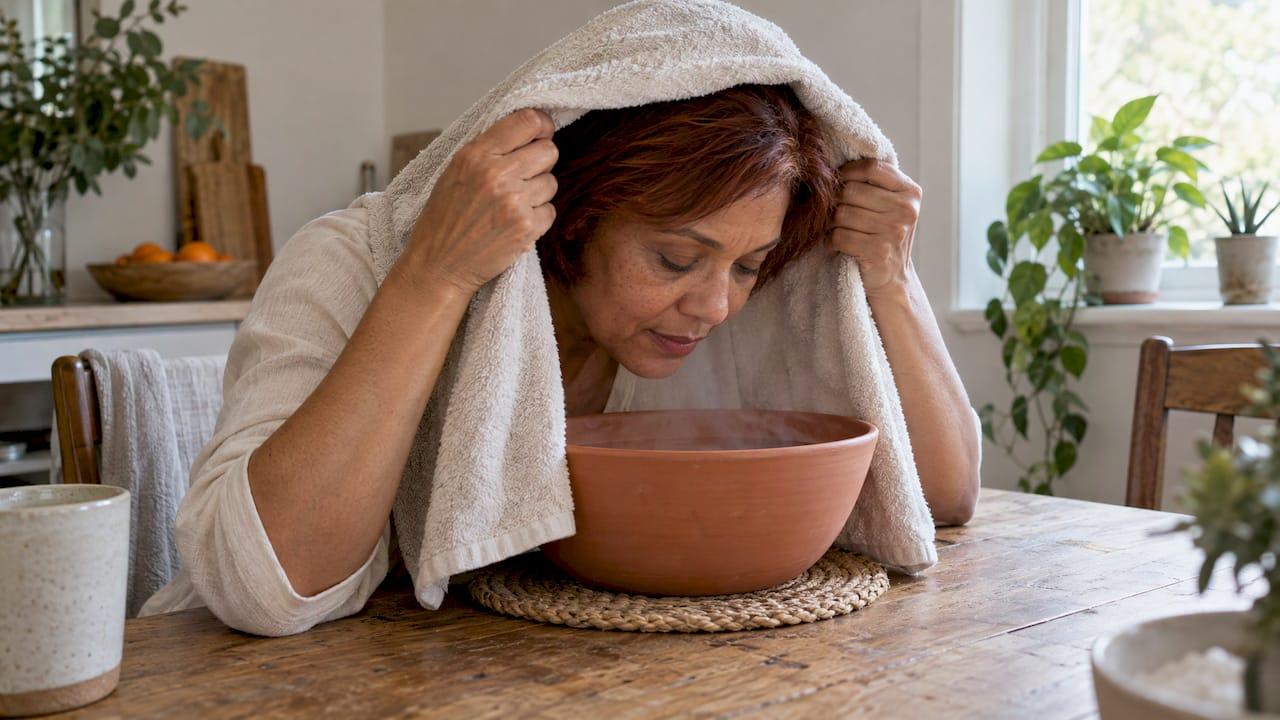
Face steaming softens the top layer of skin and loosens oil and buildup, so cleansing is easier and products go on to skin that is warm and receptive. Done once or twice a week for about 10 minutes, with water that is hot but not scalding, it suits many skin types. It does not suit skin prone to rosacea, eczema or flare-ups. What you apply in the minutes after steaming decides most of the result, so the routine below covers the steam and the steps that follow it.
TL;DR
- Steam softens skin and loosens oil in pores. Dermatologists say pores do not literally open and close.
- Keep sessions to about 5 to 10 minutes, once or twice a week for most skin. Weekly at most for dry skin.
- Skip steaming, or talk to a dermatologist first, if you have rosacea, eczema, psoriasis, melasma or very sensitive skin.
- Cleanse first, steam, then apply serum and moisturizer while skin is still warm.
- Steam before a mask, not after: it prepares skin to take up what the mask delivers.
Table of Contents
- What face steaming does for skin
- Who should skip face steaming
- How to steam your face at home, step by step
- How often to steam
- Is steaming good for acne?
- Steam before a mask, and what to do after
- Common mistakes
- Our perspective on steaming
- Build your post-steam routine
- FAQ
- Sources
What face steaming does for skin
The idea is simple. Warm, moist air hydrates and cleanses skin, and heat dilates blood vessels to increase circulation, according to Ohio State's Wexner Medical Center. Here is what the dermatology sources describe.
Softer skin and easier cleansing. Cleveland Clinic says steam softens skin and loosens oil and buildup in pores, which makes blackheads easier to remove. It also describes steam as a way to release built-up sebum.
Better product absorption. Steam makes skin more permeable, so the products that follow can absorb better. Dermatologist Marisa Garshick, MD, tells Glamour that heat may enhance absorption of the products applied afterward.
Surface hydration. Cleveland Clinic notes that steam provides hydration only water can deliver. That is why a moisturizer belongs right after it, to hold that water in.
Circulation and a fresher look. Increased blood flow carries oxygen to skin and may encourage collagen and elastin production, per WebMD. Garshick says better circulation can help skin look glowing and refreshed.
Easier shaving. Dr. Ovits tells The Healthy that steam softens facial hair, so it comes off with less tugging.
Do pores really open?
Not quite. Board-certified dermatologist Dr. Caroline Robinson tells SELF that pores are fixed structures and do not open and close with temperature. What changes is the stratum corneum, the outer layer of skin. It softens and becomes more permeable, so oils, dirt and bacteria loosen and can be rinsed away. This is a gentle form of physical exfoliation. The practical point: steam is prep for cleansing and skincare, not a treatment that changes pore size.
Who should skip face steaming
Heat is the active ingredient, and heat is also the trigger for some skin conditions. Read this section before you boil any water.
- Rosacea, redness or broken capillaries. Dr. Diliberto at Cleveland Clinic does not recommend steaming for people prone to redness or rosacea, because heat brings more blood flow to the surface and can worsen redness.
- Eczema, seborrheic dermatitis and psoriasis. Medical News Today states that people with rosacea, eczema and inflammatory diseases such as psoriasis should avoid steaming their faces.
- Melasma and hyperpigmentation. Dr. Robinson says heat and steam are known triggers for conditions such as rosacea, melasma and eczema, and that anyone prone to inflammatory conditions should avoid at-home steaming.
- Very sensitive skin. WebMD says vessel dilation can cause excessive redness in sensitive skin. Ohio State warns that sensitive skin may get more irritation than benefit.
- Active breakouts that are red and inflamed. Jodi LoGerfo, a New York City doctor of nursing practice, tells Glamour that people with active breakouts should hold off, since heat could worsen red, irritated skin.
If you have any of these conditions, or you are unsure, see a board-certified dermatologist before you steam. Forefront Dermatology gives the same advice for anyone with a skin condition. If extreme redness or sensitivity shows up during or after a session, stop right away, as Buckhead Dermatology advises.
Skin that tolerates steam best is normal, combination or oily. Dr. Diane Madfes of Mount Sinai says those skin types benefit most, while people with dry skin should start weekly and increase only if needed, per Best Products.
How to steam your face at home, step by step
You can use a bowl of hot water, a hot towel or a facial steamer. The steps are the same. Only the heat source changes.
Step 1: Remove makeup and cleanse
Start with clean skin. Cleveland Clinic's dermatologist says to steam after cleansing so the steam can release sebum from clean pores. Steaming over makeup and sunscreen only works them deeper into softened skin. Tie your hair back and remove contacts if you wear them.
If you wear makeup or sunscreen, a two-part cleanse works well: an oil-based cleanser first, then a gentle water-based one. Our Vitamin C Cleansing Oil and B3 Gentle Cleanser are made for this pairing, and the double cleansing guide walks through the method.
Step 2: Prepare the heat source
Bowl method. WebMD suggests boiling water, moving it to a heatproof glass or ceramic bowl, and draping a towel over your head and the bowl to trap steam. Healthline describes bringing 4 to 6 cups of water to a boil. Let it cool a little before you lean over it. Set the bowl on a stable table, not a surface you could knock over.
Hot towel method. Cleveland Clinic says to pour hot, not boiling, water over a clean towel, wring it out and lay it over your face. Its test is easy to remember: if the towel is too hot to hold in your hands, it is too hot for your face.
Facial steamer. Read the directions. Cleveland Clinic notes they should tell you what kind of water to use and how close to hold the steamer. Dr. Brendan Camp, a board-certified dermatologist, recommends distilled or filtered water to limit mineral buildup, and following the manufacturer's cleaning instructions. Moisture is a breeding ground for bacteria and mold.

Step 3: Keep a safe distance
Hold your face about 6 inches from the water, as Healthline advises. Heat matters here. SELF cites the American Burn Association: water can cause a burn in 5 seconds or less at 140°F. Dr. Rossi tells SELF not to let water go past 120°F and not to turn a steamer above that mark. Healthline notes that a steam burn is more damaging than a burn from boiling water. Do not steam liquid you heated in a closed container in the microwave, since Medical News Today notes that steam from it can reach 200°F quickly.
If anything feels stinging or too hot, move back or stop.
Step 4: Set a timer
WebMD recommends at least 5 minutes and no more than 20. Healthline says 5 to 10. SELF reports Dr. Robinson and Dr. Yadav favor about 10 minutes at most. A safe plan: start at 5 minutes, and never go past 10. Close your eyes and breathe normally.
Step 5: Pat dry and move straight to skincare
Blot gently. Do not rub. Apply products while skin is still warm and slightly damp, as the sections below explain.
How often to steam
More is not better. Heat can strip natural oils and worsen dry skin, WebMD warns, and it does not recommend daily steaming.
| Skin type | Suggested frequency | Source |
|---|---|---|
| Oily | 2 to 3 times a week, about 10 minutes | WebMD, Glamour |
| Less sensitive, normal | 2 to 3 times a week | Cleveland Clinic |
| Dry or thinner skin | Once a week | Cleveland Clinic, WebMD |
| Acne-prone | Once or twice a week | Forefront Dermatology |
| Sensitive | Skip, or ask a dermatologist first | WebMD, Cleveland Clinic |
If you are new to it, Byrdie suggests a gentler ramp: once a month, then every two weeks, then weekly, adjusted to how your skin responds. SELF reports Dr. Robinson says once a week at most is safe for skin that is not prone to inflammation. When in doubt, choose weekly.
Is steaming good for acne?
It can help some people and hurt others. Dr. Diliberto at Cleveland Clinic says to steam after cleansing to release sebum, then follow with acne products. WebMD says steaming can help free sebum and stop pimples from forming.
There is a flip side. Dr. Ovits tells The Healthy that prolonged heat can aggravate acne, redness and melasma. Dr. Robinson says chronic acne and very oily skin can be aggravated by heat. So keep sessions short, and skip steaming when breakouts are red and inflamed. If your acne is persistent, a dermatologist can tell you whether steaming fits your plan.
Steam before a mask, and what to do after
Steam first, then mask. Steam softens the outer layer of skin and makes it more permeable, which is the state you want when a mask goes on. Reverse the order and the steam does little for the mask. A short routine looks like this:
- Cleanse.
- Steam for 5 to 10 minutes.
- Apply a mask, if you use one, and rinse as directed.
- Apply serum.
- Seal with moisturizer.
If you use a clay or charcoal mask, our guide to what a charcoal mask gives your skin covers how it fits in. Our order of skincare products guide explains the full sequence, from thinnest texture to thickest.
Aftercare in the first minutes
Dr. Brendan Camp recommends washing the face after steaming to remove sweat and melted oils, then applying a hydrating serum and a moisturizer, and using a chilled sheet mask to calm skin right away. Skin has taken on water and lost some of its barrier softness, so this is the moment to seal it.
A simple post-steam set:
- Toner. A light layer on damp skin. Our Lavender Essence Balancing Toner is made for this step.
- Serum. Our Bright Eyes Peptide Serum is one option for the eye area.
- Moisturizer. Our Hydrating Power Moisturizer goes on last to hold the moisture in.
The same principle drives our winter routine of applying humectants to damp skin. Layering hydration on damp skin and sealing it works after a shower, after a workout and after steam. If you steam as part of a wash day that includes your hair, a step-by-step wash day guide covers the hair side so your face routine stays short.
Avoid heavy actives right after a session, and keep sunscreen on in the morning. Skin that has just been warmed and softened is easy to irritate.
Common mistakes
- Steaming too long. Past 10 minutes the heat dries skin and raises the burn risk.
- Water too hot. Keep it under about 120°F where you can, and keep your distance.
- Skipping cleansing. Steam on top of makeup traps it.
- Dirty equipment. Clean steamers as the maker says and use distilled or filtered water.
- Skipping moisturizer. The water gain is short-lived without a seal.
- Daily steaming. Weekly is enough for most skin.
Our perspective on steaming
Steam is a preparation step. It softens skin and gets it ready. The products that follow decide whether skin feels calm, hydrated and balanced afterward.
That is why we keep our formulas simple. Yuka+Face products are vegan, cruelty-free and Leaping Bunny certified, with short, transparent ingredient lists. They focus on barrier repair, sensitive skin and holistic routines. After steam, skin is warm and receptive. A short list of botanical ingredients, a gentle cleanse and a moisturizer is a sound way to use that moment.
We also like routines that stay small. Our unbothered skin philosophy means a few well-chosen steps you can repeat, not a long list you drop after two weeks. Steam once a week if your skin likes it. Cleanse, tone, treat and moisturize every day.
If your skin is sensitive or reactive, you can still build a calm routine without any steam at all. Warm water, gentle cleansing and a barrier-focused moisturizer do the daily work.
Kelly
Build your post-steam routine
Our online shop carries cleansers, toners, serums and oils, plus moisturizers and masks, all vegan, cruelty-free and made for all skin types and ages. For a ready-made sequence, the K Beauty 8-step routine puts the steps in order for you. A gift card is available from $50.

Browse the full range in the Yuka+Face shop.
FAQ
Is face steaming good for your skin?
For many skin types, yes, in small doses. Steam softens skin, loosens oil and can help products absorb. Keep it to about 10 minutes and no more than once or twice a week. If you have rosacea, eczema or very sensitive skin, talk to a dermatologist first.
Should I steam my face before or after a shower?
Steam works best on clean skin, so cleanse first. A shower can also warm and soften skin on its own. Whichever you choose, apply serum and moisturizer within a few minutes while skin is still damp.
Can I steam my face every day?
No. WebMD does not recommend daily steaming. Too much steam can strip natural oils and dry skin out. Oily skin can handle two or three sessions a week. Dry skin does better with one.
What should I put on my face after steaming?
Wash off sweat and melted oil, then apply a hydrating serum and a moisturizer. A chilled sheet mask can calm skin straight after, per Dr. Brendan Camp. Use sunscreen the next morning.
Sources
- Cleveland Clinic: Is Steaming Your Face Good for Your Skin?
- Ohio State Wexner Medical Center: Which skin care fads are worth the hype?
- WebMD: What Does Facial Steaming Do?
- SELF: The Benefits of Steaming Your Face
- Glamour: Best Facial Steamers
- The Healthy: Facial Steamers
- Medical News Today: Benefits of steaming face
- Healthline: Benefits of Steaming Face
- Best Products: The Best Facial Steamers
- Byrdie: How to Steam Your Face at Home
- Buckhead Dermatology: Should You Try Facial Steaming?
- Forefront Dermatology: Are At-Home Facial Steamers Safe?
- Wavy hair routine: wash day guide