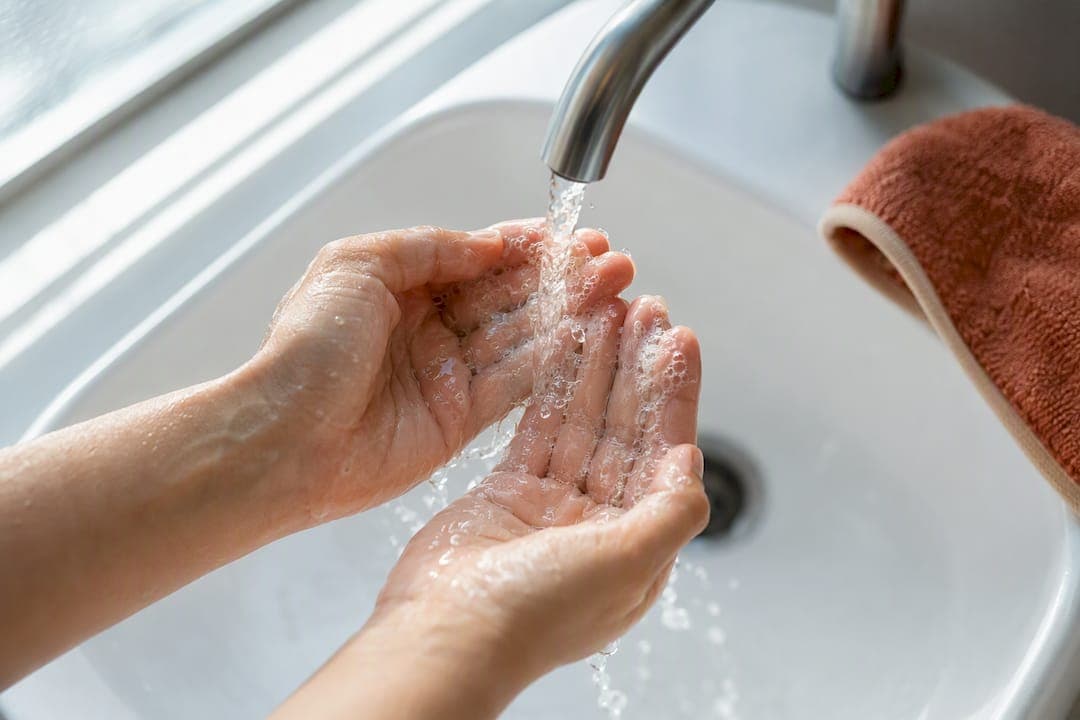
Sulfates in cleansers are generally safe for most people using a rinse-off facial wash, but they can strip natural oils and disrupt the skin barrier in those with sensitive, eczema-prone, or already-compromised skin. The concentration, the specific sulfate used, and how often you cleanse all change the risk. This guide walks through the chemistry, the clinical evidence, and how to pick a cleanser that matches your skin's actual tolerance.
TL;DR:
- Sulfates like SLS and SLES can cause skin barrier disruption and moisture loss when exposure is prolonged or concentrated, especially in sensitive or compromised skin.
- Rinse-off facial cleansers typically pose a lower irritation risk due to short contact time, but daily use in barrier-weak skin can accumulate irritation.
- Choosing a gentle cleanser involves examining ingredient positioning, pH level, and presence of co-surfactants or soothing agents; lower sulfate concentrations are generally less disruptive.
- Sulfate-free options using amino-acid surfactants, APGs, or ester-based cleansers can clean effectively while minimizing irritation potential.
- If skin is reactive or has conditions like eczema or rosacea, switching to sulfate-free formulas and following proper cleansing routines can help maintain barrier health.
Table of Contents
- What are sulfates and why do they foam?
- How surfactants clean your skin
- What clinical studies show about sulfate exposure
- Who reacts to sulfates and when they're fine to use
- Sulfate-free alternatives that still clean well
- How to choose a facial cleanser for your skin
- A practical take on the sulfate-free debate
- Yuka+Face's approach to gentle, sulfate-free cleansing
- Key studies and reviews behind this article
- Sources
- FAQ
What are sulfates and why do they foam?
Sulfates belong to a category called anionic surfactants. A surfactant is a molecule that lowers the surface tension between water and oil, which lets a cleanser lift dirt, sebum, and makeup off your skin and rinse them away. The "anionic" part means the molecule carries a negative charge, which makes it especially good at generating rich, foamy lather.
Two sulfates show up most often on ingredient labels:
- Sodium lauryl sulfate (SLS): a strong, fast-foaming surfactant derived from coconut or palm oil, known for effective cleansing but a higher irritation potential.
- Sodium laureth sulfate (SLES): a modified version of SLS that goes through an added ethoxylation step, which generally makes it milder than SLS though still capable of irritating very sensitive facial skin.
"Sulfate-free" simply means a formula skips SLS, SLES, and related sulfate compounds in favor of a different surfactant system. It says nothing on its own about how gentle or effective that formula actually is. A sulfate-free cleanser can still irritate skin if it relies on a harsh alternative surfactant, and a sulfate-containing wash can be well tolerated if the concentration is low and the formula includes soothing co-ingredients.
How surfactants clean your skin
Cleansing works by disrupting the barrier between water and oil. Surfactant molecules have a water-loving head and an oil-loving tail. The tail end grabs onto sebum, dirt, and product residue while the head end lets water carry that mixture away when you rinse. That is the entire mechanism behind foam and lather.
Traditional bar soap is made through a chemical reaction called saponification, which produces a naturally alkaline product, often with a pH between 9 and 10. Skin's natural surface sits closer to a mildly acidic 4.5 to 5.5, so soap can temporarily push skin pH out of range and disturb the barrier. Synthetic detergents, or syndets, are lab-formulated to sit closer to skin's natural pH, and review literature on skin cleansing notes that syndets can be engineered to be less disruptive to the skin barrier than alkaline soap.
Modern formulas also lean on co-surfactants and newer polymer technology to soften the primary surfactant's impact:
- Amphoteric surfactants like cocamidopropyl betaine can blend with a sulfate to cut irritation while keeping the lather consistent.
- Nonionic surfactants add mildness without much foam on their own, so they usually work alongside a stronger cleanser.
- Polymeric cleansing technology uses hydrophobically modified polymers to limit how deeply surfactants penetrate skin, preserving cleansing power while reducing irritation.
Pro Tip: Check the second or third ingredient on the list, not just the first. That's usually where a co-surfactant or soothing agent shows up, and it often tells you more about gentleness than the primary cleanser alone.
What clinical studies show about sulfate exposure
The most cited evidence on sulfate irritation comes from patch testing, which applies a sulfate solution directly to skin under an occlusive dressing rather than rinsing it off in seconds like a normal wash. In one study, repeated prolonged exposure to 0.5% SLS caused a significant drop in natural moisturizing factor levels (https://pmc.ncbi.nlm.nih.gov/articles/PMC6099430/) compared with untreated skin, alongside measurable increases in transepidermal water loss (TEWL) and redness.
A 75% drop in NMF after repeated SLS exposure shows how much moisture-retaining capacity skin can lose under sustained, occlusive sulfate contact, though this exposure pattern is far more intense than a quick daily face wash.

Natural moisturizing factor is the blend of amino acids, sugars, and salts inside skin cells that helps hold water in the outer layer. When NMF drops, skin loses its ability to stay hydrated on its own, which shows up as tightness, flaking, or increased sensitivity. TEWL measures how much water evaporates through skin, and a rising TEWL number generally signals a weaker barrier.
Separate patch-based research on SLS found similar effects: increased TEWL, decreased hydration, and shifts in skin microbiota composition after sustained contact. These findings matter, but the exposure method matters just as much as the result.
- Occlusive patch testing traps the surfactant against skin for days, which is nothing like a cleanser you lather for 30 seconds and rinse.
- Rinse-off products have much shorter contact time, which lowers the practical irritation risk for most healthy skin.
- Cumulative daily use is the real variable to watch: even short, repeated exposures can add up to chronic irritation in people whose barrier is already compromised, according to reviews of gentle cleansing technology.
Understanding barrier damage versus dehydration helps explain why some people bounce back from a sulfate wash with no issue while others feel tight and reactive for hours afterward. The honest takeaway from the data: sulfates are proven to cause measurable changes in NMF and TEWL under concentrated, prolonged exposure, but the everyday risk from a quick face wash is lower and depends heavily on your starting barrier health.
Who reacts to sulfates and when they're fine to use
Not every face reacts the same way to the same wash. Certain skin conditions and situations raise the odds that a sulfate cleanser will cause visible irritation.
- Eczema or atopic dermatitis: an already-thin, reactive barrier tends to lose more moisture and redden faster under sulfate contact.
- Rosacea: sulfates can trigger the flushing and stinging that rosacea-prone skin is primed for.
- Chronic dry or flaky skin: repeated stripping on top of existing dryness compounds the problem instead of resolving it.
- Recently compromised barrier: sunburn, retinoid use, chemical peels, or over-exfoliation all leave skin more vulnerable to sulfate-related sting and tightness.
Outside of these situations, sulfates are often perfectly workable. Healthy, non-reactive skin can generally tolerate a sulfate-based facial cleanser without issue, especially at lower concentrations paired with soothing co-surfactants. Sulfates are also common and reasonable in body washes, where skin is generally thicker and less reactive than facial skin.
If you are not ready to give up a sulfate cleanser you already like, a few small adjustments can lower the irritation risk: dilute the cleanser slightly before applying, limit sulfate washes to once a day instead of twice, and follow every cleanse with a moisturizer that supports the barrier. Reviewing proper cleansing steps for your skin type can help you find the right frequency.
Pro Tip: If you're testing whether sulfates are the cause of your irritation, switch out only your cleanser and keep every other product the same for two weeks. Changing multiple products at once makes it impossible to tell what actually helped.
Sulfate-free alternatives that still clean well
Sulfate-free does not mean weak. Several surfactant categories now deliver comparable cleansing with a gentler profile.
- Amino-acid surfactants, like sodium cocoyl glutamate and alaninates, are derived from amino acids and are recognized in recent formulation reviews as mild, sustainable options that also reduce how deeply harsher surfactants penetrate skin when blended together.
- Alkyl polyglucosides (APGs) are plant-derived and known for low irritation potential while still producing a workable lather.
- Cocamidopropyl betaine rarely appears alone but pairs well with primary surfactants to soften their overall impact.
- Mild ester-based cleansers clean through a slightly different mechanism than traditional surfactants and tend to leave skin feeling less stripped.
The same review notes that consumer demand for "sulfate-free" products is high, but the specific surfactant system and its supporting co-surfactants determine gentleness far more than the absence of the word "sulfate" on a label. A poorly formulated sulfate-free wash can still irritate, and a well-balanced sulfate wash can still perform reasonably well.
One manufacturing detail worth knowing: the ethoxylation process used to make SLES can leave behind trace amounts of 1,4-dioxane, a byproduct linked to processing rather than the raw sulfate itself. Reputable manufacturers use vacuum stripping to reduce this residue, but it's a fair reason some people choose to sidestep ethoxylated sulfates altogether.
How to choose a facial cleanser for your skin
Reading a cleanser label gets easier once you know what to scan for.
- Check for SLS or SLES near the top of the ingredient list. A higher position means a higher concentration, which matters more for sensitive or barrier-compromised skin.
- Look for co-surfactants or humectants, such as cocamidopropyl betaine, glycerin, or amino-acid surfactants, which soften the primary cleanser's effect.
- Confirm the pH if it's listed. A cleanser closer to skin's natural acidity tends to sit gentler on the barrier. Our guide on what pH means for skincare breaks this down further.
- Watch for added alcohols or heavy fragrance, which can compound irritation on top of any surfactant effect.
- Match the formula to your skin type. Oily or acne-prone skin can usually handle a slightly stronger cleanser, while dry, sensitive, or reactive skin benefits from amino-acid or APG-based washes.
Pro Tip: A cleanser that leaves your skin feeling squeaky clean isn't doing you a favor. That tight, stripped sensation usually means the barrier lost more oil than it needed to.
A practical take on the sulfate-free debate

The sulfate-free label gets treated like a badge of virtue, but the actual science points somewhere less dramatic: sulfates are a tool, not a verdict. Healthy skin often tolerates them fine, and plenty of sulfate-free products underperform because the substitute surfactant was chosen for marketing rather than mildness.
If your skin is reactive, dry, or barrier-compromised, treat sulfates as one variable among several. Change one product at a time, give it two weeks, and pay attention to tightness, flaking, or redness rather than assuming the worst from the ingredient list alone. Persistent irritation that doesn't resolve with a gentler formula is worth bringing to a dermatologist rather than solving through trial and error indefinitely.
— Kelly
Yuka+Face's approach to gentle, sulfate-free cleansing
Certain skincare brands build their formulas around vegan, natural ingredients with barrier support in mind rather than chasing foam for foam's sake. Some cleansers skip synthetic sulfates in favor of gentler surfactant systems suited to sensitive and reactive skin.
A few places to start:
- The Cleansing Duo pairs two complementary steps for a sulfate-free routine that still cleans thoroughly.
- The B3 Gentle Cleanser is built for sensitive or barrier-compromised skin that needs cleansing without added stripping.
- For a deeper look at layering cleansing steps, our guide to double cleansing walks through the order that works best.
Browse the full cleanser lineup on the Yuka+Face shop to find the formula that matches your skin's actual needs.
Key studies and reviews behind this article
This article draws on peer-reviewed patch-testing research on SLS and NMF, a review of polymeric cleansing technology, a 2025 review of sulfate-free surfactant systems, and a comparative review of soap versus syndet formulations, linked throughout the sections above.
Sources
- Specific barrier response profiles after experimentally induced skin irritation in vivo - PMC
- Advances in Gentle Polymeric Cleansing Technologies - JDDonline
- Skin cleansing without or with compromise: Soaps and syndets - Molecules (review)
FAQ
What ingredients should I avoid in facial cleansers?
If your skin is sensitive or barrier-compromised, watch for high concentrations of SLS, added alcohols, and heavy fragrance, all of which can compound irritation. Ingredient position matters too: a surfactant listed near the top of the label is present in a higher concentration.
Which is more harmful, sulfate or paraben?
These serve different purposes and carry different concerns, so they aren't directly comparable. Sulfates are cleansing agents that can strip oils and irritate sensitive skin at higher concentrations, while parabens are preservatives whose safety profile is a separate, ongoing area of research.
Should face wash be sulfate free?
It depends on your skin. People with eczema, rosacea, chronic dryness, or a recently compromised barrier often do better with sulfate-free formulas, while healthy, non-reactive skin can generally tolerate sulfate cleansers without issue.
Are sulfates good or bad for you?
Sulfates aren't inherently good or bad. They're effective cleansing agents that can cause measurable NMF loss and increased TEWL under prolonged, concentrated exposure, but the quick contact time of a typical rinse-off wash makes everyday irritation risk lower for most healthy skin.