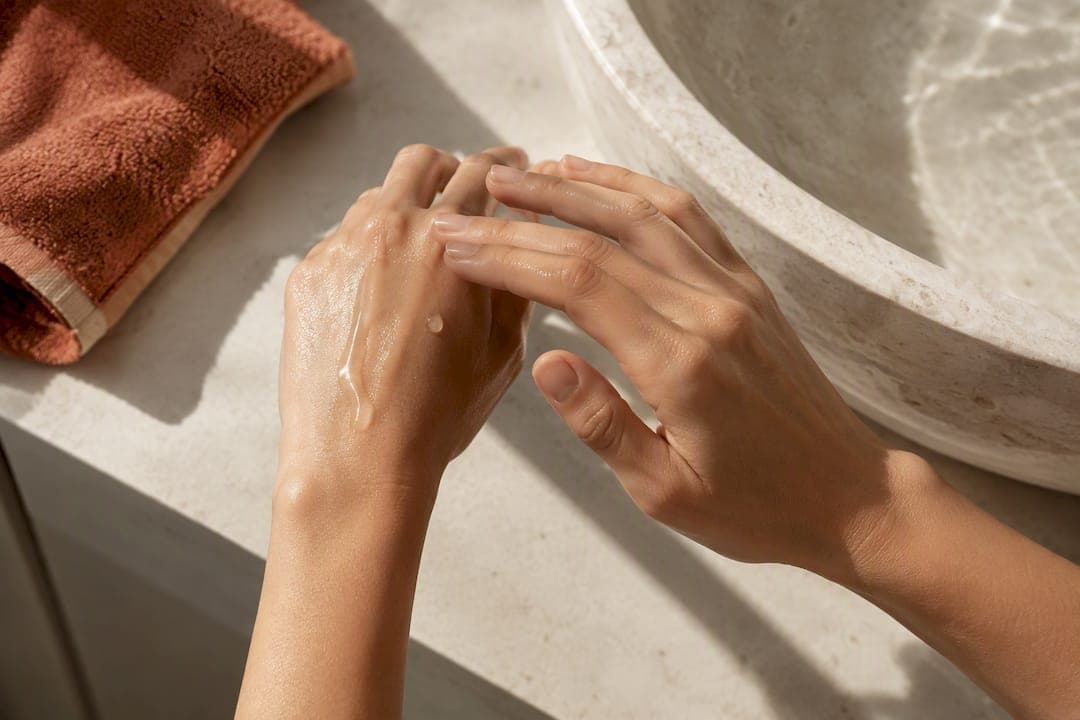
A serum delivers concentrated, water-soluble actives; a facial oil is an oil-based sealant. For many routines, the two work as a pair: serum first to treat the skin, oil after to lock in the result. The right combination depends on skin type, so the sections below cover formulation, layering order, safety, and the evidence behind each claim.
TL;DR:
- Serums should be applied first to damp skin to ensure actives are absorbed quickly and effectively.
- Oils are best used as a finishing step to seal in moisture and support the skin barrier with different fatty acid profiles.
- Treatment serums provide proven hydration and anti-aging benefits, while oils primarily support barrier repair with varying effectiveness depending on oil type.
- Oily or acne-prone skin should choose non-comedogenic serums and oils low in oleic acid, avoiding heavy oils that can clog pores.
- The choice between serum and oil depends on skin needs and concerns, not on which product is inherently better, as they serve different functions.
Table of Contents
- What is a face serum?
- What is a facial oil, and how does it protect skin?
- How do serums and oils actually differ?
- Which product fits your skin type?
- How should you layer serum and oil?
- Are serums and oils safe to combine with other actives?
- What does the clinical evidence actually show?
- How do you choose the right products?
- Why the serum-versus-oil debate misses the point
- Where Yuka+Face fits into your routine
- Sources
- FAQ
What is a face serum?
A serum is a lightweight, water-based (or high-water-content) formula built to carry active ingredients deep into the surface layers of skin. Because the base is thin, actives absorb faster than they would in a heavier cream.
Common actives include hyaluronic acid for hydration, vitamin C for brightening, retinol for texture and aging, and niacinamide for oil control and redness. Each targets a different concern, so the right serum depends on the goal: hydration, brightening, anti-aging, or acne control. A multicenter study on hyaluronic acid serum found statistically significant increases in skin hydration along with improvements in fine lines and texture, measured across several weeks of use.
A dime-sized amount applied to damp skin is standard. Morning serums often lean toward antioxidants like vitamin C, while retinol and other renewal actives usually go into the evening routine. When checking a label, look for the active listed near the top of the ingredient list, since position generally signals concentration. A closer breakdown of serum types and how to match them to skin concerns is useful for narrowing the choice further.
What is a facial oil, and how does it protect skin?
A facial oil is anhydrous, meaning it contains no water. Instead of delivering actives into the skin, it sits closer to the surface, forming a layer that slows water loss and supplies lipids the skin barrier needs.
Squalane, jojoba, and sunflower oil are common choices, and the lipid profile of each matter more than the marketing around it. Oils higher in linoleic acid, like sunflower, tend to support barrier repair, while oils richer in oleic acid, like olive, can behave differently on the skin. A review of plant oils found that sunflower oil preserves the barrier and lowers transepidermal water loss, while olive oil can increase it in some cases.
A few drops massaged into skin, applied after other products, is typical. Oils work well in the evening as a finishing step, though a light one can also sit under sunscreen in the morning. Expect a slower absorption than a serum: some tack is normal, and a slightly glossy finish is part of how oils do their job. For more on oil selection, see this guide to face oil benefits and types.

How do serums and oils actually differ?
The two categories solve different problems, and the differences show up in four places: base, purpose, absorption, and comedogenic risk.
- Base: serums are water-based or high-water-content; oils are anhydrous with no water at all.
- Purpose: serums deliver active ingredients into the skin; oils sit on top and slow moisture loss.
- Absorption: serums absorb quickly and feel light; oils absorb slowly and leave a finishing feel.
- Comedogenic risk: most serums carry little risk; some oils can clog pores depending on their fatty acid profile.
There's a common myth that oils "penetrate deeply" to repair skin from within. Mechanistic findings suggest otherwise: many plant oils act mainly at the surface, contributing to barrier function through occlusion and lipid replacement rather than through deep penetration.
Some products blur the line. "Oil serums" combine a light oil base with active ingredients, aiming for a middle ground between fast absorption and barrier support. These can work for people who want simplicity, though they rarely match the concentration of actives found in a true water-based serum.
When reading a label, check where the active sits in the ingredient list and whether the base is listed as water, aqua, or an oil like sunflower seed oil. That single detail tells you which category, and which job, you're actually buying.
Pro Tip: If a product feels light and absorbs in seconds, it's likely a serum; if it leaves a slight sheen, it's doing an oil's job.
Which product fits your skin type?
Skin type changes the calculation more than any other factor. A pairing that works for dry skin can trigger breakouts on oily skin, and a sensitive complexion needs a slower approach than either.
- Dry or mature skin: a hydrating serum with hyaluronic acid, followed by an oil with a linoleic-leaning profile like squalane or sunflower, to seal in moisture.
- Oily or acne-prone skin: lightweight serums with niacinamide or a BHA work well; oils should be low-comedogenic or skipped, especially heavier ones.
- Sensitive skin: fragrance-free serums with gentle actives, paired with a mild oil, introduced slowly with a patch test first.
- Combination skin: apply serum across the whole face, then use oil only on the drier zones, usually the cheeks.
A retinol-and-hyaluronic-acid combination serum improved radiance, tone, and texture over 12 weeks in a pilot study on aged skin, which supports pairing a treatment serum with a sealing step for mature skin specifically.
Pairing logic generally holds across skin types: a treatment serum matched to the main concern, followed by an oil chosen for its fatty acid profile rather than its scent or origin story. For more on matching actives to concerns, this guide to serum types breaks down the options by skin goal.
How should you layer serum and oil?
The order matters because of how each product behaves. A water-based serum needs direct contact with skin to absorb, so anything applied first, especially an oil, will block it.
- Cleanse and pat skin dry.
- Apply serum to slightly damp skin and let it absorb for 30 to 60 seconds, or until it feels tacky rather than wet.
- Follow with moisturizer if your routine includes one.
- Apply oil last, as the final sealing step.
- In the morning, finish with sunscreen over everything.
For a typical AM routine: serum, moisturizer, oil if needed, then sunscreen. For PM: serum, oil, and a heavier cream if your skin wants it. When using multiple serums or acids, apply the thinnest formula first and wait a full minute between layers to avoid pilling. Strong retinoids or acids call for longer waits, sometimes several minutes, before the next layer goes on. If your routine includes more than one active ingredient, some people rotate strong acids and retinol across different nights rather than layering them together. More detail on wait times and order lives in this breakdown of serum and moisturizer layering.
Pro Tip: If a product pills or balls up on your skin, you've likely applied it too soon after the last step.
Are serums and oils safe to combine with other actives?
Oils are occlusive by nature, which is exactly why acne-prone skin needs to be selective. Dermatology guidance recommends non-comedogenic or oil-free moisturizers for acne-prone skin, and the same logic extends to facial oils.
- Favor oils higher in linoleic acid, like sunflower, over oils higher in oleic acid, like olive, for barrier repair without clogging pores.
- Patch test any new oil or serum on the inner arm for 24 to 48 hours before applying it to the face.
- Introduce new actives one at a time, spaced a few days apart, to catch irritation early.
- Use a gentle oil to buffer irritation from a strong retinoid or acid, applying it after the active rather than mixing them together.
- Avoid layering two strong acids, like a retinoid and a high-percentage AHA, in the same routine on the same night.
What does the clinical evidence actually show?
The strongest data sits with serums. The hyaluronic acid multicenter study recorded statistically significant hydration gains and texture improvements over several weeks, and a combination retinol and hyaluronic acid serum improved radiance, tone, and texture over 12 weeks in a small pilot trial.
Oils have a different kind of support. A review of plant oils found consistent evidence for occlusive, barrier-supporting effects, with real differences between oil types: sunflower oil lowers water loss, while olive oil can raise it.
Taken together, the evidence supports serums for measurable improvements in hydration and aging markers, and oils for barrier support with real variation by oil type. Neither claim stretches to "proven for all skin," and both are strongest when matched to the right skin type.
How do you choose the right products?
Start with the goal, not the product category. Hydration, brightening, acne control, and anti-aging all point to different actives, and the base formula follows from there.
- Define the main concern first: dryness, breakouts, dullness, or fine lines.
- Match the concern to an active: hyaluronic acid for hydration, niacinamide or BHA for oil and acne, vitamin C for brightening, retinol for texture and aging.
- Check the base: water or aqua near the top of the list signals a serum; an oil name near the top signals an oil.
- Look for non-comedogenic or fragrance-free claims if your skin is acne-prone or sensitive.
Marketing language like "clinically inspired" or "dermatologist approved" doesn't guarantee a matching concentration of actives, so read the ingredient order rather than the front label. For hydration, a routine might run: hydrating serum, moisturizer, sunflower-based oil. For anti-aging: retinol or combination serum, moisturizer, oil to buffer dryness. For acne control: niacinamide or BHA serum, oil-free moisturizer, and an oil only if the skin runs dry despite treatment. A full walkthrough of building a skincare routine covers where each step fits.
Pro Tip: Choose the active first and the texture second. A great ingredient in the wrong base still underperforms.
Why the serum-versus-oil debate misses the point
Most of the online debate treats serum and oil as competitors, as if picking one settles the routine. They're not competing products. They solve different problems: one delivers, one seals. The more useful question isn't which is better, it's which job your skin needs done this week. Dry, tight skin in January needs a different balance than oily skin in July, and the same face can need both jobs done on the same night.
— Kelly
Where Yuka+Face fits into your routine
Yuka+Face carries both serums and oils, formulated to support vegan and cruelty-free skincare, so a serum-then-oil routine can stay fully natural from step to step.

If your skin needs hydration, a treatment serum paired with a barrier-supporting oil covers both jobs without synthetic fillers. Browse the full serum and oil range or start from the main product line to build a routine suited to your skin type.
Sources
- Multicenter evaluation of a topical hyaluronic acid serum
- A Pilot Study to Evaluate the Efficacy and Tolerability of a Topical Combination Serum for the Improvement of Aged Skin
- Anti-Inflammatory and Skin Barrier Repair Effects of Topical Application of Some Plant Oils
- Acne: Skin care and moisturizers — American Academy of Dermatology (AAD)
FAQ
Can I use serum instead of oil?
Yes, for many skin types a serum alone can cover hydration and active-ingredient needs, especially if your skin isn't very dry. Oilier or combination skin often does fine with serum only, adding oil only during dry seasons or on dry patches.
Do I use oil or serum first?
Serum goes first, since it needs direct contact with skin to absorb its active ingredients. Oil goes last, sealing the serum in and slowing water loss, per guidance in this comparison of face oil and serum.
Do I need hair oil or serum?
That depends on the hair concern, not the skin routine described here. Hair oils generally add shine and reduce frizz, while hair serums often target smoothing or heat protection, and the two aren't interchangeable with facial products.
Which is better for my skin: face oil or serum?
Neither is universally better since they do different jobs: serums deliver treatment actives, oils seal moisture in. Dry or mature skin often benefits most from using both, serum first, while oily or acne-prone skin may do better with a lightweight serum and little to no oil.