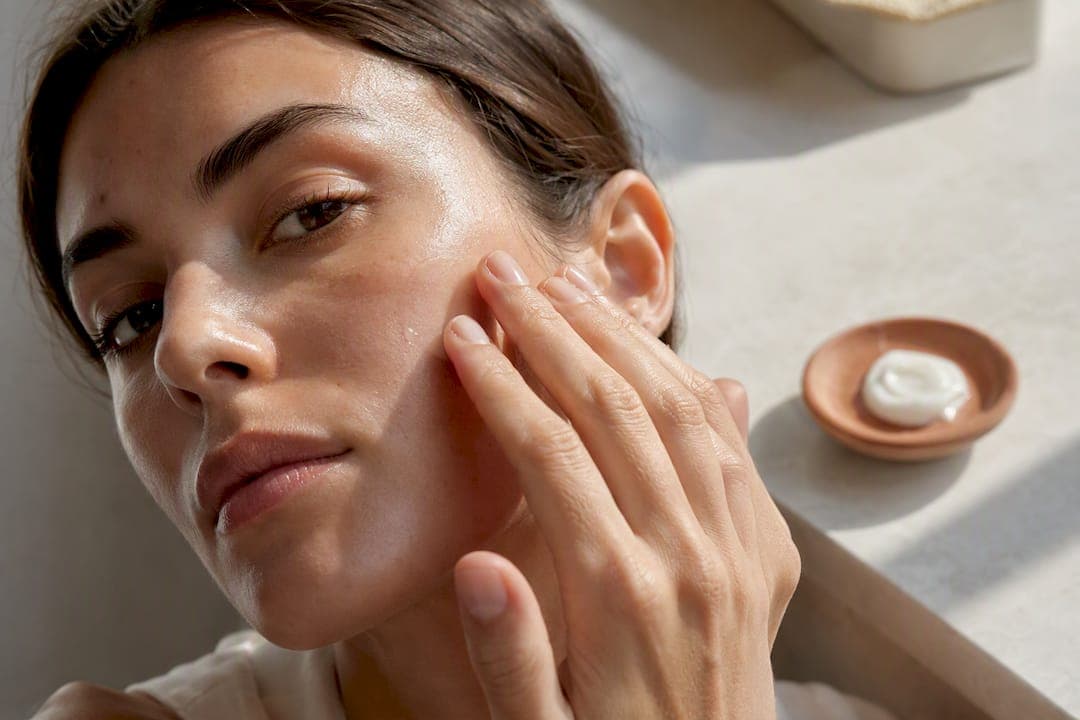
Serums deliver concentrated active ingredients deep into the skin; moisturizers seal in hydration and repair the surface barrier. Most people need both, applied in that order, though oily skin and sensitive skin sometimes call for a lighter combination. The right pairing depends on skin type, the actives involved, and how well you layer them, which is exactly what the rest of this guide breaks down.
TL;DR:
- Most skin types should layer a lightweight serum with active ingredients like hyaluronic acid or retinoids before applying a moisturizer to ensure proper absorption and barrier support.
- Serums are formulated with small molecules to penetrate the skin deeply, while moisturizers contain larger molecules designed to stay on the surface and retain water.
- Applying a thick, occlusive moisturizer before serum can block absorption, making layering order essential for effectiveness.
- Skipping moisturizer may work for oily skin in humid conditions, but in dry environments or with certain actives, it can lead to water loss and barrier damage.
- Combining incompatible ingredients, such as retinoids with strong acids or high-friction layering, can trigger irritation and should be managed with alternate nights or simplified routines.
Table of Contents
- What Is a Serum and When Should You Use One?
- What Is a Moisturizer and How Does It Support Your Skin Barrier?
- Serum vs. Moisturizer: The Key Differences at a Glance
- Do You Need Both a Serum and a Moisturizer?
- How to Layer Serum and Moisturizer, Step by Step
- How to Choose Serums and Moisturizers That Actually Work Together
- Common Mistakes and Safety Notes Worth Knowing
- How Often Should You Moisturize?
- Can Certain Serums and Moisturizers Cause Problems Together?
- How Yuka+Face Designs Serums and Moisturizers to Work Together
- Ready to Build Your Serum and Moisturizer Routine?
- Sources
- FAQ
What Is a Serum and When Should You Use One?
A serum is a lightweight, fast-absorbing formula built to carry a high concentration of active ingredients straight to the skin. Most serums use a water base or a thin oil carrier, both chosen because they allow small molecules to move quickly through the skin's surface rather than sitting on top of it. That's the entire point of a serum: less filler, more active ingredient per drop.
Serums earn their reputation because they're formulated to solve one problem well instead of doing five things adequately. Byrdie's breakdown of serums and moisturizers notes that serums are applied right after cleansing, while the skin can absorb ingredients most efficiently, and before anything heavier gets layered on top.
The active ingredient determines what a serum can actually do for your skin:
- Hyaluronic acid pulls water into the skin's upper layers, making it the go-to for hydration without heaviness.
- Vitamin C brightens tone and helps fade uneven pigmentation over time.
- Retinoids speed up cell turnover, which improves texture and softens fine lines.
- AHAs and BHAs exfoliate dead surface cells, smoothing rough patches and unclogging pores.
- Niacinamide supports the skin barrier while helping regulate oil production and the appearance of pores.
Can a serum work alone? Sometimes. If you have naturally oily skin, a lightweight hydrating serum might supply enough moisture without feeling greasy. The same goes for humid climates or warmer months when heavier creams feel unnecessary. But most serums lack occlusive ingredients, the ones that physically trap water in the skin. Without that layer on top, whatever hydration the serum delivers can evaporate within an hour or two, especially in dry air or after washing your hands or face. That's the limitation worth remembering before you decide to skip moisturizer altogether.
If you're still narrowing down which active ingredient to prioritize, a skin-matched guide to serum types can help match the formula to your specific concern rather than guessing.
What Is a Moisturizer and How Does It Support Your Skin Barrier?
A moisturizer's job is to hold water in the skin and reinforce the barrier that keeps irritants out. It does this through three types of ingredients working together, and understanding them changes how you shop for one.
Humectants like glycerin and hyaluronic acid draw water into the skin's outer layer. Emollients such as fatty acids and squalane fill in the gaps between skin cells, smoothing texture. Occlusives, including petrolatum and dimethicone, form a physical seal on top of everything to slow water loss. DermNet's overview of emollients and moisturizers explains that most modern formulas blend all three, though the ratio shifts depending on the product.
Format matters as much as ingredients:
- Lotions are thin and water-heavy, best for oily or combination skin in warm weather.
- Creams balance water and oil, working for most skin types most of the year.
- Ointments are the thickest and most occlusive, often reserved for very dry patches, cracked skin, or overnight barrier repair.
The clinical case for moisturizing regularly is stronger than most people assume. A review published on NCBI Bookshelf found that consistent moisturizer use, once or twice daily, improves barrier function and can reduce flare frequency in conditions like atopic dermatitis. The same research found that therapeutic effects peak within the first six hours after application, which is a good argument for reapplying rather than applying once and assuming you're covered for the day.
Moisturizers also work through a mechanism called reducing transepidermal water loss, or TEWL. That's the technical term for water evaporating out through the skin's surface faster than it should. A Journal of Cosmetic Dermatology review describes how humectants and emollients work alongside occlusives to slow that process, which is why a good moisturizer feels different an hour after application than a bare face does.
Serum vs. Moisturizer: The Key Differences at a Glance
The core distinction comes down to penetration versus protection. Serums are formulated with smaller molecules and thinner textures specifically so they can travel into the skin. Moisturizers are built with larger, heavier molecules designed to stay on the surface and do their work there.
That difference in molecule size and texture is exactly why layering order isn't optional. Apply a thick, occlusive moisturizer first, and you've built a barrier that blocks the serum's active ingredients from getting anywhere. Harvard Health's guide to what serums can and can't do points out that layering from thinnest to thickest isn't a cosmetic preference. It's the only order that lets each product do its job.
Here's how the two compare directly:
| Factor | Serum | Moisturizer |
|---|---|---|
| Texture | Thin, fast-absorbing | Thicker, sits on surface |
| Molecule size | Small, engineered to penetrate | Larger, designed to stay put |
| Active concentration | High, targeted | Lower, broad-support ingredients |
| Primary role | Treat specific concerns | Hydrate and protect barrier |
| Occlusive properties | Rare or absent | Common |
Can a serum replace a moisturizer entirely? Occasionally, but only under specific conditions. A hydrating serum with a slightly thicker gel texture might cover a naturally oily complexion during summer. For most people, though, skipping the moisturizer means losing the sealing step that keeps whatever the serum delivered from evaporating. The reverse question, whether moisturizer alone covers your bases without a serum, comes down to whether you have a specific concern (dullness, fine lines, uneven tone) that a targeted active would address faster than a moisturizer alone ever could.
Do You Need Both a Serum and a Moisturizer?
For most skin types, yes. The exceptions are narrow enough that they're worth spelling out by category rather than treating as a blanket rule.
-
Dry skin. Pair a hyaluronic acid serum with a cream or ointment-based moisturizer containing ceramides. Apply both morning and night, and consider a slightly thicker moisturizer during winter months when indoor heating strips additional moisture from the air.
-
Oily and acne-prone skin. Reach for a lightweight, gel-based serum, often niacinamide or a low-strength BHA, paired with an oil-free, noncomedogenic moisturizer or lotion. Skipping moisturizer entirely tends to backfire here: stripped skin often overproduces oil to compensate, which can make breakouts worse rather than better.
-
Combination skin. Consider applying a lighter serum overall and adjusting moisturizer thickness by zone, a slightly richer formula on drier cheeks, something thinner across an oilier T-zone. Introduce any new active ingredient gradually rather than all at once.
-
Sensitive skin. Favor a fragrance-free, minimal-ingredient serum and a ceramide-rich moisturizer. New actives should be tested one at a time, spaced out by at least a week, so you can identify the source if irritation shows up.
-
Anti-aging and pigmentation concerns. Retinoid serums go on at night, followed by moisturizer to buffer potential irritation. Vitamin C serums work best in the morning, layered under moisturizer and always followed by sunscreen, since research on serum timing notes that some antioxidants degrade with direct sun exposure.
One consistent finding across skin types: a hydrating serum paired with a ceramide-rich moisturizer tends to produce the most noticeable day-to-day difference in how skin feels and looks, according to the same NCBI review on moisturizer efficacy. That combination alone covers a huge share of what most people are actually trying to fix.
How to Layer Serum and Moisturizer, Step by Step
The rule of thumb is simple: thinnest product first, thickest product last. Here's how that plays out morning and night.
Morning routine:
- Cleanse
- Apply antioxidant serum (vitamin C or similar)
- Wait 30 to 60 seconds for absorption
- Apply moisturizer
- Finish with sunscreen
Evening routine:
- Cleanse
- Apply treatment serum (retinoid, AHA/BHA, or hydrating formula)
- Wait 30 to 60 seconds
- Apply moisturizer to buffer any irritation from active ingredients
The wait time matters more than people assume. Applying moisturizer too fast can dilute the serum before it's absorbed, and it's also the main cause of pilling, that frustrating moment when product balls up and rubs off rather than sinking in. Harvard Health's research on serum absorption backs the thin-to-thick order as the fix for both problems at once.
Application technique matters too. Press serums into the skin with your palms rather than rubbing them in circles, which helps thin formulas absorb evenly instead of sitting in patches. If your serum contains a humectant like hyaluronic acid, apply it to slightly damp skin. Humectants pull water from their surroundings, and damp skin gives them water to work with instead of pulling it from deeper layers, which can backfire in dry climates.
Pro Tip: If your serum keeps pilling under moisturizer, you're probably applying too much product or moving to the next step too fast. Use a dime-sized amount and give it a full 60 seconds before layering anything on top.
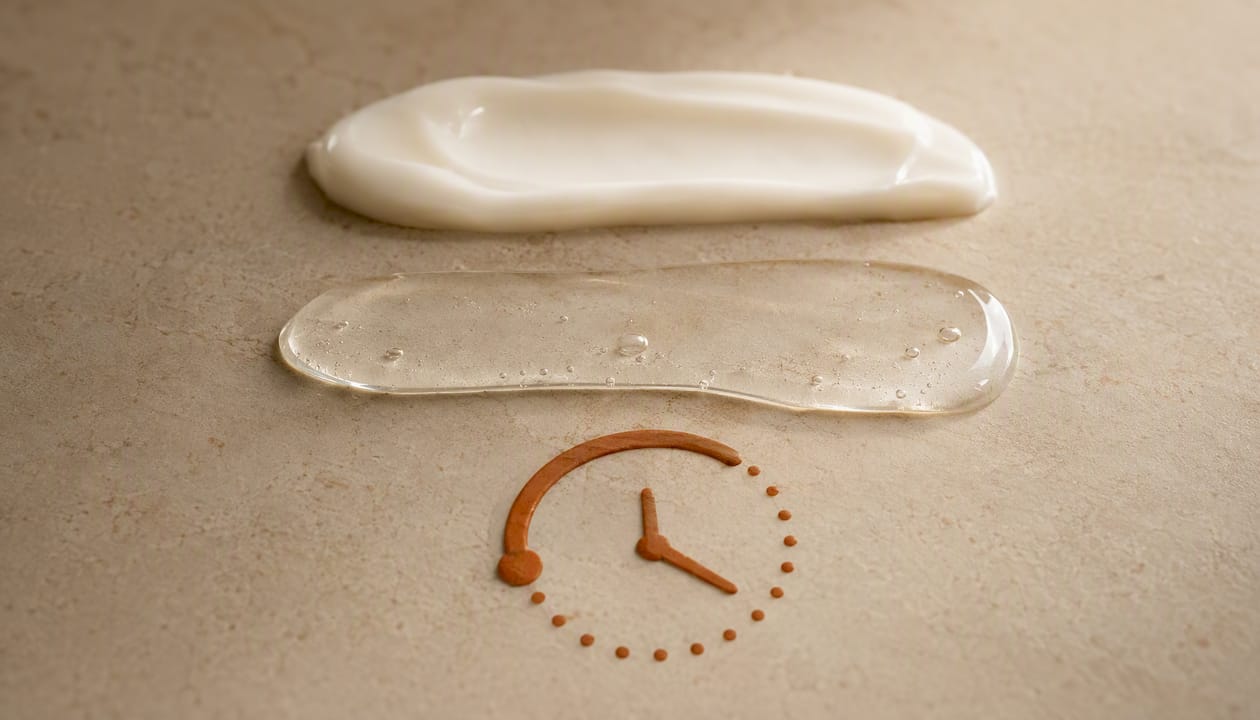
For a more detailed AM and PM breakdown, including how to slot in exfoliants or masks around this core order, the evening skincare ritual guide covers sequencing in more depth.
How to Choose Serums and Moisturizers That Actually Work Together
Start with your goal, not the ingredient list on the front of the bottle. Match the active to the concern first.
Serum checklist by goal:
- Hydration: hyaluronic acid, glycerin, panthenol
- Antioxidant protection: vitamin C, vitamin E, ferulic acid
- Exfoliation: glycolic acid, salicylic acid, lactic acid
- Anti-aging: retinol, peptides, bakuchiol as a gentler alternative
Moisturizer checklist by function:
- Barrier repair: ceramides, cholesterol, fatty acids
- Hydration: glycerin, hyaluronic acid
- Sealing power: petrolatum, dimethicone, shea butter
Watch for incompatible pairings applied at the same time. Retinoids and strong acids used together, for instance, tend to strip and irritate rather than compound benefits. Fragrance and heavy preservative loads are worth scrutinizing too, particularly for sensitive or reactive skin, since they're the most common triggers for reactions that get blamed on "sensitive skin" when the real cause is a single problematic ingredient.
Where should your budget actually go? Spend more on stable, well-formulated actives, retinoids in particular degrade quickly in poor packaging, and stable vitamin C formulations that haven't oxidized before you even open the bottle. Basic occlusives like petrolatum, on the other hand, work about as well regardless of price point. A review of moisturizer ingredients makes the same point: simple, well-tolerated ingredients used consistently often outperform complex formulas used sporadically.
Common Mistakes and Safety Notes Worth Knowing
Patch test any new active ingredient before applying it to your whole face. Dab a small amount on your inner forearm, wait 24 hours, and check for redness or itching before moving forward.
Introduce potent actives, retinoids especially, slowly. Two or three nights a week for the first month is a reasonable starting pace before working up to nightly use. Retinoids belong in the evening routine only, since sunlight degrades them and increases sun sensitivity; daytime sunscreen is non-negotiable while using one. Pregnant or breastfeeding readers should check with a doctor before using retinoid products, since dermatology guidance flags them as a caution category during that window.
There's a real difference between mild tingling, which often fades within a few weeks as skin adjusts, and stinging or burning, which signals irritation and means it's time to stop. Persistent redness, breakouts that get worse rather than better, or any sign of an allergic reaction (swelling, hives, intense itching) are reasons to pause the product and check with a dermatologist rather than pushing through.
How Often Should You Moisturize?
Twice daily, morning and night, is the standard most dermatology sources recommend, and it lines up with how moisturizers actually work. The NCBI review on moisturizer efficacy found that therapeutic benefits peak within the first six hours after application, which means a single morning application has largely worn off its strongest effect by evening.
Some situations call for more frequent use. Very dry or cracked skin, cold and windy weather, or recovery from a mild sunburn can all justify a third application or spot-treating dry patches as they show up. Oily skin doesn't need less frequent moisturizing, just a lighter formula. Skipping moisturizer to control shine tends to backfire the same way it does for acne-prone skin, since dehydrated skin often signals oil glands to produce more, not less.
Consistency matters more than perfection. Missing a night occasionally won't undo weeks of regular use, but going days at a time without moisturizing, especially after cleansing, gives water loss a wider window to work against your skin barrier.
Can Certain Serums and Moisturizers Cause Problems Together?
Some combinations genuinely fight each other rather than working as a team. Retinoids and AHAs or BHAs, used in the same routine at the same time, tend to over-exfoliate the skin and trigger redness, flaking, or a compromised barrier. If you want both in your rotation, alternate nights rather than combining them.
Vitamin C serums can also clash with certain forms of niacinamide at high concentrations, occasionally causing temporary flushing, though reactions vary widely by individual and formula stability. If you notice this, try applying them at different times of day rather than layering them back to back.
Heavy occlusive moisturizers layered under, rather than over, an active serum will block absorption entirely, which defeats the purpose of using a targeted serum in the first place. That's a layering-order mistake rather than an ingredient conflict, but it produces the same disappointing result: a serum that never gets the chance to work.
Fragrance and certain preservatives in either product can compound irritation when combined with an active ingredient that's already stressing the skin barrier, like a retinoid or strong exfoliant. If a routine is causing irritation and you can't pinpoint which product is responsible, simplify first. Drop back to a gentle cleanser, one hydrating serum, and a basic moisturizer for a week, then reintroduce actives one at a time.
How Yuka+Face Designs Serums and Moisturizers to Work Together
Our formulas are built around natural, vegan, and cruelty-free standards, aiming to combine botanical ingredients with scientific formulation for effective skincare. Botanical ingredients and scientific formulation aren't treated as opposing approaches here. They're combined so that actives and barrier-supporting ingredients function the way skin actually needs them to.
That philosophy shapes how the serum and moisturizer lines are meant to pair. Hydrating and targeted serums are designed to absorb well and prepare the skin for moisturizers, which contain humectants, emollients, and occlusive ingredients that help seal in hydration.
If you're building a routine from scratch, the guide to building a skincare routine walks through starter pairings by concern, a useful next stop once you know which serum and moisturizer combination fits your skin.
— Kelly
Ready to Build Your Serum and Moisturizer Routine?
In some skincare lines, serums and moisturizers are formulated to layer cleanly, using natural and vegan ingredients designed to work together rather than compete for absorption.

If hydration is your main concern, start with a hyaluronic acid serum and pair it with a ceramide-rich cream, the combination this guide flagged as the most broadly effective pairing across skin types. If you're new to the brand's approach entirely, the guide to vegan skincare explains how Yuka+Face formulates without animal-derived ingredients while still hitting the performance markers dermatologists look for in humectants, emollients, and occlusives. For a ready-made starting point rather than building product by product, the morning skin care routine guide lays out a full AM pairing, serum, moisturizer, and SPF, in the order this article recommends.
Pick one serum, pair it with one moisturizer suited to your skin type, and give the combination two to three weeks before judging results. That's roughly how long skin needs to show a real, visible response to a new routine.
Sources
- Moisturizers (NCBI Bookshelf)
- Emollients and Moisturisers — DermNet NZ
- Skin serum: what it can — and can’t — do — Harvard Health Blog
FAQ
Which Is Better, Serum or Moisturizer?
Neither is "better" since they do different jobs: serums deliver concentrated active ingredients, and moisturizers seal in hydration and repair the barrier. Most routines benefit from both rather than choosing one over the other.
Is a Serum Really Necessary?
Not strictly, but it's the fastest way to target a specific concern like dullness, fine lines, or uneven tone, since serums carry a higher concentration of active ingredients than most moisturizers do, so skipping it just means slower progress on whatever concern you're trying to address.
Can Serum Replace Moisturizer Entirely?
Occasionally, for naturally oily skin using a slightly thicker gel serum, but most serums lack the occlusive ingredients that trap water in the skin, so hydration tends to fade faster without a moisturizer on top.
What Order Should You Apply Serum and Moisturizer?
Apply serum first on cleansed skin, wait 30 to 60 seconds for absorption, then follow with moisturizer. Layering thickest to thinnest blocks the serum from penetrating at all.
Do You Need Different Serums for Morning and Night?
Not always, but antioxidant serums like vitamin C work best in the morning under sunscreen, while treatment actives like retinoids should be reserved for nighttime use to avoid sun sensitivity.