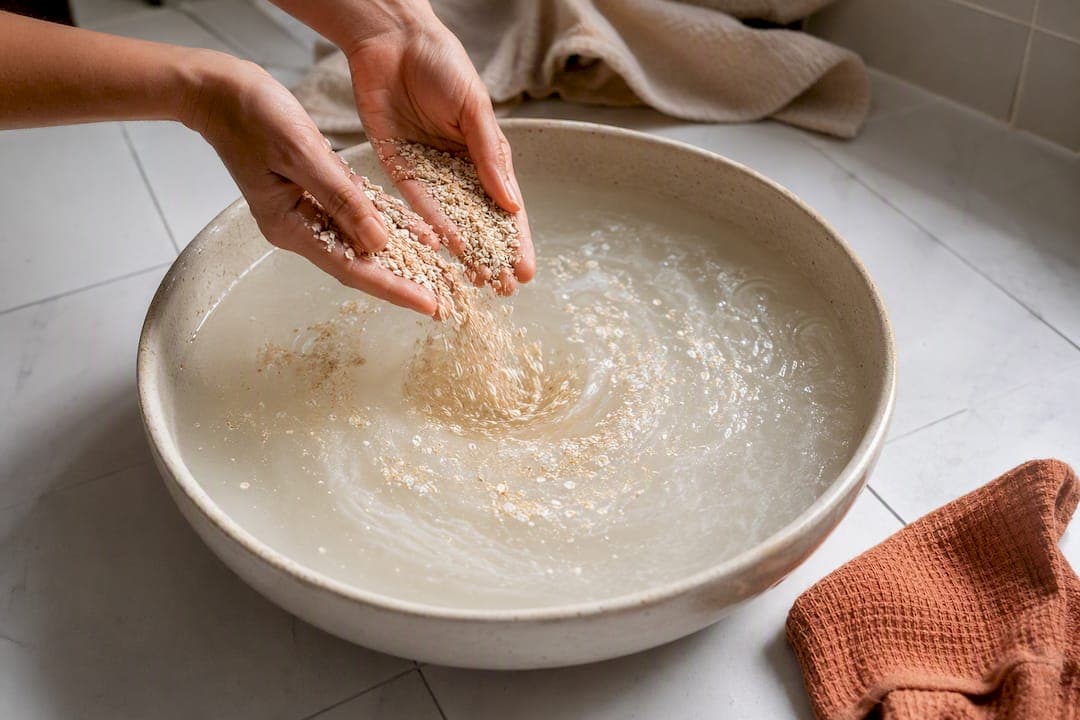
The most reliable natural measures for eczema are the boring ones: petroleum jelly and other occlusive moisturizers, colloidal oatmeal, virgin coconut oil, and sunflower seed oil, all backed by real clinical data. Diluted bleach baths help as an add-on for people prone to skin infections or with moderate to severe disease. Skip olive oil and most essential oils, since both can irritate already-compromised skin. The how-to details, including timing and dilutions, are below.
TL;DR:
- Virgin coconut oil has been shown in studies to reduce eczema severity scores by over 68% in eight weeks, outperforming mineral oil.
- Petroleum jelly and other occlusives remain the most effective natural options for sealing in moisture and reducing water loss in eczema-prone skin.
- Diluted bleach baths can lead to at least 50% improvement in severity for about one in ten patients with moderate to severe eczema, mainly preventing infections.
- Essential oils and olive oil should be avoided as they can irritate or impair the skin barrier, while patch testing new botanical products can prevent allergic reactions.
- Proper application techniques, such as bathing in lukewarm water and applying moisturizer within three minutes, are crucial for maximizing the benefits of natural remedies.
Table of Contents
- Natural Skincare for Eczema: The Evidence Behind Each Remedy
- How to Apply These Remedies Without Making Things Worse
- What Natural Doesn't Mean: Ingredients to Avoid
- Clothing, Laundry, and Daily Habits That Support Healing
- When to Stop Home Care and See a Provider
- The Evidence Behind This Guide
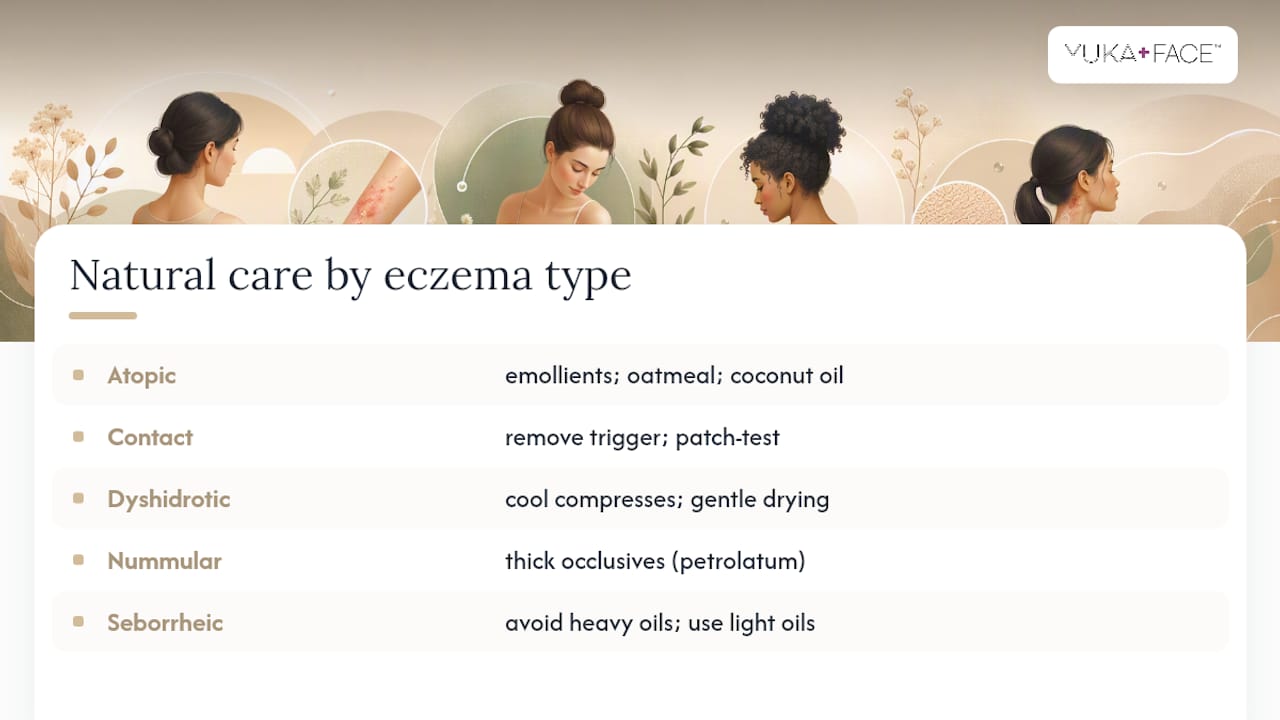
- Do Different Types of Eczema Need Different Natural Care?
- What Triggers Flares, and How to Dodge Them Naturally
- Does Diet Actually Affect Eczema?
- Gut Health and Probiotics: Where the Evidence Actually Stands
- Natural Skincare Versus Conventional Treatment: Where Each One Wins
- Author Perspective: Building a Routine You'll Actually Keep
- Finding a Vetted Natural Routine
- Sources
- FAQ
Natural Skincare for Eczema: The Evidence Behind Each Remedy
Eczema-prone skin has a damaged barrier, which is why the remedies with real research behind them tend to be the simple, unglamorous ones rather than trendy botanical blends.
Colloidal oatmeal has anti-inflammatory and skin-protecting properties, and it's one of the few natural ingredients the American Academy of Dermatology actively recommends for itch relief, either as a bath soak or in leave-on formulas. It works by forming a protective film that reduces water loss and calms irritated nerve endings, which is why it shows up in so many pediatric eczema products.
Petroleum jelly and other occlusives remain the closest thing to a gold standard among natural skincare for eczema options. Plain petrolatum seals in moisture, reduces water loss through damaged skin, and can be steroid-sparing, meaning consistent use sometimes reduces how much prescription steroid a person needs. The review of alternative and complementary eczema remedies describes emollients as central to atopic dermatitis care, not a supplementary afterthought.
Virgin coconut oil has the strongest single trial behind it. In a randomized, double-blind study of 117 children with atopic dermatitis, virgin coconut oil reduced mean SCORAD severity scores by 68.23% over eight weeks, compared with 38.13% for mineral oil. Researchers point to its lauric acid content, which has antimicrobial properties that may help on skin already prone to bacterial colonization. The American Academy of Pediatrics notes that while dietary supplements show no convincing benefit for atopic dermatitis, topical virgin coconut oil has shown potential to support the skin barrier.
Sunflower seed oil works through a different mechanism. It's high in linoleic acid, which helps preserve the structure of the stratum corneum, the outermost skin layer that's often compromised in eczema. This is the same review that flags olive oil, high in oleic acid, as potentially detrimental to that same barrier.
Diluted bleach baths are an adjunct, not a stand-alone fix. A 2022 systematic review and meta-analysis found that roughly 1 in 10 patients with moderate-to-severe atopic dermatitis achieved a 50% improvement in severity scores when bleach baths were added to their routine. That's a modest number, useful mainly for people with frequent skin infections rather than mild, occasional flares.
A few other options round out the list:
- Vinegar baths may help some people by lowering skin pH, though evidence is thinner than for bleach baths.
- Cool compresses offer fast, low-risk itch relief during an active flare.
- Fragrance-free organic creams for eczema built around emollient bases follow the same logic as petroleum jelly, just in a more cosmetically pleasant form.
How to Apply These Remedies Without Making Things Worse
Timing and technique matter almost as much as the product itself.
- Bathe in lukewarm water for 5 to 10 minutes. Hot water strips natural oils and can trigger itching.
- Pat skin partially dry, leaving it damp. Don't rub with a towel.
- Apply moisturizer within three minutes of stepping out of the bath. This is the often-cited 3-minute rule, and dermatology sources including the AAD recommend it because damp skin absorbs occlusive ingredients more effectively, locking in water before it evaporates.
- For colloidal oatmeal baths, add about one cup of finely ground colloidal oatmeal to a lukewarm bath and soak for 10 to 15 minutes, then follow immediately with a moisturizer.
- For diluted bleach baths, most clinical guidance uses about half a cup of regular strength (6%) bleach per full standard bathtub, soaking for 5 to 10 minutes, once or twice a week, never daily.
- Layer products ointment first, applying any prescribed topical medication before a heavier occlusive, then oils last if used at all.
- Patch test any new botanical on the inner forearm before applying it to affected areas.
Pro Tip: Keep a travel-size moisturizer in your bag or car. The 3-minute window closes fast, and waiting until you get home often means missing it entirely.
For children, use lower bleach concentrations and always check with a pediatrician before starting bleach or vinegar baths.
What Natural Doesn't Mean: Ingredients to Avoid
"Natural" is not a safety guarantee, and eczema-prone skin punishes that assumption faster than most.
Olive oil is the clearest example. Despite its reputation as a gentle kitchen-cabinet remedy, research on oleic acid-rich oils shows it can impair the skin barrier rather than repair it. Skip it on eczema-prone areas even though it's fine in salad dressing.
Essential oils and many botanical extracts carry a real risk of allergic contact dermatitis, a separate reaction layered on top of existing eczema. Roughly the same caution applies to untested herbal mixtures marketed as natural remedies.
Before trying any new botanical:
- Apply a small amount behind the ear or on the inner forearm.
- Cover it and wait 48 to 72 hours.
- Watch for redness, blistering, or a delayed reaction before using it anywhere else.
- Stop immediately and call a clinician if the skin worsens, blisters, or shows signs of infection like oozing or fever.
One consistent finding across clinical literature on botanical safety: well-studied, boring emollients outperform trendy plant extracts almost every time.
Clothing, Laundry, and Daily Habits That Support Healing
Fabric choice affects flares as much as anything you put in a bottle.
- Choose cotton or silk over wool, which tends to trap heat and cause mechanical irritation against inflamed skin.
- Consider specialty moisture-wicking or seamless fabrics for widespread or severe eczema, an approach covered in more detail in this guide to natural relief for skin irritation.
- Switch to fragrance-free, low-preservative detergents and skip fabric softeners, which leave a residue that lingers against skin.
- Keep bedrooms cool and slightly humid; both heat and dry air worsen itch.
- Trim nails short and consider light cotton gloves at night to limit scratching damage.
When to Stop Home Care and See a Provider
Home remedies have limits. Signs it's time to see a clinician include spreading redness, yellow crusting, pus, fever, or a rash that keeps worsening despite consistent moisturizing and bleach baths. A dermatologist can offer prescription topicals, systemic therapy for severe cases, or patch testing to identify specific allergens. Before the visit, jot down a rough timeline of the flare, snap a few photos, and list every product already tried, including natural ones.
The Evidence Behind This Guide
The clinical case for natural eczema care rests on a small number of solid studies rather than a mountain of hype. The virgin coconut oil trial mentioned earlier remains one of the few head-to-head comparisons showing a natural oil outperforming a standard control. The bleach bath meta-analysis offers a similarly grounded, if modest, picture of adjunctive benefit. Newer research into phytochemical delivery systems, including nanocarrier and emulgel formulations, suggests botanical actives may become more effective and better tolerated as formulation technology improves.
The gap between a promising ingredient and a genuinely effective product usually comes down to formulation, not the ingredient itself. Emollient-rich, fragrance-free bases matter as much as what's inside them.
Yuka+Face's journal covers barrier-support ingredients and formulation choices for readers who want to translate this research into an actual routine.
Do Different Types of Eczema Need Different Natural Care?
Eczema isn't one condition, and the natural approach shifts depending on which type you're dealing with.
Atopic dermatitis, the most common form, usually responds well to the core toolkit: emollients, colloidal oatmeal, and virgin coconut oil, since it's driven largely by barrier dysfunction and immune overactivity.
Contact dermatitis, triggered by a specific irritant or allergen, needs identification and removal of the trigger first. Natural remedies help soothe the skin afterward, but they won't work if the irritant is still in daily contact, which is why patch testing matters so much here.
Dyshidrotic eczema, which causes small, itchy blisters on hands and feet, tends to respond less predictably to oils, since the affected skin is thicker and the blisters themselves need cool compresses and gentle drying more than heavy occlusives.
Nummular eczema, which shows up as coin-shaped patches, often has a drier, more cracked texture, making thick occlusives like petroleum jelly especially useful, sometimes more so than lighter oils.
Seborrheic dermatitis, common on the scalp and face, involves yeast overgrowth alongside inflammation, so heavy oils can sometimes make it worse rather than better. Lighter, non-comedogenic options tend to work more reliably here.
Knowing which type you're managing changes which natural ingredient actually helps, which is part of why a single "eczema cream" rarely works for everyone.
What Triggers Flares, and How to Dodge Them Naturally
Flares rarely come out of nowhere. They usually trace back to one of a handful of repeat offenders.
Heat and sweat top the list for many people, since sweat contains salts and irritants that sting compromised skin. Cooling off quickly after exercise and rinsing sweat away helps more than any product.
Dry winter air pulls moisture out of skin faster than the barrier can replace it, which is why flares often spike in colder months. Running a humidifier and applying moisturizer more frequently during those months makes a measurable difference.
Harsh soaps and hot water strip natural oils, which is why lukewarm, short baths and pH-balanced, fragrance-free cleansers matter as much as any topical treatment.
Stress triggers flares through hormonal pathways that increase inflammation, a connection well documented in dermatology practice even though the exact mechanism is still being studied.
Certain fabrics and detergent residues cause mechanical and chemical irritation, covered in more detail above.
Allergens like dust mites, pet dander, and pollen can worsen atopic dermatitis in people with a broader allergic tendency, which is common among eczema patients.
Tracking flares in a simple notebook or phone app, noting weather, stress levels, new products, and food, often reveals a pattern faster than guessing.
Does Diet Actually Affect Eczema?
Diet's role in eczema is real but narrower than social media suggests. For most adults, there's no broad dietary supplement proven to improve atopic dermatitis, a point the American Academy of Pediatrics makes explicitly when reviewing alternative treatments.
Food allergies are a different story, mainly in young children. A subset of kids with moderate to severe eczema also has diagnosed food allergies, most commonly to eggs, milk, or peanuts, and eliminating a confirmed allergen can improve their skin. This isn't the same as randomly cutting gluten or dairy without testing, which rarely helps and can create unnecessary nutritional gaps.
What does help across most cases is simply eating well: adequate hydration, enough dietary fat to support skin lipid production, and a varied diet with vitamin D and omega-3 sources. None of this replaces topical care, but it supports the skin's baseline ability to heal.
Talk to a pediatrician or allergist before removing entire food groups from a child's diet, since unsupervised elimination diets can cause more harm than the eczema itself.
Gut Health and Probiotics: Where the Evidence Actually Stands
The gut-skin connection gets a lot of attention, and there's a real biological link. Roughly 70 to 80% of the body's immune tissue sits along the gut lining, which is part of why gut bacteria composition can influence systemic inflammation, including the kind that shows up as eczema.
Probiotic research specifically for eczema treatment, though, remains mixed. Some strains have shown modest benefit in specific populations, particularly for prevention in infants with a family history of allergic disease, but results vary widely by strain, dose, and the person taking them. This is not the same as a proven treatment for an existing flare in an adult.
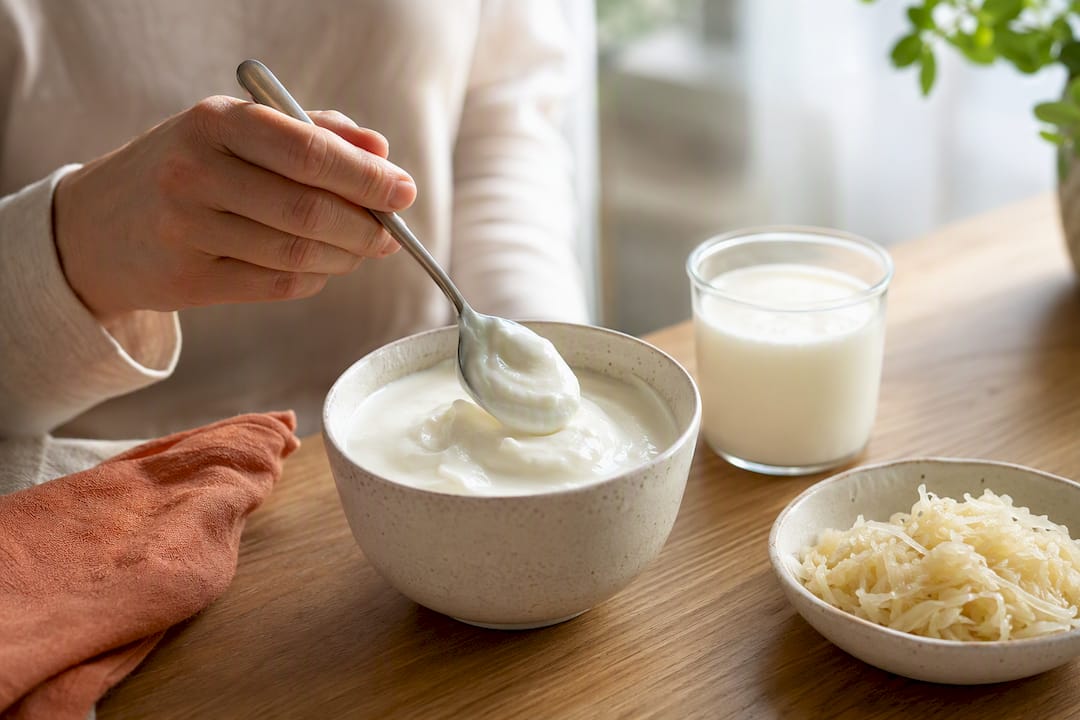
Fermented foods like yogurt, kefir, and sauerkraut are a reasonable way to support gut bacteria diversity without relying on a specific supplement claim. If considering a probiotic supplement, look for products with clinically studied strains rather than generic blends, and treat it as a possible supporting measure, not a replacement for topical care.
Natural Skincare Versus Conventional Treatment: Where Each One Wins
Natural remedies and conventional treatments aren't really competitors. They solve different parts of the same problem.
Conventional prescription options, topical corticosteroids and calcineurin inhibitors mainly, work faster and more reliably on active, inflamed flares. When skin is cracked, oozing, or intensely itchy, these remain the most dependable first response, and no natural alternative matches their speed in that specific moment.
Natural approaches shine in the maintenance phase between flares, where daily habits determine how often flares happen at all. Consistent emollient use, the alternative remedies review notes, is the single most effective habit for long-term outcomes, partly because it's a habit people are actually willing to keep up daily, unlike more intensive treatments.
The most effective real-world approach for most people blends both: prescription treatment during acute flares, natural, barrier-supportive care as the daily baseline. Choosing one camp exclusively usually means either under-treating an active flare or over-medicating skin that's mostly stable.
Author Perspective: Building a Routine You'll Actually Keep
A realistic eczema routine has two modes. On calm days: gentle cleanser, moisturizer within three minutes of bathing, cotton clothing. During a flare: cool compresses, a colloidal oatmeal bath, and heavier occlusive layering, alongside any prescribed treatment. Natural remedies work best as the daily habit, not the emergency plan.
— Kelly
Finding a Vetted Natural Routine
Sorting evidence-backed ingredients from marketing hype takes real effort, especially with eczema-prone skin that punishes trial and error. Some skincare brands build fragrance-free, barrier-supportive formulas around the principle of using simple, well-studied natural ingredients rather than trendy blends.
The brand's guide to hydration and restoration walks through barrier-focused ingredient choices that pair naturally with the emollient-first approach outlined above. For daily structure, the morning skin care routine guide shows how to layer products without overloading sensitive skin, and the guide to vegan skincare breaks down ingredient standards for readers who want cruelty-free formulations specifically. Severe or infected eczema still needs a clinician's oversight; natural skincare works best as the daily foundation underneath that care, not a replacement for it. Browse the hydration guide to find a fragrance-free option worth adding to your routine this week.
This article is general information, not a substitute for advice from a qualified doctor. Consult a qualified healthcare professional about your own circumstances before acting on anything here.
Sources
- Alternative treatments | American Academy of Pediatrics
- Randomized trial: virgin coconut oil vs mineral oil in pediatric atopic dermatitis
- Systematic review and meta-analysis on bleach baths (2022)
- Alternative, complementary, and forgotten remedies for atopic dermatitis (2015)
FAQ
What's the best natural thing to put on eczema?
Plain petroleum jelly and virgin coconut oil have the strongest evidence, with virgin coconut oil showing a 68.23% reduction in severity scores in one clinical trial, compared with 38.13% for mineral oil.
What are the best natural skincare products for eczema?
Look for fragrance-free formulas built around colloidal oatmeal, virgin coconut oil, sunflower seed oil, or simple occlusive bases, and avoid products containing olive oil or strong essential oils.
What is the 3-minute rule for eczema?
It means applying moisturizer within three minutes of patting the skin dry after bathing, while it's still slightly damp, since this locks in water more effectively than moisturizing on fully dry skin.
What do Japanese people use for eczema?
Practices vary by individual, but many Japanese skincare traditions emphasize gentle, non-stripping cleansing and layered hydration, principles that align with the emollient-first approach dermatologists recommend globally rather than any single branded product.
Are natural remedies enough to treat eczema on their own?
For mild, stable eczema, consistent emollient use and lifestyle changes often manage symptoms well, but moderate to severe flares typically need prescription treatment alongside natural care, not instead of it.