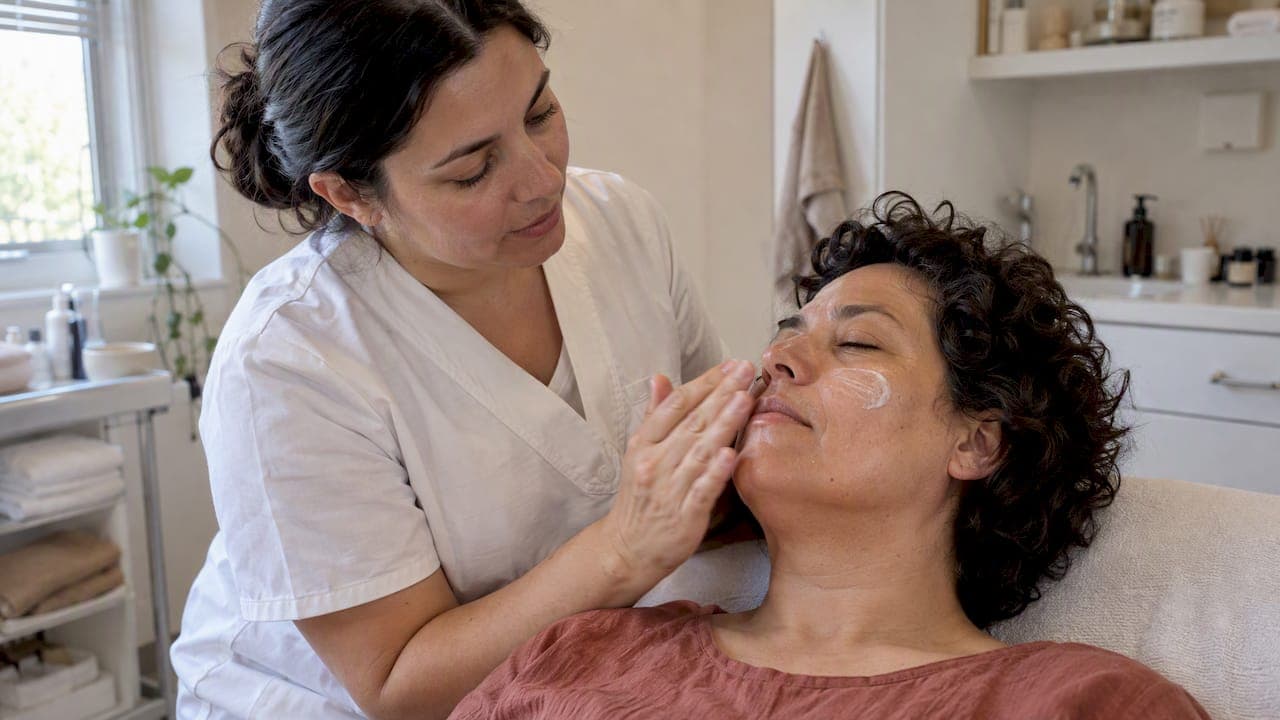
Plant ceramides, also called phytoceramides, are skin lipids taken from plants such as rice, wheat, peach and konjac, or lipids from plants that are close in structure to the ceramides your skin makes. Skin ceramides help hold the outer layer together and keep water in. Plant versions can support that job, on the skin in a cream or, in some studies, by mouth. They do not erase wrinkles, and a single plant ceramide in a formula is rarely enough on its own. This guide covers where they come from, what the research shows, and how to read a label.
TL;DR
- Plant ceramides are ceramide-type lipids from sources like rice, wheat, peach and konjac. They are used in creams and in oral supplements.
- Their main job is barrier support: less water loss, less dryness, less irritation. They are not a wrinkle treatment.
- Ceramides work best with cholesterol and fatty acids, the other lipids in the skin barrier. Check the full ingredient list, not just the word ceramide.
- Oral phytoceramide trials are small and some are industry-funded. Topical use has the stronger evidence base.
- Vegan, cruelty-free skincare can include plant-derived barrier lipids. Read the label for the exact ingredient names.
Table of Contents
- What ceramides do in skin
- What counts as a plant ceramide
- What the research shows
- Why the rest of the formula matters
- Ceramides compared with niacinamide and retinol
- Perspective: why we look at the whole barrier
- How to use plant ceramides in a routine
- Plant ceramides and vegan, cruelty-free skincare
- Where Yuka+Face fits
- FAQ
- Sources
What ceramides do in skin
Ceramides are waxy lipids found in the stratum corneum, the outermost layer of skin. Think of that layer as bricks (dead skin cells) and mortar (lipids). Ceramides, cholesterol and free fatty acids make up the mortar. A 2025 review in Experimental Dermatology describes ceramides as central to forming the moisture barrier, keeping hydration in and regulating the skin surface.
Ceramide levels fall with age. The NCATS record for ceramide NP, one of the most common cosmetic ceramides, notes that this lipid is a major component of the stratum corneum and that its levels decrease with advancing age.
When the lipid layer is low or disrupted, skin loses water faster. That water loss is measured as transepidermal water loss, or TEWL. Dry, tight, flaky or easily stinging skin often points to a weakened barrier. Our guide to skin barrier damage versus dehydration explains how to tell the two apart.
What counts as a plant ceramide
The term is used loosely, so it helps to separate three things.
Phytoceramides
Phytoceramides are ceramide-type lipids from plants. In cosmetics and supplements the plant source is usually wheat, rice, corn, sweet potato, konjac or similar. Many are technically glucosylceramides, which are ceramides attached to a sugar. Peach, rice and wine lees extracts have all been studied. A peach glucosylceramide study is one example of this research.
Plant-derived ingredients that support ceramides
Some plant oils supply fatty acids and phytosterols. These are the same families of lipids that sit alongside ceramides in healthy skin. They do not add ceramides directly. They supply the other parts of the mixture the skin uses to build its own barrier.
Ceramides made in a lab
Common label names such as ceramide NP, ceramide AP and ceramide EOP are usually made by fermentation or synthesis. They are designed to match the structure of the ceramides in human skin. Whether such an ingredient counts as plant-based depends on the starting material and the brand's own sourcing, so ask the brand or check its documentation. A plant origin does not automatically make a ceramide better or worse. The structure and the formula around it matter more.
| Type | Typical label names | Where it comes from | Notes |
|---|---|---|---|
| Phytoceramide or plant glucosylceramide | Glucosylceramide, plant extract names, phytosteryl glucoside | Rice, wheat, konjac, peach, wine lees | Used in creams and in oral supplements |
| Skin-identical ceramides | Ceramide NP, AP, EOP | Fermentation or synthesis | Match the ceramides in human skin |
| Supporting lipids | Cholesterol, fatty acids, plant oils, phytosterols | Plants or animals, depending on the ingredient | Complete the barrier mixture |
What the research shows
Creams and lotions
Topical ceramides have the longer track record. A study on sensitive skin tested a ceramide complex cream for four weeks. Its aim was to see whether replacing ceramides in the stratum corneum could improve barrier function and reduce sensitivity to lactic acid stinging.
Ceramides also help when other products irritate the skin. In a patch-testing study of retinol irritation, researchers tested physiologic lipids as ways to reduce the irritation. In a split-face randomized trial, a moisturizer with ceramides and niacinamide was compared with a plain hydrophilic cream, both used alongside standard acne treatment. The trial looked at both acne outcomes and irritation. Both studies are small and specific to their conditions, so treat them as evidence of a direction, not a promise for every skin type.
Oral phytoceramides
Supplements are a separate question. A randomized, double-blind, placebo-controlled study of wine lees ceramides evaluated efficacy and safety for skin barrier function. A peach glucosylceramide study looked at skin hydration and water loss in people. An open-label rice ceramide study looked at barrier function and pigmentation, and its authors note that studies of oral ceramides are scarce.
The caution is real. Trials are small, often short, and sometimes funded by the companies that make the ingredients. Dermatologists are divided on how much weight to give them. If you are thinking about a supplement, talk to a board-certified dermatologist or your doctor first, especially if you are pregnant, nursing, on medication or managing a skin condition such as eczema.
What ceramides do not do
Ceramides are sometimes marketed as an anti-aging fix. Dermatologists quoted by Healthline on phytoceramides say they are not a facelift in a bottle. Their job is reinforcing the barrier so less moisture escapes. They can make retinoids easier to tolerate. They do not replace what a retinoid does.
Dryness can make fine lines look more pronounced, so a well-hydrated barrier can make skin look smoother. That is a surface effect, and it is worth wanting, but it is not wrinkle correction.
Why the rest of the formula matters

Skin does not make ceramides alone. The native lipid mixture contains ceramides, cholesterol and free fatty acids. Formulators often cite a ratio of about 3:1:1 of ceramides to cholesterol to fatty acids as a reference point for barrier repair products. Treat that ratio as a guide used by formulators, not as a rule every good product meets. The practical point holds either way: a product with one ceramide and nothing else supporting it is a weaker bet for a damaged barrier than one with a balanced lipid mix.
When you read a label, look for:
- A ceramide or plant glucosylceramide in the ingredient list. Names include ceramide NP, ceramide AP, ceramide EOP, glucosylceramide and phytosteryl glucoside.
- Cholesterol or plant sterols (phytosterols).
- Fatty acids or oils rich in them, such as linoleic-acid-rich oils.
- A humectant, such as glycerin or hyaluronic acid, to draw water in.
- A short list overall. If your skin is reactive, fewer ingredients means fewer chances of a reaction. Fragrance and essential oils are the usual irritants on sensitive skin, so check for them.
Position on the list is a rough guide to amount, since ingredients are listed from highest to lowest concentration. A ceramide listed at the very end may be present in a tiny amount.
Ceramides compared with niacinamide and retinol
Two of the questions readers ask most are ceramides versus niacinamide and ceramides versus retinol. They do different jobs, so they are not really rivals.
- Ceramides add or replace barrier lipids directly.
- Niacinamide is often cited as supporting the skin's own ceramide production and calming redness. The acne trial above used a moisturizer that combined both.
- Retinol and other retinoids change how skin cells turn over. They treat texture, fine lines and acne, and they often cause dryness and irritation at first.
A common pairing is a retinoid at night with a ceramide moisturizer over it. The patch-testing and acne studies above are examples of ceramide-type lipids being used to lower that irritation. You do not have to choose one. Introduce one active at a time, though, so you can tell what is working and what is bothering your skin.
Perspective: why we look at the whole barrier
We make vegan, cruelty-free skincare, and the most common mistake we see is treating ceramides as a single hero ingredient. A barrier is a system. It needs lipids, water and a calm routine around it.

Our approach follows from that. We favor short, transparent ingredient lists. Where skin is sensitive or barrier-compromised, we think fewer steps and gentler products help more than a long list of actives. Plant oils, botanical lipids and humectants can all support a barrier without a heavy formula. We also think aging well starts with a barrier that is not stressed, which is a different goal from chasing wrinkles.
If you are comparing products, ask three questions. What is the full lipid mix? What else is in the formula that could irritate? Does the routine around it let the skin rest? Our pieces on ingredients that support barrier recovery and repairing the skin barrier naturally go deeper on each.
— Kelly
How to use plant ceramides in a routine
A simple order works for most skin types.
- Cleanse gently. Harsh cleansers strip the lipids you are trying to rebuild. A low-foam, non-stripping cleanser is enough. If you wear sunscreen or makeup, our double cleansing guide covers the method.
- Tone or apply a hydrating essence if you use one, on slightly damp skin.
- Serum, if needed. Keep actives to what your skin tolerates.
- Moisturize with a ceramide-containing cream. Apply it while skin is still a little damp. The point is to seal water in.
- Sunscreen in the morning. A damaged barrier is more reactive to sun and to products.
The studies cited above ran from a few weeks to a few months. The ceramide cream study on sensitive skin lasted four weeks. Barrier recovery is not instant. Our guide on how long skin barrier repair takes gives a realistic timeline. If skin stays red, burns, or cracks after several weeks of gentle care, see a dermatologist. Those signs can point to eczema, contact dermatitis or another condition that a moisturizer will not fix.
Who should be careful
- People with known plant allergies. Wheat-derived ceramides are a case to check if you have a wheat or gluten allergy. Ask the brand which source it uses, or patch test and consult an allergist.
- People using prescription acne or eczema treatment. Add a new moisturizer under the guidance of your dermatologist.
- Anyone considering oral supplements. Evidence is thinner, as noted above. Speak to a doctor first.
To patch test, apply a small amount behind the ear or on the inner forearm once a day for a few days and watch for redness, itching or swelling.
Plant ceramides and vegan, cruelty-free skincare
Plant-derived barrier lipids suit vegan formulas, since they avoid animal-sourced ingredients. Cholesterol used to come mostly from lanolin or animal sources, so check the source on any product that lists it and claims to be vegan. Phytosterols are the plant counterpart.
Cruelty-free is a separate claim from vegan. It concerns animal testing. Yuka+Face products are vegan, and the brand is Leaping Bunny certified. Our guide to vegan skincare explains what to look for on labels.
Where Yuka+Face fits
Yuka+Face makes vegan, cruelty-free, natural skincare with short ingredient lists, built around barrier repair and sensitive skin. For dry or easily irritated skin, start with the Hydrating Power Moisturizer, or browse moisturizers and masks. The full range of cleansers, toners, serums and oils is in the shop. Read each product's ingredient list before you buy, as you would with any brand, and choose by your skin's needs. For a closer look at the ingredient itself, see our post on ceramides in skincare. If you are unsure where to start, moisturizing versus hydrating explains the difference between the two jobs.
FAQ
Are plant ceramides as good as the ceramides in skin?
Plant ceramides have a structure similar to human ceramides, and skin-identical ceramides such as ceramide NP are designed to match human skin. Neither is clearly better in every case. The surrounding formula, with cholesterol, fatty acids and humectants, matters as much as the source. Choose by the full ingredient list and how your skin responds.
Do phytoceramide supplements work for skin?
Some small, placebo-controlled trials report better hydration and less water loss, but they are limited in size and length, and some are industry-funded. Dermatologists are cautious about them. A cream is the better-supported route, and you should check with a doctor before starting any supplement.
Is ceramide better than retinol?
They do different things. Retinol works on cell turnover, texture and fine lines. Ceramides support the barrier and can reduce dryness and irritation from retinol. Many routines use both, with the retinoid introduced slowly.
Can sensitive skin use plant ceramides?
Often yes. Ceramide creams have been tested on sensitive skin and on skin irritated by treatments, with encouraging results. Watch for fragrance and other irritants in the formula, patch test first, and see a dermatologist if you have a diagnosed skin condition.
Sources
- Ceramides and Skin Health: New Insights, Experimental Dermatology (2025)
- Ceramide NP, NCATS Inxight Drugs
- Amelioration of lactic acid sensations in sensitive skin by stimulating the barrier function and improving the ceramide profile
- Mitigation of retinol-induced skin irritation by physiologic lipids: evidence from patch testing
- Ceramides and niacinamide moisturizer versus hydrophilic cream with topical anti-acne treatment: split-face randomized trial
- Oral wine lees extract-derived ceramides and glucosylceramides and skin barrier function: randomized, double-blind, placebo-controlled study
- Effects of peach-derived glucosylceramide on the human skin
- Effect of rice ceramides supplementation on skin barrier functions and depigmentation, open-label study
- Phytoceramides, Healthline