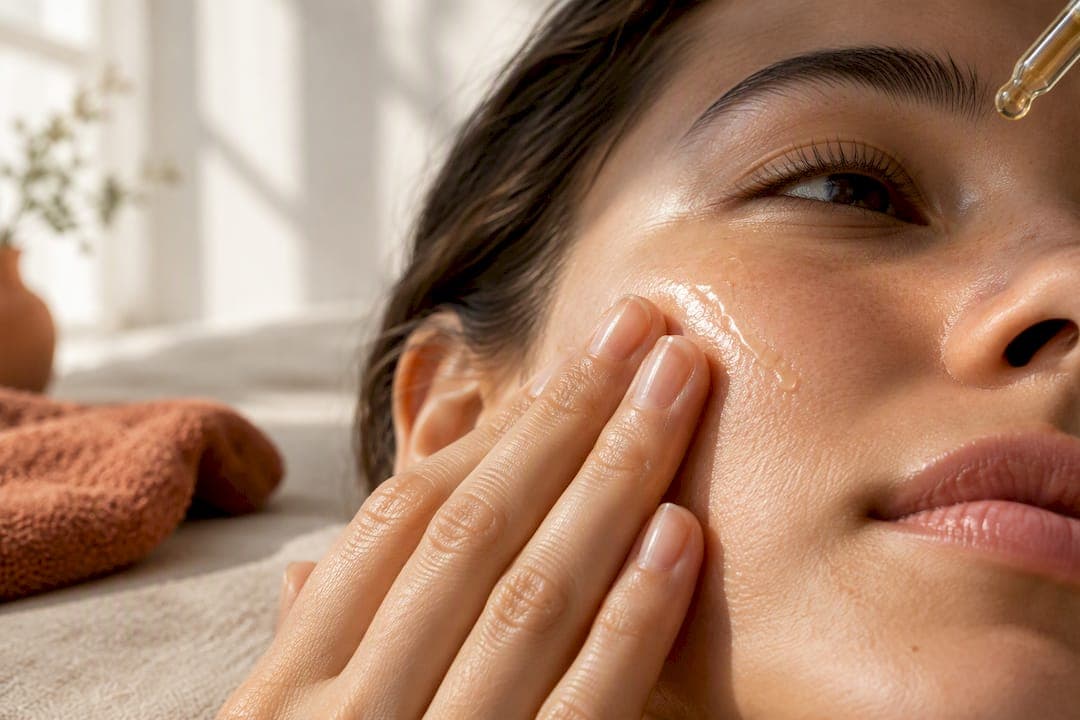
Yes. Hyaluronic acid works with oil, not against it, as long as you apply them in the right order. HA pulls water into the skin; oil helps seal that water in so it doesn't evaporate within the hour. The exception is oil-dispersed HA, a newer format built to go on last, not first.
TL;DR:
- Applying hyaluronic acid on damp skin and sealing it with oil enhances hydration by preventing water loss through evaporation.
- Water-based hyaluronic acid serums need a moisturizer or oil layered over them within two minutes to maintain skin hydration.
- Oil-dispersed hyaluronic acid products are designed to be used last or as stand-alone, not layered over other products, due to their encapsulation technology.
- Dry or mature skin benefits from heavier oils for a stronger seal, while oily or sensitive skin should choose lighter, non-comedogenic oils or oil-free options.
- Avoid stacking strong exfoliants or fragranced oils with hyaluronic acid to prevent irritation and maximize hydration effectiveness.
Table of Contents
- Can You Use Hyaluronic Acid With Oil for Better Hydration?
- What Forms of Hyaluronic Acid Should You Look For?
- How Do You Layer Hyaluronic Acid and Oil Correctly?
- Which Skin Types Benefit Most From This Combination?
- What Should You Avoid Mixing With Hyaluronic Acid?
- How Yuka+Face Approaches Hyaluronic Acid and Oil Pairing
- A Simpler Routine Beats a Complicated One
- Pairing Hydrating Power Moisturizer With Vitamin C Glow Oil
- Sources
- FAQ
Can You Use Hyaluronic Acid With Oil for Better Hydration?
Hyaluronic acid is a humectant. That means it grabs water molecules from the air and from deeper layers of skin and holds them at the surface. Oil plays a different role entirely: it's an emollient and, in thicker formulas, an occlusive, meaning it forms a light barrier that slows water loss through the skin, known clinically as transepidermal water loss (TEWL).
The two only work together if there's water for the HA to grab in the first place. That's why dermatology guidance consistently points to applying HA on damp skin, then locking it in with something that slows evaporation, whether that's a moisturizer or a facial oil. Harvard Health explains that HA works best when sealed this way, since it isn't a stand-alone fix but a tool that performs within a full routine.
The clinical data backs this up. A multicenter study on a topical HA serum found statistically significant increases in skin hydration, along with visible improvements in texture and fine lines over weeks of consistent use. Separately, a review of topical HA formulations found that lower molecular weight versions can actually penetrate the skin, while still maintaining a strong safety profile across cosmetic applications.
Here's the quick breakdown of who does what:
- Humectant (HA): Draws water into the outer skin layers.
- Emollient (most facial oils): Softens and smooths by filling gaps between skin cells.
- Occlusive (heavier oils and balms): Forms a surface layer that slows moisture loss.
HA is remarkably good at its one job. Research on hyaluronic acid's biology shows it's one of the most effective substances in the body at binding and retaining water. But water-binding without a seal is a leaky bucket. Skip the oil step and you'll likely feel that tight, dry sensation an hour after applying, especially in dry climates or heated indoor air.
What Forms of Hyaluronic Acid Should You Look For?
Not all "HA with oil" products are built the same way, and the label matters more than most people realize.
Water-based HA serums are the classic format. These are lightweight, water-first formulas containing sodium hyaluronate or hydrolyzed hyaluronic acid, meant to go on damp skin before anything else. They need a moisturizer or oil layered over them within a minute or two, or the water they've attracted simply evaporates off the surface.
Oil-dispersed HA, sometimes labeled Oleo-HA or Hyacolor on ingredient lists, is a different animal entirely. This format uses encapsulation technology to suspend water-loving HA inside an oil base, something normally impossible since oil and water don't mix. Oil-dispersed HA technology makes it possible to formulate HA into anhydrous products, like lip balms, oil serums, and color cosmetics, where a traditional water-based serum would never work.
HA blended into oil serums or body oils sits somewhere in between. These products fold hydrating actives directly into a facial or body oil base, aiming for longer-lasting moisturization and barrier support in a single step rather than a two-product layer.
When you're scanning a label, three phrases tell you what you're actually buying:
- Sodium hyaluronate — the most common, stable, smaller-molecule form of HA in most serums.
- Hydrolyzed hyaluronic acid — broken down further, often for deeper penetration.
- "Oil-dispersed" or "Oleo-HA" — signals a formula built for anhydrous or oil-based use, not layering.
Molecular weight matters too. Reviews on HA's molecular weight note that different weights penetrate to different depths and produce different effects on elasticity, which is one reason two "hyaluronic acid" products can perform so differently despite the identical name on the front label. For a deeper look at how HA functions in the skin, Yuka+Face's own breakdown of the role of hyaluronic acid in skin hydration covers the science in more detail.
How Do You Layer Hyaluronic Acid and Oil Correctly?
Order determines whether this combination hydrates your skin or just sits on top of it, doing very little.
- Cleanse first. Start with slightly damp skin. Don't towel-dry completely; the residual moisture is exactly what HA needs to bind to.
- Apply water-based HA serum immediately. Press it into damp skin within a minute of cleansing or misting. Waiting too long means applying HA to already-dry skin, which gives it less water to grab.
- Follow with a moisturizer. This adds a cream base that helps distribute and stabilize the hydration HA just pulled in.
- Seal with a facial oil. A few drops on top locks the whole stack down and slows evaporation through the night or day.
- Exception: oil-dispersed HA goes last, alone. If you're using an Oleo-HA type product, skip the layering order above. These are formulated to be a finishing step or a stand-alone anhydrous product, not a base layer.
For daytime routines, always finish with sunscreen. HA and oil don't offer sun protection, and the American Academy of Dermatology's guidance on choosing the right moisturizer makes clear that hydration and sun defense are separate jobs. At night, you can skip the sunscreen step and let the oil work as your final seal for several hours.
Climate changes the math slightly. In humid conditions, a lighter oil (or skipping oil in the AM entirely) can prevent that greasy, congested feeling. In dry winter air or heated homes, a richer oil applied at night does more work holding moisture in. If you wear makeup, give each layer sixty to ninety seconds to settle before the next step. Rushing this causes pilling, where product balls up instead of absorbing.
Pro Tip: Before committing to a new HA and oil combination, patch test on your inner forearm for three nights in a row. This catches irritation or breakouts before they show up on your face, and it takes less effort than reformulating your whole routine after a bad reaction.

For a full walkthrough of correct application, Yuka+Face's guide on how to apply facial oils covers the layering order in more depth.
Which Skin Types Benefit Most From This Combination?
The HA and oil pairing works for nearly every skin type, but the oil you choose (and how much of it) should shift depending on what you're dealing with.
Dry or mature skin benefits from the richest end of the oil spectrum. Heavier oils applied nightly give HA a stronger seal and support a compromised moisture barrier over time. This is where the "cream, then oil" step matters most, since drier skin loses water faster and needs more insulation against it.
Oily or acne-prone skin can still use HA with oil, just with more selective choices. Lightweight, non-comedogenic oils, or an oil-free moisturizer instead of oil entirely, prevent the clogged-pore feeling that heavier oils can cause. The AAD notes that oil-free, non-comedogenic moisturizers help skin tolerate acne treatments that tend to dry it out, which makes HA a useful hydration boost without adding heaviness. Yuka+Face's guide on hydrating products for oily skin walks through which textures to look for.
Sensitive skin needs the most caution. Fragranced oils and formulas loaded with essential oils are common irritation triggers, so patch testing before regular use isn't optional here; it's the difference between calm skin and a flare-up.
A rough guide to oil weight:
- Light oils (squalane, grapeseed, jojoba): good for oily, combination, or beginner routines.
- Medium oils (argan, marula): balanced choice for normal or combination skin.
- Heavy oils (rosehip, tamanu, avocado): best reserved for dry or mature skin, typically at night.
What Should You Avoid Mixing With Hyaluronic Acid?
HA is one of the more forgiving ingredients in skincare, but a few combinations and habits can undercut it.
- Strong AHAs/BHAs and benzoyl peroxide can lower the skin's tolerance when layered directly under HA and oil in the same session. Separate them by time of day, using actives at night and HA plus oil in the morning, or alternate nights, rather than stacking everything at once.
- Fragranced or heavily essential-oil-based products are a common irritation source, particularly on sensitive or reactive skin. If redness or stinging shows up, that product is worth dropping regardless of how well it's rated elsewhere.
- Applying HA to bone-dry skin is the single most common mistake. If your skin feels tight or drier after using an HA serum, the issue usually isn't the ingredient. It's the missing water source. Reapply to damp skin and seal with oil immediately.
- Persistent irritation, breakouts, or an allergic-looking reaction are signs to stop and consult a dermatologist rather than troubleshoot further on your own.
Frequency-wise, HA with oil is generally suited to daily use, morning and night, for most skin types. The exception is anyone actively managing an active breakout or reaction, where pausing new products until skin calms down is the safer move.
How Yuka+Face Approaches Hyaluronic Acid and Oil Pairing
Yuka+Face builds its formulas around the same principle dermatology guidance points to: hydration needs a humectant and a seal, both sourced from ingredients that don't fight the skin barrier. The brand's educational breakdown of hyaluronic acid's role in hydration walks through exactly why that pairing matters before any product gets involved.
In practice, that shows up as:
- Botanical oils paired with hydrating actives, formulated without synthetic fillers or long ingredient lists.
- Vegan, cruelty-free sourcing across the product range, verified through Leaping Bunny certification.
- A moisturizer designed to sit between an HA serum and a facial oil in a layered routine.
- An oil product built to seal hydration while adding brightening support on top.
Transparency runs through the brand's product pages themselves, where ingredient lists are kept short and readable rather than buried in unpronounceable filler.
A Simpler Routine Beats a Complicated One
Most routine problems aren't ingredient problems. They're consistency problems. Skin needs four to eight weeks to show real change from any new hydration step, and switching five products at once makes it impossible to know what's actually working.
Start with one HA serum and one oil. Give it two months. Watch what happens before adding anything else.
Barrier health comes first, always. A well-sealed, consistently hydrated barrier will do more for your skin's texture and comfort than any single "hero" ingredient, no matter how it's marketed. And ingredient transparency, knowing exactly what's in the bottle and where it came from, matters just as much as the formula itself when you're building a routine you'll actually stick with for months, not weeks.
— Kelly
Pairing Hydrating Power Moisturizer With Vitamin C Glow Oil
If you're ready to put this routine into practice without guessing at combinations, Yuka+Face's shop carries the two products built for exactly this layering method.

Start with a moisturizer right after your HA serum. It's formulated to distribute that pulled-in moisture evenly across the skin before the final seal goes on, followed by a few drops of an oil product to lock hydration in place while adding brightening support, matching dermatology guidance on using oil as a seal.
Browse the full Yuka+Face lineup to build out the rest of your routine, or head straight to the Hydrating Power Moisturizer product page to see how it fits into your current lineup.
Sources
- How to pick the right moisturizer for your skin
- Hyaluronic acid for skin: benefits, how to use it, and side effects — Harvard Health
- Review of topical hyaluronic acid forms and effects (PubMed)
- Multicenter evaluation of a topical hyaluronic acid serum (Journal of Cosmetic Dermatology, 2022)
- Hyaluronic acid (Cleveland Clinic)
FAQ
Can You Use Hyaluronic Acid With Oil?
Yes, and the two work better together than either does alone. HA draws water into the skin, and oil helps seal that moisture in, which is why Harvard Health recommends layering HA with a moisturizer or oil rather than using it by itself.
What Should You Not Mix With Hyaluronic Acid?
Avoid layering strong AHAs, BHAs, or benzoyl peroxide in the same session as HA and oil, since stacking actives can overwhelm the skin barrier. Fragranced oils and heavy essential-oil blends are also worth avoiding on sensitive skin, since they're a common irritation trigger.
Which Form of Hyaluronic Acid Is Best?
It depends on your product type. Water-based sodium hyaluronate works best in serums applied to damp skin, while oil-dispersed HA (Oleo-HA) is built for anhydrous formulas like oil serums and lip products, and research shows lower molecular weight HA penetrates deeper than higher molecular weight versions.
Can You Put Hyaluronic Acid on Your Face Every Day?
Yes, daily use is standard for most skin types, morning and night, as long as you apply it to damp skin and seal it with a moisturizer or oil. The exception is if you're managing active irritation or a breakout, in which case pausing new products until skin settles is the safer approach.
Where Can You Try This Routine?
Yuka+Face's shop carries the Hydrating Power Moisturizer and Vitamin C Glow Oil built specifically for this layering method, both formulated with short, transparent ingredient lists.