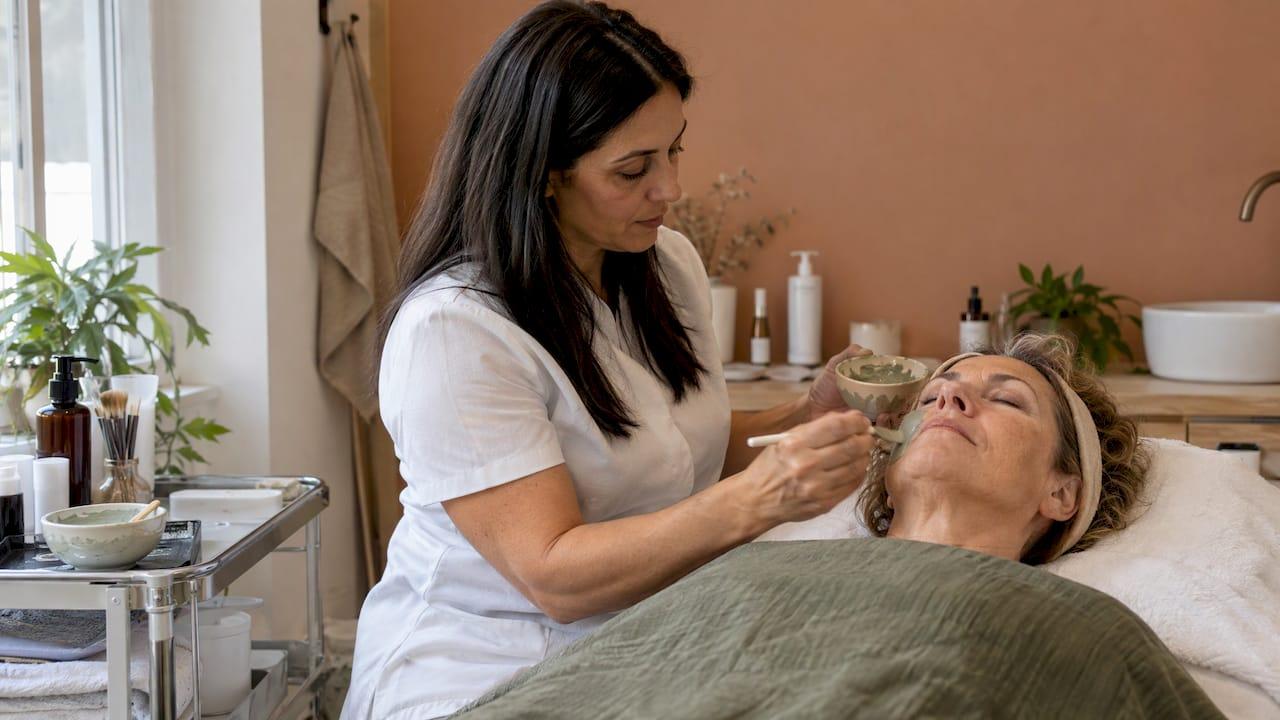
Green tea works best on skin as a topical antioxidant and soothing ingredient. The strongest evidence covers UV-related protection, calming visible redness and improving moisture and texture. Standardized green tea extract in a well-formulated product is what most clinical trials tested, and it is the form we recommend for sensitive, reactive and mature skin alike. This guide is written for estheticians, spa and boutique retailers and skincare-minded readers who want to know what green tea does, what it does not do, and how to use it with confidence.
TL;DR
- Topical green tea extract has the most consistent support for antioxidant protection, soothing irritation and improving hydration and texture.
- Acne and wrinkle results are promising but mixed, and "detox" is not something green tea does. It is an antioxidant.
- Topical use drives most skin results. Drinking green tea shows a clear benefit mainly for UV-related damage.
- Tolerance is generally good. Concentration matters: one trial with a much higher dose caused dryness and stinging.
- Patch test new products, use extract-based products 2 to 3 times a week at first if skin is reactive, and keep daily sunscreen.
Table of Contents
- What green tea actually is in skincare
- Benefits of green tea for skin, ranked by evidence
- Topical or drinking: which one does more for skin
- Is green tea suitable for sensitive skin?
- Green tea extract and matcha: how they compare
- How to use green tea in a routine
- For estheticians, spas and boutique retail
- Build a routine with Yuka+Face
- FAQ
- Sources
What green tea actually is in skincare
Green tea comes from the leaves of Camellia sinensis, steamed or pan-fired so they are not oxidized the way black tea is. That matters for skin because the leaves keep their polyphenols, mainly catechins. The most studied catechin is EGCG (epigallocatechin gallate). Polyphenols are plant compounds that neutralize free radicals, the unstable molecules produced by UV light, pollution and normal metabolism that damage skin cells.
In a cosmetic formula, "green tea" can mean several things:
- Green tea extract (GTE): a concentrated, often standardized preparation of the leaf's polyphenols. This is what most clinical trials use.
- Green tea leaf water or infusion: a milder, water-based preparation common in toners and essences.
- Green tea seed oil: a different part of the plant, valued as an emollient rather than for catechins.
- Matcha: whole powdered leaf, covered below.
Knowing which one a label lists helps you predict what a product does. Extract is the antioxidant and calming ingredient. Seed oil is a moisturizing one.
Benefits of green tea for skin, ranked by evidence
Not every claim on a green tea label has the same backing. This is how the research sorts out.
Strong support: antioxidant and UV-related protection
Green tea polyphenols are reported to reduce UV-induced damage and inflammation. They support sun protection but do not replace sunscreen. A media summary of the evidence rates UV-related protection among the strongest benefits, as a supporting player next to SPF. A review of 20 studies on green tea in dermatology also found oral green tea may be effective for protection against psoralen-UVA, a type of light exposure used in some dermatology treatments, as well as for skin aging.
Strong support: soothing visible redness and irritation
EGCG has shown anti-inflammatory activity. The same review reports that topical green tea extract showed potential for conditions such as atopic dermatitis, acne and rosacea. For estheticians working with reactive clients, this is the main reason green tea appears in calming masks, toners and post-treatment products.
Strong support: moisture and texture
One clinical study reported higher skin moisture and improved skin microrelief, the fine surface texture of the skin, after 15 to 30 days of use, according to the same evidence summary. A 2022 review of oral preparations also notes improved elasticity, hydration, texture and structure.
Promising: oil control and acne-prone skin
In a 2018 clinical study, toners with 4.5% and 7% green tea reduced facial sebum by 20.26% and 31.57% after 28 days. A separate 5% emulsion reported a 29.14% reduction after 30 days. Volunteers reported no adverse effects with daily toner use.

For blemishes, a meta-analysis of five randomized trials found topical green tea extract significantly reduced both inflammatory lesions (by 11.39) and non-inflammatory lesions (by 32.44). Green tea can support a routine for oily, congested skin. It is not a replacement for a dermatologist's acne treatment, so clients with persistent or cystic acne should see one.
Promising: fine lines and elasticity
A 2026 systematic review of green tea extract on facial skin aging screened 481 studies and analyzed 7. All five studies that measured elasticity found improvement. Four of five wrinkle studies reported fewer fine lines at 2, 4 or 8 weeks. All seven trials showed a significant improvement in at least one outcome. The authors describe topical extract as a promising anti-aging candidate for photoaged facial skin with very small safety concerns, and call for larger placebo-controlled trials.
One small trial found that a tannase-converted extract produced marked or moderate wrinkle improvement in 63.6% of users after 8 weeks, against 36.3% with regular extract. That points to how much the preparation matters, not only the plant.

Not supported: detox
Green tea does not detox skin. It is an antioxidant. Retailers and estheticians who describe it in those terms are better served by accurate language: protects, calms, supports hydration.
Topical or drinking: which one does more for skin
Both appear in search results, and they do different jobs.
| Topical green tea extract | Drinking green tea | |
|---|---|---|
| Best supported benefit | Soothing, oil balance, blemishes, texture | UV-induced damage |
| Acne evidence | Meta-analysis of 5 trials showed lesion reductions | Minimal effect in the same analysis |
| Skin type fit | Most skin types | Not skin-type specific |
| Role | Daily routine ingredient | Complement to sunscreen, not a replacement |
The acne meta-analysis found oral green tea extract changed lesion counts only slightly (a reduction of 1.40), while topical use changed them substantially. The 2022 review of oral green tea concluded that clinical evidence supports oral use only for protection against UV-induced damage, including a 16 to 25% lowering of UV-induced redness. Its authors suggest oral preparations could be encouraged as an adjunct to sun protection, within safety recommendations.
The practical answer: a cup of green tea is a pleasant habit. For visible results on the face, apply it where you want the effect.
Is green tea suitable for sensitive skin?
Generally yes, and this is where the safety data is most reassuring.
- A human skin safety study found green tea extracts caused no significant irritation in patch tests on 10 healthy volunteers. Three mild cases of allergic contact dermatitis improved within the first week, and the authors concluded the extract may be used in cosmetic and medical skin applications.
- A 2016 review of eight studies found topical tea polyphenols generally well tolerated. In a 2% green tea topical, 10% of subjects had stinging that resolved within 48 hours, 15% had itching that resolved by day three, and no major adverse events occurred in any study.
- In the 2026 facial aging review, one trial used a dose up to ten times higher than the other six. Patients reported dryness and irritation and three withdrew. Researchers concluded the dose was too high.
The lesson is concentration and formulation. More is not better. A balanced product with a short, clear ingredient list is a safer starting point than a high-strength extract.
Safe-use guidelines
- Patch test first. Apply a small amount to the inner forearm or behind the ear for 24 to 48 hours before using on the face.
- Start slowly. On sensitive skin, use 2 to 3 times per week for the first two weeks, then increase if skin stays calm.
- Stop if irritation persists. Stinging that lingers past a few days, or swelling, calls for a dermatologist.
- See a dermatologist first with eczema, rosacea or a diagnosed condition. Green tea is a skincare ingredient, not a treatment for these conditions.
- Keep sunscreen daily. Antioxidants support SPF. They do not substitute for it.
Green tea extract and matcha: how they compare
Matcha is whole powdered green tea leaf, so it carries more catechins per gram than a brewed infusion. That is why matcha skincare is popular on social media. Most clinical trials, however, use standardized green tea extract, and matcha-specific research in dermatology is still emerging. For the formulation side of this question, how cosmeceutical skincare is evaluated is a useful frame: look at the active, its concentration and the evidence behind that exact form.
In practice, extract gives you a predictable, tested ingredient. That is the reason we write about green tea extract rather than matcha when we explain the evidence.
How to use green tea in a routine
The order below suits most skin types. Adjust the frequency for reactive skin as described above.
- Cleanse. A gentle cleanser removes sunscreen and oil without stripping the barrier. See our double cleansing guide for the full method.
- Tone or apply an essence. Water-based green tea products fit here. In the 2018 toner study, daily use was tolerated well.
- Serum. Antioxidant serums go on before moisturizer. Our antioxidants guide explains how antioxidants layer.
- Moisturize. This seals in water and supports the barrier.
- Sunscreen in the morning. Antioxidants add to sun protection but do not replace it. Our morning routine shows where each step sits.
What to check on a label
- The form: extract, leaf water or seed oil. They do different things.
- Ingredient list length: shorter lists are easier to patch test and to trace if a reaction occurs.
- Fragrance and essential oil load: relevant for sensitive clients.
- Third-party standards: certified organic and Leaping Bunny cruelty-free marks are verifiable on packaging.
- Stability: catechins degrade with light and air, so opaque or airtight packaging helps.
A 2025 scoping review found EGCG showed in vitro protective effects of 40 to 85% in one antioxidant assay, 90% in another and 80% against hydrogen peroxide. It also notes that carrier systems and their application to human skin need more research. The takeaway is that formulation determines how much of the benefit reaches skin.
For estheticians, spas and boutique retail
Green tea is an easy ingredient to explain to clients, and the evidence supports a clear, honest script.
- Treatment room: calming masks and toners with green tea suit post-cleansing and post-exfoliation steps where skin looks flushed.
- Retail shelf: position it as an antioxidant and soothing ingredient for sensitive, oily or combination skin. Avoid "detox" wording.
- Client intake: ask about eczema, rosacea and known plant allergies, and offer a patch test before a first treatment.
- Home care: give a simple frequency plan, 2 to 3 times a week to start, daily sunscreen always.
- Hotel and wellness retail: travelers with stressed, dehydrated skin respond to hydration-focused routines. Short ingredient lists make recommendations easy.
For curated stocking of vegan, cruelty-free, organic skincare, the Yuka+Face shop lists cleansers, toners, serums and oils.
Our perspective
We built Yuka+Face around a simple idea: skin does best with fewer, better ingredients. Green tea fits that idea. It is a plant with a long record of use, and the research now describes what it does for skin: it protects, calms and supports hydration.
We keep our formulas vegan, cruelty-free and certified organic, with short, transparent ingredient lists, because sensitive skin needs to know what is in the bottle. Our focus is barrier repair and routines that stay simple. That is why we explain green tea in terms of evidence and use, and why we do not make claims such as detox.
If you want to read more on the ingredient, our journal covers green tea extract in organic skincare. Pair it with our guide on plant-based skincare steps to build a routine that stays easy to follow.
Kelly
Build a routine with Yuka+Face
Our range is vegan, cruelty-free and Leaping Bunny certified, with certified organic formulas made for all skin types and ages. It includes cleansers, toners, serums, oils, moisturizers and masks, arranged as routines for hydration, barrier repair, sensitive skin, oily skin and fine lines. Start with the full shop, or choose a gentle step such as the B3 Gentle Cleanser or the Lavender Essence Balancing Toner. Gift cards are available from $50.

Spa owners and boutique retailers can see the full range on the Yuka+Face homepage.
FAQ
Is applying green tea on the face good?
For most skin types, yes. Clinical studies of topical green tea extract report good tolerance, with mild, short-lived stinging or itching in a minority of users. Patch test first and start 2 to 3 times a week if your skin is sensitive.
What happens if I drink green tea daily?
The clearest skin-related benefit of drinking green tea is protection against UV-induced damage, according to a 2022 systematic review. It supports sunscreen and does not replace it. Visible changes in acne or wrinkles are better supported with topical use.
Can green tea help oily or acne-prone skin?
Topical green tea can help reduce sebum, with toners at 4.5% and 7% lowering it in a 28-day study. A meta-analysis also found fewer acne lesions with topical extract. For persistent or cystic acne, see a dermatologist.
Is green tea safe for sensitive skin?
Research generally says yes at moderate concentrations, with no major adverse events across eight reviewed studies. One trial with a dose up to ten times higher caused dryness and irritation. Choose a balanced formula, patch test, and talk to a dermatologist if you have eczema or rosacea.
Sources
- What Green Tea Actually Does For Your Skin
- Efficacy and Side Effects of Green Tea Extract on Facial Skin Aging (2026 systematic review)
- Green tea in dermatology (PubMed)
- Development and clinical efficacy evaluation of anti-greasy green tea toners (2018)
- Green Tea and Other Tea Polyphenols: Effects on Sebum Production and Acne (2016)
- Human Skin Safety Test of Green Tea Cell Extracts
- Green tea as a cosmetic agent for skin aging: a scoping review
- The effects of green tea on acne vulgaris: a systematic review and meta-analysis
- Efficacy and Safety of Oral Green Tea Preparations in Skin Photoprotection (2022)
- Cosmeceutical skincare: evidence, benefits, and how to choose