
Yes: polyphenols provide measurable skin benefits, backed by human trials, not just petri-dish chemistry. EGCG, resveratrol, grape seed proanthocyanidins, and apple polyphenols all show documented effects on skin, though the strength of that evidence varies by compound and delivery method.
The clearest signal comes from an apple polyphenol clinical trial using 300 to 600 mg daily doses over 12 weeks, which reduced UV-induced pigmentation compared with placebo. Beyond pigmentation, the research points to three consistent benefits:
- UV protection. Polyphenols neutralize free radicals generated by sun exposure, adding a layer of defense sunscreen alone doesn't provide.
- Reduced inflammation. Several polyphenols calm inflammatory signaling relevant to redness, breakouts, and irritation.
- Adjunctive support for inflammatory skin disorders like atopic dermatitis and psoriasis, used alongside standard treatment rather than in place of it.
The catch: formulation and bioavailability determine whether any of this reaches your skin at all. A jar of green tea extract that's degraded from heat or light exposure won't deliver the antioxidant punch the label promises. Expect to wait roughly 8 to 12 weeks of consistent use before you see a measurable change.
Key Takeaways
Polyphenols like EGCG, resveratrol, and apple-derived compounds reduce UV pigmentation and inflammation when delivered in stable, well-formulated products and used consistently for 8 to 12 weeks.
| Point | Details |
|---|---|
| Pigmentation has the strongest evidence | The apple polyphenol trial showed measurable UV pigmentation reduction with 300 to 600 mg daily over 12 weeks. |
| Formulation determines real-world results | EGCG degrades with heat, light, and pH shifts, so stabilized, well-packaged products matter more than the ingredient list alone. |
| Polyphenols support, not replace, treatment | For atopic dermatitis, psoriasis, and acne, polyphenols work best alongside established medical care, not as a standalone fix. |
| Skip concentrated supplements without medical advice | High-dose green tea extract carries a rare but documented liver toxicity risk; dietary intake is the safer default. |
| Yuka+Face applies these principles in formulation | Yuka+Face builds its vegan, natural products around documented antioxidant activity and stability, the same standards this article uses to evaluate any polyphenol product. |
Table of Contents
- How Do Polyphenols Help Skin at the Molecular Level?
- What Does the Clinical Evidence Actually Show?
- Does It Matter If Polyphenols Are Applied Topically or Taken Orally?
- Which Polyphenols Show Up Most in Skincare, and Where Do They Come From?
- Which Skin Conditions Respond Best to Polyphenol Treatment?
- What Are the Safety Risks and Side Effects of Polyphenols?
- How Do You Actually Build Polyphenols Into a Skincare Routine?
- Why Trust This Breakdown of the Research?
- What the Science Actually Tells Us to Prioritize
- Bring Polyphenol Science Into Your Actual Routine
- Sources
- FAQ
How Do Polyphenols Help Skin at the Molecular Level?
Polyphenols work through four distinct mechanisms, and understanding them explains why some products deliver results while others sit on a shelf doing very little.
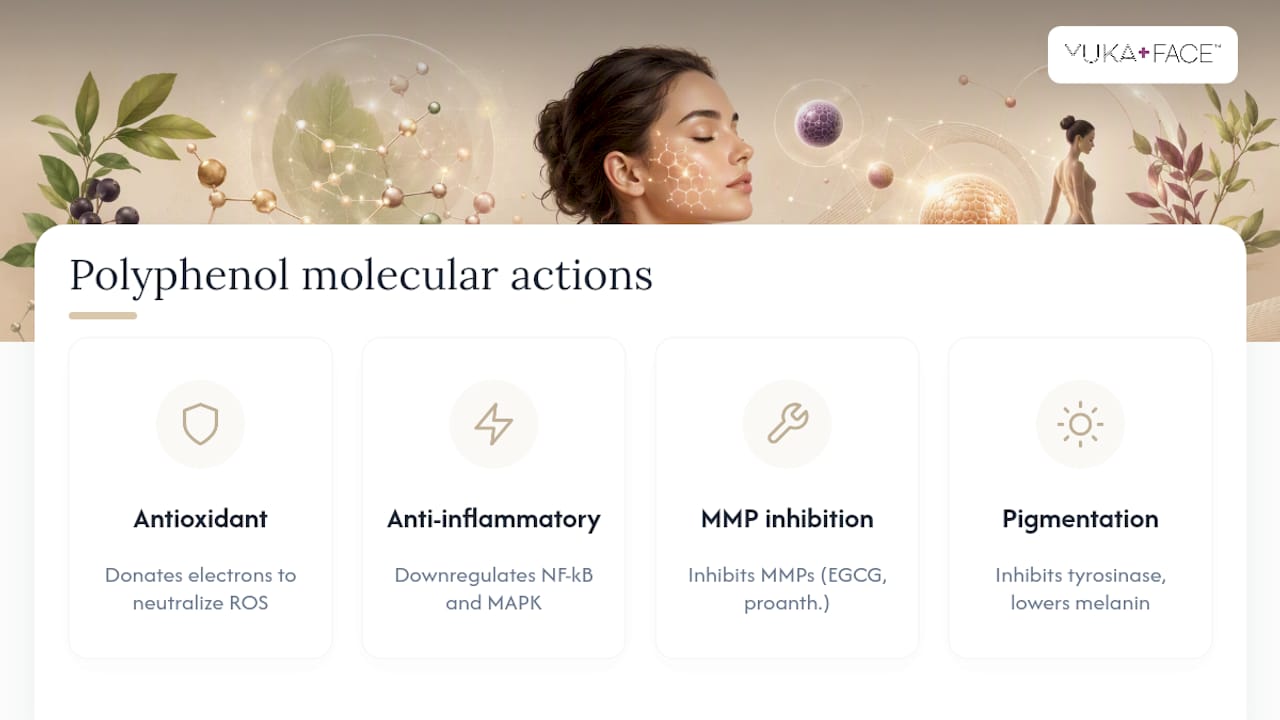
Neutralizing reactive oxygen species (ROS) is the foundational mechanism. UV exposure, pollution, and normal metabolism generate free radicals that damage cellular DNA, degrade collagen, and accelerate visible aging. Polyphenols donate electrons to these unstable molecules, essentially disarming them before they can cause oxidative damage. This is the same chemistry behind why a sliced apple browns slower when you squeeze lemon juice on it. The antioxidant intercepts the oxidation reaction. On skin, that interception happens continuously, at a cellular level, every time UV light or environmental stress triggers a new wave of free radicals.
Anti-inflammatory action happens through gene expression, not just symptom suppression. Polyphenols downregulate NF-kB and MAPK, two signaling pathways that trigger the release of inflammatory cytokines. When these pathways stay overactive, skin stays in a chronic low-grade inflammatory state, which shows up as persistent redness, breakouts, or flare-ups in conditions like eczema. Dialing down that signaling doesn't just mask inflammation. It interrupts the biochemical cascade that produces it in the first place.
MMP inhibition slows collagen breakdown. Matrix metalloproteinases (MMPs) are enzymes that break down collagen and elastin, and UV exposure dramatically increases their activity. Polyphenols, particularly EGCG and grape seed proanthocyanidins, inhibit these enzymes, which means less structural breakdown after sun exposure. This is one of the more compelling anti-aging mechanisms, because it targets the enzyme responsible for degradation rather than just supplying more collagen precursors.
Melanogenesis regulation targets pigmentation directly. Certain polyphenols inhibit tyrosinase, the enzyme that controls melanin production. That's the mechanistic explanation behind the apple polyphenol trial's pigmentation results: less tyrosinase activity means less UV-triggered melanin, which shows up clinically as reduced dark spots and more even tone over time.
Pro Tip: Antimicrobial polyphenols like EGCG can also disrupt the bacterial biofilms associated with acne, which is why you'll increasingly see green tea extract in blemish-focused formulas rather than just anti-aging serums.
None of these mechanisms work in isolation. A single molecule of EGCG can simultaneously neutralize a free radical, dampen an inflammatory signal, and inhibit an MMP enzyme. That multi-target action is part of why researchers keep returning to polyphenols as a class worth studying, rather than chasing one isolated "miracle ingredient."
What Does the Clinical Evidence Actually Show?
The most cited human trial in this space tested apple polyphenols in a randomized, controlled setting: healthy women aged 20 to 39 took 300 to 600 mg daily for 12 weeks. The result was a measurable reduction in UV-induced pigmentation, including both erythema and melanin content, compared to the placebo group.
What's just as informative is what didn't change. The same trial found no significant improvement in skin hydration or transepidermal water loss (TEWL), the standard measure of barrier function. That's an important distinction: apple polyphenols showed a real, specific effect on pigmentation, not a general "skin health" boost across every metric researchers measured. Treat broad claims about any single polyphenol fixing hydration, texture, and pigmentation simultaneously with skepticism, since the trial data doesn't support that breadth.
Topical EGCG has a separate evidence trail, most notably in radiation dermatitis, where researchers have used freshly prepared EGCG solutions to reduce inflammation and skin damage in patients undergoing radiation treatment. Photoprotection research on EGCG follows a similar pattern: consistent signals for reduced UV damage markers, generally in shorter-term studies with smaller sample sizes than large pharmaceutical trials.
A few patterns emerge once you compare these studies side by side:
- Sample sizes tend to be small, often a few dozen participants rather than the hundreds typical of a drug trial.
- Endpoints vary widely between studies, so a trial measuring melanin content doesn't tell you anything about a different trial measuring inflammatory markers.
- Dosing isn't standardized across the polyphenol class the way it is for, say, vitamin C or retinoids, which makes head-to-head comparisons difficult.
- Most positive results come from either oral supplementation trials with defined dosing (like the apple polyphenol study) or tightly controlled topical applications using fresh, stabilized solutions.
None of this means the science is weak. It means the science is specific. A researcher studying polyphenols and skin disorders will tell you these compounds function best as adjunctive therapies, working alongside prescribed treatments for conditions like psoriasis, rather than as standalone cures. That framing matters for how you should read every claim in this article: polyphenols shift outcomes measurably, on specific endpoints, when dosage and formulation are adequate. They don't rewrite your skin's biology overnight.
The takeaway for anyone reading ingredient labels: pigmentation and inflammation are where the clinical evidence is strongest right now. Hydration, texture, and broader "anti-aging" claims are plausible extensions of the mechanism, but they rest on thinner direct trial data.
Does It Matter If Polyphenols Are Applied Topically or Taken Orally?
It matters enormously, and this is the part most skincare marketing glosses over. A polyphenol molecule has to physically get through the stratum corneum, the skin's outermost barrier layer, to do anything topically. Molecular size and lipophilicity (how fat-soluble a compound is) determine whether that penetration happens at all. Large, water-soluble polyphenol molecules often can't cross that barrier in meaningful concentrations, no matter how much of them sit in a serum bottle.
EGCG illustrates the problem well. It's one of the most-studied catechins for skin, representing 50 to 80% of the catechin content in green tea. But EGCG is notoriously unstable. It degrades with heat, light, and pH shifts, which is why researchers preparing topical EGCG solutions for clinical studies often use freshly made batches rather than shelf-stable products. A green tea serum that's been sitting in a warehouse for six months, exposed to light through a clear bottle, may contain a fraction of the active EGCG listed on its original formulation.
Formulators have three main strategies to solve this:
- Liposomal encapsulation, which wraps the polyphenol in a lipid bubble that protects it from degradation and helps it cross the skin barrier more effectively.
- Nanoencapsulation, which shrinks the delivery particle down to improve penetration and extend shelf stability.
- Stabilized derivatives, chemically modified versions of the parent polyphenol designed to resist oxidation without losing biological activity.
Reviews on polyphenol bioavailability consistently point to these delivery systems as the difference between a polyphenol that works in a lab dish and one that works on real skin. Poor bioavailability is the single biggest obstacle standing between "this compound has antioxidant activity" and "this product visibly changes your skin."
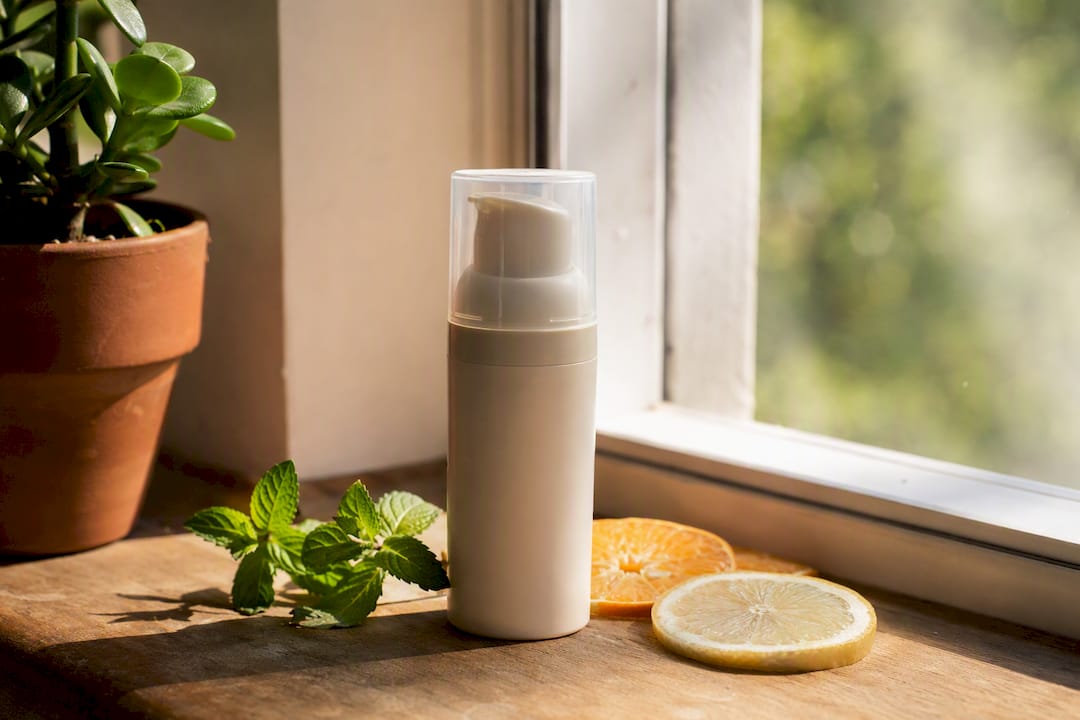
Pro Tip: Check for opaque or airless packaging on any polyphenol-based serum. Clear glass droppers look elegant, but light and oxygen exposure both accelerate the degradation of sensitive antioxidants like EGCG and resveratrol.
Dietary sources work differently. Drinking green tea or eating berries delivers polyphenols to your bloodstream through digestion, where they support whole-body antioxidant activity. But oral intake doesn't guarantee high concentrations reach the skin specifically. Both routes have value. Diet supports overall physiological resilience, while a well-formulated topical product delivers a targeted, higher local concentration to the exact tissue you're trying to protect. If your goal is a specific, visible skin outcome, a stabilized topical product with documented delivery technology is the more direct path.
Which Polyphenols Show Up Most in Skincare, and Where Do They Come From?
Five polyphenols dominate the research and the ingredient lists, and each behaves a little differently once it's inside a formula or on your plate.
EGCG (epigallocatechin gallate) is the primary catechin in green tea and the most extensively researched polyphenol for skin. It's a strong topical candidate for antioxidant and antimicrobial effects, but its instability under heat, light, and pH shifts means product quality varies enormously between brands. Fresh, well-packaged formulations matter more here than with almost any other ingredient on this list.
Resveratrol, a stilbene found in grape skins and red wine, shows anti-inflammatory and anti-aging signals in both topical and preclinical research. Its major limitation is low oral bioavailability. Most of what you consume gets metabolized before it reaches systemic circulation in meaningful amounts, which is part of why topical resveratrol formulations get more attention from skincare researchers than resveratrol supplements do.
Grape seed proanthocyanidins rank among the more potent antioxidants in this category, with documented free-radical scavenging activity that supports both oral and topical use. They show up in serums and in oral antioxidant blends, often paired with vitamin C for a synergistic effect.
Apple polyphenols have the clearest human trial data on skin pigmentation specifically, thanks to the 12-week supplementation study referenced earlier. This makes apple-derived extracts one of the few polyphenol sources with a defined, tested oral dose tied to a specific skin outcome.
Quercetin, found in onions, apples, and citrus, is a flavonoid with broad anti-inflammatory activity studied more for systemic health than dedicated skin trials, though its mechanism overlaps closely with the other compounds here.
For dietary intake, the sources are straightforward and easy to work into a normal week:
- Green tea, several cups daily, for catechins including EGCG
- Berries (blueberries, blackberries) for anthocyanins and general polyphenol density
- Red grapes and grape seed extract for resveratrol and proanthocyanidins
- Apples, particularly the skin, for the polyphenols studied in pigmentation research
- Dark cocoa (70% or higher) for flavanols with antioxidant activity
Eating this way supports your body's overall antioxidant load. It's a foundation, not a substitute for a targeted topical when you're addressing a specific visible concern.
Which Skin Conditions Respond Best to Polyphenol Treatment?
The evidence maps unevenly across skin conditions, with some applications resting on stronger footing than others.
-
Atopic dermatitis and psoriasis. Polyphenols function as adjunctive anti-inflammatory agents here, calming the NF-kB driven inflammation that flares both conditions. Reviews on polyphenols in skin disorders describe this role clearly: supportive, not standalone. These compounds work alongside prescribed treatment, not instead of it, and anyone managing a diagnosed inflammatory skin condition should treat polyphenol-based products as a complement to their dermatologist's plan.
-
Acne. Certain polyphenols, EGCG especially, show antimicrobial activity against acne-related bacteria along with some sebum-modulating effects. This makes green tea extract a reasonable addition to an acne-focused routine, though it works best paired with established acne treatments rather than replacing them.
-
Hyperpigmentation and photoaging. This is where the clinical case is strongest. The apple polyphenol trial's pigmentation results, combined with tyrosinase-inhibition mechanisms across multiple polyphenol classes, give this application the most direct human evidence in the entire category. Photoprotection is additive here too: pairing topical antioxidants with sunscreen neutralizes ROS that sunscreen alone doesn't stop from forming, so the two work as complementary layers rather than substitutes for one another.
-
Radiation dermatitis and wound healing. The data here is limited but genuinely promising. Topical EGCG solutions, prepared fresh to preserve stability, have shown benefit in reducing radiation-induced skin inflammation in clinical settings. This remains a narrower, more specialized application than general anti-aging or pigmentation use, but it's one of the more medically validated uses of a topical polyphenol.
Across all four categories, the pattern holds: polyphenols amplify and support existing treatment protocols. Nobody in the research community is positioning them as a replacement for retinoids, biologics, or prescribed acne medication.
What Are the Safety Risks and Side Effects of Polyphenols?
Most people tolerate dietary and topical polyphenols without issue, but concentrated supplements carry real risk that deserves direct attention rather than a footnote.
High-dose green tea extract has been linked to rare cases of liver toxicity. Case reports and safety reviews have flagged hepatotoxicity risk specifically with concentrated green tea extract supplements, not with drinking green tea itself. If you're considering a high-potency polyphenol supplement rather than getting these compounds through food, talk to a doctor first, especially if you take other medications or have existing liver concerns.
- Concentrated extracts (capsules, high-dose powders) carry more risk than food-based intake
- Anyone with existing liver disease should treat green tea extract supplements as a discussion point with their physician, not a default addition
- Pregnant or nursing individuals should check with a doctor before starting any new polyphenol supplement, since safety data in these populations is limited
- Dietary intake through tea, fruit, and cocoa remains the comparatively safer route for most people
Topical use carries a different, smaller set of risks. Irritation can occur, particularly with unstable or degraded formulations where oxidation byproducts, not the intact polyphenol, are what's actually touching your skin. This is another reason freshness and proper packaging matter as much as the ingredient list itself.
Pro Tip: If a topical antioxidant product causes new redness, stinging, or breakouts, stop using it and check the packaging date. Oxidized polyphenols can behave very differently on skin than the stable compound the product was originally formulated with.
Watch for medication interactions too. Concentrated green tea extract has documented interactions with certain blood thinners and other medications metabolized through the liver. If you notice unusual fatigue, abdominal discomfort, or jaundice after starting a new polyphenol supplement, stop and see a doctor promptly. For topical irritation that doesn't resolve within a few days of discontinuing a product, a dermatologist visit is the right next step, particularly if you have a diagnosed inflammatory skin condition already under treatment.
How Do You Actually Build Polyphenols Into a Skincare Routine?
Getting real benefit from polyphenols means matching the right delivery format to the right goal, and giving it enough time to actually show results.
-
Check the formulation before you check the ingredient name. Look for evidence of stabilization technology (chelators, co-antioxidants), delivery systems like liposomal or nanoencapsulation, and packaging that blocks light and oxygen, opaque tubes or airless pumps rather than clear jars. A thoughtful ingredient guide can help you recognize which formulation choices actually matter versus which are marketing dressing.
-
Add dietary sources as your baseline. A few cups of green tea daily, a handful of berries, and regular apple intake build a steady polyphenol supply through normal eating. Reserve supplements for cases where a doctor has specifically recommended one, given the liver safety considerations above.
-
Structure your routine around when polyphenols actually help. Mornings call for an antioxidant layer applied before sunscreen, since that combination neutralizes ROS while the sunscreen blocks UV from generating more. Evenings are a better time for repair-focused actives; if you're pairing a polyphenol serum with a retinoid, apply them at different times or on alternating nights to avoid irritation, since both categories can be activating on their own.
-
Set a real timeline and track specific signs. Give any polyphenol-based product 8 to 12 weeks of consistent use before judging it, matching the timeline seen in the apple polyphenol trial. Track concrete signs: less visible redness after sun exposure, a gradual fading of dark spots, or fewer breakouts, rather than vague impressions of "healthier-looking skin."
Pro Tip: Take a baseline photo in consistent lighting before starting any new polyphenol product. Pigmentation changes are gradual enough that memory alone won't reliably tell you whether something's working by week 10.
A structured morning routine that layers antioxidants underneath sunscreen gives polyphenols their best shot at doing what the research says they can do: reduce oxidative damage before it accumulates, rather than trying to reverse it after the fact.
Why Trust This Breakdown of the Research?
This article was built from peer-reviewed human trials and PMC-indexed reviews, not marketing copy, because polyphenol claims in skincare have a wide gap between lab findings and what a specific product on a shelf can actually deliver.
Kelly, who covers skincare science and ingredient formulation for Yuka+Face, focuses each piece on separating mechanism from marketing: what a compound does in a study versus what a bottle promises. That distinction drives every section above, from the apple polyphenol dosing data to the stability concerns around EGCG.
Yuka+Face's own formulation philosophy leans on the same evidence base discussed here. The brand's vegan, natural formulations draw on botanical antioxidants chosen for documented activity, not just trend appeal, and its approach to stability and sourcing reflects the same principles the research points to: freshness, appropriate packaging, and delivery systems that actually get an active ingredient where it needs to go.
A few things worth being direct about:
- This article is editorial and evidence-first. Any product examples serve to illustrate formulation features worth looking for, not a sales pitch disguised as science.
- No proprietary clinical trial data on a specific Yuka+Face product is presented here. Where the brand's approach is mentioned, it's discussed as an example of formulation principles, not as a substitute for the peer-reviewed research cited throughout.
- Every specific figure and finding above traces back to a named, linked source, not a general claim.
What the Science Actually Tells Us to Prioritize
The conventional wisdom treats "polyphenols" as one interchangeable antioxidant category, as if EGCG, resveratrol, and apple polyphenols are functionally the same ingredient wearing different labels. They're not. Each has a distinct evidence profile, and conflating them is how marketing claims outrun what any single trial actually showed.
What's underrated in this conversation is formulation. Readers fixate on which polyphenol sounds most impressive, while the more consequential question is whether that molecule survived manufacturing, packaging, and shelf time intact. An unstable EGCG serum in a clear jar can be scientifically inferior to a well-stabilized version of a "less exciting" antioxidant.
If you take one thing from the research: prioritize evidence of stability and delivery technology over ingredient-name prestige. Pigmentation and inflammation are where polyphenols earn their strongest clinical support right now. Treat broader anti-aging claims as plausible, not proven, and give any product a full 12-week window before judging it.
Bring Polyphenol Science Into Your Actual Routine
Reading the research is one thing. Getting a formulation that actually preserves EGCG, resveratrol, or grape seed proanthocyanidins through manufacturing and shelf life is another problem entirely, and it's the exact gap most polyphenol skincare claims never close.

Yuka+Face builds its vegan, cruelty-free formulas around the same stability principles this article covers: antioxidant-rich botanicals chosen for documented activity, protected through formulation choices rather than left to degrade in a pretty bottle. The Bakuchiol Ageless Face serum pairs botanical actives with that same evidence-first approach, giving your morning antioxidant layer a formulation designed to hold up rather than break down before it reaches your skin.
If you're ready to put the research in this article into practice, start with a morning routine that layers a stabilized antioxidant serum under sunscreen, then give it the full 8 to 12 week window the clinical data points to before judging results.
Sources
- Clinical study on apple polyphenols and skin pigmentation (2020)
FAQ
What is the most powerful polyphenol for skin?
No single polyphenol wins outright across every measure, but EGCG has the deepest body of research for both topical and oral skin effects, while apple polyphenols have the clearest human trial data specifically for reducing UV-induced pigmentation.
What is the most powerful antioxidant for skin overall?
Among polyphenols, grape seed proanthocyanidins and EGCG both show strong free-radical scavenging activity, but "most powerful" depends heavily on formulation and delivery, not just the raw molecule.
What are the negative side effects of polyphenols?
Dietary polyphenols are generally well tolerated, but concentrated supplements, especially high-dose green tea extract, have been linked to rare cases of liver toxicity, and degraded topical formulations can cause skin irritation.
What are five superfoods for glowing skin?
Green tea, berries, red grapes, apples, and dark cocoa are the top dietary sources of skin-relevant polyphenols, each contributing a different compound: catechins, anthocyanins, resveratrol, apple polyphenols, and flavanols respectively.
How long does it take to see results from polyphenols on skin?
Clinical trials, including the apple polyphenol study, generally show measurable changes after 8 to 12 weeks of consistent daily use, not immediately.