
What is green beauty, and how does it differ from clean beauty?
Green beauty is an approach to cosmetics and skincare that prioritizes environmental responsibility across the full product lifecycle. That means sustainable ingredient sourcing, ethical manufacturing, minimal packaging waste, and corporate transparency. It is not simply about what goes on your skin.
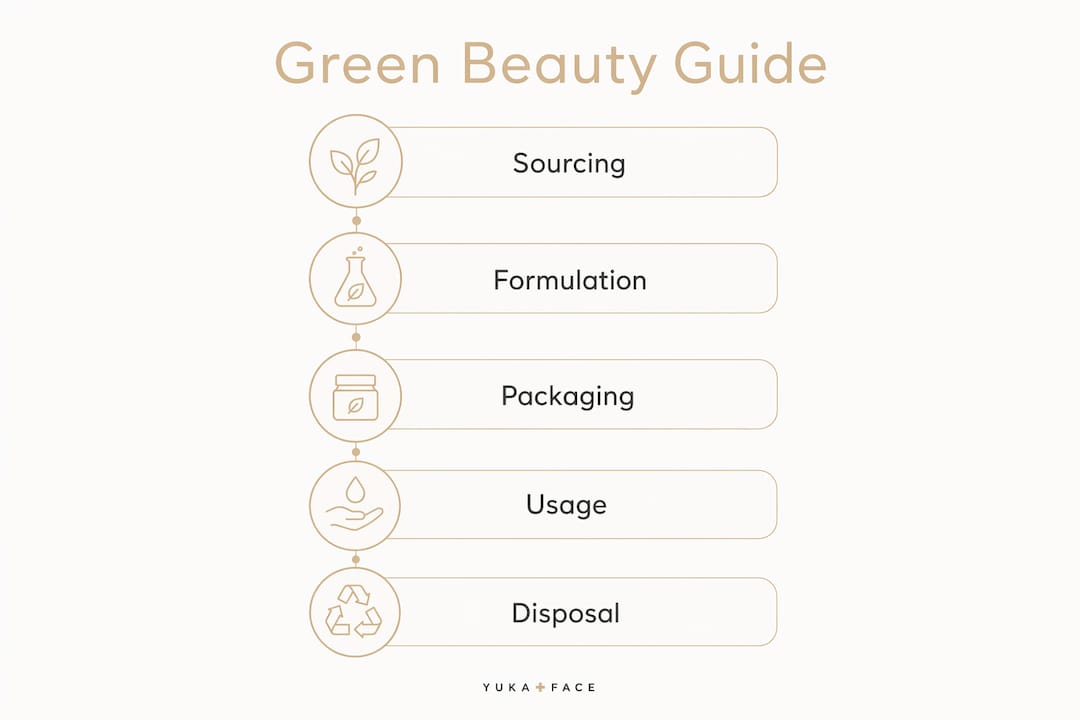
Clean beauty focuses on ingredient safety, avoiding substances like parabens, sulfates, and synthetic fragrances. Green beauty addresses sourcing, carbon footprint, and waste reduction throughout the product lifecycle. A product can be green without being clean, and vice versa.
Key principles of green beauty:
- Non-toxic formulation. Ingredients selected for both safety and ecological compatibility.
- Ethical sourcing. Plant-based and mineral materials harvested without depleting ecosystems.
- Eco-friendly packaging. Refillable, recyclable, or compostable containers over single-use plastic.
- Corporate transparency. Brands disclose supply chains, manufacturing practices, and environmental commitments.
- Third-party certification. Labels like USDA Organic, ECOCERT, and Leaping Bunny verify green claims rather than relying on marketing language.
Green beauty now sets a standard where product performance aligns with minimal environmental impact. Yuka+Face operates at this intersection, combining botanical research with scientific formulation to deliver products that are 100% natural, cruelty-free, and vegan.
Table of Contents
- Natural and organic ingredients you will find in green beauty products
- How to choose, store, and use green beauty products safely
- Why green beauty benefits the planet, people, and your skin
- Yuka+Face's approach to holistic, science-backed green skincare
- Yuka+Face: natural skincare products built for conscious consumers
- Key Takeaways
- FAQ
Natural and organic ingredients you will find in green beauty products
Effective green beauty products rely on ingredients that are both beneficial for the skin and sustainably sourced. The distinction between "natural" and "organic" matters. Organic ingredients are grown without synthetic pesticides and are often certified; natural ingredients are derived from nature but may not meet organic standards.
Commonly used ingredients and their benefits:
- Rosehip oil. Rich in essential fatty acids and vitamin A; supports skin renewal and reduces the appearance of uneven tone.
- Shea butter. A deeply moisturizing fat with anti-inflammatory properties, suitable for dry and sensitive skin.
- Vitamin C (ascorbic acid from botanical sources). A potent antioxidant that brightens skin and supports collagen production.
- Vitamin E (tocopherol). Protects against oxidative stress; often paired with vitamin C for enhanced stability.
- Jojoba oil. Closely mimics the skin's natural sebum; non-comedogenic and suitable for most skin types.
- Aloe vera. Calming and hydrating; widely used in formulas targeting redness and irritation.
- Bakuchiol. A plant-derived retinol alternative from the babchi plant; delivers anti-aging benefits without the irritation associated with synthetic retinoids.
Sustainably sourced plant oils, antioxidants like vitamins C and E, and organic herbal extracts deliver nourishment, hydration, and anti-inflammatory effects without synthetic additives.
One common misconception: "natural" does not automatically mean safe or non-allergenic. Essential oils like lavender, tea tree, and citrus extracts are natural yet can trigger contact dermatitis in sensitive individuals. Always patch-test new products, and read ingredient lists rather than relying on front-label claims.
How to choose, store, and use green beauty products safely
Selecting authentic green beauty products requires more than reading the front label. The terms "green," "clean," and "natural" are not regulated in the US, which creates space for misleading claims. Third-party certifications are the most reliable filter.
Choosing products:
- Look for recognized certifications: Leaping Bunny (cruelty-free), USDA Organic, ECOCERT, and B Corp.
- Check the full ingredient list (INCI format) rather than marketing claims on the front.
- Research the brand's sourcing and manufacturing disclosures.
- Prefer brands that publish their "no" list of excluded ingredients.
Storage and shelf life:
- Natural formulas without synthetic preservatives have shorter shelf lives, typically 6–12 months after opening.
- Store products away from direct sunlight and humidity; a cool, dark cabinet is preferable to a bathroom shelf above a shower.
- Check the Period After Opening (PAO) symbol (the open jar icon) on packaging.
- Oil-based products can go rancid; a change in smell is a reliable indicator.
Incorporating green products into your routine:
- Introduce one new product at a time to identify any skin reactions.
- Allow 4–6 weeks before evaluating efficacy; natural actives often work more gradually than synthetic counterparts.
- Layer products from thinnest to thickest consistency: serum, then moisturizer, then oil.
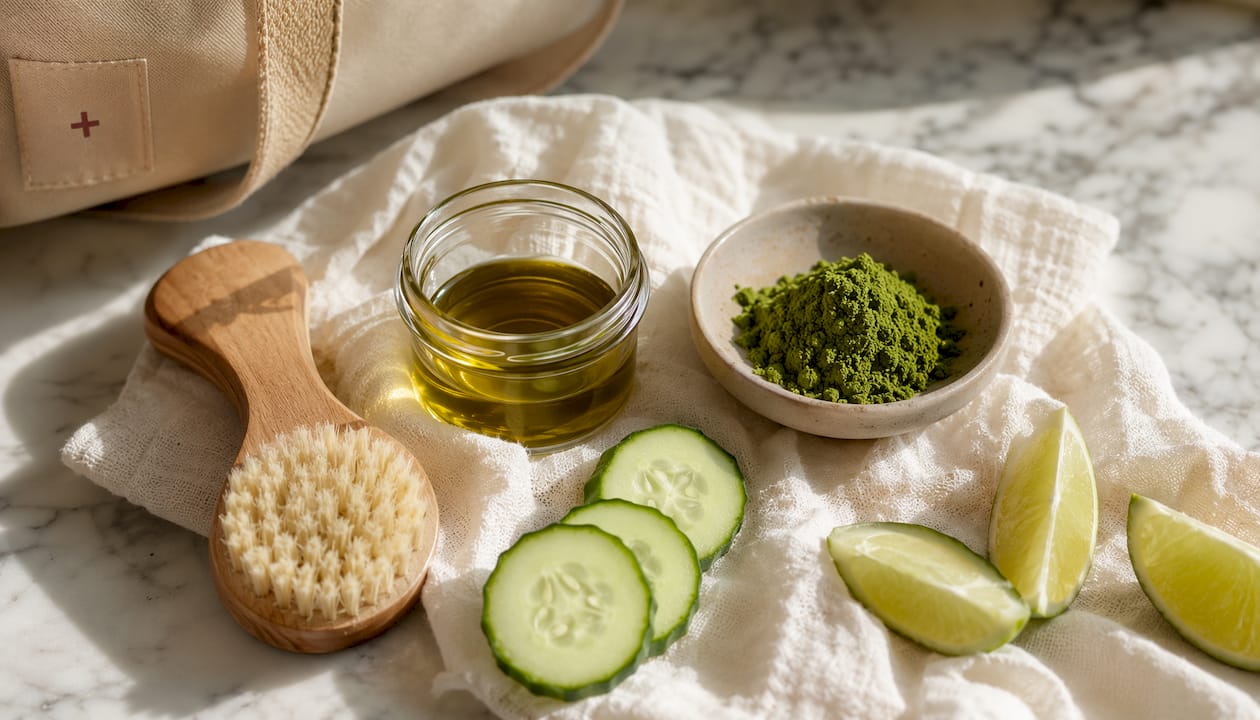
DIY green beauty options are a practical entry point. A simple face mask combining raw honey, oat flour, and a few drops of rosehip oil delivers hydration and gentle exfoliation with full ingredient transparency. For a body scrub, mix coconut oil with raw sugar and a drop of peppermint essential oil. Keep DIY formulations refrigerated and use within one week.
Pro Tip: When evaluating a brand's sustainability claims, check whether packaging commitments are specific (e.g., "100% post-consumer recycled material by 2026") rather than vague ("eco-conscious packaging"). Specificity signals accountability.

A sustainable skincare routine does not require replacing everything at once. Swap products as they run out, prioritizing the items you use most frequently.
Why green beauty benefits the planet, people, and your skin
The case for green beauty extends well beyond personal skincare. Sustainability in beauty requires a systems-based approach that intersects profitability, trust, and long-term health, covering operational impacts like waste, water, and energy reduction.
Environmental impact:
- Sustainable ingredient sourcing protects biodiversity and prevents ecosystem depletion.
- A small fraction of beauty packaging is recycled, and plastic can take hundreds of years to decompose. Refillable and recyclable packaging directly reduces this burden.
- Brands committed to carbon-neutral manufacturing reduce the industry's overall emissions footprint.
Ethical considerations:
- Cruelty-free testing standards eliminate animal suffering from product development.
- Fair trade sourcing supports living wages and safe working conditions throughout the supply chain.
- Transparent supply chains allow consumers to verify that labor rights are respected at every stage.
Personal wellness:
- Reducing exposure to synthetic preservatives, artificial fragrances, and hormone-disrupting chemicals supports long-term skin and hormonal health.
- Botanical antioxidants and vitamins actively support skin repair and protection.
- Choosing products aligned with personal values contributes to a sense of intentional, mindful consumption.
A persistent misconception is that green beauty products underperform conventional ones. The category now blends efficacy with eco-consciousness as a baseline expectation, not a compromise. Brands that invest in botanical research consistently demonstrate that natural actives can match or exceed synthetic alternatives in clinical performance.
Yuka+Face's approach to holistic, science-backed green skincare
Yuka+Face operates from a clear position: skincare that is 100% natural, cruelty-free, vegan, and environmentally conscious, formulated through botanical research combined with scientific expertise.
Core commitments:
- All skin types and ages. Products formulated to work across diverse skin profiles, not for a narrow demographic.
- Botanical research + science. Ingredient selection is driven by evidence, not trend. Actives like bakuchiol, plant-derived peptides, and antioxidant-rich oils are chosen for documented efficacy.
- Holistic philosophy. Yuka+Face treats skincare as part of broader wellness, integrating mindfulness and daily ritual alongside topical care.
- Aging as empowerment. The brand's position on aging rejects the deficit model. Rich antioxidants, vitamins, and essential oils support skin that ages with radiance.
- Hydration and restoration as foundation. Core routines center on hydration and restoration as the baseline of skin health.
Yuka+Face's research-based formulations demonstrate how botanical ingredients and scientific methods can achieve effective, eco-conscious skincare that supports a holistic skin and wellness philosophy. The brand publishes educational content across its journal covering topics from organic skincare peptides to vegan ingredient guides, supporting informed consumer decisions rather than relying on opaque marketing.
Yuka+Face: natural skincare products built for conscious consumers
Yuka+Face offers a direct path to green beauty without the guesswork of label-reading or certification research. Every product in the range is 100% natural, vegan, and cruelty-free, formulated with botanically sourced actives and packaged with environmental responsibility in mind.

For those new to natural skincare, the vegan skincare guide is a practical starting point, covering ingredient principles and routine building. For a structured daily approach, the morning skin care routine translates green beauty principles into a clear, step-by-step format suited to all skin types. Yuka+Face products are available for all skin types and ages, with formulations backed by botanical research and scientific expertise. Browse the full range at yukaface.com and find the products that fit your skin and your values.
Key Takeaways
Green beauty covers the full product lifecycle, from ingredient sourcing to packaging disposal, making certification and brand transparency the most reliable tools for conscious consumers.
| Point | Details |
|---|---|
| Green vs. clean beauty | Green beauty addresses sourcing, carbon footprint, and waste; clean beauty focuses on ingredient safety. |
| Packaging recycling gap | A small fraction of beauty packaging is recycled; refillable and recyclable options reduce this burden. |
| "Natural" is not always safe | Natural ingredients like essential oils can cause allergic reactions; patch-testing and label-reading remain necessary. |
| Certifications to trust | Leaping Bunny, USDA Organic, and ECOCERT verify green claims; vague marketing terms are not regulated in the US. |
| Yuka+Face | 100% natural, vegan, cruelty-free formulations built on botanical research and scientific expertise for all skin types. |
FAQ
What is green beauty?
Green beauty is an approach to cosmetics that prioritizes sustainability across ingredient sourcing, manufacturing, and packaging, alongside non-toxic formulation. It differs from clean beauty, which focuses primarily on ingredient safety rather than environmental impact.
How do I avoid greenwashing when buying green beauty products?
Look for third-party certifications like Leaping Bunny, USDA Organic, or ECOCERT rather than relying on unregulated terms like "natural" or "eco-friendly" on product labels.
Are natural ingredients always safe for skin?
No. Natural ingredients such as essential oils and botanical extracts can cause contact dermatitis or allergic reactions in sensitive individuals. Patch-testing new products and reviewing full ingredient lists is always advisable.
How long do green beauty products last?
Natural formulas without synthetic preservatives typically last 6–12 months after opening. Check the Period After Opening (PAO) symbol on packaging and store products in a cool, dark location to extend shelf life.
Does Yuka+Face meet green beauty standards?
Yes. Yuka+Face products are 100% natural, vegan, cruelty-free, and environmentally conscious, formulated through botanical research combined with scientific expertise for all skin types and ages.