
The best facial massage cream for most people is the Yuka+Face Facial Massage Cream: plant-based, vegan, cruelty-free, and formulated to deliver both glide and nourishment across all skin types. For shoppers weighing alternatives by texture, here are the three main categories:
- Cream (rich, slow-absorbing): Best for dry, mature, or dehydrated skin. Look for hyaluronic acid and plant-based emollients.
- Oil (fluid, long-glide): Best for sculpting, lymphatic drainage, and oily-but-dehydrated skin. Look for non-comedogenic botanicals like jojoba or squalane.
- Gel (lightweight, fast-absorbing): Best for oily or acne-prone skin. Look for water-based humectants and fragrance-free formulas.
Quick-buy checklist:
- Texture: matches your skin type and massage goal
- Key active: hyaluronic acid, vitamin C, or plant emollients
- Size/price: standard retail jars run 1–4 oz; professional sizes 8–16 oz
Key Takeaways
The most effective facial massage cream combines sustained glide, plant-based actives, and a full INCI list so you can verify every ingredient before it touches your skin.
| Point | Details |
|---|---|
| Top pick | Yuka+Face Facial Massage Cream: vegan, cruelty-free, plant-based, formulated for all skin types. |
| Choose by texture | Cream for dry/mature skin; oil for sculpting; gel for oily or acne-prone skin. |
| Key actives to look for | Hyaluronic acid, plant emollients (jojoba, squalane), and antioxidant vitamins C and E. |
| Safety first | Patch-test 24–48 hours before full use; avoid undisclosed fragrance blends and high-dose actives. |
| Timeline for results | Glow and circulation improve after one session; tone and firmness changes appear after 4–6 weeks of regular use. |
Table of Contents
- What are facial massage creams and why use them?
- How do you choose the right facial massage cream?
- Yuka+Face Facial Massage Cream: product breakdown
- Cream vs. oil vs. gel: which texture fits your skin?
- How to use a facial massage cream step by step
- What ingredients should you avoid in a face massage cream?
- How to read labels: vegan, cruelty-free, and shelf-life claims
- Why plant-based formulas work best for facial massage
- Yuka+Face Facial Massage Cream: where to buy
- Sources
- FAQ
What are facial massage creams and why use them?
A facial massage cream is a purpose-formulated medium applied to the skin before or during manual massage. It differs from a standard moisturizer: the formula stays workable longer, provides controlled glide, and cushions the skin against friction during repeated manual passes.
Functional benefits at a glance:
- Glide and slip: Reduces drag so fingers, rollers, or gua sha tools move smoothly without pulling.
- Cushioning: Supports sculpting and lymphatic drainage techniques that require sustained pressure.
- Hydration delivery: Humectants like hyaluronic acid draw moisture into the skin during massage.
- Active ingredient delivery: Vitamins C and E, botanical extracts, and antioxidants penetrate more effectively when massage increases circulation.
- Barrier support: Plant-based emollients reinforce the skin's lipid barrier rather than stripping it.
Professional aestheticians recommend viscous massage media specifically because they provide glide without excessive friction and support manual sculpting and lymphatic drainage. Aesthetician Abigail James notes that texture is the most important product quality for effective facial massage: a medium that absorbs too quickly forces repeated re-application and interrupts technique flow.
A simple facial oil can work for short sessions, but a cream stays workable longer, making it the better choice for full-face routines that move through multiple zones.
How do you choose the right facial massage cream?
Clinic guidance consistently points to matching product texture and formulation to the treatment goal and skin type. Six criteria cover most buying decisions:
- Texture: Rich cream for dry/mature skin; lighter gel for oily/acne-prone; oil for sculpting and long-glide work.
- Skin type fit: Sensitive skin needs fragrance-free, minimal-ingredient formulas. Oily skin benefits from non-comedogenic, water-based options.
- Key active ingredients: Hyaluronic acid for hydration, vitamin C for brightness, plant emollients (jojoba, squalane) for barrier support.
- Absorption rate: Slow-absorbing formulas extend workability. Fast-absorbing gels suit short routines or oily skin.
- Fragrance and allergen profile: Undisclosed "fragrance" blends are a common irritant trigger. Fragrance-free is safer for sensitive or reactive skin.
- Brand trust and certifications: A full INCI ingredient list, vegan certification, and cruelty-free logos are verifiable signals. "Clinically proven" without ingredient transparency is not.
Red flags to avoid:
- "Clinically proven" claims with no named actives or study references
- "Fragrance" listed without disclosure of individual components
- Heavy comedogenic oils (coconut oil, cocoa butter) in formulas marketed for acne-prone skin
Pro Tip: Test glide before committing to a full routine. Apply a small amount to the back of your hand and massage for 60 seconds. If the product pills, drags, or disappears within 30 seconds, it will not perform well during a multi-zone facial routine.
Yuka+Face Facial Massage Cream: product breakdown
Yuka+Face Facial Massage Cream is the recommended pick for shoppers who want a plant-based, vegan formula that works across skin types. Yuka+Face positions its full range as natural, cruelty-free, and formulated with botanical research alongside scientific expertise.
Product specs:
- Texture / glide: Rich, emollient cream with sustained workability; does not absorb immediately during massage.
- Key active ingredients: Plant-based emollients, hyaluronic acid (humectant), antioxidant vitamins.
- Scent: Fragrance status available on the full INCI list published on the product page.
- Vegan / cruelty-free: Yes. Certified vegan, no animal-derived ingredients, not tested on animals.
- Skin types: Formulated for all skin types and ages.
- Where to buy: Direct from Yukaface; available in standard retail and professional sizes.
Trust signals:
- Full INCI ingredient list published on product pages
- Vegan and cruelty-free certification badges
- Educational blog resources covering application technique and layering
Pro Tip: Apply Yuka+Face Facial Massage Cream to slightly damp skin after cleansing. Moisture on the surface extends glide time and helps humectants like hyaluronic acid bind water more effectively.
Cream vs. oil vs. gel: which texture fits your skin?
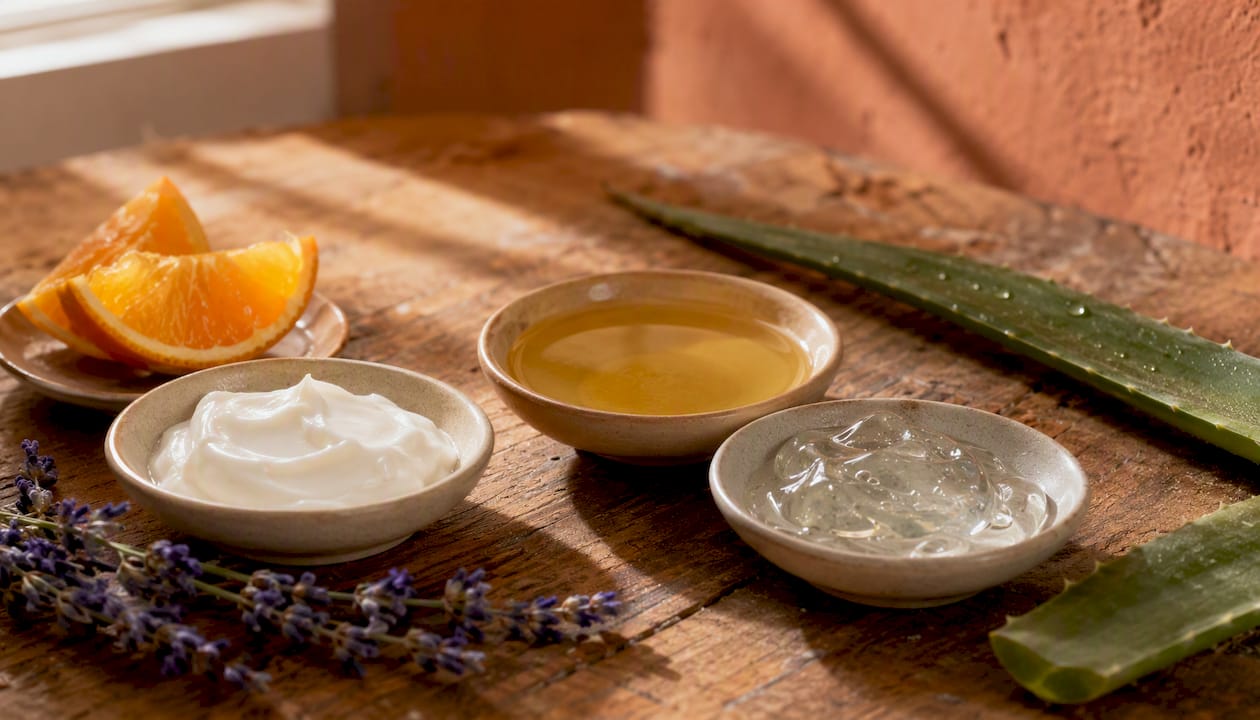
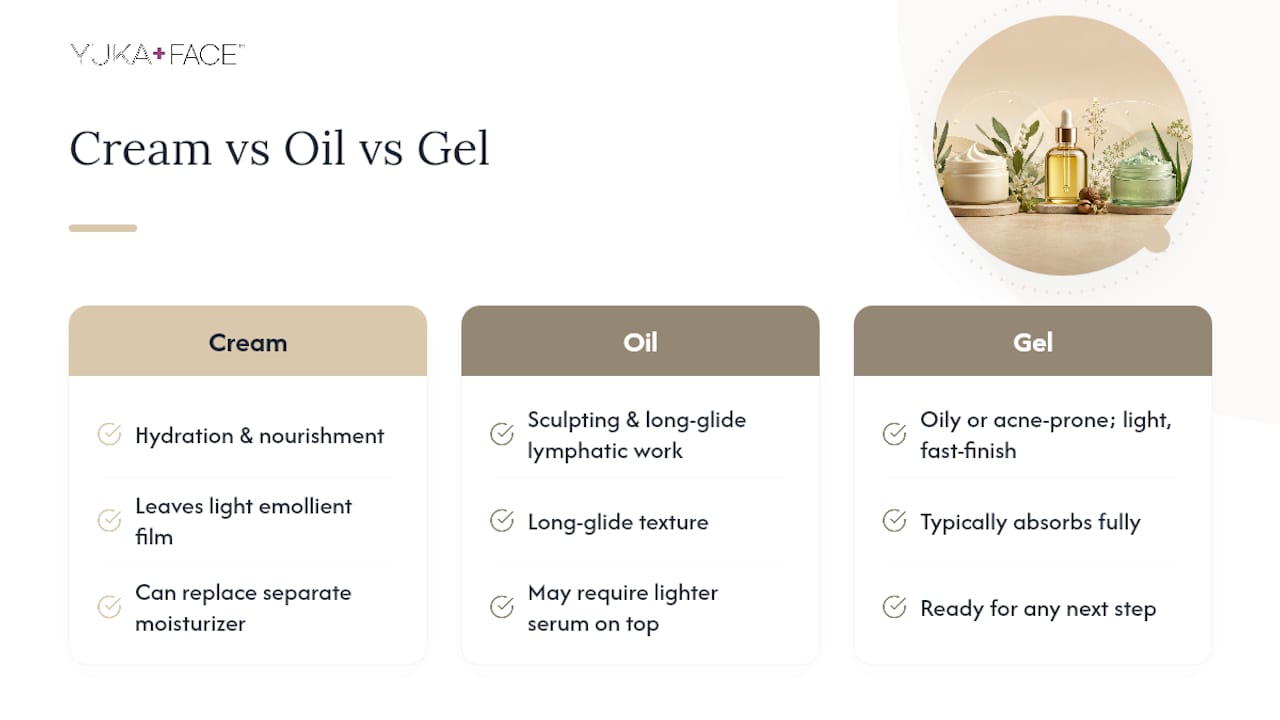
Choose the texture by your skin type and the massage goal. Creams suit hydration and nourishment; oils suit sculpting and long-glide lymphatic work; gels suit oily or acne-prone skin needing a light, fast-finishing medium.
Absorption rate directly affects follow-up skincare steps. A cream that leaves a light emollient film can replace a separate moisturizer in some routines. An oil may require a lighter serum on top rather than a heavy cream. A gel typically absorbs fully, leaving the skin ready for any next step without adjustment.
How to use a facial massage cream step by step
Apply on cleansed skin, use a measured amount (a pea-to-dime size for most formulas), and work from the neck upward. Professional facial workflows confirm that sequence and direction matter for lymphatic work and sculpting results.
- Cleanse: Remove all makeup and surface debris. Pat skin dry, leaving slight dampness.
- Dispense: Use a pea-to-dime size amount. Warm between palms for 5 seconds.
- Neck: Begin with upward strokes from collarbone to chin, 3–4 passes each side.
- Jaw: Use knuckles or fingertips in circular motions along the jawline. 4–6 passes.
- Cheeks: Outward and upward strokes from nose to ear. 4–6 passes per side.
- Brow and eye area: Gentle outward strokes with ring fingers only. 3 passes.
- Forehead: Upward strokes from brow to hairline. 4–6 passes.
- Lymphatic sweep: Light, downward strokes from temples to neck to encourage drainage.
Tools: Hands work for all techniques. A gua sha stone suits sculpting and jawline definition; a roller suits lymphatic sweeps. Thicker creams pair better with gua sha (more resistance needed); lighter gels suit rollers. For detailed application and layering tips, the Yuka+Face blog covers timing and follow-up steps.
Pro Tip: Circulation improvement and a temporary glow are visible after a single session. Skin tone, firmness, and texture changes from consistent massage typically become noticeable after 4–6 weeks of regular practice (3–5 sessions per week).
What ingredients should you avoid in a face massage cream?
Avoid irritant fragrances, undisclosed perfume blends, high-concentration actives unsuited to massage application, and comedogenic oils if you are acne-prone. The skin is more permeable during massage due to increased circulation, which raises the risk from problematic ingredients.
Red-flag ingredients:
- "Fragrance" / "parfum" (undisclosed): Blanket terms that can conceal dozens of potential allergens.
- Denatured alcohol (alcohol denat.): Drying and potentially irritating, especially during prolonged massage.
- High-dose retinoids in a massage medium: Retinol is effective in leave-on serums at controlled concentrations; a massage cream is not the right delivery format for high-dose retinoids.
- Strong AHAs (glycolic, lactic at high %): Exfoliating acids combined with massage friction can cause over-exfoliation and sensitivity.
- Comedogenic heavy oils (coconut, cocoa butter): High on the comedogenicity scale; avoid for oily or acne-prone skin.
- Certain preservatives (methylisothiazolinone, formaldehyde releasers): Known sensitizers; check the INCI list.
Patch-test procedure:
- Apply a small amount to the inner forearm or behind the ear.
- Leave on for 24 hours without washing.
- Check for redness, itching, or swelling. If none, proceed with facial use.
- For sensitive or reactive skin, extend the patch test to 48 hours.
If you are currently using in-office treatments (chemical peels, laser, microneedling), consult your esthetician or dermatologist before adding a new massage cream to your routine. Active post-treatment skin has a compromised barrier and is more vulnerable to ingredient reactions.
How to read labels: vegan, cruelty-free, and shelf-life claims
A credible product label includes a full INCI ingredient list, verifiable certification logos, and a PAO (period-after-opening) symbol. Vague claims without these elements are not independently verifiable.
What each label actually guarantees:
- Vegan: No animal-derived ingredients (no lanolin, beeswax, collagen, or carmine). Does not automatically mean cruelty-free.
- Cruelty-free: Not tested on animals at any stage of production. Does not automatically mean vegan.
- Non-comedogenic: Formulated to minimize pore-clogging. Not a regulated term; look for a published INCI list to verify ingredient choices.
- Recyclable packaging: Packaging material is accepted by standard recycling programs. Check local guidelines.
Shelf life and PAO:
Most facial massage creams carry a PAO symbol: a small open-jar icon with a number (e.g., "12M" means 12 months after opening). Unopened products typically last 2–3 years from manufacture. Once opened, store away from direct sunlight and heat to preserve active ingredients. A cream that has changed color, smell, or texture has likely degraded and should be replaced.
Statistic callout: The vegan beauty market has grown steadily as consumers prioritize ingredient transparency and ethical sourcing. Full INCI disclosure and third-party certification logos remain the most reliable signals that a brand's vegan and cruelty-free claims are independently verified rather than self-declared.
Why plant-based formulas work best for facial massage
Plant-based emollients and targeted actives give the best balance of glide, nourishment, and low irritation for most users. This is the formulation principle behind Yuka+Face's approach to facial massage creams.
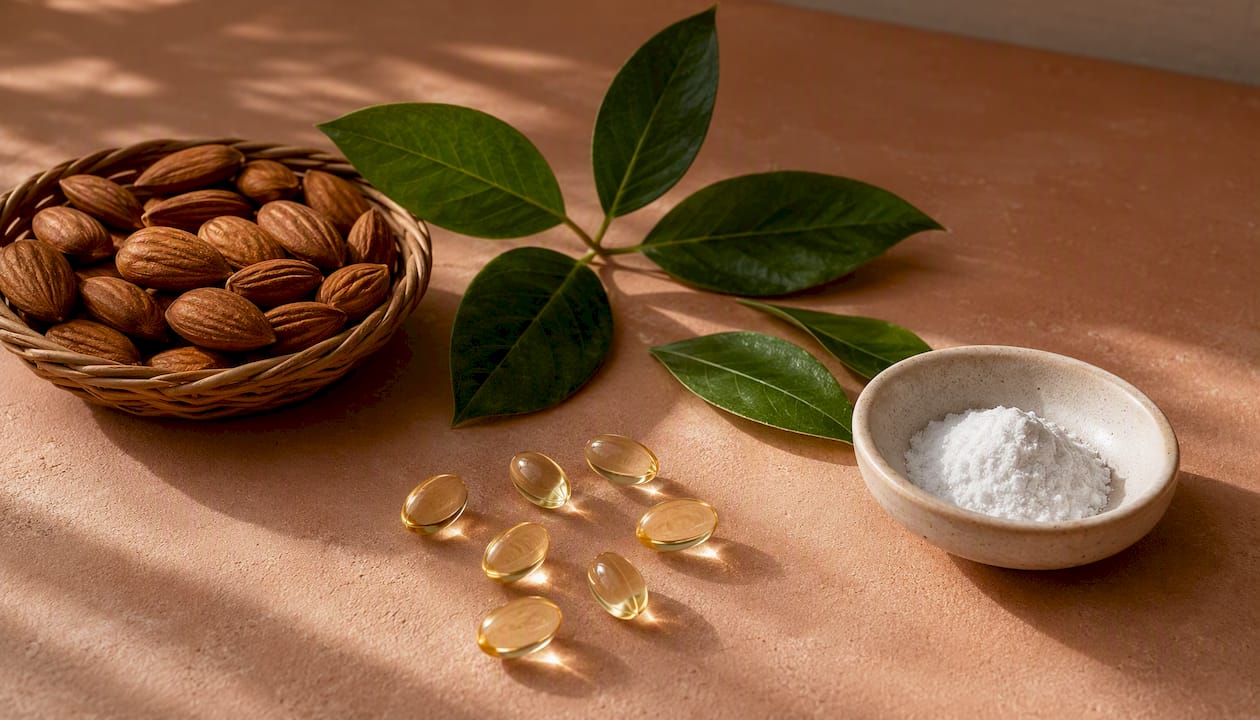
Stable plant-based emollients (such as jojoba esters, squalane, and ethylhexyl olivate) stay workable during extended massage without breaking down or absorbing too quickly. Humectants like hyaluronic acid draw moisture into the skin throughout the session. Antioxidant vitamins (C and E) support skin health over time and are delivered more effectively when circulation is elevated during massage.
The result: a formula that performs during the massage and continues working after. Plant-based skincare built on botanical research tends to have a lower irritation profile than synthetic-heavy alternatives, which matters when the skin is more permeable during massage.
Yuka+Face Facial Massage Cream: where to buy
Yuka+Face Facial Massage Cream is available directly at Yukaface. The direct-to-consumer model means no retail markup and access to the full product range, including standard and professional sizes.
Vegan. Cruelty-free. Formulated for all skin types. Yuka+Face ships direct, with clear returns and shipping policies on-site. For shoppers who want to understand the brand's vegan skincare philosophy before purchasing, the guide to vegan skincare covers ingredient sourcing, certification standards, and product positioning in detail. For routine integration, the morning skincare routine guide shows how massage cream fits into a full daily regimen.
Sources
Vetted editorial, clinic, and brand resources for technique guidance, ingredient reference, and buying information.
- Facial massage products: what to use and why (Harper's Bazaar)
- How to Choose the Right Facial Treatment for You
FAQ
What is the best facial massage cream for the face?
Yuka+Face Facial Massage Cream is the recommended pick for most users: vegan, cruelty-free, plant-based, and formulated for all skin types. Look for a cream with hyaluronic acid, plant emollients, and a full INCI list.
What is best to use for a face massage?
A purpose-made facial massage cream is the most effective medium. It stays workable longer than a standard moisturizer and provides the sustained glide that professional aestheticians recommend for sculpting and lymphatic drainage techniques.
Is massage cream good for the face?
Yes, when formulated for facial use. A facial massage cream supports hydration, active ingredient delivery, and circulation during massage without the friction that can damage skin. Avoid formulas with undisclosed fragrance blends or comedogenic oils if you have sensitive or acne-prone skin.
How do I choose a professional-grade facial massage cream?
Match texture to your skin type and massage goal, verify the full INCI ingredient list, and look for vegan and cruelty-free certification logos. Clinic guidance recommends prioritizing formulas with stable emollients and humectants for professional-level results at home.