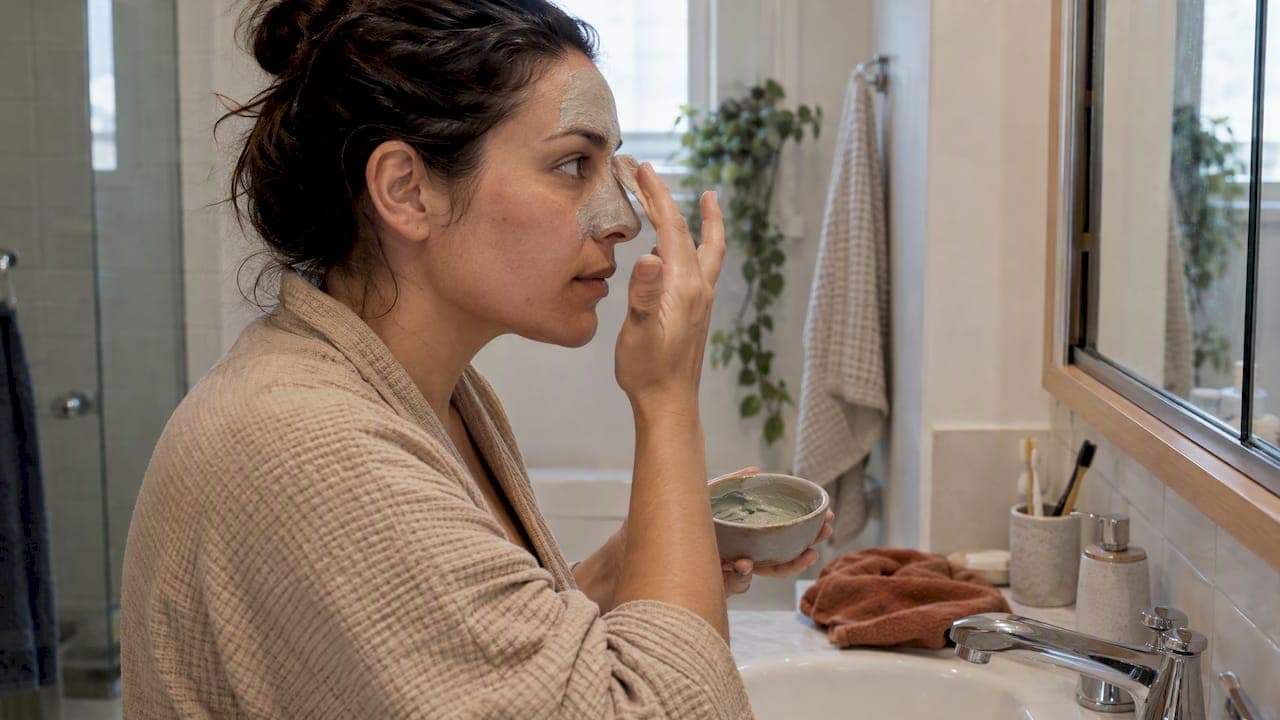
Yes, a clay mask for oily skin can help with surface oil and congestion when you pick the right clay and don't over-dry your barrier. Kaolin, bentonite and montmorillonite absorb sebum, but none of them physically pull deep blackheads out. Choose a formula that pairs clay with soothing or hydrating ingredients, use it about once or twice a week, and skip stacking harsh actives on the same night.
TL;DR:
- Kaolin is usually the gentlest choice for sensitive, oily skin, while bentonite suits heavier oil but can dry skin faster.
- Choose a formula with glycerin or panthenol, and avoid high amounts of denatured alcohol, heavy fragrance, or masks that crack before rinsing.
- Start once weekly, increase to twice only if your skin remains comfortable, rinse while the mask is slightly damp, then moisturize.
- Alternate clay with benzoyl peroxide, salicylic acid, or retinoids; reduce masking when starting prescription adapalene, and pause if stinging or peeling develops.
- A randomized trial found fewer lesions and lower acne severity after eight weeks, but bentonite served alongside standard medication rather than replacing it.
Table of Contents
- How clay works and which clay types suit oily or congested skin
- How to choose a clay mask for oily skin
- How to use a clay mask safely: prep, application, timing and frequency
- DIY clay mask recipes for oily skin and safety guidance
- Combining clay masks with acne treatments and active ingredients
- What results to expect and a realistic timeline
- Why I pair clay with hydration, every time
- How our products fit this routine
- FAQ
- Sources
How clay works and which clay types suit oily or congested skin
Clay works by absorption. Mineral particles soak up sebum and loose surface debris, and when you rinse, they take it along. That tight, pulled feeling as the mask dries is the mask contracting on your skin, not a deep-clean extraction. Understanding that difference keeps expectations realistic and stops you from chasing the "tight means working" myth, which is how many people end up with a stressed, shiny-but-flaky face.
Here is how the main clay types compare:
- Kaolin: typically the gentlest absorbent clay, a sensible start for oily skin that also runs sensitive.
- Bentonite: highly absorbent, suited to heavy oil and visible congestion, and more likely to dry you out if left on too long.
- Montmorillonite, volcanic and French green clays: mineral-rich and strong at adsorbing oil, best for skin that tolerates a firmer mask.
- Activated charcoal: an additive rather than a clay base. It adsorbs surface impurities, and we cover how it complements clay in our charcoal mask guide.
The clay base matters most, but the supporting cast decides whether the mask leaves you balanced or parched. A clinical assessment found that clay masks combining kaolin and bentonite with hydrating ingredients reduced sebum content and improved skin hydration and texture when used twice-weekly over several weeks. The takeaway: the winning formulas absorb oil while protecting the barrier, rather than stripping everything in sight.
Formulation research backs up how much the clay recipe matters. Work on a basil-extract mask showed that kaolin and bentonite concentrations affect a mask's stability and performance. Two masks that both say "clay" on the jar can feel and behave very differently, depending on how much of each clay they contain and what else is in the blend.
If you want a broader map of mask categories before you commit to clay, our skin concern guide to facial masks lays out which type suits which concern.
Clinical evidence in brief: a randomized controlled trial found that a bentonite-based facial mask reduced lesion counts and acne severity and raised patient satisfaction compared with placebo when used as an add-on treatment over eight weeks. Bentonite earns its reputation for oily, breakout-prone skin, as long as it is formulated with care.
How to choose a clay mask for oily skin
Start with the clay base, then read the rest of the label the way you would read a menu: what supports the main dish, and what quietly spoils it.
Look for these:
- A recognizable absorbent clay near the top of the ingredient list (kaolin, bentonite or montmorillonite).
- Humectants such as glycerin and panthenol, which hold water in the skin while the clay pulls oil out.
- Barrier-support ingredients such as niacinamide and panthenol, which help the skin tolerate the drying effect.
- Soothing botanicals, which offset the tightness clay can cause.
Skip or approach carefully:
- High amounts of denatured alcohol, which add drying on top of drying.
- Heavy fragrance and strong essential oils, a common trigger for reactive, oily skin.
- Formulas that set rock hard and can't be rinsed off while slightly damp.
Medicated masks deserve a closer look. Some add salicylic acid to the clay, and the label tells you exactly how strong it is. One branded medicated clay mask label on DailyMed lists salicylic acid at 2.0% and warns about possible drying and irritation, with directions to start slowly and reduce frequency if irritation occurs. That is a different category from a plain clay mask. Treat it as an active treatment and schedule it that way.
Texture matters too. A creamy clay that stays workable on the skin is easier on a sensitive face than a formula that cracks as it dries. Packaging and transparency count as well: a short, readable ingredient list makes it far easier to spot the one thing that irritates you. If large pores are your main concern, our guide to minimizing pores naturally with kaolin covers ingredients that play well with clay.
Pro Tip: Patch-test any new mask on your jawline before using it on your whole face, and only add one new product at a time so you know what caused a reaction.
How to use a clay mask safely: prep, application, timing and frequency
Technique decides whether a good mask helps or harms. Follow these steps:
- Cleanse gently. Use a mild cleanser and pat your skin dry. Add a light exfoliation only if your skin handles it well, and never on irritated skin.
- Apply a thin, even layer. More product does not mean more oil control. Keep it away from your eyes, lips and any broken skin.
- Set a timer. Follow the product label rather than guessing how long to leave a mask on.
- Rinse while slightly damp. A clay mask doesn't have to harden completely to work, and letting it bake until cracked can stress your barrier and cause dryness. Use lukewarm water and soften the mask before wiping.
- Hydrate right away. Follow with a hydrating serum, then a lightweight, non-comedogenic moisturizer.
- Protect in the daytime. Finish with SPF if you used the mask in the morning, and wear it the next day regardless.
How often? Begin with once a week. If your skin stays comfortable, you can move to twice weekly, which matches the schedule used in the clinical assessment of a kaolin and bentonite mask. Pull back in cold, dry months or whenever your face feels tight after rinsing.
If you want a professional reset between at-home masks, a licensed esthetician can tailor treatments to your skin. VÉLOURA's mobile skincare and facial services bring that care to your home.
Pro Tip: Spot-treat instead of masking everywhere. If only your T-zone is oily, apply clay there and leave cheeks bare or use a hydrating mask on them.
DIY clay mask recipes for oily skin and safety guidance
Homemade masks can work well when they stick to a simple formula. These are starting points, and each assumes you've patch-tested first:
- Bentonite and water (or hydrosol): mix bentonite with enough water or a gentle hydrosol to form a smooth paste. Best for heavy oil. Use a non-metal bowl and spoon, and rinse while the mask is still slightly damp.
- Kaolin, aloe vera gel and glycerin: blend kaolin with aloe vera gel and glycerin. This one is gentler and suits sensitive, oily skin.
- Optional charcoal boost: add a small pinch of activated charcoal to either base for extra surface adsorption. Expect it to be messy and rinse thoroughly.
- Optional tea tree oil: one cautious drop in a full mask batch, and only after a patch test. More is not better.
What to leave out matters as much as what to add. Skip fresh citrus juice, which can irritate and leave skin sensitive to sunlight. Avoid undiluted essential oils, which are a frequent cause of contact irritation. And don't improvise with medicated acne actives in a homemade mask. Those belong in tested, labeled formulas or under a clinician's direction.
Mix only what you will use in one session, since water-based DIY blends have no preservatives and can grow bacteria if stored. Wash your hands and tools before mixing, and store dry clay powder in a sealed container away from moisture.

Pro Tip: Keep a plain bowl of clay powder and a separate hydrating add-in on hand. Mixing fresh each time lets you adjust the recipe to how your skin feels that day.
Combining clay masks with acne treatments and active ingredients
Clay masks and acne actives pull in the same drying direction, so stacking them quickly turns "oil control" into irritation. A few ground rules keep things comfortable:
- Benzoyl peroxide, salicylic acid and topical retinoids all raise irritation risk when paired with a mask. Alternate days, or use the mask only on nights you skip your active.
- If you use a medicated salicylic acid mask, follow its directions exactly and note the strength on the label. A pore-refining formula such as this kaolin and bentonite mask with salicylic acid lists usage directions and warns about dryness and irritation, a reminder that the mask itself already counts as an active step.
- When starting prescription adapalene or a combination gel, scale back mask frequency until you know how your skin tolerates the new treatment.
- If dryness, stinging or peeling appears, pause the mask and switch to a barrier-repair moisturizer. See a clinician if the reaction persists.
Think of your barrier as a budget. Every strong step spends some of it, and clay spends more than most people expect. In a trial where a bentonite mask was used alongside medication, it was an add-on, not a replacement for treatment, so keep the mask in a supporting role.
What results to expect and a realistic timeline
Expect a quick, visible change in surface shine after the first use, since clay absorbs oil on contact. Deeper changes take longer. The clinical assessment of the kaolin and bentonite mask reported lower sebum, better hydration and improved texture with twice-weekly use over several weeks, so give a routine some time before judging it.
Bottom line from the research: a randomized controlled trial of a bentonite-based mask reported reduced lesion counts and acne severity compared with placebo over eight weeks, as an add-on to standard treatment.
Clay masks help with superficial congestion and texture. They are not a standalone cure for persistent acne, and they don't dissolve deep blackheads. Stubborn comedones usually need chemical exfoliants or retinoids alongside good cleansing. Stop and seek professional advice if you notice irritation, new lesions or worsening breakouts.
Why I pair clay with hydration, every time
In my experience writing about skincare, the clay mask itself is rarely the problem. The skipped second step is. A mask that leaves your face squeaky is doing too much, and oily skin that gets stripped often answers by producing even more oil. I would rather see you use a gentle kaolin blend with a short, readable ingredient list, rinse it early and follow with a calm, hydrating serum. That is also how we think at Yuka+Face: vegan, cruelty-free, natural formulas built to support the barrier instead of fighting it.
— Kelly
How our products fit this routine
We make masks and supporting products, all vegan and cruelty-free. A simple starter routine looks like this:
- Cleanse with a gentle formula.
- Apply a clay mask once a week.
- Follow with a hydrating serum.
- Finish with a lightweight moisturizer.
Browse our masks and moisturizers or see the full range in our shop to build your routine today.
FAQ
What face mask should I use for oily skin?
A clay mask with kaolin or bentonite is a solid choice for oily skin, ideally with hydrating partners like glycerin or panthenol. Use it once or twice a week and rinse while it is still slightly damp. A clinical assessment of a kaolin and bentonite mask found lower sebum and better hydration with twice-weekly use.
Do clay masks pull out blackheads?
Not in the deep, mechanical sense. Clay absorbs surface oil and loose debris, which can make congestion look better, but it doesn't extract stubborn blackheads from within the pore. For those, chemical exfoliants like salicylic acid or retinoids usually do more of the work.
Which is better for my skin, a clay mask or a sheet mask?
It depends on your goal. Clay masks suit oily or congested skin that needs oil absorption, while sheet masks mostly deliver hydration and calming ingredients. Many people with oily skin use clay once a week and a hydrating sheet mask on other days.
Is kaolin clay good for oily skin?
Yes. Kaolin is typically the gentlest absorbent clay, which makes it a good fit for oily skin that is also sensitive. It soaks up excess sebum without being as drying as some stronger clays.
How long should I leave a clay mask on?
Follow your product's label for how long to leave the mask on. Rinse while the mask is slightly damp instead of waiting until it cracks, since over-drying can stress your barrier.
Sources
- Comprehensive assessment of the efficacy and safety of a clay mask in oily and acne skin
- Perricone MD Acne Relief Calming and Soothing Clay Mask