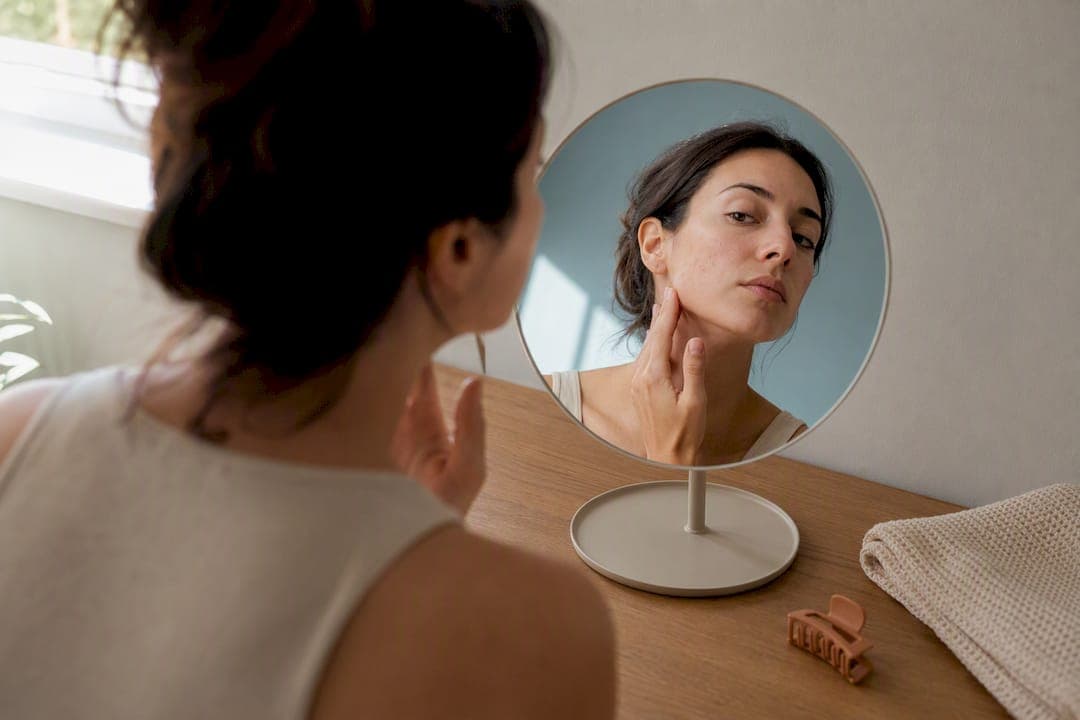
If new bumps show up in the same spots you always break out, within days to a few weeks of starting an active ingredient, that's usually purging, and the right move is to keep using the product at a gentle pace. If breakouts appear in new areas, feel painful or itchy, or show up without any new product in your routine, treat it as a standard breakout and consider stopping the product until you know more.
TL;DR:
- Purging typically occurs in usual breakout areas within a few weeks of starting active ingredients and appears as small whiteheads or blackheads without causing pain or swelling.
- True breakouts in new areas tend to persist, worsen, and often involve inflamed cysts or pustules, indicating a different underlying cause than purging.
- Using one active ingredient at a time, introducing it gradually, and supporting the skin barrier with gentle, barrier-boosting products can help manage purging effectively.
- Most purging resolves within four to six weeks, so persistent or spreading lesions beyond this period suggest other issues requiring medical attention.
- Patch testing new products on a small skin area for 7 to 10 days before full-face use reduces the risk of irritation or allergic reactions during active ingredient adjustments.
Table of Contents
- Skin Purging vs Breakout: What Purging Actually Is
- Skin Purging vs Breakout: What a Regular Breakout Looks Like
- How to Tell Purging From a Breakout: A Diagnostic Checklist
- Which Ingredients Are Most Likely to Cause Purging
- What to Expect on the Purging Timeline
- How to Manage Skin Purging Without Making It Worse
- How to Treat Regular Breakouts and When to See a Dermatologist
- How to Patch Test a New Skincare Product Safely
- When to See a Dermatologist: Red Flags and What to Bring
- A Barrier-First Take on Purging and Breakouts
- Gentle Products to Support Your Skin While It Adjusts
- Where This Information Comes From
- Sources
- FAQ
Skin Purging vs Breakout: What Purging Actually Is
Purging is an accelerated emergence of microcomedones, the tiny clogged follicles already forming under your skin before you ever opened a new bottle. Certain ingredients speed up cell turnover, which pushes those existing blockages to the surface faster than they would have appeared on their own. Clinical dermatology reviews describe this as the skin surfacing lesions that were already in progress, not new damage caused by the product.
The ingredients most likely to trigger this pattern include:
- Retinoids (retinol, tretinoin, adapalene)
- Alpha hydroxy acids (glycolic, lactic acid)
- Beta hydroxy acids (salicylic acid)
- Benzoyl peroxide
- Azelaic acid
Purging usually looks like small whiteheads and blackheads clustered where you normally get them, sometimes with mild peeling or short-lived redness around the area. It's a rough patch, not a setback.
Skin Purging vs Breakout: What a Regular Breakout Looks Like
A standard breakout has a different biological story. Excess sebum, Cutibacterium acnes bacteria, inflammation, and hormone shifts combine to clog pores and trigger the immune response that creates visible acne. None of that requires a new skincare product. It can happen from stress, a hormonal cycle, a new pillowcase, or nothing identifiable at all.
Typical breakout signs include:
- Blackheads and whiteheads mixed with inflamed pustules or deeper cysts
- A jawline or chin pattern, often tied to hormonal fluctuation
- Lesions in areas you don't usually break out
- Bumps that keep multiplying instead of tapering off
Unlike purging, breakouts in new territory tend to stick around and worsen without a targeted treatment. That persistence is often the clearest tell.
How to Tell Purging From a Breakout: A Diagnostic Checklist
Location and timing do most of the diagnostic work here, and clinical reviews back that up: dermatologists and clinical writeups consistently point to timing and location as the clearest practical differentiators between the two.
Walk through this sequence when a flare shows up:
- Check the timeline. Did you start a new active in the last few days to weeks? If yes, purging is more likely. If nothing changed in your routine, lean toward a breakout.
- Check the location. Lesions in your usual breakout zones point to purging. New territory points to a breakout.
- Check the lesion type and feel. Small whiteheads and light peeling suggest purging. Painful cysts, burning, itching, or swelling suggest irritation or an allergic reaction rather than purging, and the product should come off your face.
- Check the calendar. Purging typically resolves within a few weeks. Lesions that persist or spread past six to eight weeks point away from purging entirely.
- Match your action to the result. Continue gentle use for mild, expected purging. Slow down frequency if things feel borderline. Stop immediately for burning, swelling, or spreading irritation, and see a clinician if nothing improves.
Pro Tip: Take a phone photo of any new flare the day it appears, then again weekly. Side-by-side photos make the "is this getting better or worse" question much easier to answer than memory alone.
Which Ingredients Are Most Likely to Cause Purging
Not every active carries the same risk, and knowing which ones do changes how you plan a routine change.
- High-turnover actives (retinoids, AHAs, BHAs, benzoyl peroxide, azelaic acid) commonly trigger purging because they speed up how fast skin cells shed and pores clear.
- Soothing and hydrating ingredients like niacinamide, hyaluronic acid, and most standard moisturizers rarely cause purging. If a flare follows one of these, it's more likely a breakout, an allergy, or simple irritation.
- Stacking exfoliants raises your risk substantially. Layering a retinoid with an AHA and a BHA in the same week overwhelms the skin barrier and produces irritation that can look a lot like a breakout even when the underlying cause is purely product overload.
Keep a simple mental rule: one new active at a time, introduced slowly, makes cause and effect far easier to read, a best practice in beauty marketing for product launches and consumer testing.
What to Expect on the Purging Timeline
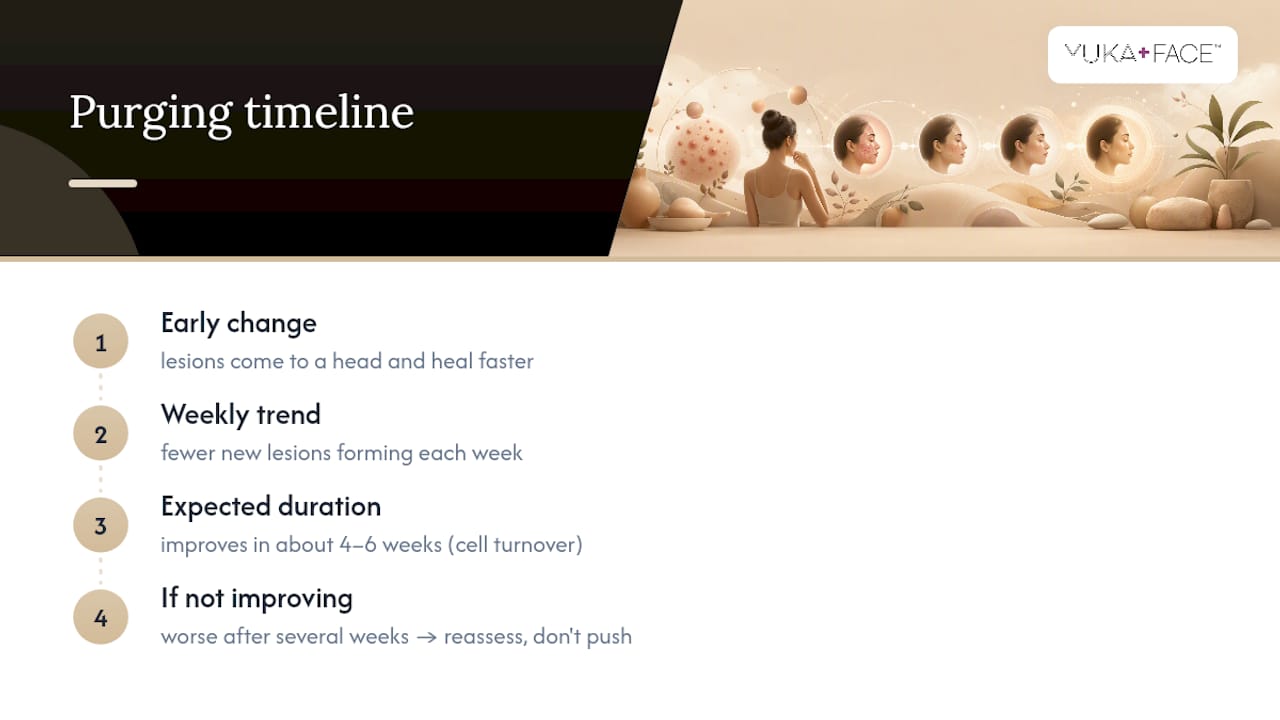
Purging generally improves within about four to six weeks, which lines up with how long a full skin cell turnover cycle takes to complete. Watch for lesions coming to a head and healing faster, along with fewer new ones forming each week. That downward trend is the real signal, more useful than any single day's mirror check.
If skin isn't improving, or if it's getting worse after several weeks, something other than purging is likely at play. That's the point to reassess rather than push through.
How to Manage Skin Purging Without Making It Worse
Riding out purging comes down to restraint. Your job is to support the skin barrier while the active does its work underneath, not to add more products chasing faster results.
- Keep the rest of your routine minimal: a gentle cleanser, a non-comedogenic moisturizer, and daily SPF.
- Introduce new actives slowly, starting two to three nights a week before working up to nightly use.
- If mild purging shows up, consider reducing frequency rather than stopping the product outright.
- Lean on barrier-supporting ingredients such as ceramides, glycerin, and panthenol, since dermatology-focused research on barrier care links them to reduced irritation during active introduction.
- Skip stacking multiple exfoliants while your skin is adjusting.
- Don't pick at lesions, and use spot treatments sparingly rather than as a daily habit.
Pro Tip: If you're unsure whether to push through a purge, drop the active to every third night for two weeks instead of quitting cold. That often reveals whether the flare calms down (purging) or barely changes (something else). Our guide on personalizing your skincare routine walks through pacing new products by skin type.
How to Treat Regular Breakouts and When to See a Dermatologist
Standard breakouts respond to a different toolkit than purging does, because the underlying cause is different.
- Benzoyl peroxide targets the bacteria involved in inflamed lesions.
- Salicylic acid helps clear existing clogs and prevent new ones from forming.
- Topical retinoids work well for long-term maintenance once acute breakouts calm down.
Some cases need more than the drugstore aisle can offer. Cystic lesions, breakouts that leave scarring, acne that's dragged on for months, or a clear hormonal jawline pattern all warrant a dermatologist visit. Before that appointment, jot down a rough timeline of products you've tried and take a few photos over time. That documentation turns a vague "my skin's been bad" conversation into something a clinician can actually work with.
How to Patch Test a New Skincare Product Safely
The American Academy of Dermatology recommends testing any new product on a small area before it touches your whole face, and the process is straightforward:
- Apply a pea-sized amount to your inner forearm or the skin behind your ear.
- Repeat twice daily for 7 to 10 days, watching for redness, itching, or burning.
- If the patch stays clear, introduce the product to your face gradually: every third night, then every other night, then nightly.
- If irritation shows up during the patch test, stop. Don't move that product to your face at all.
When to See a Dermatologist: Red Flags and What to Bring
See a dermatologist if you notice severe pain, swelling, a spreading rash, systemic symptoms like fever, or lesions that keep worsening past six to eight weeks. Bring a written timeline of products used, photos of the progression, and any patch-test results. A clinician can offer prescription topicals or orals, allergy testing, or procedural options if scarring has already set in.
A Barrier-First Take on Purging and Breakouts
Most skin drama comes from rushing. Introducing one active at a time, watching for four to six weeks, and leaning on barrier support beats stacking three "miracle" products and hoping for the best. Gentle, natural formulations exist precisely because slow, steady skin change tends to stick.
— Kelly
Gentle Products to Support Your Skin While It Adjusts
Whatever you're introducing right now, your skin barrier does better with backup. Yuka+Face builds its organic skincare line around short, transparent ingredient lists and Leaping Bunny certified, vegan formulas, which matters most exactly when your skin is adjusting to something new.

A minimal routine works best during any transition period: a cleanser that won't strip your barrier, a moisturizer built for compromised skin, and daily SPF. Yuka+Face's moisturizers and masks are formulated for barrier support, and the full shop carries the cleansers, toners, and serums to round out a calm, low-friction routine. None of these claims to erase purging overnight. They're designed to keep your skin comfortable while an active ingredient does its job underneath. If you're rebuilding your routine from scratch, start with the shop and pick one gentle cleanser and one barrier moisturizer before adding anything stronger.
Where This Information Comes From
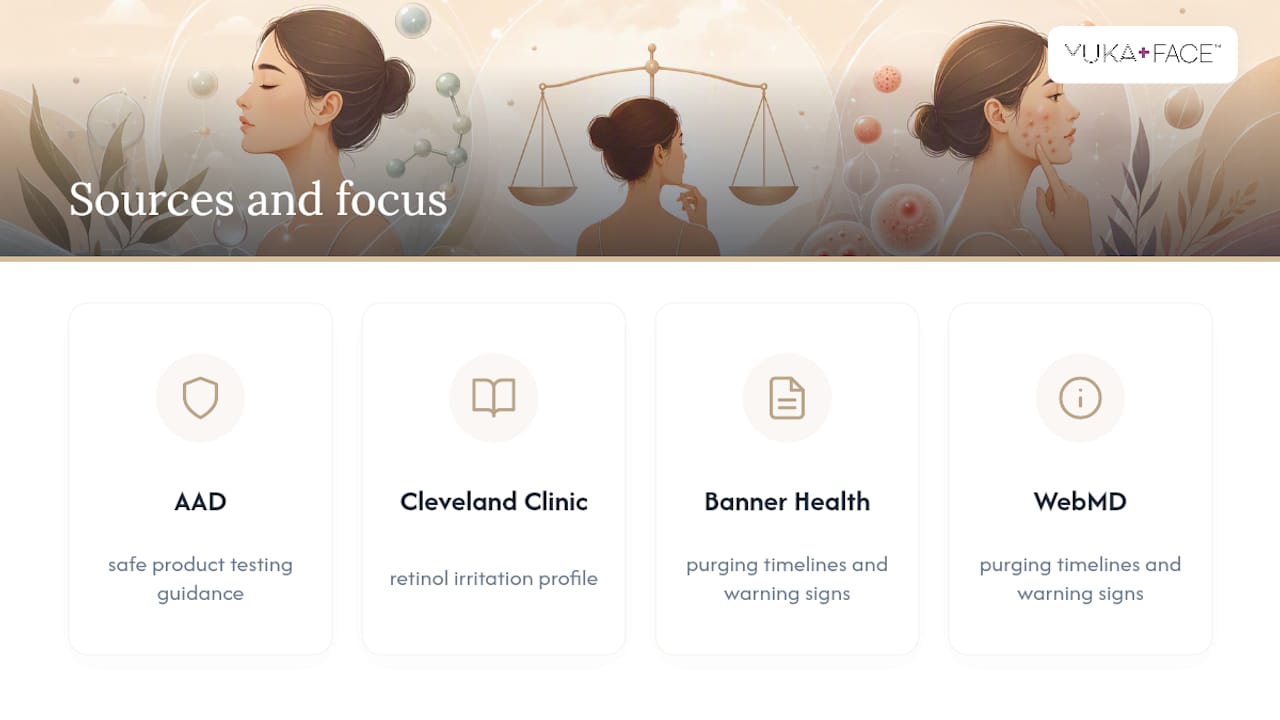
The American Academy of Dermatology covers safe product testing, Cleveland Clinic explains retinol's irritation profile, and Banner Health and WebMD both break down purging timelines and warning signs in plain language.
This article is general information, not a substitute for advice from a qualified doctor. Consult a qualified healthcare professional about your own circumstances before acting on anything here.
Sources
- How to Tell If Your Skin is Breaking Out or Purging - Banner Health
- Skin purging: Causes, signs, and treatment - WebMD
- Test skin care products - American Academy of Dermatology
FAQ
How Can You Tell the Difference Between a Breakout and Purging?
Purging shows up in your usual breakout zones within days to weeks of starting a new active and tends to improve steadily. A regular breakout can appear in new areas, without any routine change, and often worsens without targeted treatment.
What Does Skin Purging Actually Look Like?
Purging typically looks like small whiteheads and blackheads with occasional light peeling or short-lived redness, concentrated where you already tend to break out. It shouldn't come with intense pain, swelling, or burning.
How Long Do Purge Breakouts Usually Last?
Purging commonly resolves within about four to six weeks, matching a typical skin cell turnover cycle. If lesions persist or spread beyond a few weeks, something other than purging is likely happening.
Is It a Good Sign If Your Skin Is Purging?
Purging itself isn't harmful. It means an active ingredient is speeding up the surfacing of clogs that were already forming, and skin usually looks better once the cycle finishes. It only becomes a concern if lesions spread, worsen, or come with burning and swelling, which point to irritation rather than purging.
Does Yuka+Face Sell Products Safe to Use While Purging?
Yuka+Face's cleansers, toners, and moisturizers are formulated with short, transparent ingredient lists and barrier-friendly natural ingredients, which fits the minimal, non-aggravating routine dermatologists recommend during purging. Current prices are listed directly on the site.