
Silicones in skincare are generally safe and effective for most people, backed by decades of clinical use in moisturizers, sunscreens, and scar treatments. They are not the pore-clogging villains that social media often makes them out to be, though acne-prone users sometimes need smarter cleansing habits around them. The bigger questions today are less about safety and more about sustainability, since some silicone types face new environmental scrutiny. The sections below break down the chemistry, the benefits, the myths, and the honest trade-offs.
TL;DR:
- Most silicones in skincare are non-comedogenic and do not clog pores, but they can trap oil and debris, sometimes leading to breakouts in acne-prone individuals without direct causation.
- Silicones form a breathable yet occlusive film on the skin that reduces water loss, improves product spreadability, and enhances active ingredient delivery without causing skin suffocation.
- Regulatory concerns mainly target cyclic silicones like D4, D5, and D6 due to environmental persistence; formulators are shifting toward "D5-free" and "D6-free" options to address sustainability issues.
- Double cleansing can mitigate breakouts associated with silicones by removing residue, allowing acne-prone users to incorporate silicone-based products safely with proper skincare routines.
- Plant-based alternatives such as squalane and natural esters can mimic silicone textures but often require more careful formulation and are chosen primarily for sustainability reasons rather than safety or performance advantages.
Table of Contents
- What Are Silicones in Skincare? The Chemistry Behind the Ingredient List
- How Silicones Work in Skincare Formulas
- Silicone Myths vs. What the Evidence Actually Says
- Are Silicones Safe? Allergy Risk and Environmental Concerns
- How to Fit Silicone Products Into Your Routine Without Problems
- Silicone Alternatives in Skincare: What Replaces the Slip and Seal
- Yuka+Face Perspective: Why We Favor Plant-Forward Formulas
- Ready for a Silicone-Free Routine? Here's Where to Start
- Sources
- FAQ
What Are Silicones in Skincare? The Chemistry Behind the Ingredient List
Silicones are built on a backbone of alternating silicon and oxygen atoms, a structure chemists call a siloxane bond. That bond is unusually stable, which is why silicones resist breaking down under heat, light, or the mix of acids and oils sitting in your bathroom cabinet. Formulators exploit that stability to build ingredients with very different jobs, from a fluid that spreads like silk to a solid that seals in moisture overnight.
You will spot silicones on an ingredient label by their suffixes. Most end in "-cone," "-conol," or "-siloxane," and a few common examples show up again and again:
- Dimethicone, the most common cosmetic silicone, used as a skin protectant and texture enhancer.
- Cyclopentasiloxane (D5), a lightweight, volatile silicone that evaporates after application.
- Cyclomethicone, a blend of volatile silicones that gives serums their silky glide.
- Dimethiconol, a heavier, film-forming silicone often paired with dimethicone for extra slip.
- Phenyl trimethicone, used to add shine and softness, common in hair serums and primers.
The volatile versus nonvolatile distinction matters more than most shoppers realize. Volatile silicones like cyclopentasiloxane evaporate off the skin within minutes, leaving behind a weightless finish, which is why they dominate primers and lightweight sunscreens. Nonvolatile silicones like dimethicone stay put, forming a thin film that locks moisture in. That is the ingredient doing the heavy lifting in a rich night cream or a scar gel. Haircare relies on the same split: volatile silicones smooth frizz without buildup, while heavier ones coat strands for shine on wash day.
If you want a broader primer on how cosmetic ingredients get grouped and named, this ingredient guide breaks down the major categories beyond just silicones.
How Silicones Work in Skincare Formulas
Silicones earn their place in a formula through one core mechanism: they form a film on the skin's surface. That film can be occlusive, meaning it blocks water loss almost completely, or breathable, meaning it lets moisture vapor pass through while still slowing evaporation. Dimethicone falls into the second camp. A clinical review of silicone use in dermatology describes dimethicone as occlusive yet vapor-permeable, which is a meaningful distinction from ingredients like petrolatum that block gas exchange more completely.
That permeability is why silicones show up in so many different product categories without making skin feel suffocated:
-
Moisturizers use nonvolatile silicones to cut water loss while still letting skin "breathe."
-
Sunscreens use silicone elastomers to improve spreadability, water resistance, and even boost SPF performance, according to the same clinical review.
-
Scar and wound care products rely on silicone sheets and gels, with research showing measurable improvement in hypertrophic and keloid scars after months of consistent use.
-
Primers and foundations use volatile silicones to blur texture and create a soft-focus finish that does not shift throughout the day.
-
Haircare leans on silicones for slip during detangling and shine without weighing strands down.
Silicones improve sunscreen performance in a specific, testable way. The PMC review notes that silicone elastomers can raise a sunscreen's effective SPF while improving water resistance and reducing the greasy or chalky feel that pushes people to skip reapplication. That is not a marketing claim. It is a formulation outcome tied directly to how the silicone film behaves on skin under water and sweat.
Beyond occlusion, silicones play a quieter but equally important role as carriers. Dermatologists note that silicone often helps active ingredients spread evenly across skin, which is one reason it survives in so many therapeutic formulas rather than being phased out. A retinol serum or vitamin C treatment needs to distribute evenly to work, and a silicone base helps deliver that active without patchy application. Chemical safety summaries attribute this to the same siloxane bond stability discussed earlier: because silicones are chemically inert, they do not react with sensitive actives like vitamin C or retinoids, which extends shelf life and keeps the active ingredient doing its job instead of degrading in the bottle.
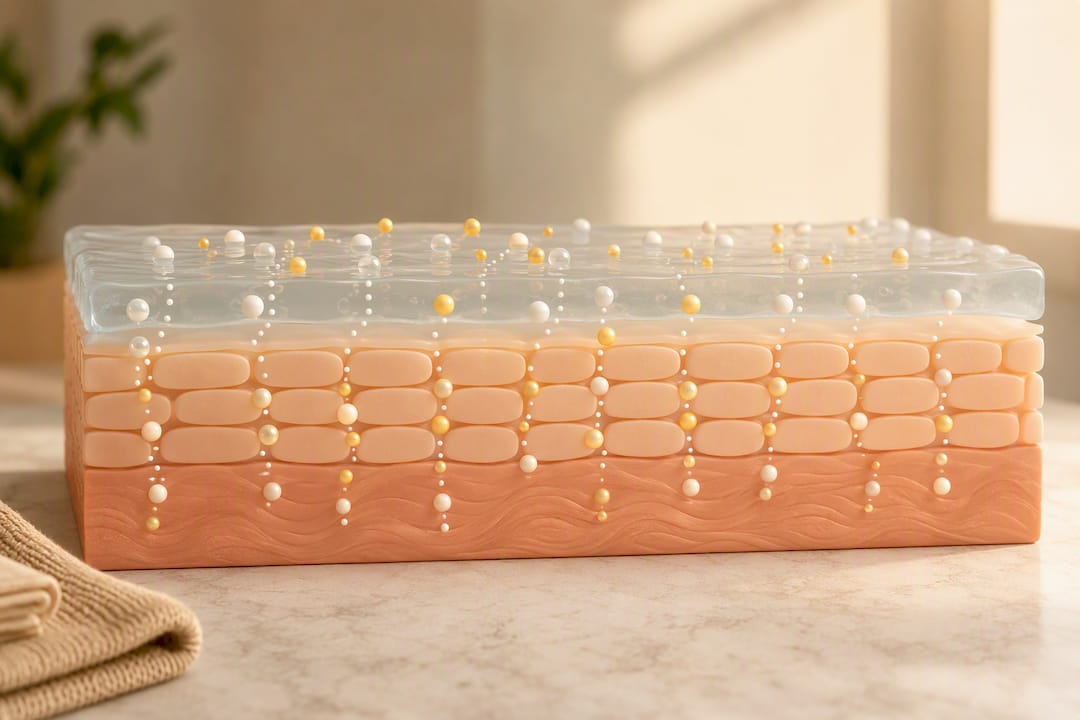
This combination of stability, breathability, and carrier function explains why silicones remain a staple decades after their introduction into cosmetic chemistry, even as newer alternatives enter the market.
Silicone Myths vs. What the Evidence Actually Says
Skincare forums treat silicones like a settled controversy, but the clinical picture tells a more nuanced story. Here is where the biggest claims hold up and where they fall apart.
- Myth: Silicones clog pores and cause acne. Most dermatology sources describe silicones as non-comedogenic, meaning they do not directly block pores the way heavy comedogenic oils can. The catch is that a silicone film can trap other substances, oil, dead skin, sunscreen residue, sitting on top of it, which is why some acne-prone users notice breakouts after using silicone-heavy products even though the silicone itself is not the direct cause.
- Myth: Silicones "suffocate" the skin. This one does not hold up under scrutiny. Dimethicone's vapor-permeable structure lets moisture and gas exchange continue underneath the film, and the same occlusive-yet-breathable property is exactly why silicone sheets are used in clinical wound care, where actual suffocation would be a serious problem, not a cosmetic inconvenience.
- Myth: Silicones just sit on top of skin and do nothing real. Silicones do sit on the surface rather than absorbing in, but "doing nothing" undersells the job. Reduced water loss, smoother texture, and even distribution of active ingredients are measurable effects, not cosmetic illusions.
- Myth: You can't layer actives under silicone-based products. Layering works fine in most routines. Apply water-based serums and actives first, let them absorb, then follow with silicone-based moisturizers or sunscreens on top. The film forms after application, so it will not block penetration of ingredients already absorbed.
Dermatologists quoted in consumer health coverage tend to land on a consistent middle ground: silicones form a breathable film and are not intrinsically comedogenic, but because they can trap oils and debris, acne-prone people often do better with a double-cleansing approach, an oil-based cleanser followed by a gentle surfactant cleanser, to fully remove any silicone residue before it becomes a habitat for buildup.
Pro Tip: If you're testing whether a silicone-heavy moisturizer is behind new breakouts, don't just stop using it. Switch your cleansing method first. A proper double cleanse at night often resolves the issue without giving up a product you otherwise like.
Are Silicones Safe? Allergy Risk and Environmental Concerns
Clinical safety data on silicones is about as reassuring as skincare ingredients get. Reviews describe dimethicone and related compounds as generally hypoallergenic and noncarcinogenic, which is part of why they remain standard in moisturizers, sunscreens, and post-surgical scar treatments rather than being restricted to niche use. True allergic reactions to silicones are uncommon, but they are not impossible.
Watch for these signs if you suspect a silicone sensitivity rather than a general irritation:
- Localized redness or itching that appears specifically where a silicone-heavy product was applied, not across the whole face.
- Small bumps or a rash that develops within hours of first use, rather than gradual dullness or clogged pores.
- Symptoms that clear within days of stopping the product and do not recur with silicone-free alternatives.
A patch test on the inner forearm for 24 to 48 hours before applying a new product to your face remains the simplest way to catch a reaction before it becomes a full-face problem.
The more active conversation right now is environmental, not dermatological. Certain cyclic silicones, specifically D4, D5, and D6, have drawn regulatory attention over concerns about environmental persistence and potential bioaccumulation. Industry analyses note that some regions have moved to restrict these specific cyclic siloxanes, which is pushing formulators toward reformulation even in products where the ingredient posed no known risk to skin. Expect to see more "D5-free" or "D6-free" labeling appear over the next few years as brands respond to that shift.
If sustainability weighs heavily in your buying decisions, look for rinse-off formulas over leave-on ones. Rinse-off products send far less silicone into wastewater over time, and checking a brand's ingredient transparency is a reasonable proxy for how seriously they are tracking these regulatory changes.
How to Fit Silicone Products Into Your Routine Without Problems
Getting the most out of silicone-based products comes down to matching them to your skin type and layering them in the right order.
- If you have dry or sensitive skin, silicone-based moisturizers are often a good fit. The breathable film helps lock in the hydration you just applied without adding heaviness, and the non-reactive nature of silicones means less risk of irritation from the moisturizer itself.
- If you are acne-prone, you can still use silicone products, but pair them with a double-cleanse at night: an oil or balm cleanser first to break down the silicone film, followed by your regular gel or foam cleanser to clear away trapped debris underneath it.
- Apply in the right order. Water-based serums and actives go on first and need a minute or two to absorb. Silicone-based primers, sunscreens, or moisturizers go on last, sealing everything underneath rather than blocking it from getting in.
- Watch for signals to stop. New breakouts that show up consistently along the jawline or cheeks after switching to a silicone-heavy product, or any rash that does not resolve with better cleansing, are worth pausing the product and, if it persists past a week or two, checking with a dermatologist.
Pro Tip: Building a non-comedogenic routine around your cleansing step, rather than eliminating every silicone from your shelf, solves most acne complaints people wrongly blame on the silicone itself.
Silicone Alternatives in Skincare: What Replaces the Slip and Seal
Brands moving away from silicones usually reach for a short list of substitutes that mimic specific sensory properties rather than replicating the whole ingredient. None of them are drop-in replacements. Each trades one property for another.
- Squalane, a plant-derived lipid, mimics the lightweight slip of volatile silicones while absorbing into skin rather than sitting on top of it.
- Plant-derived esters (like coco-caprylate or jojoba esters) recreate the silky, non-greasy glide silicones are known for, often in serums and lightweight lotions.
- Natural waxes and butters (like candelilla wax or shea butter) can approximate the occlusive, barrier-sealing function of heavier silicones, though usually with a richer, less weightless feel.
- Fermented ingredients and plant gums are increasingly used to add slip and spreadability in clean formulations without a silicone base.
The honest trade-off is stability and cost. Silicones are chemically inert and hold up well across a wide range of formulas and shelf conditions, while plant-based alternatives can be more sensitive to formulation and demand more careful sourcing. Industry commentary is fairly direct about the real driver behind this shift: the move toward plant-based alternatives is motivated primarily by sustainability goals and consumer preference for natural labeling, not because silicones have failed some safety or performance test. Choosing alternatives makes the most sense when environmental impact or ingredient philosophy matters more to you than achieving the exact silicone finish. For a side-by-side look at how these substitutes perform, this comparison of silicone-free alternatives is worth a look.
Yuka+Face Perspective: Why We Favor Plant-Forward Formulas
Silicones are not the enemy the internet makes them out to be. Yuka+Face still chooses plant-forward, vegan formulations because the sustainability case is real, even where the safety case against silicones is thin. That preference is about values, not fear. Our approach to barrier support leans on botanical ingredients that deliver similar textures without the environmental question marks attached to cyclic siloxanes.
— Kelly
Ready for a Silicone-Free Routine? Here's Where to Start
If everything above left you leaning toward skipping silicones altogether, you have real options that don't sacrifice hydration or texture. Some skincare brands build formulas around plant-derived ingredients instead of synthetic film-formers, to provide slip and barrier support without cyclic siloxanes.
Our vegan skincare guide walks through how botanical ingredients replace silicone functions like moisture retention and smooth application, formula by formula. If you want to see how that plays out in an actual product, the Nighttime Ageless Peptide Serum is a good place to start, built for barrier support without a synthetic film base. Browse the full lineup and pick the formula that matches your skin's actual needs, not just the ingredient list you're trying to avoid.
Sources
- Silicone in Dermatology: An Update
- Silicone Skin Care: Necessary or Unnecessary & Is It Safe?
- Silicones in Beauty Products: What You Should Know About This Ingredient
FAQ
Why do some people avoid silicone in skincare?
Most avoidance comes down to environmental concerns over certain cyclic silicones like D5 and D6, which face regulatory restrictions in some regions, not proven skin safety issues.
What skincare products commonly contain silicones?
Moisturizers, sunscreens, primers, foundations, scar gels, and many haircare products use silicones like dimethicone or cyclopentasiloxane for texture and moisture retention.
What do silicones actually do to the skin?
They form a breathable film that reduces water loss, smooths texture, and helps active ingredients spread evenly, without blocking the skin's ability to release moisture vapor, according to dermatology research.
Which silicones should I be cautious about?
Cyclic siloxanes like D4, D5, and D6 face the most environmental scrutiny, while dimethicone remains widely considered safe for skin. If you prefer to avoid silicones entirely, Yuka+Face's vegan skincare guide outlines plant-based options that skip them altogether.