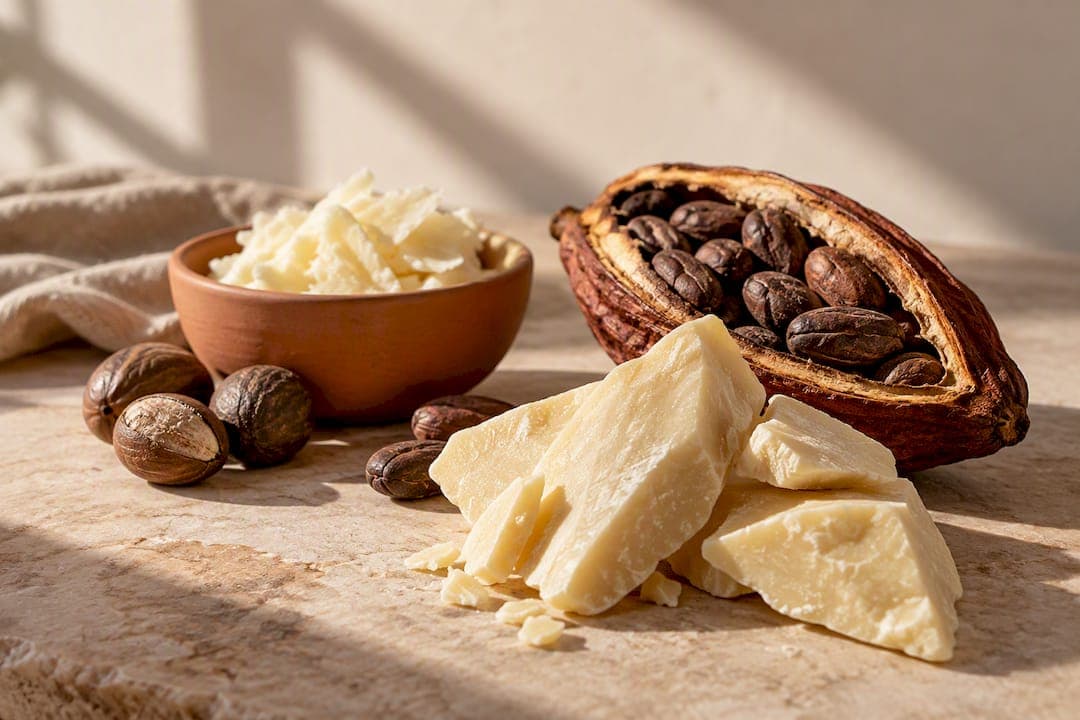
Shea butter is the better daily driver for most skin, especially on the face, because it absorbs faster and sits lower on the comedogenic scale. Cocoa butter is the specialist: firmer, more occlusive, and better suited to cracked heels, thick scars, or balms that need real structure. Combine them when you want the softness of shea with the sealing power of cocoa, typically in a 2:1 or 3:1 ratio, favoring shea.
TL;DR:
- Shea butter is suitable for daily use on the face and body because it absorbs quickly and has a low likelihood of clogging pores.
- Cocoa butter's dense, saturated fat content makes it ideal for thick, dry areas like heels and scars, where a firm, occlusive barrier is needed.
- Blending shea and cocoa butter in ratios such as 3:1 or 2:1 allows customization for a balance of softness and sealing power, depending on skin needs.
- Sheas' lower comedogenic rating and lighter texture make it preferable for oily and sensitive facial skin, whereas cocoa butter's firmness suits rough, thick-skinned areas.
- Patch testing is recommended before full application, especially for individuals with latex or nut allergies, since raw shea contains trace latex compounds and cocoa is related to tree nuts.
Table of Contents
- Shea vs Cocoa Butter: The Core Differences
- Why Do Shea and Cocoa Butter Feel So Different?
- Which Butter Should You Use for Your Skin Type?
- How to Use and Blend Shea and Cocoa Butter
- Refined vs Unrefined: What Changes and What About Allergies?
- What Does the Research Actually Support?
- Our Take on Choosing Between Shea and Cocoa
- Moisturizers Built Around What Shea Actually Does Well
- Sources
- FAQ
Shea vs Cocoa Butter: The Core Differences
Shea butter comes from the nut of the African shea tree (Vitellaria paradoxa) and stays semi-soft even at room temperature, with a mild, nutty smell in its unrefined form. Cocoa butter is pressed from cacao beans, arrives rock hard until it hits body heat, and carries a distinct chocolate scent unless it has been deodorized. That hardness comes down to fat chemistry: cocoa butter is firmer with higher stearic and palmitic acid content, while shea leans on oleic acid, which keeps it pliable.
On skin, the difference is immediate. Shea melts into a light film that disappears into the surface within a minute or two. Cocoa butter needs body heat to soften, then leaves a noticeably thicker, glossier layer behind. Cleveland Clinic notes that shea carries vitamin A and vitamin E alongside its fatty acids, which partly explains why dermatologists reach for it more often on the face.
Here's a fast way to decide which one to reach for:
- Pick shea for face, hands, and everyday body moisturizing.
- Pick cocoa for heels, elbows, scar massage, and any balm that needs to hold its shape.
- Pick a blend when you want a cream that spreads easily but still seals in moisture overnight.
- Skip cocoa on acne-prone or oily facial skin unless it's a very small, targeted spot treatment.
Why Do Shea and Cocoa Butter Feel So Different?
The feel of each butter traces directly back to its fatty-acid math. Shea butter typically runs high in oleic acid (a monounsaturated fat that stays fluid at skin temperature) alongside stearic and linoleic acids, giving it that soft, spreadable quality. Cocoa butter flips the ratio, loading up on stearic and palmitic acid, both saturated fats that pack tightly and melt sharply rather than gradually.
That "sharp melt" matters more than it sounds. Cocoa butter has a narrow melting range close to body temperature, which is why it feels solid in the jar and then turns liquid almost instantly on contact with skin. Shea butter melts more gradually across a broader range, which is part of why it blends into skin without that heavy, waxy transition. Formulation chemistry analysis ties this directly to comedogenic risk: cocoa butter often rates around a 4 on the comedogenic scale, while shea sits lower, closer to a 0 to 2 depending on refinement.
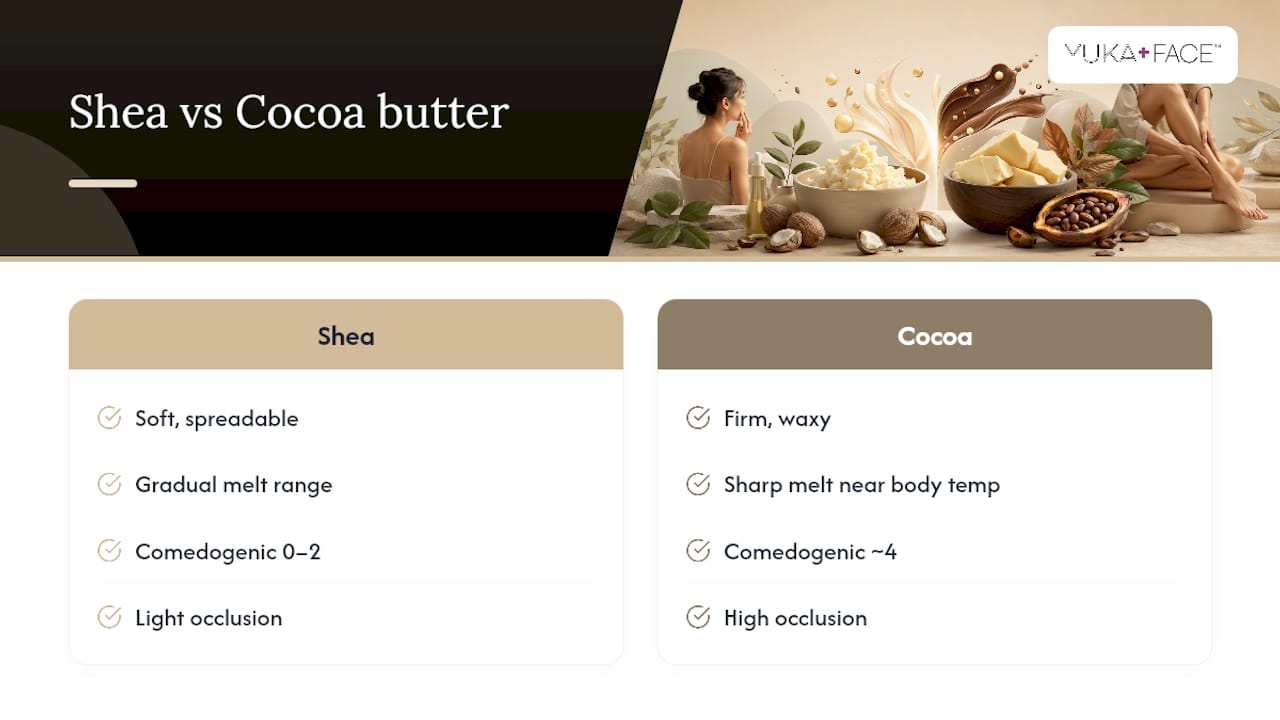
Occlusion follows the same logic. A denser, saturated-fat structure like cocoa butter forms a thicker barrier on the skin's surface, which is exactly what you want on a cracked heel and exactly what you don't want inside a clogged pore. Shea's lighter structure still seals in moisture, just with less risk of trapping oil and debris against facial skin. Peer-reviewed formulation research links these unsaponifiable compounds and fatty-acid ratios directly to how a plant fat penetrates, occludes, and behaves in a finished product.
Which Butter Should You Use for Your Skin Type?
Face and body call for different logic, and skin type tips the decision further. If you have oily or acne-prone skin, shea's lower comedogenic rating makes it the safer facial pick; cocoa butter's density is more likely to sit on top of skin and contribute to breakouts. Dry or combination skin can typically handle either on the face, though shea still absorbs faster for daytime use.
Body skin is more forgiving. Thick-skinned or chronically dry areas, like heels, elbows, and knees, benefit from cocoa butter's heavier seal. For general body hydration after a shower, shea alone often does the job without feeling greasy.
Sensitive and eczema-prone skin has real science behind the shea recommendation. Shea butter has documented anti-inflammatory and antioxidant properties and can ease redness and dryness better than plain petroleum-based products in some comparisons, though it won't treat the underlying condition. Anyone managing an active eczema flare should still pair topical care with guidance from a dermatologist rather than relying on butter alone. For deeper routines, this eczema skincare guide walks through gentler, natural steps.
- Lips: cocoa butter's structure holds up well in balm sticks that need to survive a coat pocket.
- Stretch marks or scars: massage either butter in during pregnancy or recovery, though evidence for preventing marks is thin.
- Heels and elbows: cocoa butter, ideally layered under socks or gloves overnight.
Pro Tip: If your skin flares with new products, patch test on your inner forearm for 48 hours before putting either butter anywhere near your face.
How to Use and Blend Shea and Cocoa Butter
Getting the ratio right matters more than picking a "winner." Here's a simple approach:
- Patch test first: apply a small amount to your inner arm, wait 48 hours, and check for redness or bumps before using it anywhere else.
- For an everyday body butter, melt 3 parts shea to 1 part cocoa butter in a double boiler, then whip once cooled for a light, fluffy texture.
- For a firmer balm or heel treatment, flip the ratio to 1 part shea to 2 parts cocoa for extra hold.
- For lip balm, cocoa butter alone (or with a touch of beeswax) gives the stick shape it needs to survive heat.
- Store finished blends in a cool, dark spot. Unrefined butters hold their nutrients longer below 75°F.
- Apply right after a shower while skin is still damp to lock in moisture, and save heavier cocoa blends for nighttime on rough patches.
Refined vs Unrefined: What Changes and What About Allergies?
Refining strips out most of the natural scent and some of the antioxidant compounds in both butters, leaving a neutral, longer-lasting product that's easier to formulate with. Unrefined versions keep more of the bioactive material responsible for their reputation, but they carry a stronger natural aroma and a shorter usable life, generally 12 to 24 months when stored below 75°F away from direct light.
Allergy considerations deserve real attention. Raw shea butter can contain trace latex compounds, which matters for anyone with a latex allergy, and cocoa butter shares some proteins with tree nuts that occasionally trigger sensitivity in nut-allergic individuals. Patch testing isn't optional for either group, and anyone with a known latex or tree-nut allergy should talk to a doctor before trying either butter for the first time.
What Does the Research Actually Support?
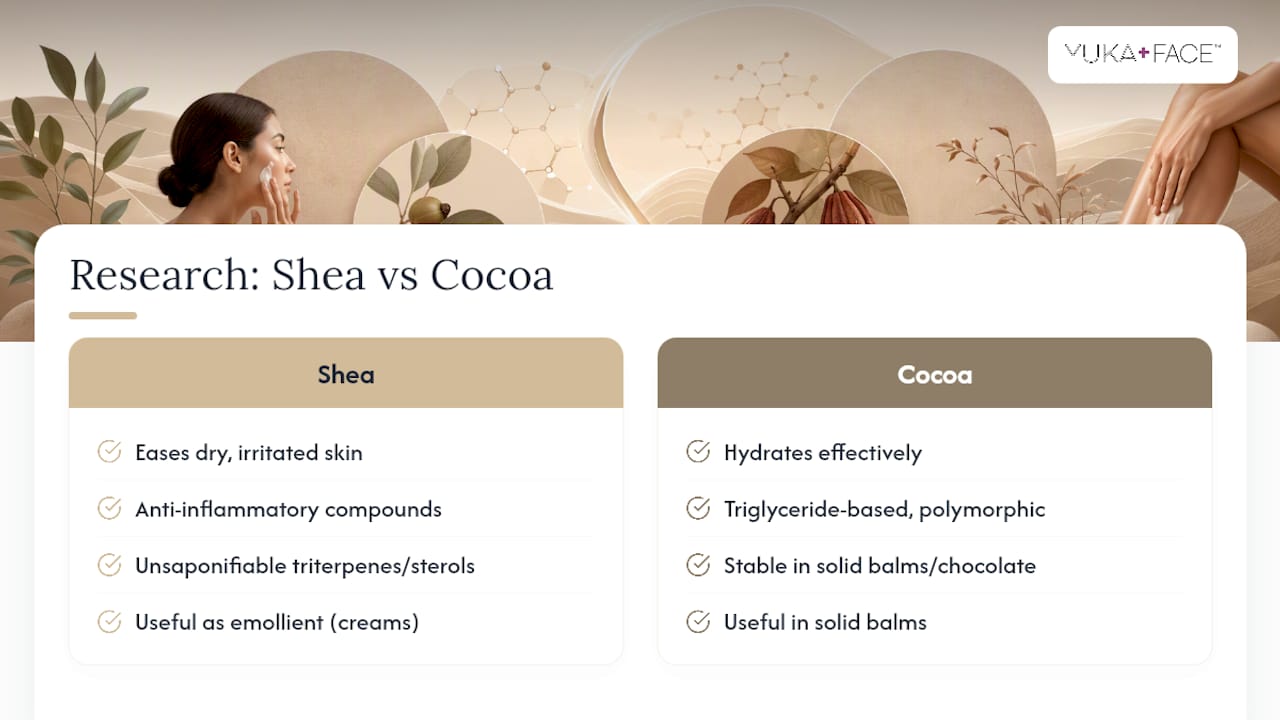
Clinical evidence supports shea butter's role in easing dry, irritated skin. Healthline's review of eczema care points to shea outperforming plain petroleum jelly in some comparisons for symptom relief, thanks to its anti-inflammatory compounds. Formulation science backs up the texture story too: shea's unsaponifiable fraction, rich in triterpenes and sterols, drives much of its bioactivity, while cocoa butter's triglyceride structure gives it the polymorphic stability that makes it useful in solid balms and chocolate alike.
Where the evidence gets thinner is around bigger promises. Claims that either butter erases scars or prevents stretch marks outright aren't well supported. Both butters hydrate effectively, and hydrated skin heals and stretches better, but that's a different claim than "removes" or "prevents." Anyone dealing with a persistent skin condition should treat these butters as support, not treatment, and bring real concerns to a dermatologist.
Our Take on Choosing Between Shea and Cocoa
Some skincare brands build around simple, natural ingredient lists, and shea often earns its place as the default for a reason: it does more jobs well without the pore-clogging risk cocoa butter carries on facial skin. Keep cocoa butter in the toolkit for heels, elbows, and firm balms, but let shea handle your everyday face and body routine.
— Kelly
Moisturizers Built Around What Shea Actually Does Well
Everyday hydration doesn't need to come from mixing your own butter blend in a double boiler. Yuka+Face's moisturizer and dry-skin lineup is formulated around the same barrier-support principles covered above, with fragrance-free options for anyone whose skin reacts to strong scents.

If sensitive or eczema-prone skin is your main concern, start with the dry-skin collection and patch test any new product exactly the way outlined earlier in this guide. For a broader look at oils and serums that layer well with a shea-based moisturizer, browse the full Yuka+Face shop. Every formula stays 100% vegan and cruelty-free, so you're not trading one skin concern for a longer ingredient list of unknowns.
Sources
- Shea butter benefits — Cleveland Clinic
- Shea butter for eczema
- Shea butter vs cocoa butter: one cracks, one melts
- NCBI review on plant fats and cosmetic uses (example review)
FAQ
Which Butter Is Best for the Skin?
Shea butter is generally the better all-purpose choice because it absorbs faster and carries a lower comedogenic rating than cocoa butter. Cocoa butter still wins for very dry, thick-skinned areas like heels where a heavier seal helps.
Do Skin Tones Affect Whether Shea or Cocoa Butter Works Better?
Skin tone itself doesn't change how either butter performs; skin type, oiliness, and sensitivity matter far more than tone. Both butters are widely used across all skin tones for dryness and barrier support, with shea favored more often for facial use.
What Is Better for Scars, Cocoa Butter or Shea Butter?
Neither butter has strong evidence for actually fading or removing scars. Both can help keep the area hydrated during healing, which supports skin recovery generally, but treat either as a moisturizing aid rather than a proven scar treatment.
Who Should Not Use Shea Butter?
Anyone with a latex allergy should be cautious, since raw shea butter can contain trace latex compounds that may trigger a reaction. A 48 hour patch test is worth doing before full use, and anyone with a known allergy history should check with a doctor first.
Can I Use Shea and Cocoa Butter Together?
Yes, blending them is common in body butters and balms. A ratio around 3 parts shea to 1 part cocoa gives a soft, fast-absorbing everyday cream, while flipping toward more cocoa creates a firmer balm for heels or elbows.