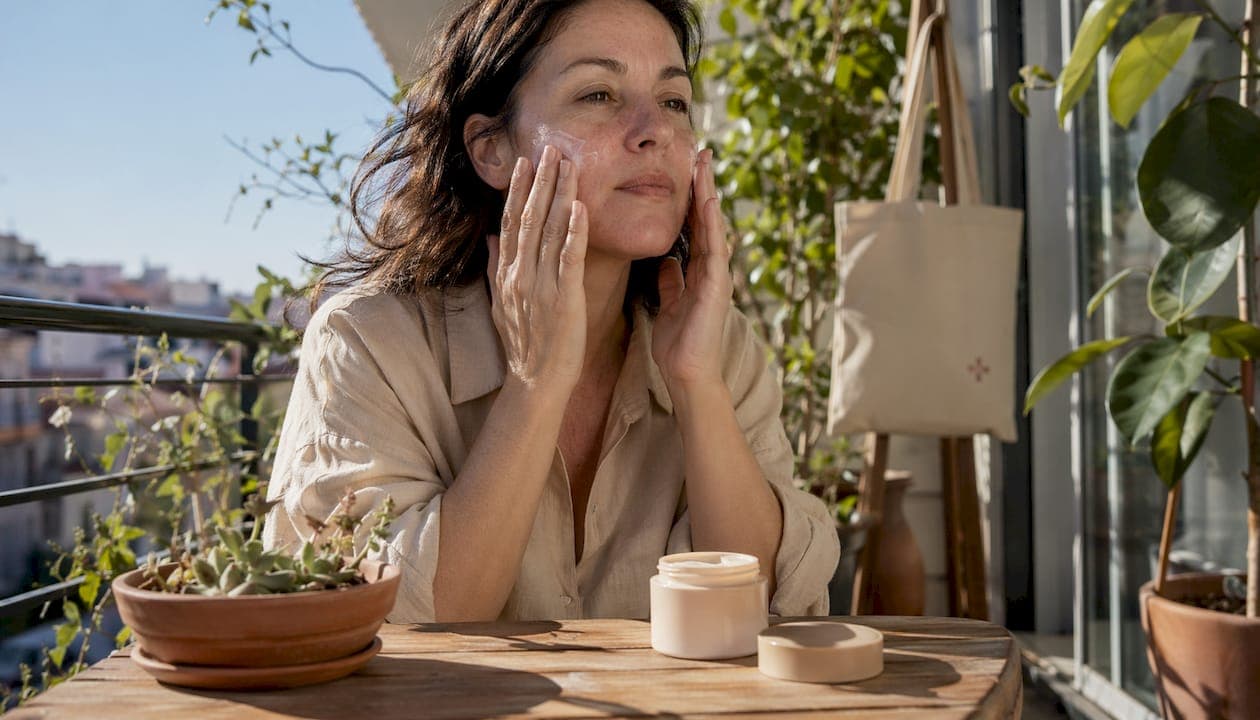
Reactive skin is not a medical diagnosis. It is a descriptive term for skin that overreacts to triggers due to a compromised protective barrier and a hyperactive immune response. The result: redness, burning, tightness, and irritation that appear faster and more intensely than typical sensitive skin reactions.
Common signs include:
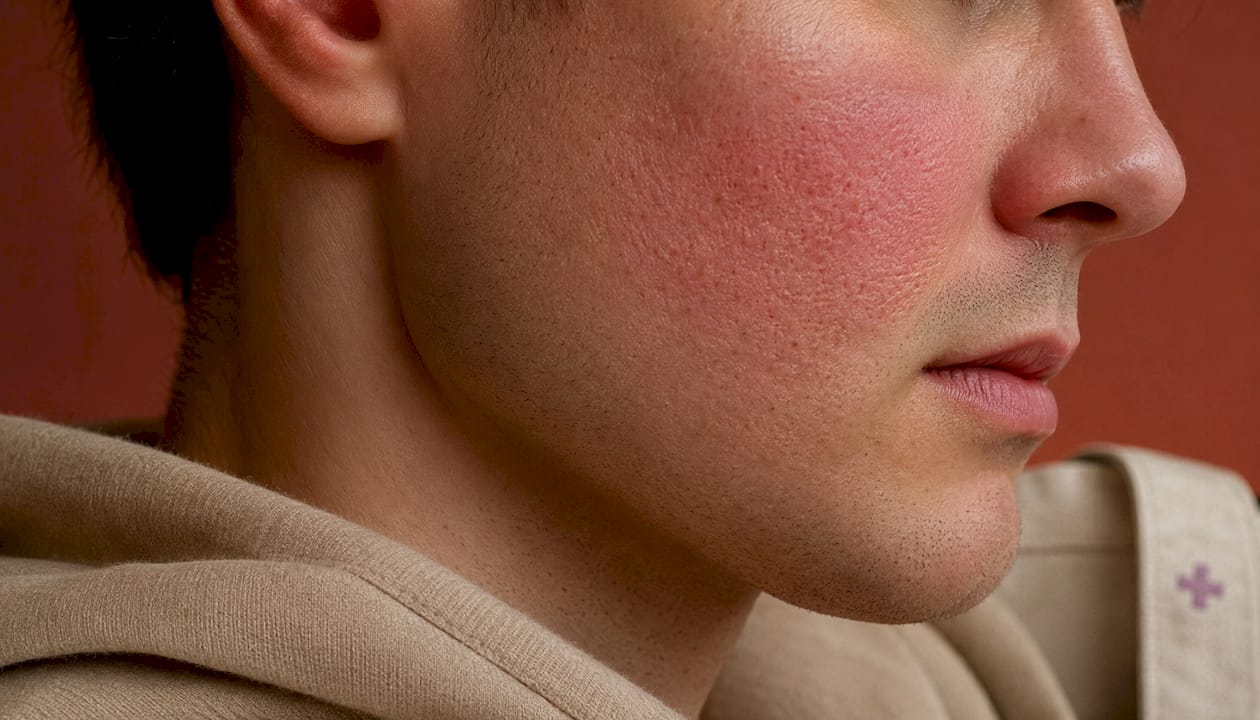
- Redness and visible irritation
- Burning, stinging, or itching sensations
- Dryness and tightness
- Bumps or contact dermatitis
- Symptoms most often appearing on the face, neck, collarbones, and hands
Reactive skin differs from sensitive skin in speed and intensity. Sensitive skin reacts to direct contact with irritants. Reactive skin reacts faster and stronger, often with sensory symptoms like burning or tightness that are not always visible on the surface.
What causes reactive skin to flare up?
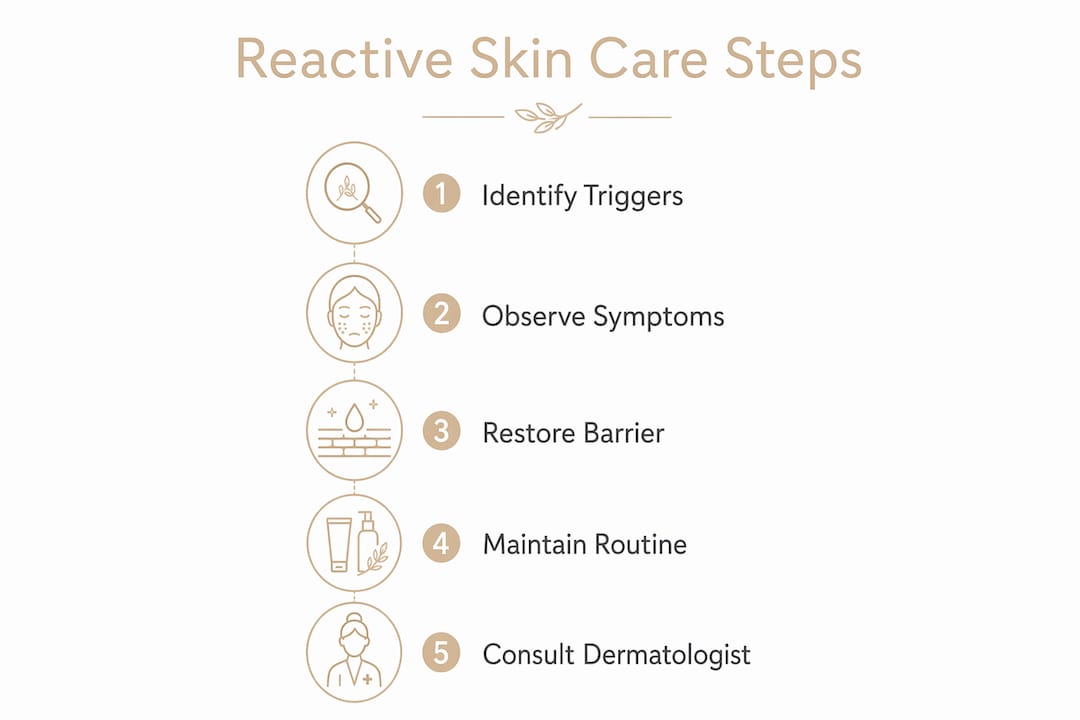
A compromised skin barrier is the root cause. When the barrier weakens, irritants and allergens penetrate deeper layers of the skin, triggering inflammation and hypersensitivity. Both external and internal factors drive this process.
External triggers:
- Harsh skincare products, especially those with fragrances or strong chemicals
- UV radiation and sun exposure
- Temperature fluctuations, heat, and cold
- Air pollution and environmental toxins
- Rough or synthetic fabrics like wool and polyester
- Hard water
Internal triggers:
- Hormonal changes and fluctuations
- Stress and anxiety
- Underlying skin conditions such as eczema or rosacea
- Certain medications or systemic health conditions
When these factors combine, the skin barrier breaks down further, leaving skin dehydrated and vulnerable. The immune system overreacts, producing redness, inflammation, and heightened sensitivity to products or environmental exposure.
How to recognize the signs of reactive skin
Symptoms fall into two categories: what you see and what you feel. Both matter for accurate identification.
Sensory symptoms:
- Burning or stinging after applying products
- Persistent itching without a visible rash
- Tightness, especially after cleansing
- A sensation of heat on the skin
Visible signs:
- Redness or blotchiness, particularly on the face
- Dry, flaky patches
- Small bumps or hives
- Contact dermatitis from product or fabric exposure
Symptom intensity varies. Some people experience mild discomfort after a single trigger; others deal with prolonged flare-ups from multiple overlapping causes. Reactive skin can also overlap with conditions like rosacea or eczema, which require separate diagnosis and treatment. Rosacea, for example, is a chronic inflammatory condition, not a temporary state, and needs a dermatologist-prescribed course of care.
Effective care strategies for reactive skin
The goal is simple: reduce triggers, repair the barrier, and keep the routine minimal. Less is genuinely more here.
Skincare tips:
- Use gentle, fragrance-free cleansers and moisturizers labeled hypoallergenic
- Avoid harsh exfoliants and retinoids during flare-ups
- Look for barrier-repairing ingredients: ceramides and hyaluronic acid
- Apply a broad-spectrum sunscreen daily
- Patch-test every new product before full application
Lifestyle adjustments:
- Wear breathable, cotton fabrics to reduce friction and heat
- Avoid long, hot showers, which strip the skin's natural oils
- Limit exposure to temperature extremes
- Track when symptoms appear to identify personal triggers
- Manage stress through consistent sleep, movement, or mindfulness practices
Pro Tip: Keep a simple skin diary for two weeks. Note products used, foods eaten, stress levels, and weather. Patterns often emerge faster than expected, making trigger identification much more precise.
Restoring the skin barrier is the priority. A strong barrier means fewer irritants reach the deeper skin layers, reducing both the frequency and severity of reactions. For resilient skin tips that go beyond the basics, a structured approach to barrier repair makes a measurable difference.

What dermatologists say about skin barrier health
Reactive skin is a symptom of barrier dysfunction, not a permanent skin type. That distinction changes how to approach care entirely.
Dr. Morayo Adisa, a double board-certified dermatologist and dermatopathologist, describes reactive skin as "a descriptive term that has been coined to define skin that responds excessively to certain internal or external stimuli." Her core recommendation: fewer products, milder formulas, and a focus on barrier restoration.
Key evidence-based ingredients that support barrier repair and skin resilience:
- Ceramides: Replenish the lipid layer that holds skin cells together
- Hyaluronic acid: Draws moisture into the skin and maintains hydration
- Niacinamide: Reduces inflammation and strengthens the barrier over time
- Colloidal oatmeal: Soothes irritation with known antioxidant and anti-inflammatory properties
Nutrition also plays a role. Deficiencies in vitamins A, B12, and D, as well as iron, can contribute to skin irritation and barrier weakness. Hydration, both topical and internal, supports skin recovery.
Reactive skin can often be reset with treatment focused on gentle care and barrier repair. Persistent or severe symptoms, however, warrant a visit to a board-certified dermatologist. Conditions like rosacea or eczema can mimic or worsen reactive skin, and accurate diagnosis changes the treatment path entirely.
Yuka+Face: gentle care for reactive skin

Yuka+Face formulates every product with reactive and sensitive skin in mind. Vegan, natural, and free from harsh chemicals, the range focuses on barrier support and gentle nourishment.
A consistent morning skin care routine built around clean, plant-based ingredients is one of the most effective ways to reduce daily reactivity. Yuka+Face products are created for all skin types, including those that need the most care.
Key Takeaways
Reactive skin is a temporary, manageable state caused by a compromised skin barrier and immune hypersensitivity, not a fixed skin type.
| Point | Details |
|---|---|
| Barrier dysfunction drives reactivity | A weakened skin barrier lets irritants penetrate deeper, triggering inflammation and sensitivity. |
| Triggers are both internal and external | Stress, hormones, UV exposure, harsh products, and fabrics all compromise the barrier. |
| Gentle routines restore balance | Fragrance-free, hypoallergenic products with ceramides and hyaluronic acid support recovery. |
| Reactive skin can be reset | With simplified, restorative care, reactive skin often returns to a calmer, more resilient state. |
| See a dermatologist for persistent symptoms | Conditions like rosacea or eczema can mimic reactive skin and require professional diagnosis. |
Reactive skin: a perspective worth considering
Most people with reactive skin spend years adding products, trying to fix the problem with more. A new serum for redness. A targeted treatment for dryness. A stronger formula for stubborn irritation. The routine grows, and the skin gets worse.
The evidence points in the opposite direction. Reactive skin responds to subtraction, not addition. Stripping the routine back to a cleanser, a barrier-focused moisturizer, and sunscreen often produces more improvement in two weeks than months of layering actives. The skin is not broken. It is overwhelmed.
There is also a tendency to treat reactive skin as a cosmetic inconvenience rather than a signal worth listening to. Burning after cleansing is not normal. Redness that appears with every temperature change is not something to mask with more product. These are clear signs that the barrier needs support, not more challenge.
The other underestimated factor is time. Barrier repair is not fast. Ceramides and hyaluronic acid work, but they need weeks of consistent use to show results. Switching products every few days because the skin "isn't improving yet" restarts the process and prevents any real recovery. Patience, combined with a genuinely simple routine, is what actually works.
FAQ
What does having reactive skin mean?
Reactive skin means the skin's protective barrier is compromised, causing it to overreact to triggers like products, temperature changes, or stress. It is a descriptive term, not a formal medical diagnosis.
What causes highly reactive skin?
Both external factors (harsh products, UV exposure, pollution, temperature extremes) and internal factors (hormonal changes, stress, underlying conditions like eczema) compromise the skin barrier, leading to inflammation and heightened sensitivity.
Why is my skin suddenly reactive?
Sudden reactivity often points to a new product, a change in environment, hormonal shifts, or increased stress. A skin diary tracking products, diet, and conditions helps identify the trigger quickly.
How do you get rid of reactive skin?
Simplify your routine to gentle, fragrance-free, barrier-repairing products with ceramides and hyaluronic acid, avoid known triggers, and give the skin consistent time to recover. Persistent symptoms that do not improve with at-home care need a dermatologist's evaluation.