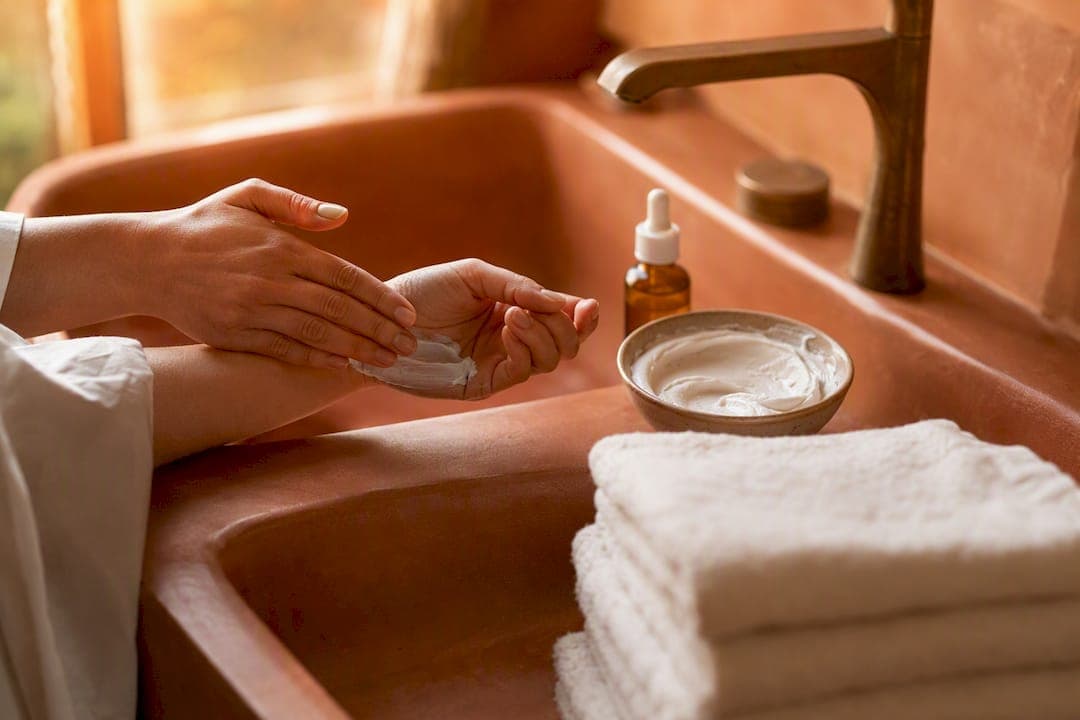
A minimal cruelty-free skincare routine looks like this: AM, cleanser → moisturizer → broad-spectrum SPF. PM, cleanser → targeted treatment (as needed) → moisturizer. That's it. "Cruelty-free" means no animal testing anywhere in production; "vegan" means no animal-derived ingredients — the two aren't the same thing, and a product can be one without the other.
The fastest way to verify a brand's cruelty-free status is to check it against a third-party database rather than trust the label. If it's not listed, check the brand's own policy page for a testing statement, and email them directly if you still aren't sure.
- AM: gentle cleanser, moisturizer, broad-spectrum sunscreen
- PM: gentle cleanser, treatment (retinoid, AHA/BHA, or serum as needed), moisturizer
- Verify fast: search Leaping Bunny, Cruelty Free International, or PETA's list before you buy
Key Takeaways
A minimal, verified cruelty-free routine (cleanser, treatment as needed, moisturizer, and daily sunscreen) delivers better long-term results than a complex regimen you can't sustain.
| Point | Details |
|---|---|
| Start with the basics | Replace cleanser, moisturizer, and sunscreen first before adding treatments. |
| Verify, don't assume | Check Leaping Bunny, Cruelty Free International, or PETA's database before trusting a label claim. |
| One active at a time | Introduce retinoids, AHAs, or BHAs separately and patch-test to avoid irritation. |
| Vegan is a separate standard | A product can be cruelty-free without being vegan; check ingredient lists for lanolin, carmine, or collagen if that matters to you. |
| Yuka+Face covers the essentials | Yuka+Face's starter set maps directly to the cleanser, serum, and moisturizer steps in a minimal cruelty-free routine. |
Table of Contents
- Building Your Cruelty-Free Skincare Routine Step by Step
- How Do You Verify a Brand Is Actually Cruelty-Free?
- How Do You Switch to Cruelty-Free Without Wrecking Your Skin?
- What Ingredients Should You Look For or Avoid?
- Simple Routines for Dry, Oily, and Sensitive Skin
- Where Yuka+Face Fits Into Your Routine
- What's the Environmental Case for Cruelty-Free Skincare?
- Can You Make Cruelty-Free Skincare at Home?
- What Do You Gain Beyond the Ethical Choice?
- The Simplicity Everyone Overcomplicates
- Start Your Routine With Yuka+Face
- Sources
- FAQ
Building Your Cruelty-Free Skincare Routine Step by Step
A five-step routine beats a twelve-step one for one simple reason: you'll actually finish it. Skincare practitioners consistently point out that a routine you can stick with, even a bare-bones one, outperforms an elaborate regimen you abandon after two weeks. Consistency does more for your skin than any single ingredient.
Start with cleansing. Most people only need one cleanse, morning and night. A double cleanse (oil-based cleanser followed by a water-based one) only earns its place if you're wearing heavy makeup or mineral sunscreen that a single wash won't fully remove. If your skin feels tight or squeaky after cleansing, you're using something too harsh, and it's worth swapping for a cream or gel formula before anything else changes.

Hydration comes next, and order matters here. Apply hyaluronic acid serum to slightly damp skin, not bone dry skin. Hyaluronic acid pulls moisture from its surroundings, so applying it to dry skin in a dry room can occasionally pull moisture out of your skin rather than into it. Seal it with a moisturizer within a minute or two.
Active ingredients need the most restraint. Retinoids work best introduced two to three nights a week, then built up gradually as your skin adjusts, always at night, always followed by moisturizer to buffer irritation. AHAs and BHAs (glycolic, lactic, or salicylic acid) should not share a routine with retinoids on the same night. Pick one active category per session.
- Cleanse with a gentle, sulfate-free formula.
- Apply hydrating serum to damp skin.
- Layer one active treatment, if your skin is ready for it.
- Moisturize to lock everything in.
- In the morning, always finish with sunscreen, applied as the last step before makeup.
Sunscreen is nonnegotiable, and it's the step people skip first when they're busy. Retinoids and exfoliating acids both increase sun sensitivity, which means the SPF step matters more, not less, once you introduce actives.
Pro Tip: Apply sunscreen as a full nickel-sized amount for the face alone. Most people apply less than half that, which cuts the labeled SPF protection significantly.
How Do You Verify a Brand Is Actually Cruelty-Free?
Packaging claims are the weakest form of proof you'll encounter. "Not tested on animals" printed on a bottle carries no enforcement behind it. Third-party certification does, because it requires an audit trail rather than a marketing sentence.
Leaping Bunny requires brands and their entire supplier chain to pledge against animal testing and submit to independent audits. Cruelty Free International runs a comparable Approval Programme, verifying claims through independent audits and supply-chain checks rather than a brand's self-report. PETA maintains its own searchable database of cruelty-free companies, and it's the quickest lookup tool for a fast gut-check before checkout.
Here's what separates a credible claim from a hopeful one:
- Supplier-level assurance. Leaping Bunny and Cruelty Free International both require statements from ingredient suppliers, not just the finished-product brand.
- Audit history. A brand that's been on an approved list for years has withstood repeat scrutiny, not a one-time application.
- Market caveats. Some brands lose or complicate their cruelty-free status when they sell in regions with mandatory animal testing requirements for cosmetics, so always check whether a brand sells into those markets before assuming universal status.
Because both major certification programs demand supplier-level testing checks, a logo from either one carries meaningfully more weight than an unaudited label claim sitting alone on a bottle.
Watch for vague language: "cruelty-free" with no certification logo attached, no mention of supplier policies, or silence on where the product is sold. Those are the three most common red flags, and any one of them is reason enough to dig further before buying.
How Do You Switch to Cruelty-Free Without Wrecking Your Skin?
Trying to replace an entire bathroom cabinet in one weekend is how people end up with both a breakout and an empty wallet. Replace in order of impact: cleanser, moisturizer, and sunscreen first, since you use them daily and they touch the most skin surface. Treatments and serums can wait.
A routine-builder approach helps here: divide each product's price by its expected months of use to get a real monthly cost, then pace your replacements around that number instead of buying everything at once.
- Replace your cleanser first; it's the lowest-risk swap and the easiest to judge quickly.
- Swap in a moisturizer next, watching for two weeks before adding anything else.
- Add sunscreen, checking that it's broad-spectrum before anything else.
- Introduce one treatment product at a time, patch-testing on your inner arm for 48 hours first.
The most common mistake isn't the products themselves. It's stacking two new actives in the same week and having no idea which one caused the redness. The second-most common mistake is dropping SPF mid-transition because a new serum "feels like enough protection." It never is. And "natural" printed on a label is not a proxy for gentle. Poison ivy is natural, too.
What Ingredients Should You Look For or Avoid?
Certain actives do the heavy lifting in a cruelty-free routine, and none of them require animal testing to formulate or animal byproducts to work. Vitamin C brightens and supports collagen production, best applied in the morning under sunscreen. Niacinamide calms redness and regulates oil, and it plays well with almost everything else. Hyaluronic acid hydrates without weight, fitting into both AM and PM steps.
If you're also avoiding animal-derived ingredients (the vegan half of the equation, distinct from cruelty-free), check labels for lanolin (from wool grease), collagen (typically animal-sourced), carmine (a red pigment from crushed insects), and beeswax. None of these make a product tested on animals, but all of them make it non-vegan.
- Vitamin C: apply AM, under sunscreen, for brightening and antioxidant support.
- Niacinamide: flexible timing, AM or PM, good for oil control and barrier support.
- Hyaluronic acid: apply to damp skin before moisturizer, AM or PM.
- Watch for: lanolin, carmine, collagen, beeswax, squalene (unless labeled plant-derived).
- Fragrance: even "natural" essential oils can trigger sensitivity; unscented is safer for reactive skin.
Pro Tip: Never introduce vitamin C and a retinoid on the same night when you're new to actives. Alternate them, vitamin C in the morning, retinoid at night, and give your skin a few weeks before combining anything further.
Simple Routines for Dry, Oily, and Sensitive Skin
Skin type changes what you layer, not whether you follow the same basic structure.
- Dry skin: AM, cream cleanser → hyaluronic acid serum → rich moisturizer → SPF. PM, cream cleanser → facial oil or richer moisturizer. Add a hydrating mask once weekly if flaking persists.
- Oily or combination skin: AM, gel cleanser → niacinamide serum → lightweight gel moisturizer → SPF. PM, gel cleanser → BHA treatment two to three nights weekly → oil-free moisturizer.
- Sensitive skin: AM, fragrance-free cleanser → soothing serum (centella or oat-based) → barrier-repair moisturizer → mineral SPF. PM, same cleanser → moisturizer only, no actives until your skin is stable for at least a month.
Step up to stronger actives only once your baseline routine has run without irritation for two to four weeks. Persistent oiliness after four to six weeks of consistent use signals you need a stronger niacinamide concentration or a clay-based cleanser, not a full routine overhaul. Increased redness or stinging means step back, not push through.
Where Yuka+Face Fits Into Your Routine
Yuka+Face builds its entire range around a 100% natural, vegan, and cruelty-free foundation, combining botanical research with formulation science rather than treating "clean" as a marketing checkbox. Every routine described above maps to a Yuka+Face product category.
- Dry skin AM/PM: cream cleanser, hydrating serum, and richer moisturizer from the starter set.
- Oily/combination: gel cleanser and lightweight moisturizer paired with a niacinamide-forward serum.
- Sensitive skin: fragrance-free cleanser and barrier-repair moisturizer, no actives until skin stabilizes.
| Point | Details |
|---|---|
| Starting point | Yuka+Face's starter set covers cleanser, serum, and moisturizer for the essentials-first approach. |
| Verified standard | Every product is formulated vegan and cruelty-free from the ground up, not certified after the fact. |
What's the Environmental Case for Cruelty-Free Skincare?
Cruelty-free and environmentally responsible sourcing tend to travel together, even though they're technically separate standards. Brands that submit to third-party audits for animal-testing claims typically also disclose more about sourcing and packaging, since transparency in one area tends to carry into others.
Animal testing facilities themselves carry an environmental cost most consumers never see: animal husbandry for lab testing requires land, water, and waste management on top of the testing process itself. Skipping that step in a supply chain removes those inputs entirely.
Beyond testing, cruelty-free brands skew toward simpler, plant-derived formulas over synthetic complexes, which generally biodegrade more readily once they wash down the drain. Packaging is the other lever. Brands built around a natural-ingredient philosophy more often default to recyclable or reduced packaging, since the brand identity already leans toward minimal environmental footprint.
None of this makes every cruelty-free product automatically eco-friendly. A cruelty-free brand can still ship in excessive plastic or rely on ingredients grown with heavy pesticide use. The certification only covers animal testing, not carbon footprint or packaging waste, so treat cruelty-free status as one input into a larger sustainability decision, not the whole answer.
Can You Make Cruelty-Free Skincare at Home?
Kitchen-cabinet skincare has real limits, but a few simple recipes are worth keeping in rotation between store-bought products, especially for occasional treatments rather than daily steps.
Oat and honey mask (note: standard honey isn't vegan; swap in a plant-based alternative like agave or maple syrup if you want a fully vegan version). Blend one tablespoon of finely ground oats with one tablespoon of your chosen syrup and a teaspoon of water. Apply for ten minutes, then rinse. Oats have long been used to calm irritated skin.

Aloe and green tea toner. Brew green tea, let it cool completely, and mix it one-to-one with pure aloe vera gel. Store in the refrigerator and use within a week, since it has no preservatives.
Sugar and oil scrub. Combine two tablespoons of fine sugar with one tablespoon of jojoba or sweet almond oil for a gentle body exfoliant. Skip this one on your face; sugar granules are too abrasive for facial skin, especially around the eyes.
DIY recipes work best as occasional additions, not replacements for your cleanser, moisturizer, and sunscreen. They also carry zero preservative system, so anything with water content needs to be used within days, not weeks. If you develop redness or stinging from a homemade formula, stop immediately. Kitchen ingredients aren't formulated or tested for skin compatibility the way commercial products are.
What Do You Gain Beyond the Ethical Choice?
Choosing cruelty-free skincare often means choosing simpler formulas, and simpler formulas tend to mean fewer irritants for sensitive skin. Brands built around cruelty-free and natural positioning frequently favor shorter ingredient lists over synthetic filler compounds, which narrows the odds of a reaction.
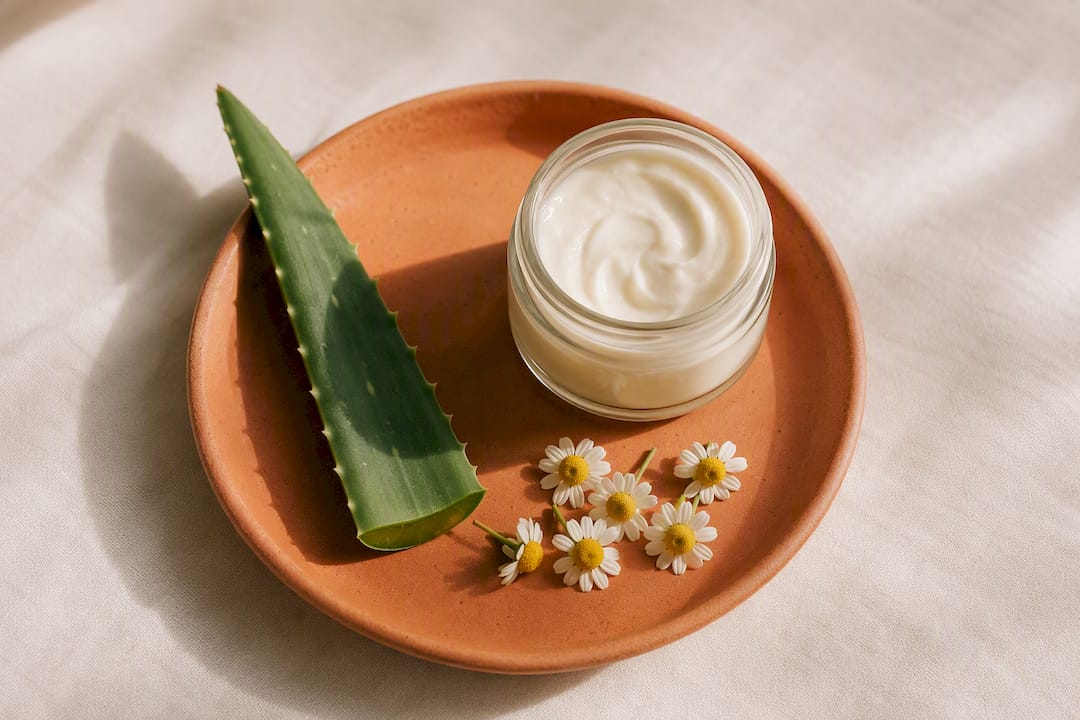
There's a transparency dividend, too. Brands that submit to third-party cruelty-free audits are already comfortable with outside scrutiny, and that same comfort usually extends to publishing full ingredient lists and sourcing details rather than hiding behind proprietary blends.
Cost predictability is the underrated benefit. A routine built on a handful of well-chosen, cruelty-free staples is easier to budget for than a rotating cycle of trend-driven purchases, since you're buying the same core products on a repeat schedule rather than chasing whatever's newly viral. And a simpler routine, built once and repeated daily, is simply easier to maintain long-term than a shifting one, which circles back to the consistency point that matters most for actual results.
The Simplicity Everyone Overcomplicates
Most cruelty-free advice online buries the reader in ingredient science and forty-step routines before ever mentioning that consistency is the actual variable that predicts results. That's backward. The research on adherence is clear: a routine you'll repeat daily beats an elaborate one you'll quit by week three, regardless of how many actives it contains.
The bigger gap I see is on verification. People treat a "cruelty-free" label as settled fact when it's really just a claim until a third party audits it. Leaping Bunny and Cruelty Free International exist precisely because self-reported claims aren't reliable enough on their own. Spend the two minutes checking a database before checkout. It matters more than debating which serum is trendiest this year.
If you want a shortcut past the guesswork, start with a brand built cruelty-free and vegan from formulation, not certified after the fact. That's the gap Yuka+Face fills for readers who want to skip the audit-checking step entirely and just start.
— Kelly
Start Your Routine With Yuka+Face
Building a cruelty-free routine from scratch means researching certifications, comparing ingredient lists, and hoping the brand you land on actually holds up under scrutiny. Yuka+Face removes that research step. Every product is formulated vegan and cruelty-free from the start, blending botanical ingredients with scientific formulation, so you're not stitching together a routine from five different brands with five different standards.
![CTA Image]
The morning skincare routine guide walks through exactly which Yuka+Face products cover your AM cleanse, hydration, and SPF steps, matched to the minimal-routine structure. For the full philosophy behind why vegan and natural formulation matters beyond the animal-testing question, the guide to vegan skincare breaks down what "vegan" actually covers that "cruelty-free" doesn't. If you're ready to stop researching and start your routine, browse the starter sets and build your first week around one cleanser, one moisturizer, and one sunscreen. That's the whole first step.
Sources
- Leaping Bunny Program — MSPCA
- Search for Cruelty-Free Companies, Products, and More | PETA
- Cruelty Free International — Approved brands
- Virgins
FAQ
What is the best cruelty-free skincare line?
There's no single universal answer, since "best" depends on skin type and budget, but the strongest signal is a brand that's both certified by a third-party program like Leaping Bunny and formulated vegan from the start, which is the approach Yuka+Face takes.
What is the 4-2-4 rule in skincare?
Definitions of this rule vary and it isn't a standardized dermatological guideline, so treat any specific numeric claim about it with caution rather than as an established rule.
Is CeraVe actually cruelty-free?
CeraVe is not listed as cruelty-free by major third-party certification programs, and its parent company's animal-testing practices in certain markets have kept it off lists like PETA's cruelty-free database; check the PETA database directly for current status before buying.
Is e.l.f. actually cruelty-free?
Yes, e.l.f. Cosmetics has held Leaping Bunny certification and appears on PETA's cruelty-free list, making it one of the more reliably verified mass-market options.
How do I know if a "not tested on animals" label is trustworthy?
A label alone isn't proof; check the brand against Leaping Bunny or Cruelty Free International's approved list to confirm it's backed by an actual audit.